Skip to main content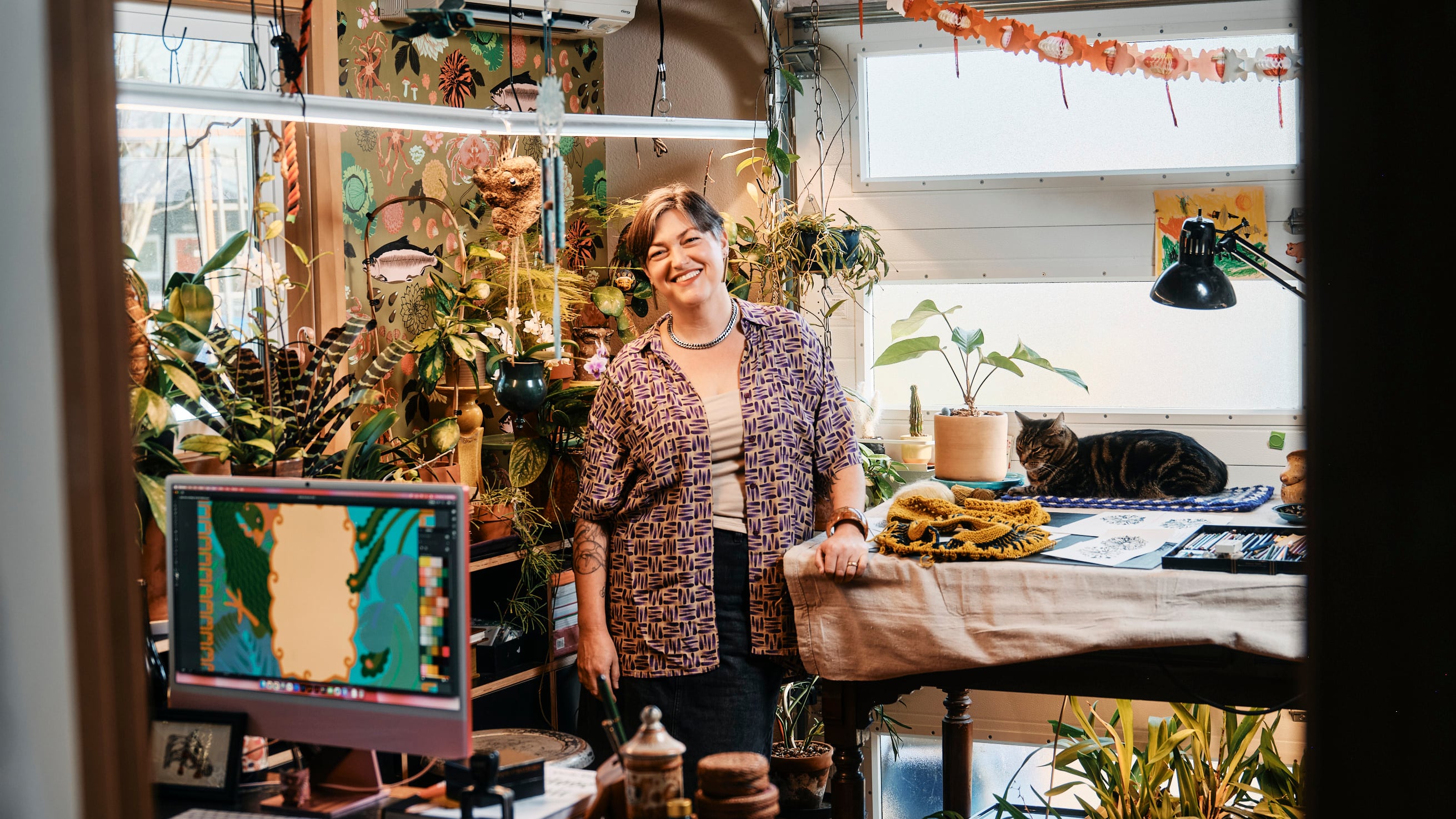
Kate Blairstone thinks she knows why everywhere we go now looks like a bank lobby with cold neutral tones: fear.
“People, especially in their homes, are trained to build your home for the next buyer, which leads to learning to like beige because that’s what you get,” Blairstone says. “It’s much more expensive to have taste, or hire someone with taste to do it for you. It’s really scary for people, and people feel like it’s safer to not have to make that choice.”
Now Blairstone designs wallpaper, gift wrap and other products; she does custom work and also sells ready-made wallpapers and gift wraps. Her aesthetic is busy, maximalist and cheerful—a far cry from the sad beiges that have taken over design in recent years.
“I’m so not trend-focused that I’m not sure if that’s a poor business choice for me because some people find my work hard to use because they don’t understand it,” she says, “but the people who get it really get it, and that’s what’s fun. It attracts people.”
Suppose you want your living space to feel like it has a room plucked from a Clue board. You want a conservatory, ballroom or study feel without a century’s worth of soot and sun bleach, enlivened with a touch of contemporary colorways. Blairstone can get into psychedelic hues for the right client, but most of her ready-to-buy patterns still feel rooted in natural reality with a touch of fantasy. Think goth-friendly red and pink camellias on a light black backdrop, Miami-tone pink grains on mint green, or art nouveau Siberian tigers.
“What draws me to [wallpaper] is how transformative and immersive it is,” Blairstone says. “You feel totally enclosed by it. I’m not a ‘statement wall’ person. If you’re going to go for it, you’ve got to go for it.”
Blairstone graduated from the Pacific Northwest College of Art in 2005 with a degree in printmaking. Blairstone didn’t get into wallpaper design for more than a decade after graduating, instead spending time in the service industry. She helped design the new interior for the long-running Portland restaurant Besaws after it moved locations in 2016 after 112 years in one building. This in turn led to projects with clients Thomas and Mariah Pisha-Duffly for their restaurants (Gado Gado, Oma’s Hideaway, The Houston Blacklight) and The State Hotel’s nine floors in Seattle.
Blairstone begins her illustrations on tracing paper by hand; after inking them, she scans her drawings into her computer to color and process with design software. Her work is licensed through Portland interior design company Manolo Walls, which is produced through a manufacturer in the United Kingdom. Pitching clients, collecting references, and building mood boards are also regular parts of her work schedule.
With her ready-to-buy rolls of Manolo wallpaper selling for around $225 a roll, Blairstone says her wallpaper is within the midrange price point of bespoke interior design supplies. Less expensive rolls might be less adhesive, use cheaper printing materials, or have less effective marketing than other brands. Blairstone credits technological advances for making orders more affordable and less wasteful to fill, while allowing her a greater freedom in printing color choices.
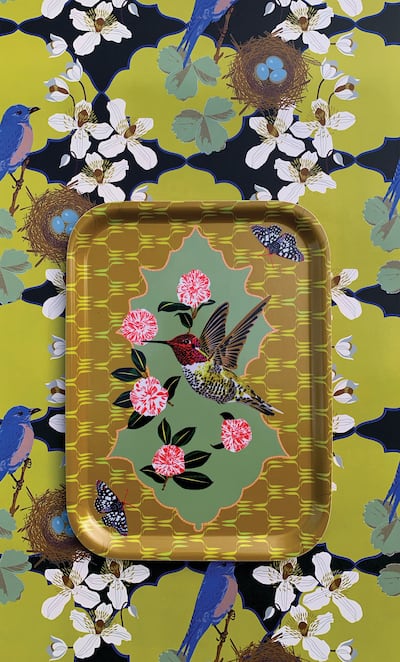
“Traditional print processes require you to have a very limited palette, because every path in a new color requires a new screen and new engraved rollers,” she adds. “Since I have a printmaking background, my style references traditional processes with a modern production method so I can use as many colors as I want. That’s why these [designs] feel so alive, because there’s a lot of variation in the paint or the tones. I’m not limited to a three-color design.”
Custom projects take her down the research rabbit hole to learn about flora and fauna significant to her client’s vision, which can include connections to their personal heritage or that of a specific cuisine. She learned about the sea life sold at Pike Place Market and that of the Puget Sound for The State Hotel, among other species local to Washington. She works on one project at a time, which can take her anywhere from a few weeks to a year to complete.
“Once you’ve done it once, people trust you to do it again,” Blairstone says.
Find Blairstone’s Work: kateblairstone.com | @kateblairstone
Make It: Patterns
Printmaking
If you’re interested in creating wallpaper or gift wrap—or simply interested in playing with pretty, repetitive prints similar to those Kate Blairstone creates—check out the Multnomah Arts Center’s Trayle Print Studio: A Center for Printmaking and Book Arts, which offers classes and workshops on topics such as collograph printmaking (in which materials are glued or sealed to a rigid substrate), lithography (created using an oily medium to draw an image on flat, ground limestone), and intaglio (full-color images from a single copper plate). Course fees vary, and pay-what-you-can options are available. MAC also offers classes in other visual arts (such as painting, drawing and photography) as well as woodworking, ceramics and a host of other creative disciplines, like theater and dance. 7688 SW Capitol Highway, #37, 503-823-2787, multnomahartscenter.org. 9 am–9:30 pm Monday–Thursday, 9 am–5pm Friday and Saturday.
Wildcraft Studios offers courses in techniques such as Japanese woodblock printmaking, paper marbling, and papercut cyanotypes; visual art classes in introductory drawing and painting, including both watercolor and acrylic; and courses in botanical illustration, painting with paper pulp, and making your own watercolors and botanical inks out of locally sourced materials. Class prices vary (the Japanese woodblock printmaking course costs $275 plus $45 for materials); discounts and scholarships are available. 1439 NW Marshall St., wildcraftstudioschool.com.
Nester, Makers Edition Magazine is free, distributed all over Portland, and can be found at these locations. Love Nester? Save the date for NestFest, where we bring the magazine to life at an event in Fall of 2026.