Skip to main content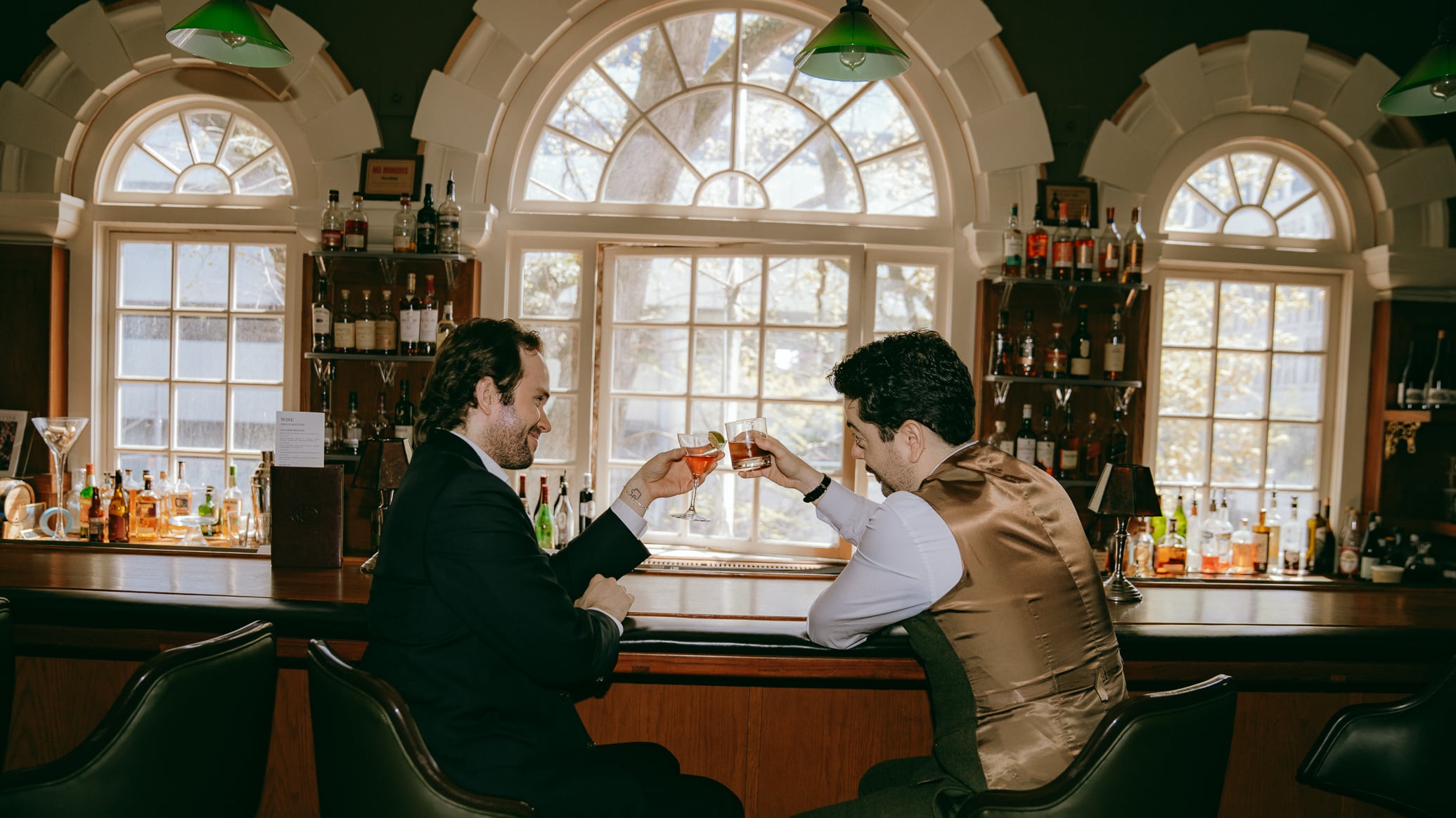
Stepping into the University Club on Southwest 6th Avenue downtown feels like going back in time. Pull open the heavy front door to the 1911 building and visitors will find a wood-paneled library. Roaring fires. Chandeliers. Secret passageways.
But when member Kyle Parsons first checked out the University Club, he was struck by the forward thinking of the place.
It was 2019 and Parsons had moved home to Portland after graduating from college. Parsons, now 31, was having a hard time making new friends as an adult, so he looked into joining a social club. He toured the Arlington Club and Waverley Country Club, but didn’t quite click with either—plus he doesn’t golf. The University Club had the most fun energy, he says.
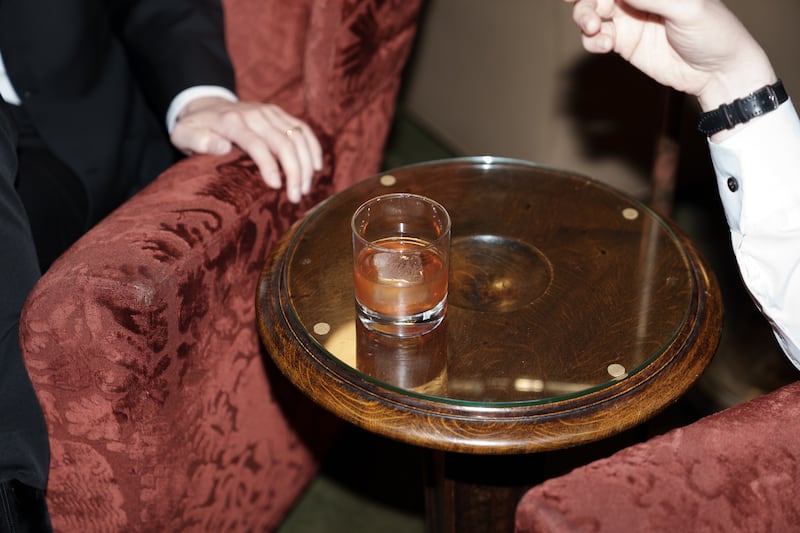
“Especially for myself, being an openly gay man, some of the other clubs didn’t feel quite as welcoming,” he says. “I know here they really embrace that.”
The University Club celebrates Pride Month with a luncheon and drag queen bingo—all very good signs. Plus, the social calendar was stacked all year long with Wine Wednesdays, movie nights, trivia nights and more. He paid a one-time initiation fee of $2,500 and joined. At 25, Parsons was the youngest University Club member at the time; he will qualify for the young executive rate of $310 a month until he’s 34.
But there are fewer Kyle Parsonses walking through those doors these days to pony up hundreds of dollars a month at the University Club. Social clubs face stiff competition now from the sexy new option across the river, Soho House, (“Are You Soho House Material?” WW, March 20, 2024) which opened in 2024 with a shimmering 25,000-square-foot facility complete with gym, sauna, restaurant and rooftop pool.
The University Club was established in 1898 as a place for college-educated young men to network, drink beer, and sing college drinking songs. (The University Club welcomed its first female member in 1984.) There are no fitness facilities to be found, unless you count billiards or the defunct squash court that now houses holiday decorations and the HVAC unit. So will socializing in a bespoke environment be enough of a draw?
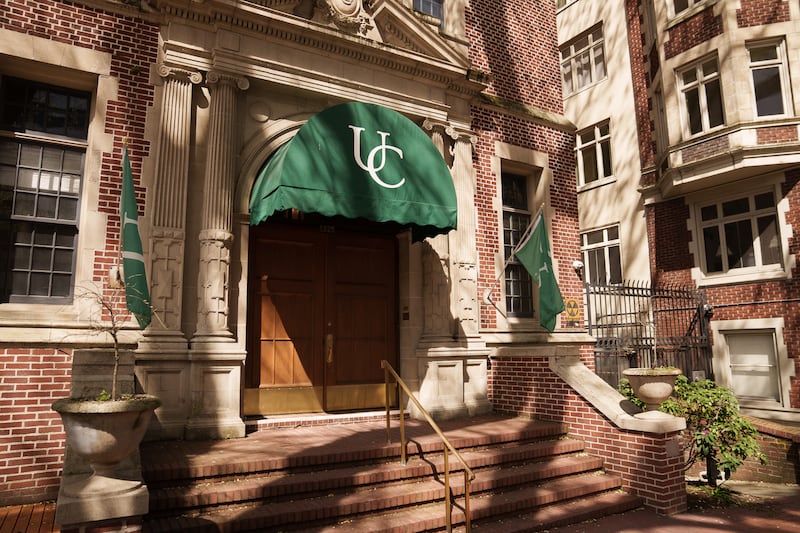
Matthew Gimbel, 38, says yes. He joined the University Club during the pandemic to combat isolation while working his communications job from home, and is now on the board of directors. He started a monthly Dungeons & Dragons group, plus he runs trivia night. He loves how easy it is to create community here as a member; it isn’t “top down.”
“Clubs across the country, I think, are aging, and we’re the new generation of people to take things in a different direction.”
Similar to how Soho House pitches itself as a “third space” for young creatives, the University Club is reimagining itself as a hub for arts and education.
Parsons chairs the artist-in-residence program, which welcomes a professional to display their art and lead workshops for a year. There is a similar program for an author in residence; this year there are two, husband and wife Nicolas Kristof and Sheryl WuDunn. The University Club’s location just blocks away from the Portland Art Museum and Arlene Schnitzer Concert Hall is convenient for an arts lover—especially because members have access to the club’s parking lot.
Attracting new members is imperative post-pandemic, according to membership director Amanda Grimm.
“COVID hit the private club scene pretty hard,” Grimm says.
That was especially true in Portland, whose downtown took a massive hit starting in 2020 from social distancing, protests, and the exodus of daily commuters.
The University Club has about 400 memberships, Grimm says, though some of those have a spouse attached so the actual number of members is higher. In 2022, the University Club told Portland Monthly it had about 1,000 members.
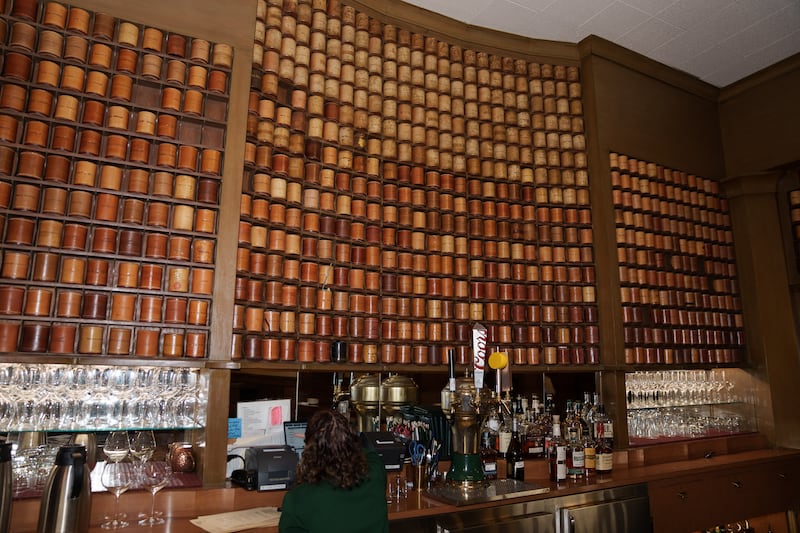
A recent Wine Wednesday happy hour packed in a few dozen members in the bar area for conversation, a French wine tasting, and hors d’oeuvres. Members’ wine lockers lined the walls around them, some with funny names on the plaques like “Big Shooter,” “Fifty Shades of Red” and “The Medicine Cabinet.”
Food and beverage director Grant Ferguson, 39, is a sommelier who used to work at Soho House. Ferguson didn’t love working for a global company and started at the University Club last June.
“Soho House was a little bit more of the cocktail, pool party vibe, which is great,” he says. “It just wasn’t necessarily my cup of tea.”
People at Wine Wednesday are talking to each other in small groups rather than buried in their phones or on laptops. Tech is allowed in the cellphone stalls or in the coworking room, but discouraged in general spaces. If your phone goes off in the sports bar, you’re supposed to ring a giant bell and buy everybody a drink. The no-phone policy is just another way the University Club feels like stepping back in time, and Parsons and Gimbel agree it’s a huge perk. Connecting with friends over social media is convenient but ultimately hollow, Parsons says.
“Loneliness is such an epidemic,” Gimbel says. “I can’t imagine if I didn’t have this place. It would be World of Warcraft all day, every day. It’s weird to me that it’s not more popular because it’s so essential for people to have social connection. And I can’t think of a better place to do it, honestly.”