Skip to main content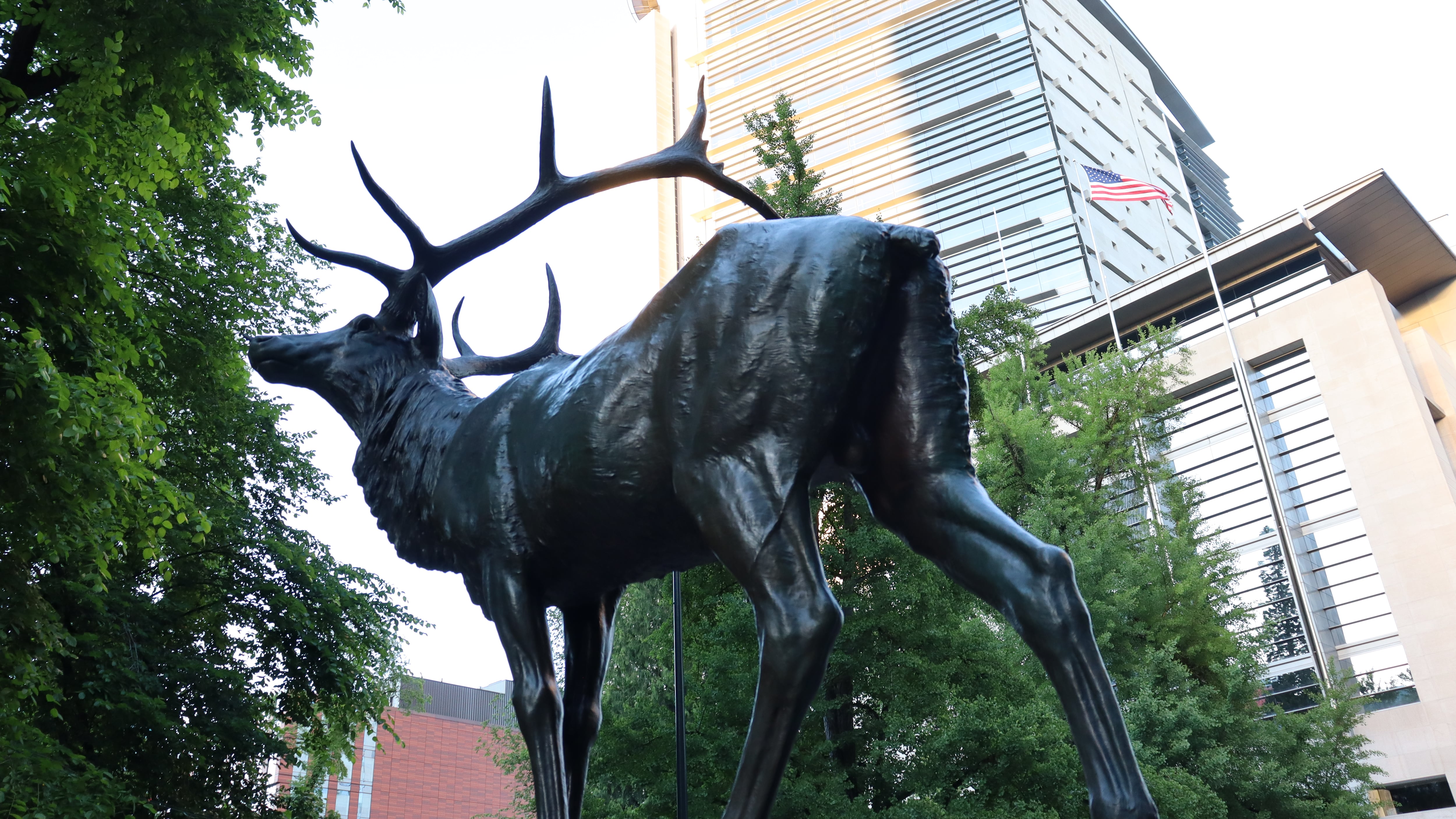
CHICAGO GOT OVER RAILROADS
Your recent article entitled “Railed” [WW, May 20] shows problems already solved in other cities. Road-over-rail overpasses are the best solution. The Portland Bureau of Transportation should take a page from Chicago, which developed CREATE (Chicago Regional Environment And Transportation Efficiency), which is a public-private partnership of freight railroads, passenger railroads, and multiple local government agencies.
Since 2009, they have used a blend of federal matching funds and local funds to build many road-over-rail overpasses, which have alleviated massive traffic snarls, thus boosting commerce, cleaner air, and quality of life.
When I communicated with PBOT in 2024, they said they were working on an application, based on the Infrastructure Investment & Jobs Act passed by Congress in 2021.
The next round: The U.S. Department of Transportation recently issued a Notice of Funding Availability (NOFA) for local governments to address a variety of local railroad safety issues, and those three grade crossings in Southeast Portland certainly qualify. The deadline for PBOT to apply is June 8, 2026. The entire metropolitan area will benefit from cleaner, safer, smoother transportation. PBOT should visit Clark County to see four road-over-rail overpass projects done well.
Ron Rasmussen
Northeast Portland
MONEY WAS HEAVEN-SENT
I’m trying to think of another job where you earn a $1.9 million salary despite doing what appears to be—at best—a pretty crappy job [“Fall From Grace,” WW, May 27]. Maybe Mr. Antonucci could run for Congress.
Ben Seigel
North Portland
MOONED BY THE ELK
After more than five years of absence, Portland’s beloved “elk statue” (more officially known as the “Thompson Elk Fountain”) was finally reinstalled in its original downtown location on April 9, 2026 [Byte Club, WW, April 15]. I first became aware of the statue’s reappearance a few weeks later, catching a long glimpse of it from a window of Bus 14, which had just entered downtown and Main Street from the Hawthorne Bridge. But my initial elation was quickly sapped by the realization that something had gone wrong. Instead of its former welcoming stance, the elk now had its backside turned towards the oncoming traffic—in effect, giving us the cold shoulder as we approached. What a letdown! Didn’t the planners and engineers behind this project understand that when placing a direction-oriented statue or monument in the middle of a one-way street, it should face—not moon—the oncoming traffic? Or could the problem go even deeper—to a failure to recognize (or properly appreciate) the symbolic value of statuary? I thought the charter change was supposed to usher in a new era in which Portland’s “The City That Works” slogan might start to make sense again. But the elk statue’s backwards stance seems more appropriate for “The City That Twerks.”
Russell Scheidelman
Northwest Portland
GET SERIOUS ABOUT SUPERFUND
Portlanders reading WW’s coverage of the City Council’s painful efforts to close a $160 million general fund deficit should be asking a larger question: Why is nobody talking about the looming financial impact of the Portland Harbor Superfund cleanup?
Your recent story [“Treasure Island,” Oregon Journalism Project, March 25] made clear that public entities, including the city of Portland and the state of Oregon, are among the parties responsible for cleanup costs that could ultimately total between $4 billion and $7 billion. So what will the city’s share be? Tens of millions? Hundreds of millions? What about the state’s?
We already pay toward the cleanup through charges on our Portland water bills, but nobody seriously believes that will cover the full cost. If budgets are already this strained, what happens when those bills start coming due? More cuts to parks, shelters, and public safety? More rate hikes and taxes at a time when working families are already stretched thin?
That is why it is frustrating to see so little urgency around exploring creative, cost-saving cleanup alternatives. I have read proposals suggesting Ross Island could safely house nontoxic sediment from the cleanup while helping restore the lagoon into usable public greenspace and potentially saving billions in transportation and disposal costs.
Whether Ross Island is the answer or not, where are the leaders willing to seriously examine options before this financial train hits Portland taxpayers head on? The time for proactive leadership is now, not after the bills arrive and budgets are cut.
Ian Yolles
Northwest Portland
Letters to the editor must include the author’s street address and phone number for verification. Letters must be 250 or fewer words. Submit to:
P.O. Box 10770
Portland, OR 97296
Email: amesh@wweek.com