Skip to main content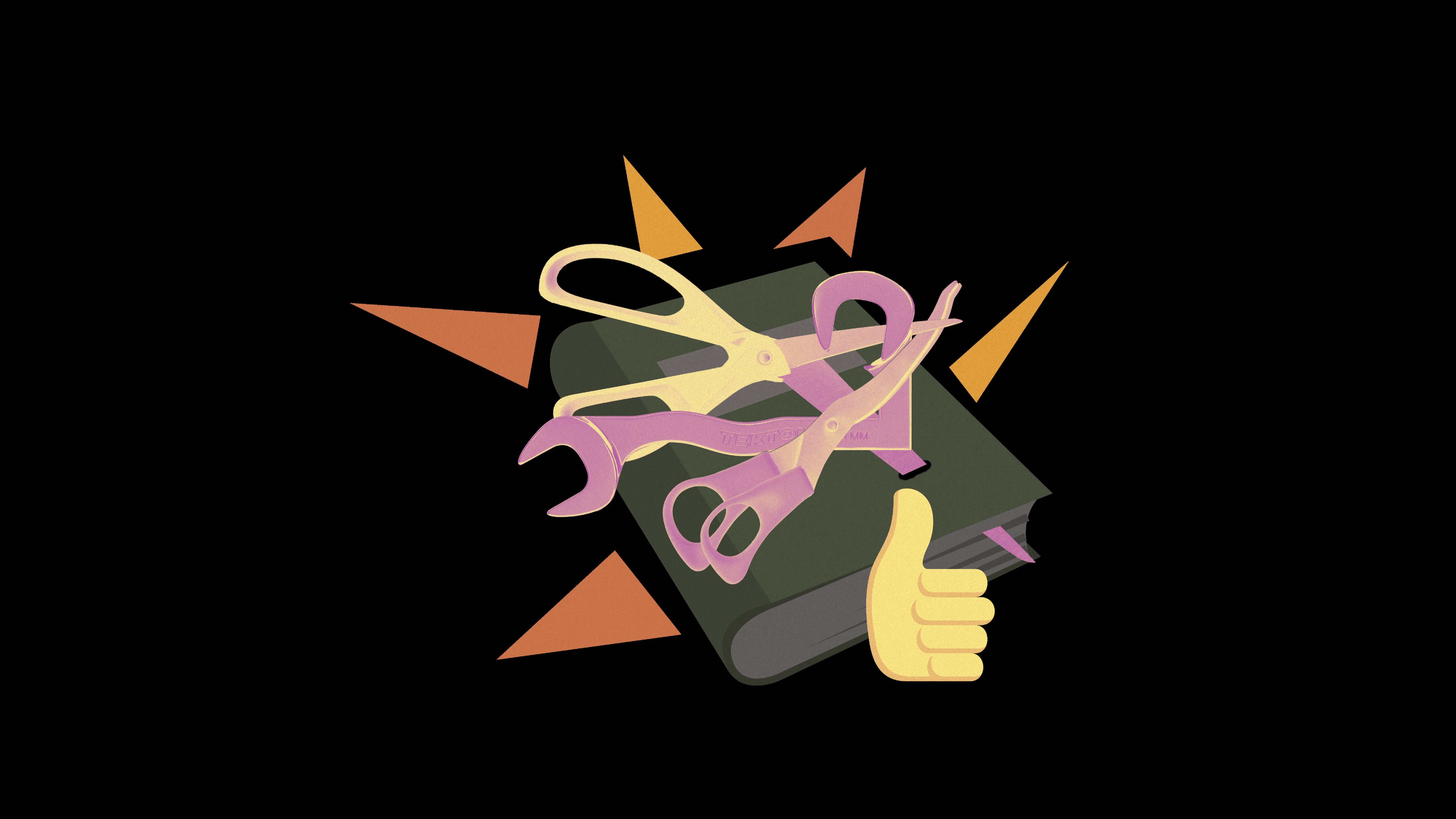
Savannah Bergeron was in a rush buying some birthday and Father’s Day presents recently. The Olympia, Wash., graphic designer had only 10 minutes before a meeting, so she threw some titles in her cart on Powells.com that she thought her daughter and husband might like.
She and her husband have been sewing a lot in the past year, making lightweight bags for themselves and their friends. So, into the cart went Manufacture Handlebar Bags for Cyclists in Your Shed. Her 7-year-old daughter—“the sweetest, pink-obsessed kid, but make it spooky”—is interested in mythical monsters like chupacabra and Krampus. In went The Moon Krampus and two books on cryptozoology for kids. She hit “place order.”
When she opened the box about a week later, the books were not what she expected—and not up to the quality she associates with Powell’s Books, a store she goes out of her way to support because it’s an independent bookseller.
“I immediately felt like an idiot,” Bergeron says.
Manufacture Handlebar Bags for Cyclists in Your Shed by Stem School screamed AI—from the meandering title to the “author” name to the unusual cover art, which included a pair of scissors in the shape of a right angle and a pair of one-sided pliers. As a graphic designer with a background in illustration, Bergeron is better equipped to detect AI illustrations than most. Inside, the text read like gobbledygook from a lazy internet search. Her daughter’s books were a little better, but also had some AI elements, she suspected, particularly the art. (The Moon Krampus is the fourth installment of a children’s series called Sebastian & The Deep Forest by Massimiliano Villani.) She felt duped.
When first reached by Willamette Week early last week, Bry Hoeg, manager for Powell’s City of Books on West Burnside, said staff hadn’t reviewed the books in person but believed they were AI-created. A search for the author “Stem School” on Powells.com yields 334 results, with books on topics ranging from public speaking to rain harvesting to beekeeping, all of which have been published in 2025 or 2026. (Stem School’s been busy.)
Manufacture Handlebar Bags for Cyclists in Your Shed is not one of the approximately 600,000 books available on the shelves at the Burnside Powell’s, Hoeg says. It’s a self-published book available through one of Powell’s third-party vendors, Ingram Content Group.
Ingram does not allow works created solely by AI, but does allow AI-assisted books, according to spokeswoman Kristin Palmer. The company told WW it was “looking into” the books in question.
Bergeron posted her experience on Reddit, and the post got a ton of attention—though the response was not quite what she expected. Some posters suggested it was Bergeron’s own fault for not being a more careful consumer.
“We shouldn’t need to be investigative journalists to buy books,” Bergeron tells WW. “It’s not really fair to put that on people. Am I supposed to go to the bookstore and Google the book and make sure that it was written by a real person? I don’t have staff to do that, but a bookstore does.”
Hoeg agrees that the task of identifying human versus robot authors should not be left to customers. But she also goes a step further; she doesn’t believe it should rest solely on booksellers either.
“It’s very complicated and problematic, but it’s not a Powell’s problem; it’s an industry problem,” Hoeg says.
According to Hoeg, Ingram is the biggest vendor that most independent bookstores use to supply their websites; the handlebar bags book is also available on Broadway Books’ and Two Rivers Bookstore’s websites, to name two other local independent booksellers.
Ingram helps customers access thousands of independently published books written by humans, but it’s also the same funnel that let the AI books in. Hoeg says Ingram is a “great partner” that elevates independent voices in publishing, but that she wishes the books and bibliographic data arrived with more transparency so Powell’s could make informed decisions about what to sell.
Powell’s does not have written protocols or policies yet for detecting or removing AI-written materials, Hoeg says. “There’s nothing like that, and I can’t say I would want us to be the AI police or detectives. That’s not what we’re here for. We’re here to be a third place in our community.”
Both Broadway and Two Rivers have signed a pledge to “refuse to knowingly promote AI works or stock AI-generated books on our shelves” as part of an open letter circulated through the bookseller community earlier this month by Always Here Books. Powell’s has not signed the letter.
Broadway Books did not respond to a request for comment in time for WW’s deadline, but Two Rivers owner Christine Longmuir says she is wholly opposed to AI in publishing. The books in question are available on the St. Johns shop’s “indie commerce” partner website, not its primary one, tworiversweirdsisters.com.
“Ingram Content has millions of titles in its database. It would be daunting for any small business to comb through and remove titles,” Longmuir says.
The issue of whether to promote or sell AI-produced materials extends beyond bookstores, of course. In April, Music Millennium canceled an in-store “listening party” for a new album that was created largely with artificial intelligence, following an online backlash.
After receiving her sewing book and Krampus books, Bergeron wrote to Powell’s, taking the company to task for selling “AI slop,” as she calls it, and asked for a refund. The company apologized, issued a refund, and wrote, “Rest assured, we make sure to remove these listings as soon as we have been made aware of them,” in a response Bergeron shared with WW.
By the end of last week, Manufacture Handlebar Bags for Cyclists in Your Shed was no longer for sale on Powells.com, nor is The Moon Krampus. Powell’s digital and information technology teams took them off the site, careful not to also cut off independently published books written by humans; there are still quite a few Stem School-authored books for sale.
Absent an official policy, staff is dealing with incidents on a case-by-case basis, Hoeg says.
“We know it’s not what our customer wants to see, and we also know that we support writers and we support the writing community and art.”
Last September, Powell’s incurred backlash for using AI-generated imagery on T-shirts depicting wolves and cats standing on books. In that instance, the artist used AI tools during the creative process, Hoeg says. Powell’s heard the feedback and will be selling a collection of merch made by local artists later this year.
Bergeron still plans to shop for used books at Powell’s when she’s visiting Portland, though she doubts Powells.com will be her first stop for online book shopping anymore.
“As we’re watching AI impact us in new ways on a daily basis, we’re seeing a system that’s not protecting us against the negative impacts,” Bergeron says. “Buying anything made by AI should be an informed choice that a person makes, not an exchange that leaves us feeling duped.”