Skip to main content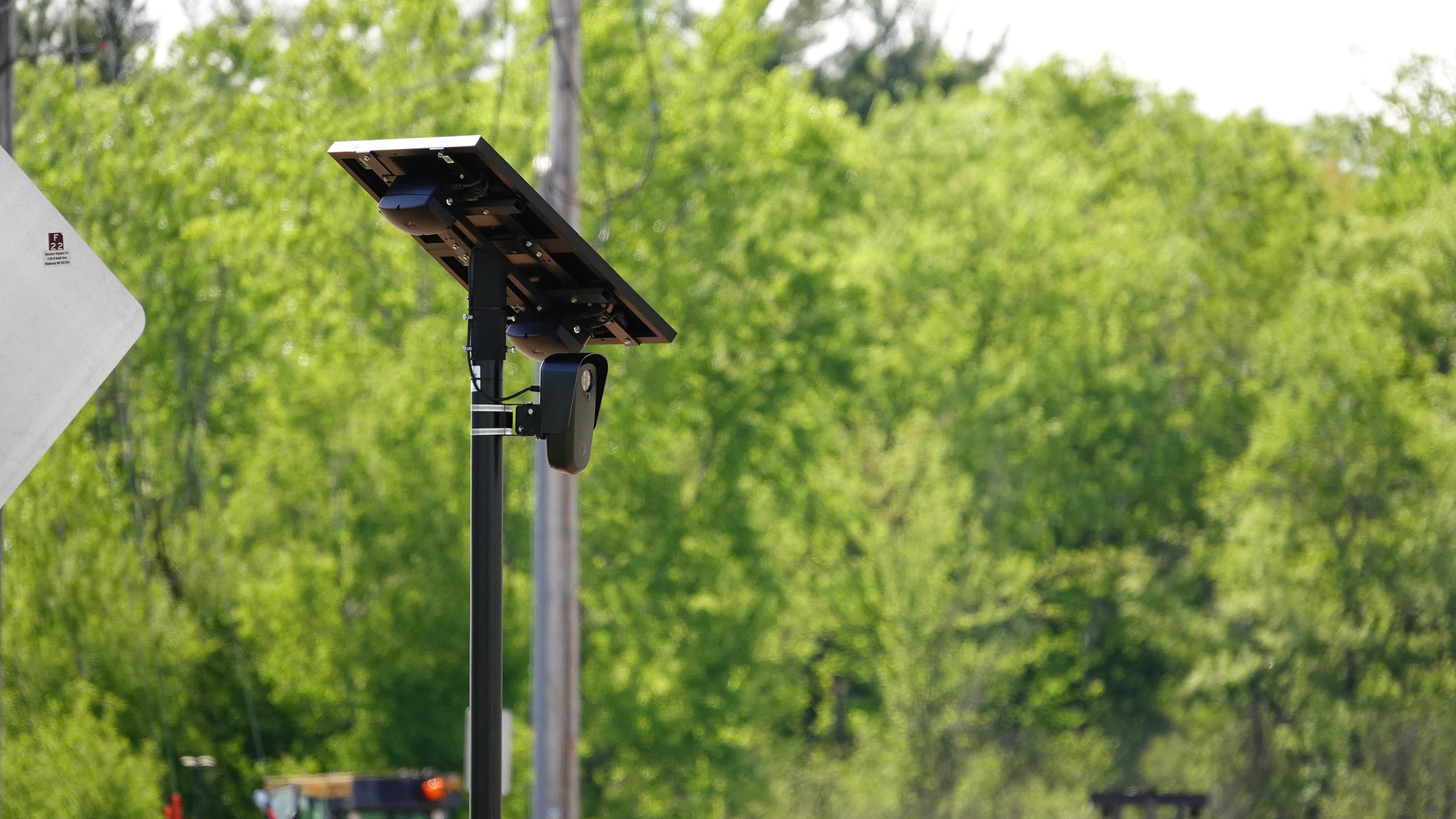
Flock Safety, the biggest automated license plate reader manufacturer in the country, has come out in support of Oregon’s new law restricting the use of its products.
Senate Bill 1516, which took effect when Gov. Tina Kotek signed it March 31, limits automated license plate reader use to clear law enforcement purposes, requires agencies to delete their plate reader data after 30 days unless it’s part of an ongoing investigation, restricts data from being used in violation of a state sanctuary law, and requires officers to log when and why they search license plate databases.
“I do think this is a step in the right direction,” state Sen. Floyd Prozanski (D-Eugene), who chairs the Senate Judiciary Committee, said after the committee approved the bill in January.
Flock seems pleased with the bill as well.
“Flock supports legislation that creates guardrails for how license plate recognition data is used and shared, while preserving the effectiveness of this important public safety tool,” Flock spokesperson Paris Lewbel tells WW. “Flock is strongly in favor of common-sense regulation that preserves the ability of law enforcement to use these highly effective technologies, while requiring the sorts of safeguards and accountability mechanisms communities expect.”
Automated plate readers, especially Flock’s, have come under increasing scrutiny for the amount of information they gather on passing cars, their alleged tendency to get information wrong, and their use by immigration enforcement agencies.
Both Flock and its main competitor Motorola gather much more than just license plate numbers. They also track the make and model of cars, as well as physical damage like dents. That’s raised concerns that automated readers could conduct broad surveillance that isn’t strictly related to law enforcement. (Motorola did not respond to a request for comment about its views on SB 1516.)
And these things are everywhere—whether mounted on police cars, or on surveillance poles erected by private businesses. The Portland Police Bureau says it gets its automated readers from Motorola. Flock won’t confirm the extent of its presence in Portland, and the ACLU of Oregon has not confirmed any active Flock cameras in Multnomah County as of November 2025. But it has confirmed their use in at least 10 Oregon counties—a small proportion of the tens of thousands the company has placed nationwide. (The crowdsourced database DeFlock, which purports to track automated readers, reports around 50 in Portland, but one alleged Flock camera independently checked by WW listed a different manufacturer.)
“If they [Flock] are endorsing the loose limits that a piece of legislation sets, I think that’s really a cause for concern,” says Sarah Hamid, director of strategic campaigns at the Electronic Frontier Foundation, of Flock’s support for the law.
To be sure, most states don’t limit ALPRs at all; Oregon is now one of at least 16 that do. Many of these states restrict law enforcement’s use of automated plate readers to criminal and missing person investigations, and require searches to be logged and data to be deleted after a set time—restrictions now in place in Oregon.
But some civil liberties advocates say Oregon’s law doesn’t go far enough. “SB 1516 took some initial important steps towards protecting this data from being misused, including by ICE, but concerning loopholes remain open,” Ethan Krow, associate director of policy and organizing at the American Civil Liberties Union of Oregon, tells WW. “When the government has easy access to this information, we lose more than privacy and control over our information—free speech, security, and equality suffer as well.”
Some states go further than Oregon. In Texas, law enforcement must obtain a warrant or court order to use plate data in an investigation. And in Washington, automated readers have been banned from sensitive locations like schools, immigration and health care facilities, and places of worship. Washington law enforcement is prohibited from using such cameras not just for immigration enforcement, but also for tracking people seeking health care like abortions or gender-affirming care, as well as monitoring protests.
Flock has opined positively about many of these laws on its blog, even as in private its leaders strike a critical tone. In an email sent to all of Flock’s law enforcement clients in December 2025, obtained by the ACLU, Flock CEO Garrett Langley wrote that Flock and its clients were “under coordinated attack” by “activist groups who want to defund the police, weaken public safety, and normalize lawlessness.”
These activist groups tell another story. The ACLU has said that Flock cameras misread as many as 10% of the plates they scan, leading to arrests of innocent people backed up by seemingly reputable evidence. Officers have also been documented using automated plate readers to track private citizens like exes and neighbors, and at least 150 Motorola cameras have leaked data to the public, according to Wired. (Langley, the Flock chief, has predicted that in less than 10 years, Flock will have eliminated essentially all crime in the country.)
Many criticisms of automated plate readers have hinged on their use by immigration enforcement to track immigrants. Law enforcement agencies around the nation searched Oregon license plate databases hundreds of times in late 2025 on behalf of federal immigration enforcement, according to the Oregon Law Center.
A recent lawsuit alleges that U.S. Immigration and Customs Enforcement has been using Oregonians’ data for immigration enforcement under its data-sharing agreements with the Oregon State Police. Those agreements expressly prohibit using the data in violation of sanctuary laws, but the lawsuit, brought by the Rural Organizing Project, says it’s highly implausible that an immigration agency is following that prohibition.
In part because of the potential for abuse, multiple Oregon cities have turned off their Flock cameras in recent months, including Albany, Bend, Eugene, Springfield and Woodburn. Woodburn, which has Oregon’s largest Latino population and is 31% immigrant, removed its cameras entirely after confirming that immigration enforcement agencies accessed the city’s camera data dozens of times, according to The Oregonian.
Hamid of the EFF says some 70 cities nationwide have turned off their automated readers, canceled their contracts, or blocked future deals.
“The ultimate decision that so many of these communities are landing on is that the safest way to have an ALPR system is to not have an ALPR system,” Hamid says.
Portland, so far, has not deactivated its ALPRs. The Portland Police Bureau uses vehicle-mounted automated plate readers manufactured by Motorola, PPB spokesman Mike Benner tells WW. Six such cameras were installed on police vehicles operating in the East Precinct—the area south of Interstate 84 and east of César E. Chávez Boulevard—of which four are currently operating. (The other two were hit by vehicles of people driving under the influence, Benner says.)
Oregon’s bill permits other state and federal agencies to search Oregon license plate databases so long as the search is discrete and “relevant to the law enforcement purpose,” not “unrestricted or ongoing.” If a non-Oregon agency does access state plate data, the agency making the search, the number of cameras accessed, and the information requested must be logged.
PPB only shares ALPR data with other agencies within Oregon, Benner says. “To my knowledge, federal law enforcement has not requested our data,” he tells WW. “If they do, our response will be no.”