Skip to main content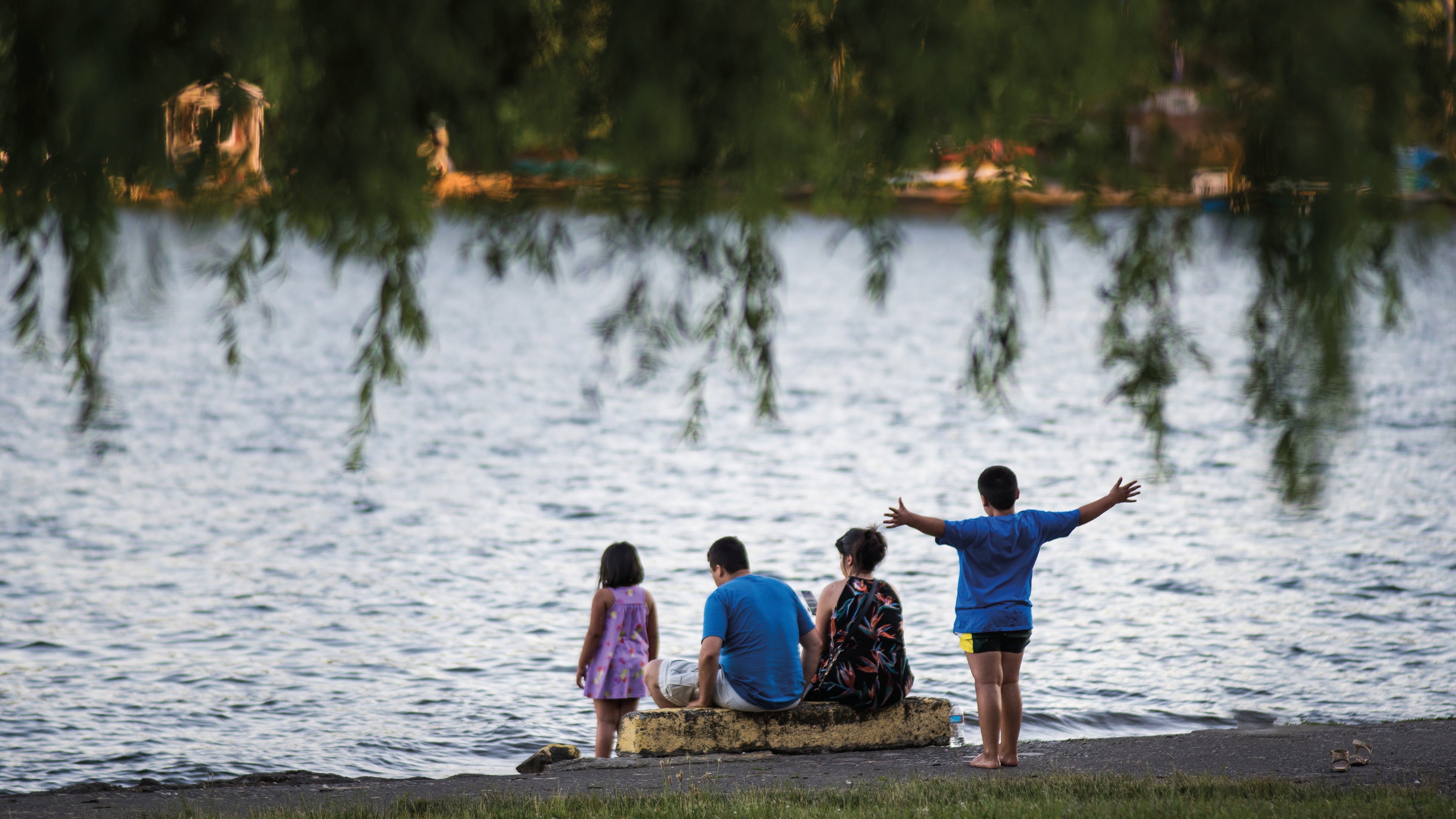
Portland has a climate much like a mullet haircut: For about eight months out of the year, it’s fairly restrained up top, aside from some predictable rain. Then summer hits, and suddenly everything goes wild: It’s hot, dry and all over the place. But it doesn’t take long before your average Pacific Northwest denizen needs to seek out moisture—such as a cool, calm lake. Whether you want to swim, fish, hop on a paddleboard or boat, or simply take a walk by the water, we found three lakes within an hour’s drive of Portland—and one in the city proper—where you can get in your laps.
There’s something for everyone at Blue Lake Regional Park (21224 NE Blue Lake Road, 503-665-4995, oregonmetro.gov/places/blue-lake-regional-park) in Fairview, making it an ideal spot for a day trip whether you’re out for a family picnic, want to put your boat in the water, or go for a short solo hike. There’s a 200-foot sandy beach for swimmers, paddleboards and kayaks, and private boats with less than 3 horsepower and shorter than 14 feet are permitted. Or bring your fishing pole—there’s an ADA-accessible fishing pier.
If you’d rather stay on dry land, there’s an 18-hole disc golf course, two playgrounds, volleyball nets, horseshoe pits, a soccer field, a basketball court and a splash pad, as well as picnic areas and grill stations. If you just feel like going for a stroll, the park also includes multiple hiking trails with little elevation gain and scenic views of the lake itself and nearby wetlands. There’s also a charming, kid-friendly natural discovery garden with educational placards about local fauna (and information about each plant’s growing needs, in case you get curious about how something would work out in your own garden). If you enjoy it this summer, I’d be remiss not to tell you that the north side of the park is planted with cherry trees, so if you return in the springtime, you’ll be greeted by a burst of pink blossoms that gives Tom McCall Waterfront Park a run for its money.
Looking to try a new outdoor hobby? Metro also offers educational programming and group activities at the park, like forest bathing walks and free, introductory fly fishing classes; check the park’s website for more information. The fee to park at Blue Lake is $5 a car.
Some people, when faced with the beauty of nature, think about Walt Whitman, or John Muir, or perhaps a passage of scripture that speaks to their mostly deeply held spiritual beliefs. But on a recent visit to Lacamas Regional Park (3344 NE Everett St., Camas, clark.wa.gov/public-works/lacamas-regional-park) over in Washington, I kept thinking about Mountain Dew commercials from the 1980s. Those ads, which featured teens in cutoffs doing things like swinging on rope swings or floating on inner tubes, offered a vision of easy, unpretentious outdoorsiness that never fully left me. Just half an hour outside of Portland, this huge park in Clark County offers family-friendly amenities like a playground, a picnic area and 9.5 miles of trails. But there’s also plenty of space to indulge your inner teenage dirtbag.
There are actually two lakes here connected by a small waterway: the 26-acre Round Lake and the much larger 300-acre Lacamas. Fishing is permitted on both; it’s also a popular spot for standup paddleboarding. Motorized boats are also allowed on Lacamas Lake, and there are two loading ramps. (In July 2026, construction crews will begin a four-month project to replace a bridge along the main access road in the northeast corner of the park, and trails near the construction area will be closed; check the park’s website for details.)
If you’d rather stick to dry land, you can either hike or mountain bike through the park’s scenic network of trails; if you’re even a casual birder, you’ll want to bring your binoculars.
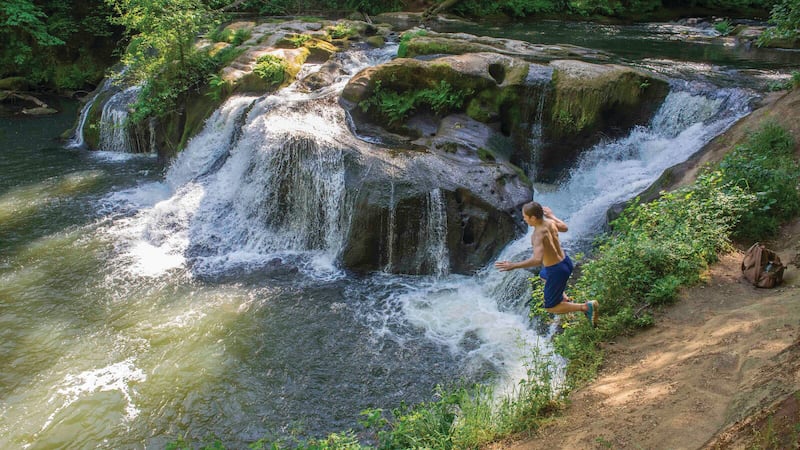
Or you can jump into the Camas Potholes. So named for the unique rock formations (that include, you guessed, really big holes), this is a spot where local swimmers scramble down on a suspended rope and jump over a waterfall into Lacamas Creek. Proceed at your own risk—or simply sip a Mountain Dew and admire the youthful chutzpah of those brave enough to try.
If you’re hungry after your day at the lake, hit Oak Tree Station Food Cart Park (5900 Friberg-Strunk St., Camas, oaktreestation.com). This includes a pod of more than 20 food carts, indoor and outdoor seating, and a taproom for a post-swim pint. There’s also a playground in case your littles haven’t fully tired themselves out yet after a day on the water.
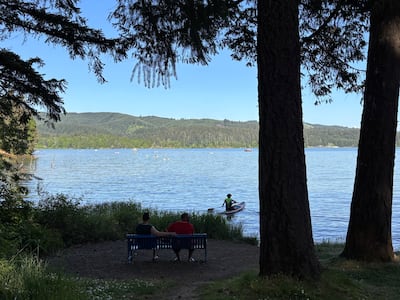
If you’re itching for a day trip farther outside the city, Henry Hagg Lake (50250 SW Scoggins Valley Road, Gaston, washcoparks.org/scoggins-valley-park) is worth the one-hour drive to the west. This is also the biggest lake on our list, at about 1,100 acres, and is surrounded by Scoggins Valley Park. It’s also incredibly popular, at least judging by the crowds spotted on a recent Sunday afternoon, though it’s possible people were simply seeking relief on an unseasonably warm spring day and are not indicative of typical summer turnout. Still, it’s a good idea to head out early and plan for a little traffic toward the end of your drive.
There are five recreation areas here (parking costs $7 for a daily pass or $5 for seniors 55 and up and veterans), and each will give you access to a slightly different experience—from Scoggins Creek (a quiet, forested picnic area with little access to water but also less crowded) to C-ramp (the largest picnic area, which offers access to concession sales, and a boat ramp as well as covered picnic tables). You can also rent a kayak or paddleboard here if you want to get out on the water but don’t have your own equipment.
Scoggins Valley Park also includes a disc golf course, multiple public art windows created by local artists, and 15 miles of hiking trails. If you want to take a hike but don’t feel content with the accompaniment of birdsong, you can even scan a QR code and access a Soundscape for Hagg Lake, created by Katherine Paul (aka Black Belt Eagle Scout) with the lake specifically in mind.
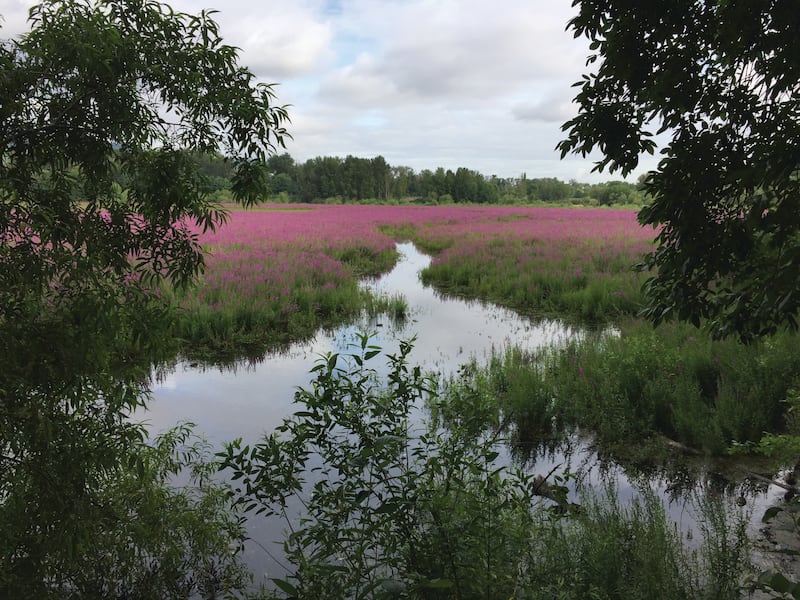
The circular body of water at the center of the Oaks Bottom Wildlife Refuge (Southeast 7th Avenue and Sellwood Boulevard, friendsofoaksbottom.org, portland.gov/parks/oaks-bottom-trails) isn’t technically a lake—it’s a marsh. But on the plus side, you don’t have to leave Portland to visit. That also means you don’t have to drive yourself; you can get there by bus (TriMet’s 19 and 70 buses both stop in the area) or bike (via the Eastbank Esplanade and the Springwater Corridor). Sellwood Park (Southeast 9th Avenue and Sellwood Boulevard) offers access to the unpaved Oaks Bluff Trail, a 1.1-mile path that skirts the eastern edge of the marsh. The trail offers no direct access to the water, but does take you through a gorgeous open meadow and a wooded area, with the water in view for most of that walk. The marsh is bounded on the other side by the Springwater Corridor, which—unlike the Oaks Bluff Trail—allows cycling access, if you feel more like biking around the water. Either way, you’ll be close enough to Oaks Amusement Park that your outing will have a soundtrack that’s equal parts birdsong and the gleeful shouts of children.
Once you’ve gotten your nature fix, head into Sellwood for a snack and a stroll around one of Portland’s most enduringly charming neighborhoods. One suggestion: The Focacceria by Montelupo (1613 SE Bybee Blvd., 503-954-3275, thefocacceria.co). Focaccia was originally enjoyed by fishermen and other workers in Italy’s port cities as a light, inexpensive lunch; it feels fitting to cap a watery adventure with a slice of focaccia, of which several varieties can be had here for less than $10. The location also offers a small number of boutique grocery items, including frozen entrees to go, housemade pasta sauces, and imported pasta, so you can pick up a few things for dinner on your way out.
This story is part of Oregon Summer Magazine, our annual guide to refreshing destinations, cool escapes, and the best ways to stay hydrated all summer long. See more stories from Oregon Summer Magazine here, or check this map to see where you can pick up a free copy of the magazine.