Skip to main content
Elisabeth Kramer was never the girl who dreamt of her wedding. “It was just never my thing,” Kramer says.
But in 2016, she agreed to help a friend plan her big day. Kramer’s hyper-organized Virgo brain kicked into gear; she loved the logistical puzzle. And she was good at it. During the reception, the florist and the photographer asked for her business card.
“I was like, ‘I don’t know what you’re talking about. I’m a magazine editor.’”
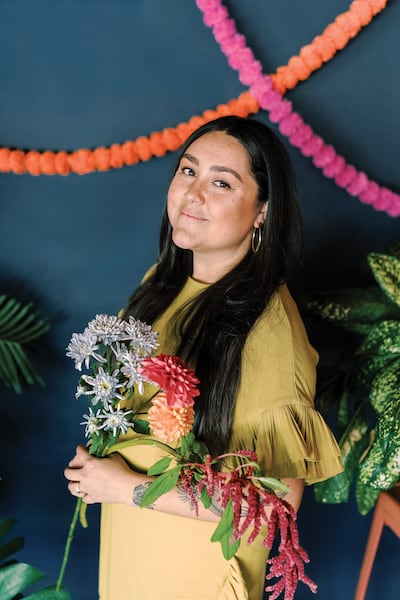
Today, she is a Portland wedding coordinator and consultant who has built her second career on casting a skeptical eye toward the business. She sells herself as “a wedding planner who’s fighting the Wedding Industrial Complex.”
Altared, the website Kramer co-founded in 2020 (“a space for wedding vendors who want to change the wedding industry”), has become a hub of the industry in Portland. Kramer has also hosted free networking, programming and newsletters for Portland wedding vendors on topics such as diversity, equity, inclusion, accessibility and sustainability. Through her work at Altared—and helping plan up to 20 weddings a season—she has met tons of other like-minded Portland vendors who are helping couples dispose of, or at least question, the many traditions (not to mention expenses) that come with getting hitched.
For all these reasons and more, Kramer is perhaps the foremost authority on throwing a bullshit-free wedding in Portland.
No other life cycle event has so many marks you’re supposed to hit—and opinions on whether you’re doing it right. The ceremony, the venue, the officiant, the vows and the ring exchange are all loaded with expectations, and that’s before the reception has even begun. The average U.S. wedding costs $34,200, according to a September survey by The Knot. Average cost of wedding dress: $2,100. Flowers: $2,800. Venue: $12,900. In this economy, a Multnomah County Courthouse wedding ($117) tantalizes.
“It’s really, really easy to get married. It’s not so easy to plan a wedding,” says Lexi Combs, another Portland wedding planner.
And especially for people like Kramer, 36, who never had the white dress, rose petals, dance floor fantasy to begin with, planning and executing a formal wedding is an expensive bother. (Or, as Kramer wryly puts it on her business website: “Congratulations on your engagement! Or, should I say, ‘Welcome to your new part-time job!’”) Why does proclaiming one’s lifetime love demand everyone they’ve known since middle school choose a chicken or fish entree and dance to “We Are Family” by Sister Sledge?
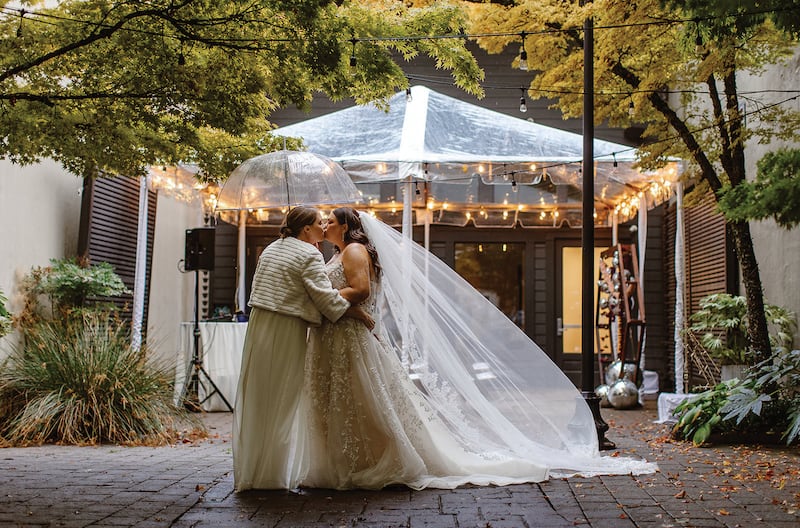
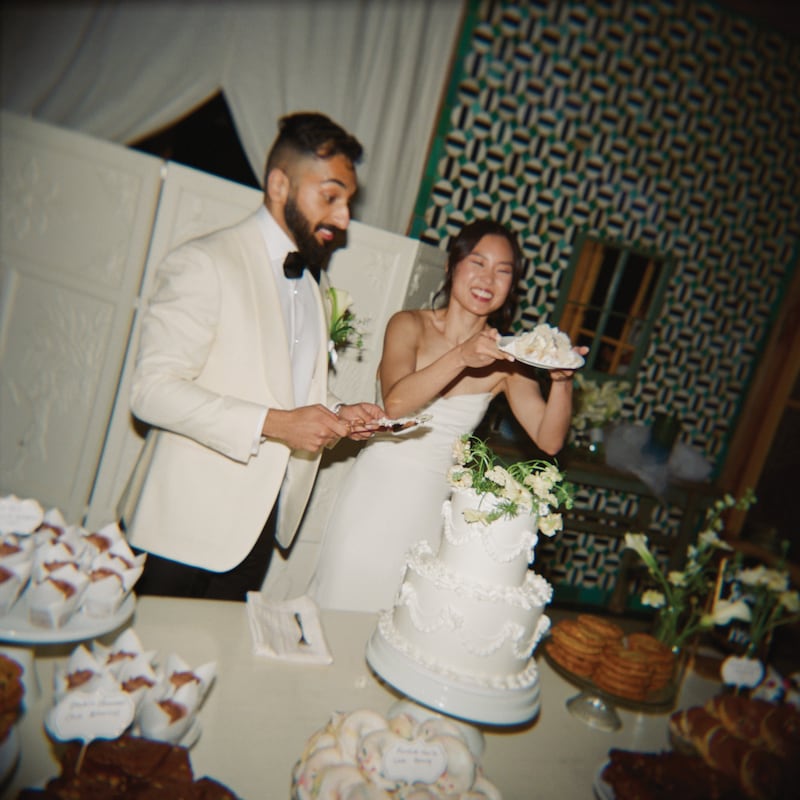
Some couples have found a middle ground with “micro-weddings,” ceremonies with about 10 to 40 guests. But even for those who opt in to a bigger wedding, betrothed Portlanders are rejecting a lot of wedding traditions these days and choosing something more personalized, cheaper and better for the environment. Multitiered, formal wedding cakes are out; dessert bars and ice-cream carts are in. Long services led by religious leaders are out; short ceremonies with friends or drag queens officiating are in. Heteronormative “wrap-and-hug” photo poses are out; “hand-joining” shots of polycules are in.
Nightmare Wedding
Lexi Combs, 29, runs the company Wild Fern Group, which has offices here and in Bozeman, Mont. Many of her couples are busy professionals who are offloading the enormous amount of work it takes to put together a wedding—about 400 hours, according to Combs’ calculations. “You’re buying your time back,” she says.
You might call Combs a traditional wedding planner, especially contrasted with Kramer. More than dismantling tradition, she’s interested in executing whatever kind of wedding couples ask her to. But the weird is creeping in. In her five years owning Wild Fern, Combs has had no shortage of unusual requests—especially here in Portland. (Not so much in Bozeman: “In Montana, you’re going to be in a barn. It’s either a nice barn or a not-so-nice barn.”)
Combs is planning a January wedding at Timberline Lodge. After the tour, she sat for mimosas and coffee with the bride.
“And she looks at me and she goes, ‘Do you know anywhere we can find a pair of twins?’”
Timberline Lodge famously stood in for exterior shots of the Overlook Hotel in the 1980 Stanley Kubrick film The Shining. The bride wanted to lean into the horror classic with a pair of twins in identical dresses to haunt the reception. The Shining couple will be hosting a murder mystery scavenger hunt with an ax under a table and some of the table numbers written backwards à la “Here’s Johnny!” and “Redrum,” respectively. That’s another trend, Combs says: Couples are concerned that their guests will get bored, so they are planning more programming.
While weddings have been happening for millennia—the origin of the bridal bouquet was to conceal the bride’s body odor as she walked down the aisle, Combs says—the modern wedding industry still feels new.
“Like, when’s the next person going to ask for twins at their wedding? It might be next year, and maybe we pioneered that strange request. Weddings change and evolve.”
Drag Me Down the Aisle
As weddings change, traditional officiants like judges and clergy are finding less room for themselves at the ceremony. In 2009, 27% of couples asked a friend to officiate, according to The Knot. In a 2026 survey, that number had shot up to 67%, at least for small weddings that cost less than $12,000.
A drag queen in Portland has made a whole business of officiating weddings.
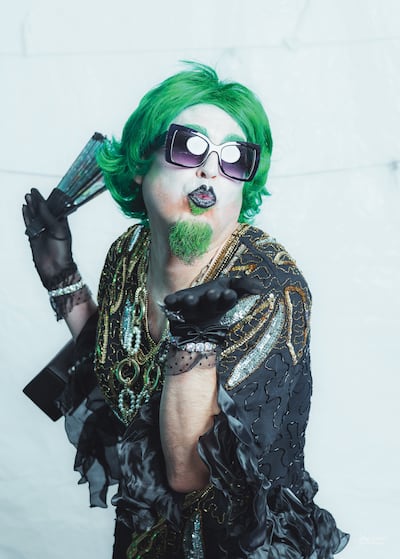
Patrick Wagnon, 44, had always wanted to perform in drag but didn’t start until 2025. His persona is Rydia Nonsense—pronounced like Lydia with an R—and she bills herself as Portland’s green-haired, bearded auntie. Tagline: “Nerdy, sassy, stupid.” Rydia had performed at weddings here and there in the first months of being in the scene. Wagnon was brainstorming non-nightlife venues to perform in and “it clicked for me really quickly,” he says—that weddings could be Rydia’s new niche. Wagnon got ordained online in the Universal Life Church and founded Altar Queens last year.
“We like bringing drag joy to a joyous day. These events can be dry,” Wagnon says. “We spice it up.”
Clients can hire Altar Queens—the company is formally just Wagnon, but he brings more queens along—to officiate their weddings or DJ the reception, or as entertainment at bachelor and bachelorette parties, doing games and standup comedy. Altar Queens have worked for queer couples and straight couples alike. Lesbian couples are their most frequent clients. (“They’re always the most fun too,” Wagnon says.) Altar Queens have presided over weddings at Cathedral, Laurelhurst and Mt. Tabor parks, Hoyt Arboretum and Fairview Community Center.
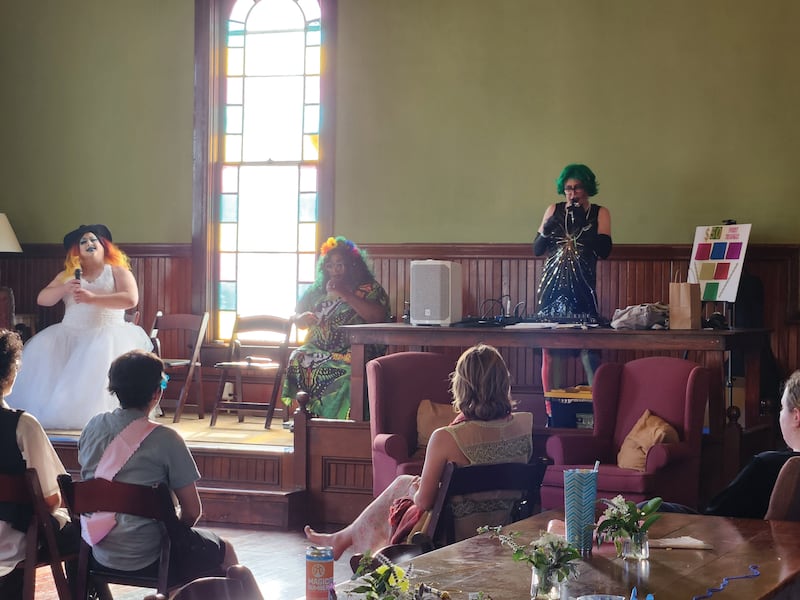
Wagnon has a few different officiating scripts. The funny one starts out, “Queerly beloved, we are gathered here today because these two lovebirds are desperately starved for attention.” The weirdo one is delivered “like a gay Carl Sagan” and goes into an extended metaphor about love as a wildfire.
Wagnon has officiated 10 weddings so far, plus done two dozen DJ gigs and parties. He is grateful to Portland’s eclectic communities and vibrant queer scene for getting him this far.
“I don’t think I would be able to do this anywhere else, honestly,” he says.
Something Recycled
One of the worst parts of Elisabeth Kramer’s job as a wedding planner is throwing away the flowers at the end of the night.
“There’s a circle of hell reserved for me because I do that,” she says. “But also, what are you going to do?”
Recent bride Emily Katzton had an idea. Katzton, 30, started the website Something Borrowed soon after her September 2024 wedding. It’s a free community-based wedding item exchange that makes it easier and cheaper to plan a low-waste wedding. It’s active in Portland and Seattle; Katzton lives here and has a background in data analysis, and her co-founder, Gwen Bartholomay, works for the city of Seattle as a reuse specialist.
While gifting a wedding’s worth of fresh flower arrangements for a wedding the next day would be tricky—but could technically work!—most of the items don’t have such a quick turnaround. This April to October, there were 1,310 items gifted on Something Borrowed. There are 87 items listed on Something Borrowed right now, which is low since this is the offseason. (Pacific Northwest wedding season runs May to October.) Eight purple bows, a chalkboard sign, sheer ivory table runners, and a size-4 lace wedding dress are all there for the taking.
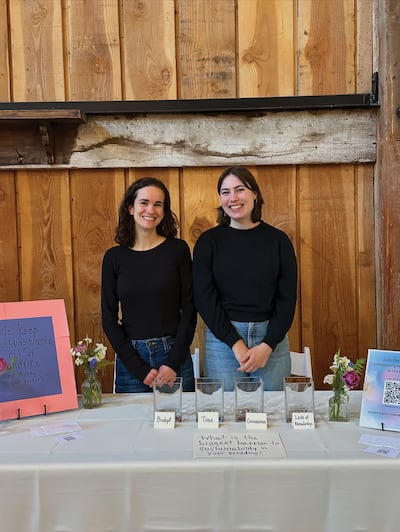
The site is especially useful for DIY and micro-weddings, an industry buzzword in recent years. Opinions vary on what size wedding qualifies as “micro,” but Katzon puts it at 30 or less.
“It’s otherwise a regular wedding, not an elopement where you’re on top of a mountaintop with just a few people.”
Micro-weddings are a way to both save money and shrink a wedding’s carbon footprint, through guest travel, décor, food waste and more. Kramer had a micro-wedding before it was cool: She had 19 guests at her 2019 wedding, a result of already being a “jaded wedding planner” after three years in the biz. “I was like, ‘This is what I think would be easiest.’ And my husband, God love him, was like, ‘I’ve heard your stories for three years. I agree.’”
Katzton threw herself a camping-themed wedding in North Plains, where she sourced 50 eclectic mugs from her neighborhood Buy Nothing group; this was before she founded Something Borrowed for that exact type of request.
The thrifty, community exchange element helps cut down budget while adding some unique touches—it would have been easier, and boring, to just buy 50 mugs on Amazon, for example—but gathering as many odds and ends from an exchange like Something Borrowed is ideal for those concerned about waste.
It’s getting more common for brides and grooms to consider sustainability before the big day, Katzton says, and not just at the end of the night when they’re looking at all the trays of food waste.
“It’s a one-time thing, so it’s easy to think, what’s the big deal?” Katzton says. “But when you think of the whole industry, it adds up to being a big deal.”
Something for the Album
Whether it’s a campout, micro-wedding or drag queen–led extravaganza, one thing that hasn’t changed as weddings have adjusted to contemporary values is that most couples still want to document the whole thing.
Photography runs an average of $3,000 at U.S. weddings, according to The Knot. But couples might get stilted shots more fitting for a New England cathedral wedding if they hire a photographer who isn’t used to more free-spirited affairs. This is where people like Daniela Klaz and her business No Rules Photography step in.
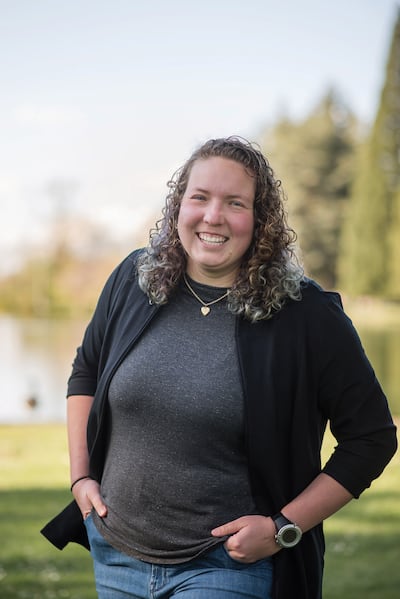
“Traditions are just peer pressure from dead people.” That’s the guiding principle of Klaz’s business, which specializes in nontraditional wedding photography. She moved to Portland in 2021 and started No Rules after apprenticing at big, formal Irish Catholic weddings in Massachusetts shooting grandiose celebrations with 300 to 400 guests and four-tiered wedding cakes at $50,000 venues.
Her business in Portland is radically different. She has shot an elopement at Latourell Falls in the Columbia River Gorge, a Multnomah County Courthouse wedding, and an Oaks Pioneer Church ceremony where the bride wore a rainbow skirt.
Klaz, who is 35 and queer, tends to attract queer couples who want to feel sure they will not be judged by a wedding vendor on what should be the happiest day of their lives. “Couples,” though, isn’t quite the right language.
“I keep saying ‘couples’ but that is disingenuous,” she says. “I actually have quite a few clients who are in polyamorous relationships. They either do commitment ceremonies or have marriages as well—just, potentially, like, not the same way, with signing some paperwork, that you would have with two people getting married. So I should say, my ‘clients and their family units.’”
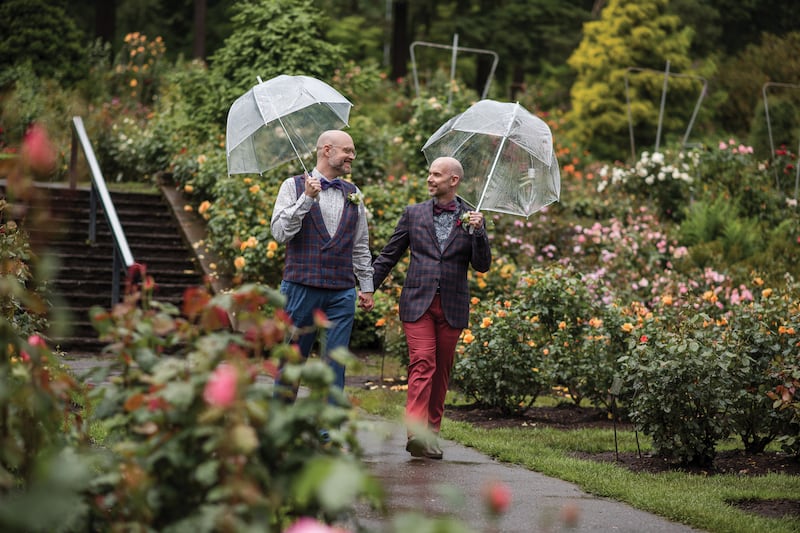
Figuring out poses for Klaz’s family units takes more creativity than the traditional, heteronormative shots that the industry is famous for: wrap-and-hug, with the man behind the woman; forehead-to-forehead; the hand-on-lapel diamond ring show-off shot. Instead, she gets “super curious and nosy” to learn about the family unit so that she can take photos that reflect their dynamics.
She still captures some of those poses, sure, but she doesn’t assume that whoever’s taller is going to be the big spoon, or that only the man, if there is a man, gives out hand-kisses. And many of her clients are forgoing the posed photos altogether and opting for candid, playful photos instead.
For family units of three or more, she likes couple shots, group shots and “some fun hand joining.” Klaz’s attentiveness extends to all the wedding guests; she also asks parents for consent to photograph their children, and doesn’t force families into formal portraits unless they ask for them. She also builds in plenty of breaks for the couple or family.
“I think there are a lot of photographers who take the angle of, like, ‘I’m going to make the wedding the most beautiful thing possible at whatever expense that might be on your emotional or mental health and your stress level.’”
Something Simpler
Elisabeth Kramer of Altared typically calls herself a wedding “coordinator” or “consultant.” “Planner” isn’t wrong, but it comes with too much baggage, she says, in part due to the 2001 Jennifer Lopez movie The Wedding Planner, where J-Lo wears a headset and inspects silverware placement down to the millimeter.
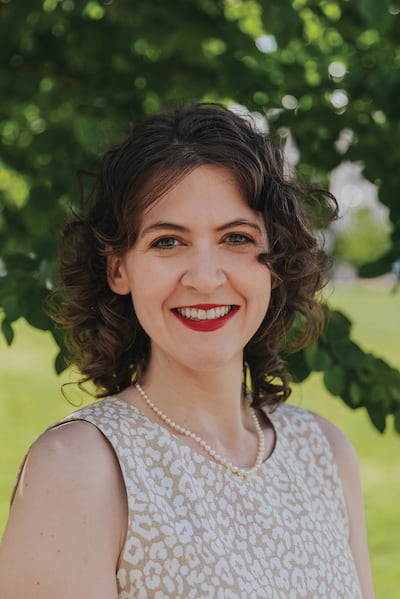
Kramer does full-on wedding coordination for about $4,000 but also offers “rent my brain” phone consultations for $250 an hour. She posts her prices loud and proud on her website partly as a way to push back on how difficult it often is to get clear numbers in the wedding industry. As a former journalist, she thrives more on data than mood boards.
“The part I didn’t like was the smoke and mirrors,” she says. “Maybe this is the journalist in me, but just the lack of clear information. You know, what the heck do these things cost? Who, actually, do I need to hire? There’s so much obfuscation. I just found that very frustrating.”
Kramer’s business is changing. She’s decided to shutter Altared after six years, realizing she doesn’t have the capacity to maintain the monthly newsletter and vendor meetups. It’s personal and professional: She had a baby in 2024 and this fall she went in-house at local wedding venue the Victorian Belle as its part-time events specialist.
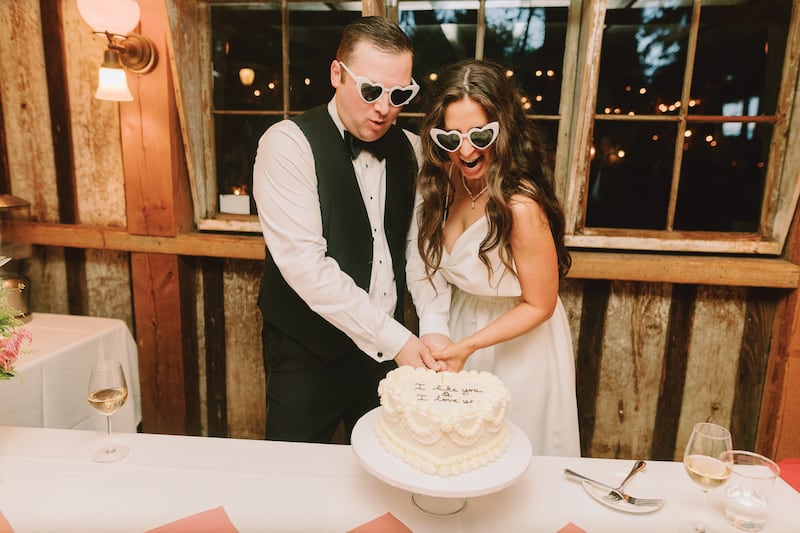
While her career depends on event logistics, she admits she often doesn’t plan the best bits. Her favorite example was when a couple really wanted a mariachi band at their reception but couldn’t quite afford it. Their friends pooled their money and surprised them with one; the bride’s abuela danced all night.
“Every wedding has them, whether it’s a toast or a look or something that happens,” Kramer says. “They’re human events. People always think that, as a planner, that I want it to go perfectly planned, and it’s like, well, no, not really. I’m just a guide to keep us from veering off into utter chaos.”
Kramer rarely tells clients how, exactly, to do something at their ceremony or reception because other than signing the legal document, most everything at a wedding is up for interpretation and reinvention. The important thing is for couples to stay true to themselves and their bond.
“There are very few ways you can totally screw up your wedding,” Kramer says. “You think there are, but there really aren’t that many. But the best way to screw up your wedding is to screw up your relationship. I think people lose sight of that sometimes.”