Skip to main content
Whether Bigfoot is real is beside the point. Capturing Bigfoot, Marq Evans’ new, 109-minute documentary now streaming on Amazon, asks a more interesting question. What happens when the secret at the center of a community gives out?
As a fringe observer of the field for decades, my most earnest takeaway from the film was not a satisfying triumph of skepticism but a lingering sadness for the scores of men who dedicated their lives to this niche subculture, arguably one of the greatest grifts of all time.
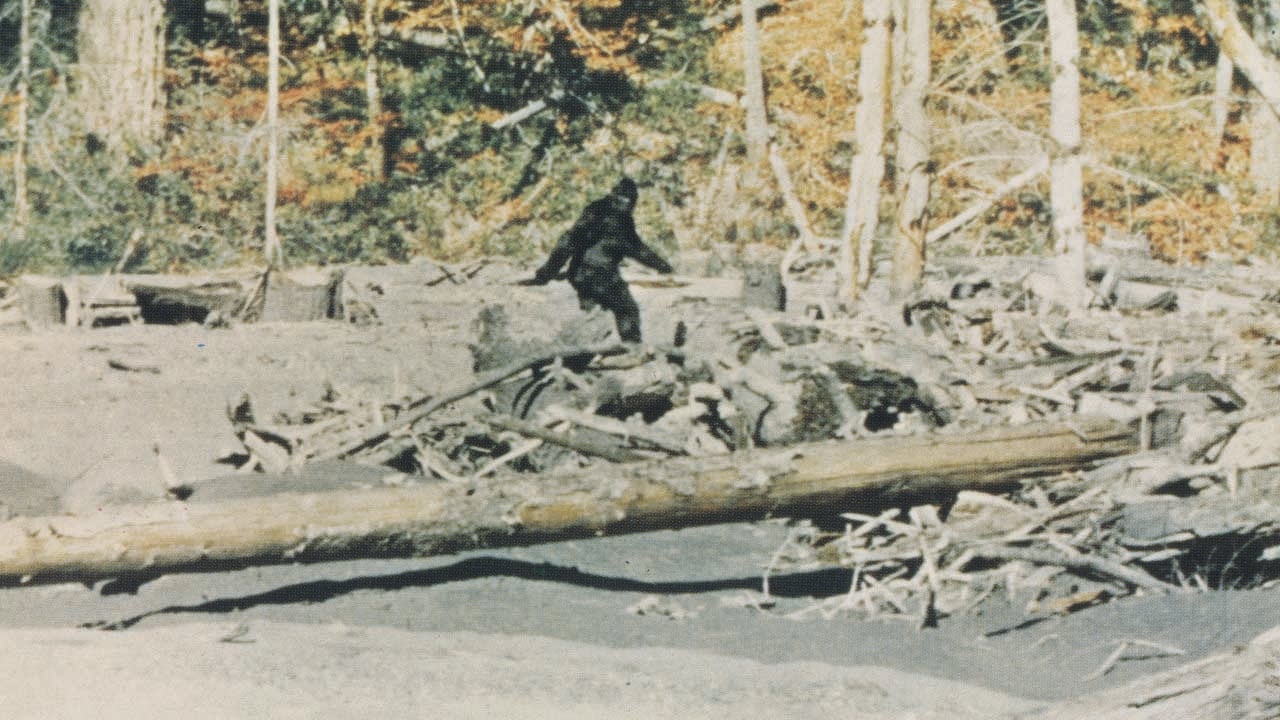
Evans’ smoking gun is a decades-old snippet of footage that effectively debunks the celluloid center of the Bigfoot mythos. Capturing Bigfoot centers on Clint Patterson, son of Roger Patterson. Roger’s famous 1967 16 mm film features what has historically been accepted as 59 seconds of Sasquatch. The creature, whose identifiable breasts suggest female biology, walks with a loose, swinging gait away from Patterson’s shaky Cine-Kodak K-100 camera, glancing over her shoulder once before disappearing into the Northern California woods.
In 2026, it remains the only footage of its kind, and the most compelling evidence of Bigfoot. Well, until now.
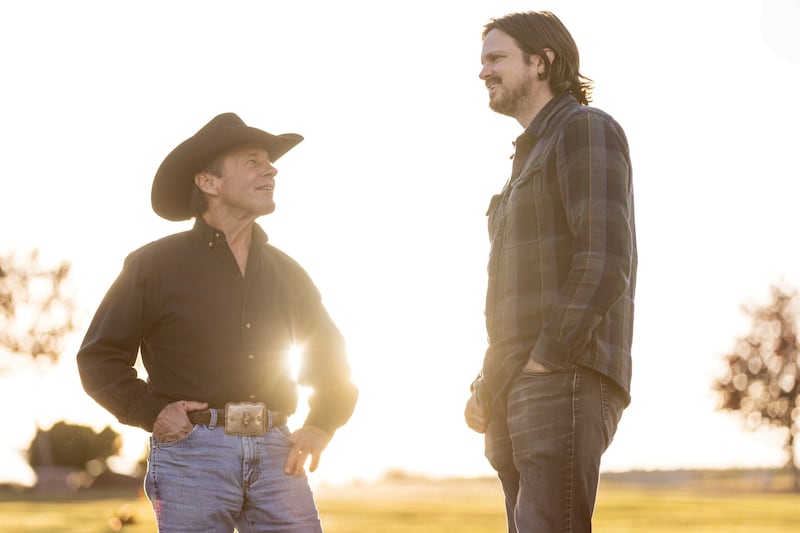
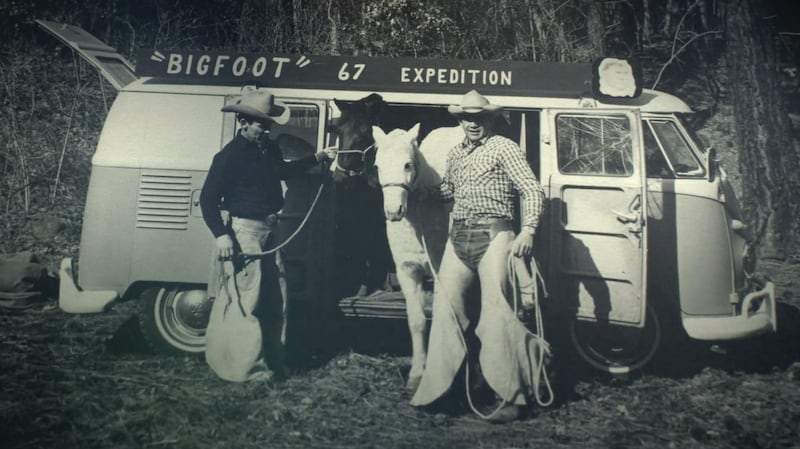
Capturing Bigfoot traces the elder Patterson’s origins as a skilled cowboy, rancher and tradesman with a distinctly cultivated talent for fine art. At the tender age of 34, he released a film said to have been made on a Bigfoot stalking excursion with a man named Bob Gimlin. Suddenly, what’s now known as the Patterson-Gimlin film launched him into the center of one of the greatest mysteries in American pop culture.
Patterson and his brother-in-law, Al DeAtley, produced and toured a docudrama featuring the footage, earning the equivalent of millions of dollars today. But by the early 1970s, their partnership was already unraveling. Patterson’s health was deteriorating, and DeAtley, increasingly uncomfortable with the business of selling a film he still wasn’t convinced was authentic, was ready to walk away. When Patterson died in 1972, he left DeAtley and his widow, Patricia, to contend with the film’s increasingly lucrative legacy.
In this new film, revelations reopen a painful family history for Clint Patterson, whose investigation into his father’s legacy has estranged him from his mother for years.
In 2022, Evans got ahold of what he thought was an original version of the famous Patterson-Gimlin shot. Instead, he discovered something considerably more consequential. It was a rehearsal of sorts, dated to 1966, in which the Bigfoot of the iconic 1967 reel is plainly revealed to be a person in a Bigfoot costume.
Evans assembles a cross section of the Bigfoot community, from Idaho State University professor and Bigfoot researcher Jeff Meldrum to creature-effects expert Bill Munns and author and longtime Sasquatch investigator Greg Long. Their perspectives, along with those of longtime field researchers and enthusiasts, illustrate just how much intellectual, emotional and personal investment has accumulated around those 59 seconds of film over the past 60 years.
My own Bigfoot husband, Craig Flipy, was a field producer for Animal Planet’s series Finding Bigfoot between 2013 and 2014, and some of his archival footage is featured in Capturing Bigfoot. “It does make it a harder case to argue,” he told me with a sigh after attending the film’s Oct. 14 premiere and director Q&A at the Portland Art Museum’s Whitsell Auditorium.
The myth of Bigfoot hardly began with Patterson’s expert hoaxing prowess. In fact, it was his fascination with stories of local sightings that inspired him. Sasquatch, Yeti, the Abominable Snowman—stories of enormous, elusive creatures living beyond the boundaries of what we understand have existed across cultures for generations. In the Pacific Northwest, Bigfoot became a particularly enduring fixture of regional folklore, a creature whose existence was perpetually just beyond the reach of scientific verification. But it was the way Patterson repackaged that lore that compelled a generation, most of whom were boys at the time of his film’s release, to open their minds to a world at once vast and unknowable.
Intentionally or otherwise, Patterson gave folklore a face. His film transformed an otherwise abstract legend into something tangible, something that could be scrutinized, debated, reproduced and passed down. For countless children, my husband included, those 59 seconds opened a door—something extraordinary might be hiding just beyond the tree line.
And perhaps that’s what makes the revelations in Capturing Bigfoot so bittersweet.
In my years observing the Bigfoot community as a sort of Bigfoot wife, I often wondered whether these men were really interested in finding evidence of the creature’s existence at all. They were older now, presumably wiser. Perhaps they simply wanted to be in each other’s company. They wanted to camp off grid, share stories in remote mountain valleys they’d never admit to being too frightened to explore alone. They wanted to gaze at the star-filled night skies together and bask in the sanctity of intimate male friendship.
Bigfoot might be a hoax, but that deception may have given these people something real, even if the creature itself never was.
WATCH: Capturing Bigfoot streams on Amazon Prime, amazon.com. $9.99.