Skip to main content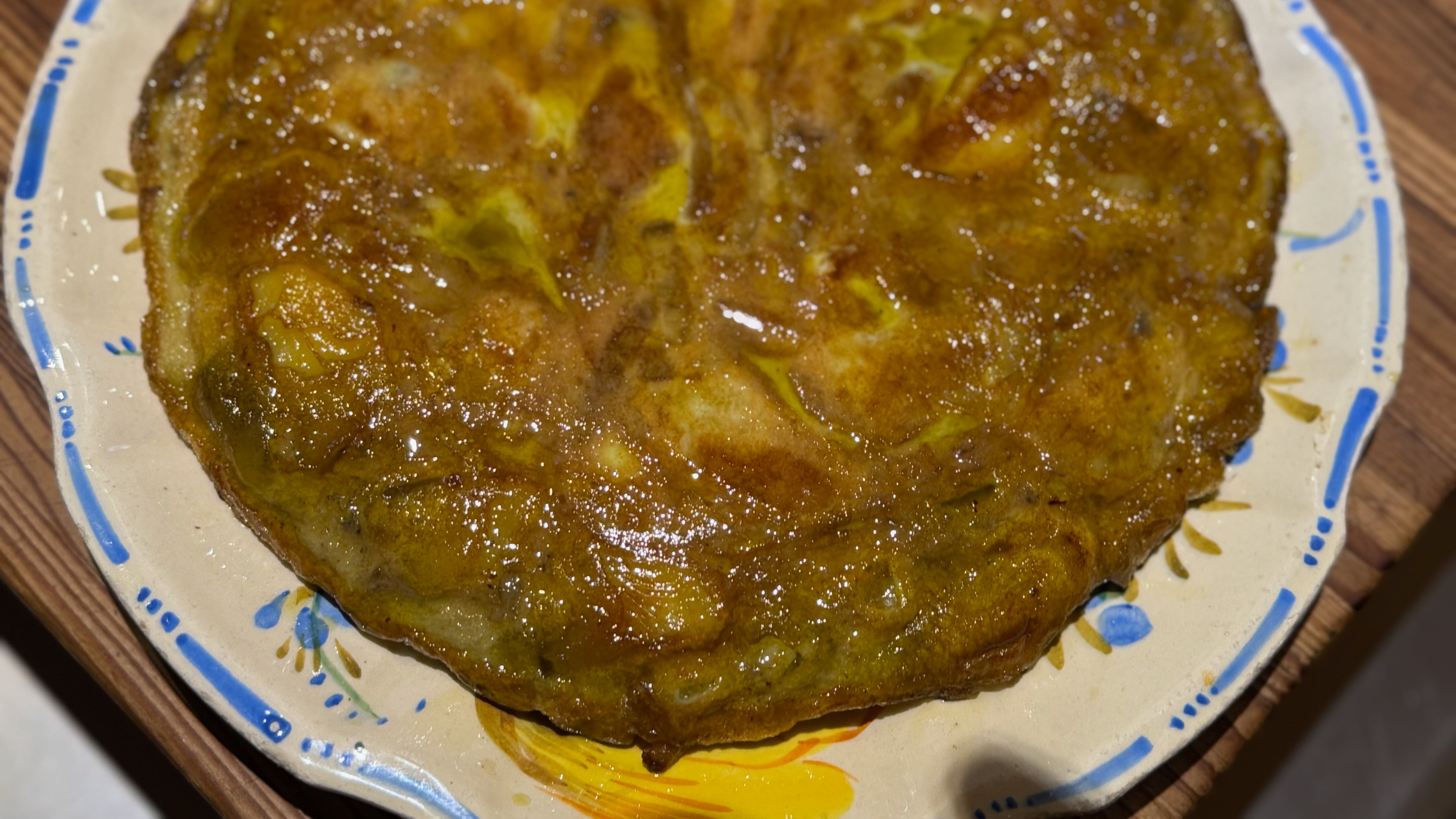
Jim Dixon wrote about food for WW for more than 20 years, but these days most of his time is spent at his olive oil-focused specialty food business Wellspent Market. Jim’s always loved to eat, and he encourages his customers to cook by sending them recipes every week through his newsletter. We’re happy to have him back creating some special dishes just for WW readers.
If I called this a Spanish tortilla, someone would be mad since neither the potatoes nor the egg-potato mix are cooked on the stovetop. The traditionalist cooks thinly sliced yellow potatoes slowly in lots of olive oil on the stove, drains them, adds to a bowl of beaten eggs, then uses the same skillet to cook the tortilla. Some, called concebollistas in Spain, add onions to the spuds, an affront to the hardcore sincebollistas who believe the O.G. tortilla was onionless. Since potatoes were unknown on the Iberian Peninsula until the 1500s, and the tortilla itself seems to have originated toward the end of the century, the tradition is relatively young, sort of like traditional Italian tomato sauce. But we love to argue about food.
Anyway, once the bottom of the stovetop tortilla sets, the cook slides a plate over the runny-looking egg mix in the hot skillet and quickly flips it over, then slides the now-inverted tortilla back into the pan. Those who cook them often say this plate-flipping technique should really be done a few times since the point is getting the center done without overcooking the outside. While it usually goes well, the flip can be a little fraught for those who aren’t practised.
But the tortilla is one of those things that transcends its simple ingredients. When you bite into one, your first thought is usually, “What’s in this that makes it so good?” There’s a reason why the Spanish eat tortillas all the time; they’re incredibly delicious.
This frittata approach eliminates the flip, so anyone can experience the tastiness. And cooking the potatoes and onions—I’m with the concebollistas on this one—in the oven is both easier and reduces the spatter potential of stovetop cooking. While you could serve this hot, I think tortillas are best at room temperature and without anything else like allioli or romesco.
Recipe
2 pounds yellow potatoes, peeled and sliced very thinly
1 medium onion, sliced very thinly
1–2 cups extra virgin olive oil
2 teaspoon kosher-style sea salt, divided
4 eggs
Toss the potatoes and onion with half the salt and spread into an even layer in a pan or skillet with a lid that can go in the oven. Add enough olive oil to just barely cover the vegetables, and cut a piece of parchment paper to fit over them. Press the parchment down so it’s against the top of the oil-covered spuds, then put the lid on. Cook at 250°F for about 90 minutes or until the potatoes are very tender. Remove the parchment, let cool for about 20 minutes, and turn the oven temp to 400°F.
Beat the eggs in a large bowl with the rest of the salt and let sit for at least 10 minutes. Use a slotted spoon to transfer the still warm but not hot vegetables into the eggs. Heat a 6-to-8-inch skillet (see note) over medium for a few minutes, then add a few teaspoons of the olive oil from the vegetables (save the rest and use it for cooking). Add the egg mix and let it cook undisturbed for a few minutes or until the edges have begun to set.
Carefully transfer the skillet to the hot oven. Cook for about 15 minutes or until the top has set and is just beginning to brown. Remove and let cool completely, then do the inverted plate flip to serve.
Note: Use a smaller pan if you want a thicker tortilla. For the classic lenticular look of the Spanish tortilla, use a carbon steel or cast-iron frying pan with a sloped edge. The classic cast-iron pans I call skillets are really more like straight-sided saute pans, and they’ll work fine, but the tortilla will have a more defined, frittata-ish edge. It’ll still be delicious.