Skip to main content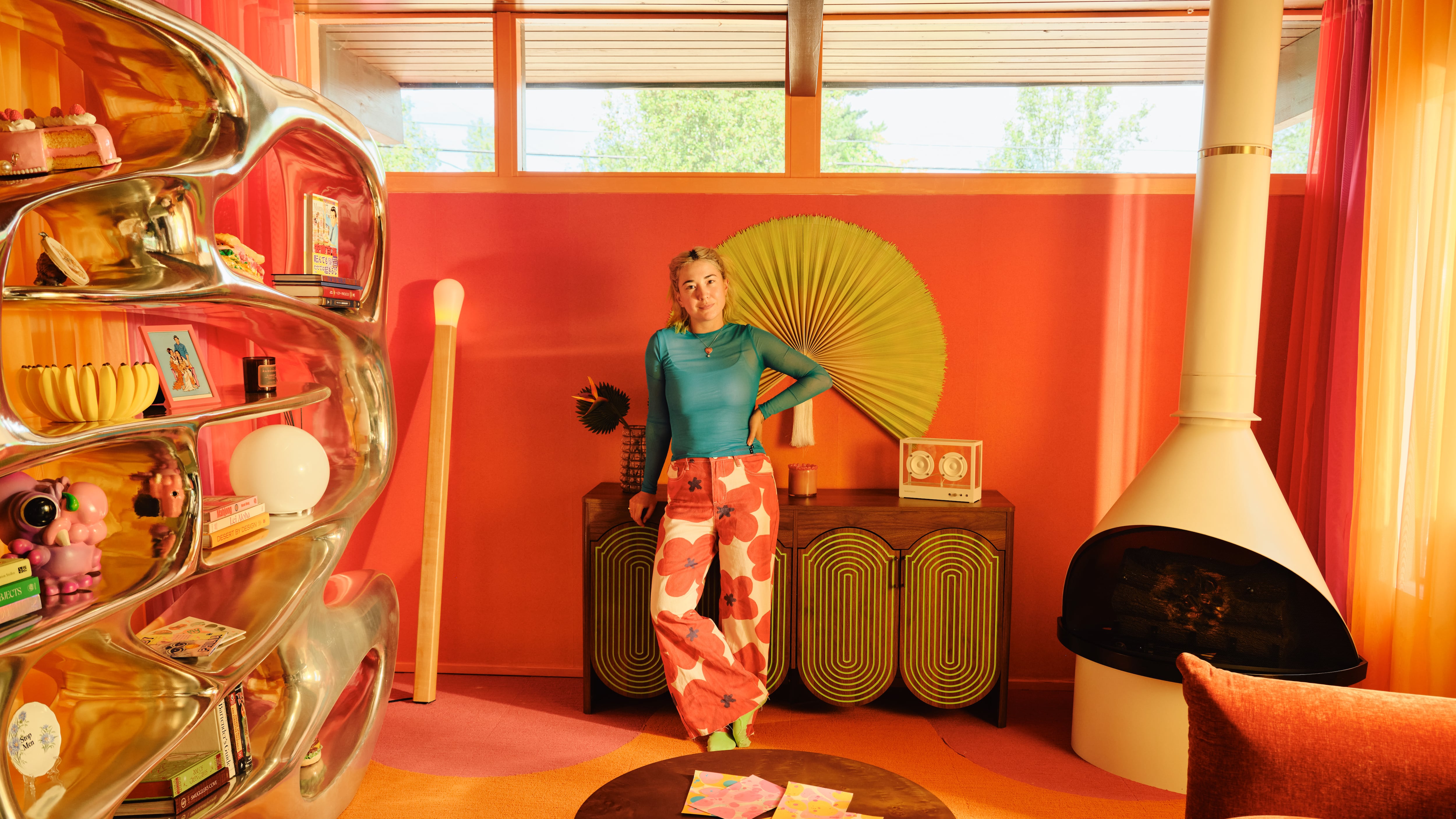
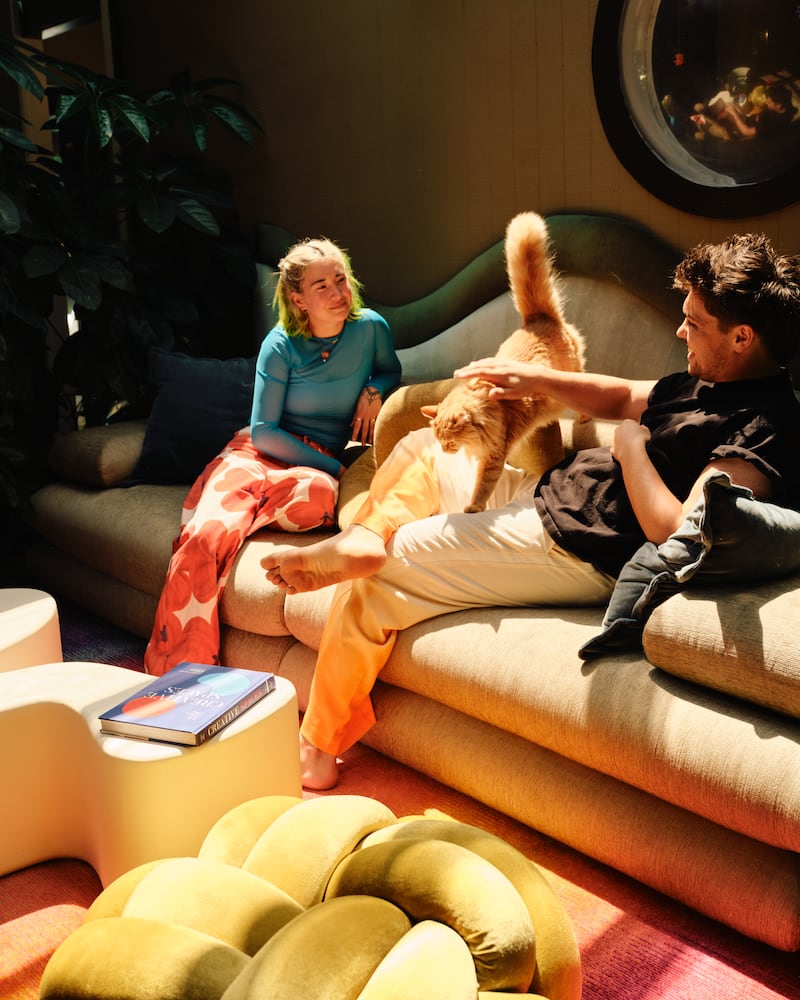
Tay Nakamoto and her husband, Andrew Stewart, bought their Beaverton home a year and a half ago, and immediately began filling it with color.
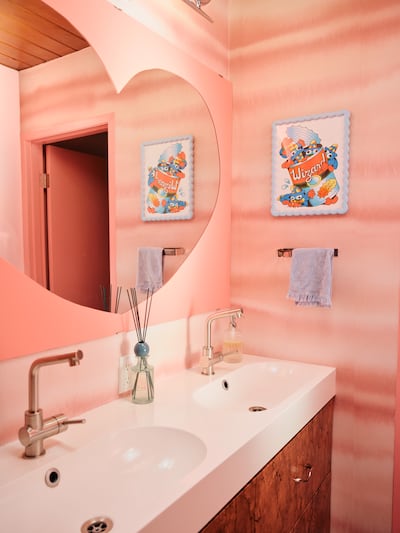
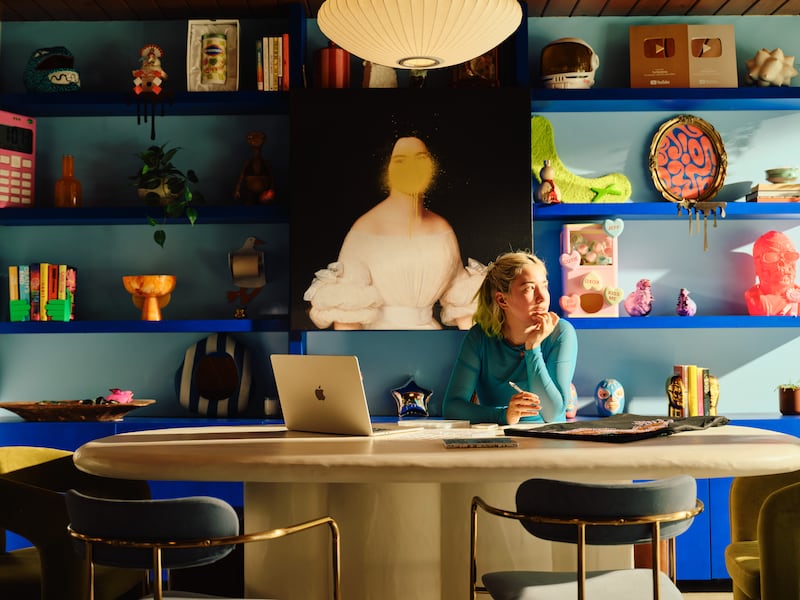
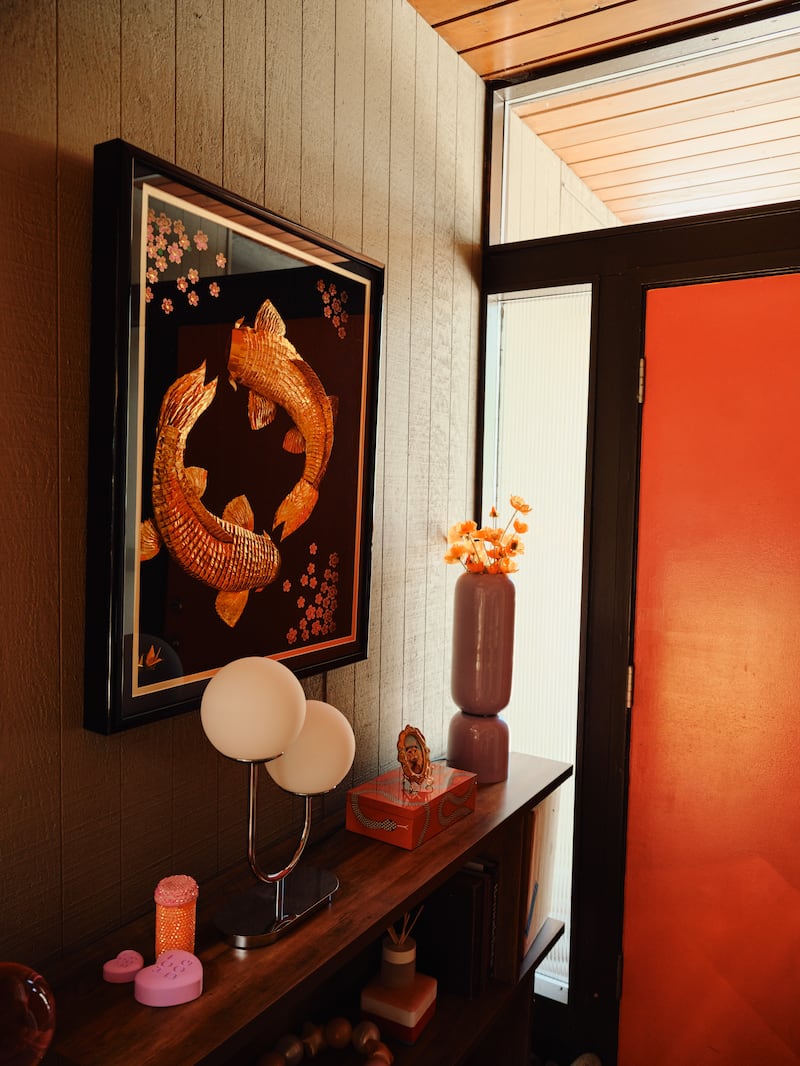
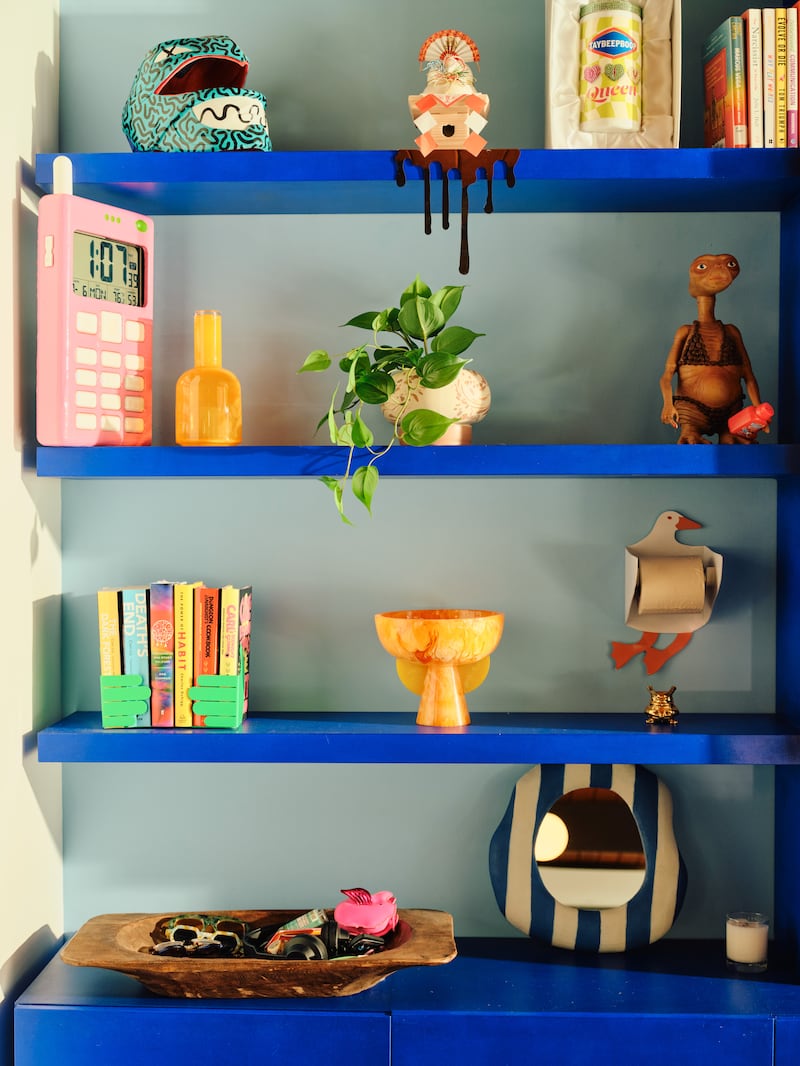
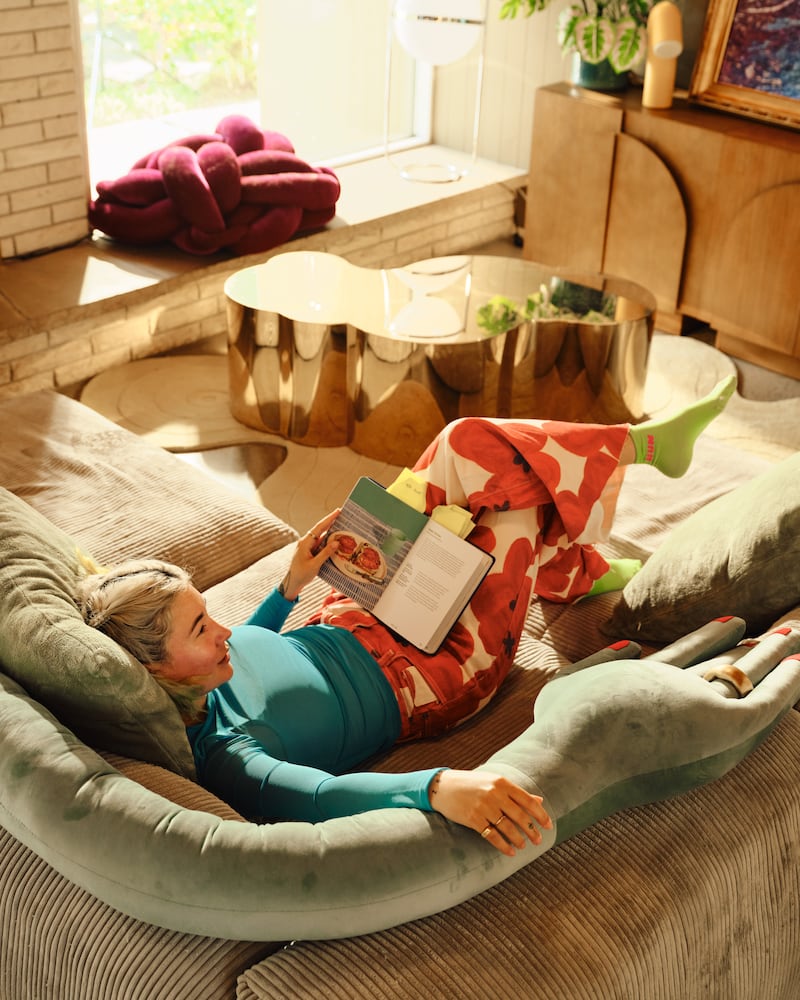
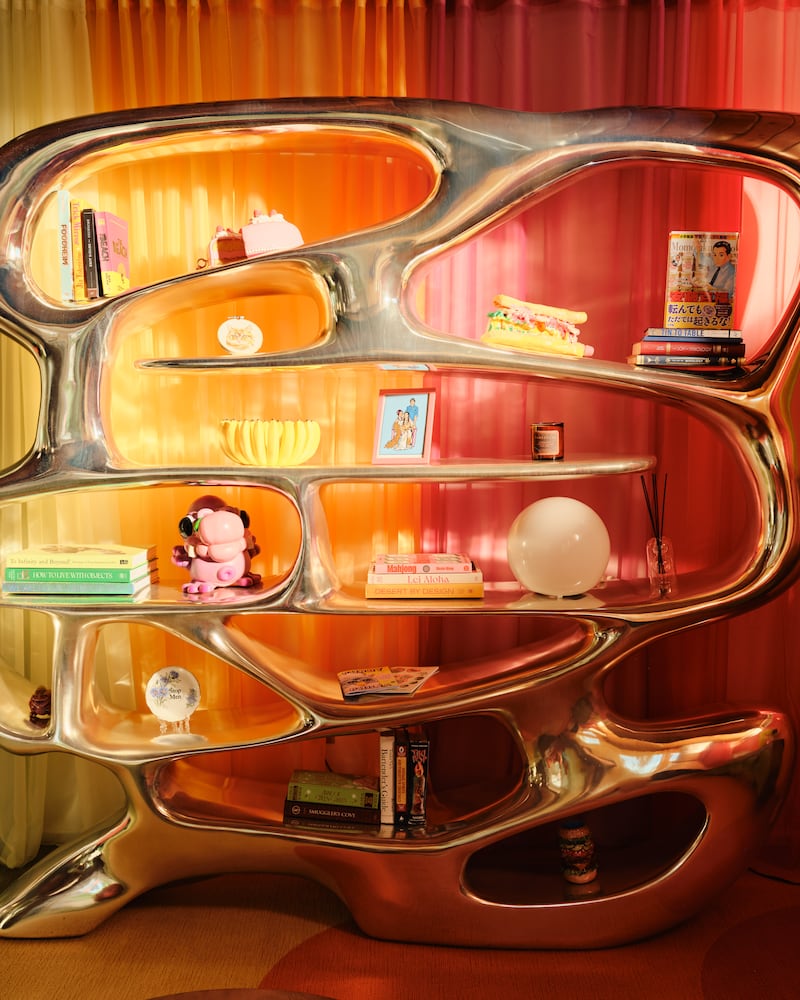
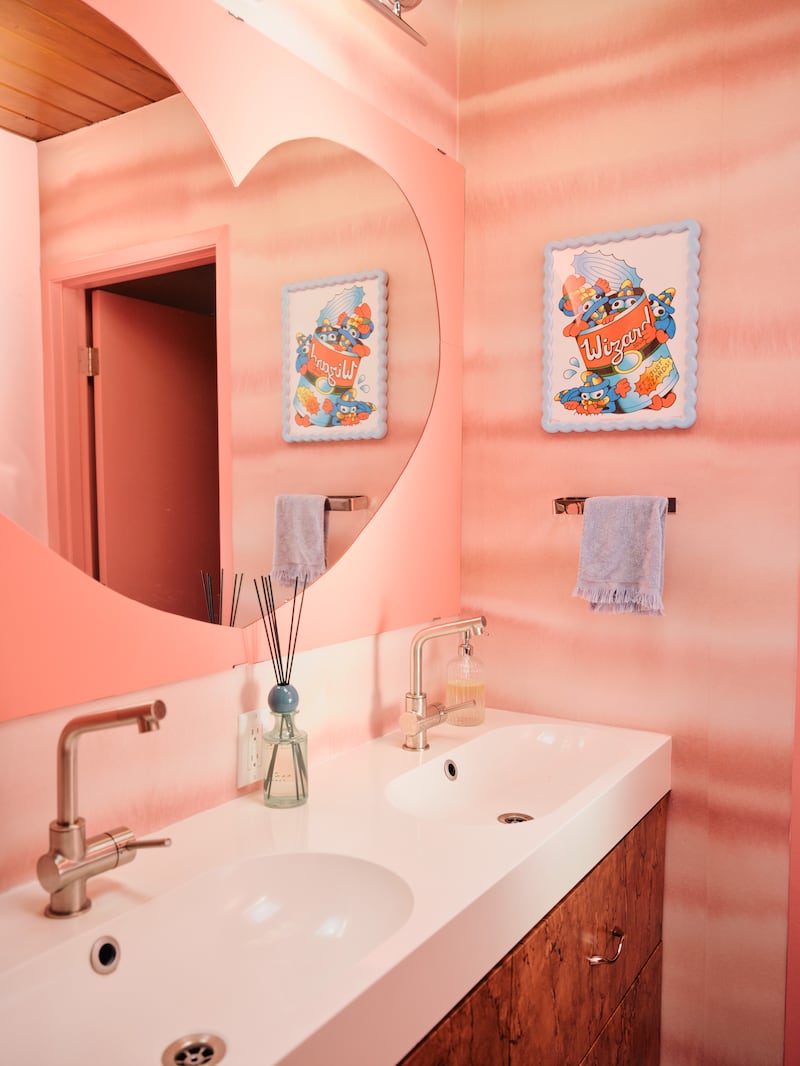
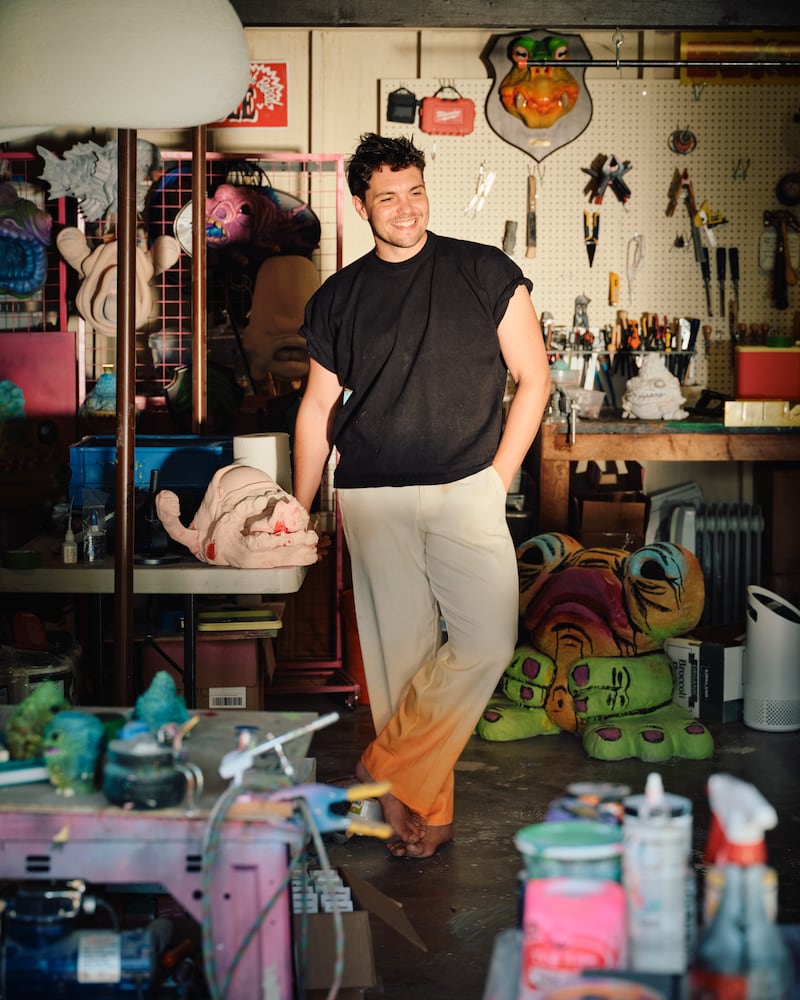
The garage is filled with Stewart’s creations—he’s a self-employed artist and toy maker whose taxidermied monster heads come in colors ranging from naturalistic grays and browns to cheerful neons. The house itself has been Nakamoto’s project since the couple moved in, with pops of bright color around every corner, walls and shelves of pop art and kitschy knickknacks and far more curves than corners.
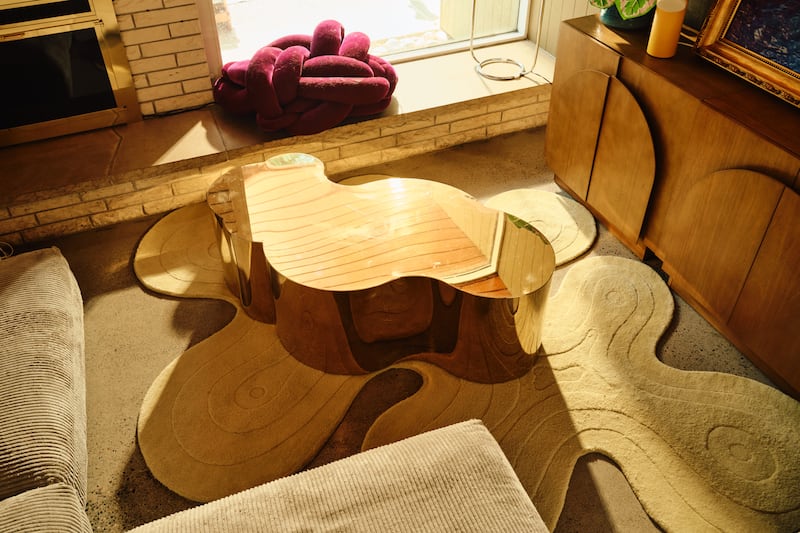
“I hate right angles, I hate sharp edges, I hate squares. If you look around, almost everything is curved; I do not want to see a square or a rectangle,” Nakamoto says. “I have, like, a phobia. Do not bring it into this house if there’s a right angle on it.”
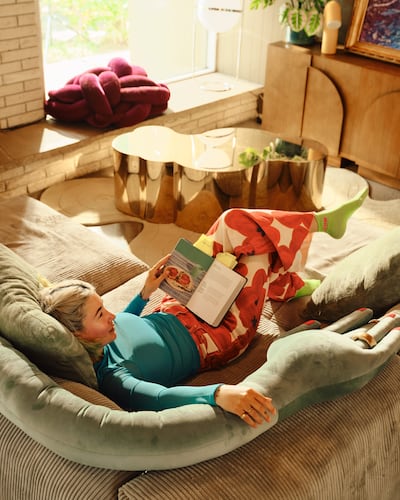
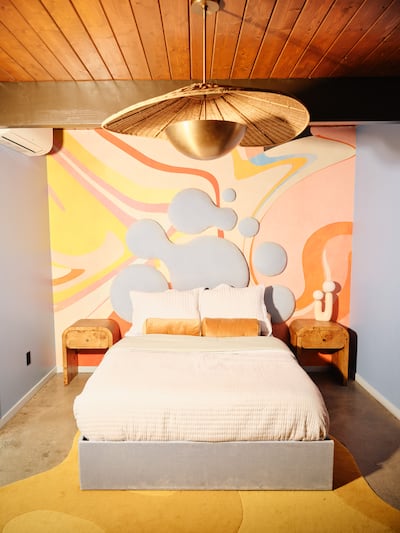
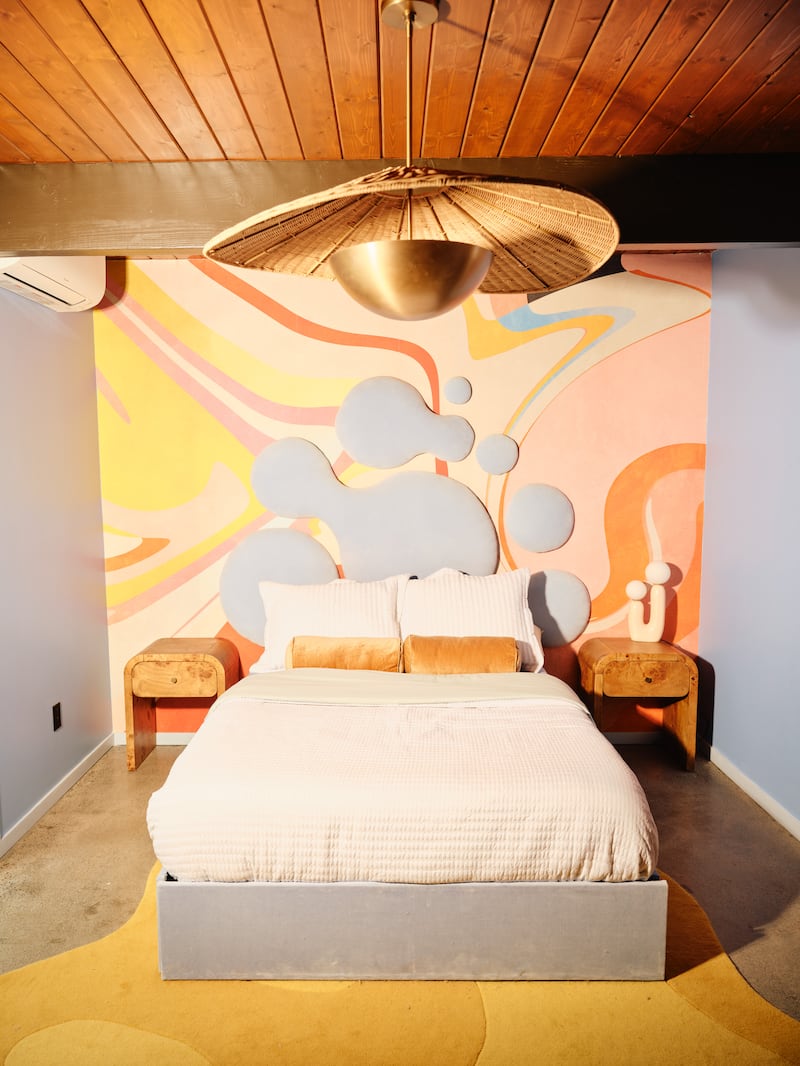
Instead, she takes inspiration from nature and from soft, round shapes elsewhere: The upholstered headboard in the bedroom, which she made, was inspired by the bubble formations of a lava lamp. Another upholstered piece, in the home’s sunny central atrium, was inspired by ocean waves. (The atrium is the primary domain of the couple’s cat, a longhaired ginger female named Jeff after Survivor host Jeff Probst.)
The house’s color scheme was also inspired by nature, Nakamoto says. For Oregonians—or at least for me—“nature” mostly presents in endless shades of green, brown and gray; it’s hard to imagine the sherbet hues of this home in nature. But Nakamoto was raised in Hawaii, where nature’s palette is more expansive.
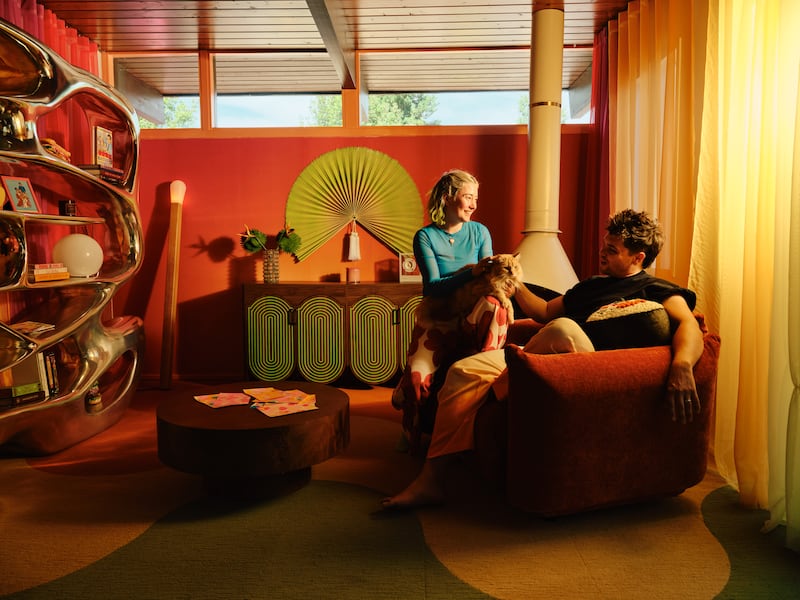
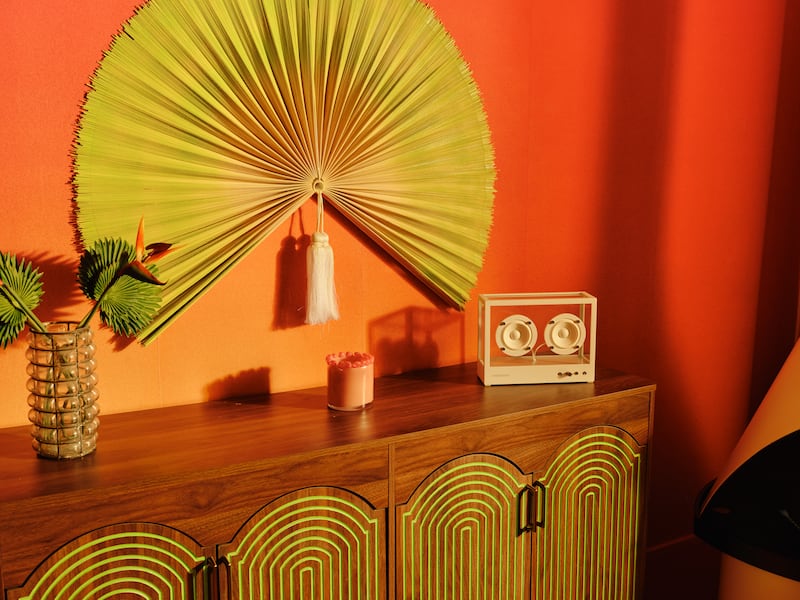
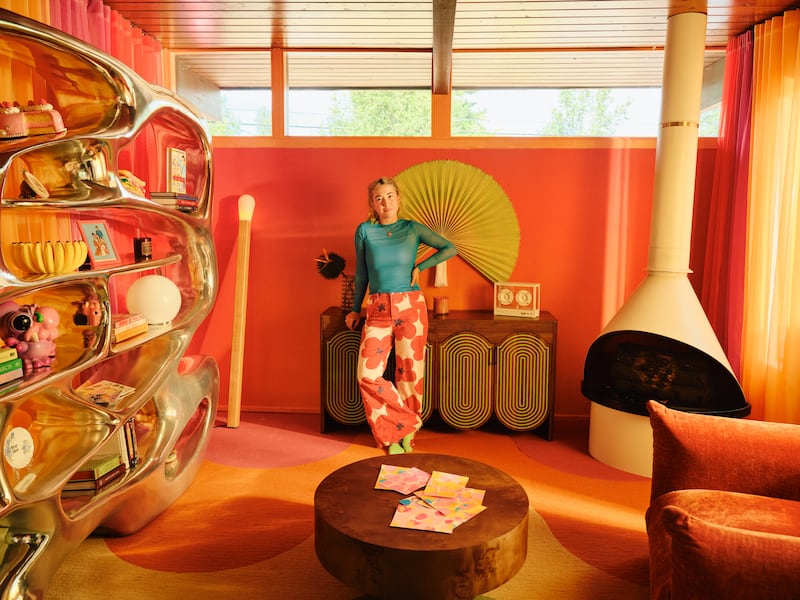
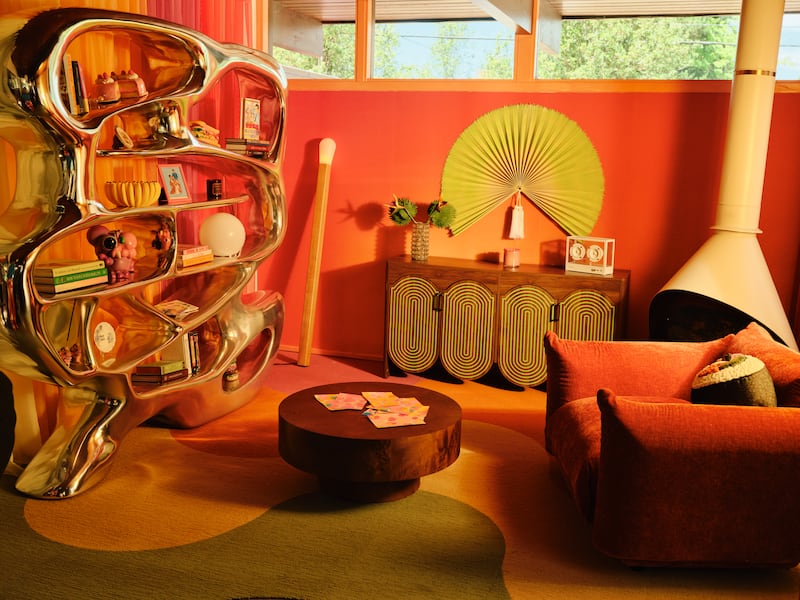
“This room that we’re in now is the sunset room, and it’s a sunset room because it’s all gradient shades of a sunset,” Nakamoto says of a room just off the kitchen. Orange, yellow and green sheer curtains line two walls; the floor is covered with carpet in brighter versions of the same colors. The chairs are also orange, but there’s a buffet table painted with chartreuse and brown ovals. The pops of chartreuse are a nod to the “green flash”—a flash of green light that sometimes appears as the sun is setting, usually over an unobstructed horizon, as on the ocean.
“I’m always looking to see if I can find the green flash, so that’s why it’s a sunset room and then I have accents and pops of this green chartreuse,” Nakamoto says.
Nakamoto is now a full-time content creator and interior decorator, and her work on the house is the primary subject of an Instagram account that’s drawn 1.4 million followers and for which she was named one of Forbes’ Top 50 Creators. She’s also working on Design Freak, a coffee-table book about home design due out in spring 2027.
Before she bought the home, Nakomoto worked in the tech industry, but part of her had always wanted to work as a designer.
“When I was a kid, and I watched Mrs. Doubtfire, and the wife was an interior designer, and she was such a boss bitch, and I was like, ‘Whatever she’s doing, I want to do that,’” Nakamoto says.
But it wasn’t until COVID-19 hit that she started seriously thinking about home design. Specifically, she started “furiously decorating” her home.
“I just bought 5 gallons of rainbow-colored paint because I was like, ‘I’m going to express my creativity and make a mural. It’ll make me happy, like a dopamine mural,’” Nakomoto says. “It was the first mural I’ve ever done, so I had no fucking clue that no one needs a gallon of paint—let alone 5 gallons of paint—to paint a single wall.”
So she kept painting.
“I just started painting my entire house. My entire house looked insane, and then it just quickly got me noticed online, and then I just had fun with it. It was like art therapy for what was going on,” she says. People started hiring her for help with design and decorating. “It just snowballed from there.”
The house is still a work in progress, and Nakamoto is candid about its flaws—both short-term inconveniences and long-term headaches. “We just fostered kittens for like two months, and they’re the stinkiest things in the world. I swear, they got shit all in the carpet,” she says, apologizing for bypassing the room the kittens occupied. The previous owners built a second, outdoor kitchen in the carport, though the carport is easily accessible from the indoor kitchen: “I think it’s stupid,” she says bluntly. The living room is furnished with big, colorful couches of a piece with the rest of the house, but Nakamoto says she is still working on it. “Normally, that’s the first thing I do in a home, but I’ve just been struggling with the layout of it and the darkness of it, so that’s been my last priority.”
Nakamoto was drawn to this house because of its midcentury modern style. In the Bay Area, midcentury homes sell for millions of dollars, and much of the housing stock is Victorian homes, which didn’t speak to her as much aesthetically.
But since she doesn’t have any formal training in design, she says, she doesn’t know the “rules”—and therefore doesn’t think about whether she’s breaking them when she makes a design choice.
“I think that that’s my superpower: not knowing what the rules are, so that, to me, I can do anything. And I could be breaking whatever these rules are, but I’m not limited to that sort of traditional thinking,” Nakamoto says.
0 of 16

Click here for more Nester Magazine.
Nester Magazine is free, distributed all over Portland, and can be found at these locations.