Skip to main content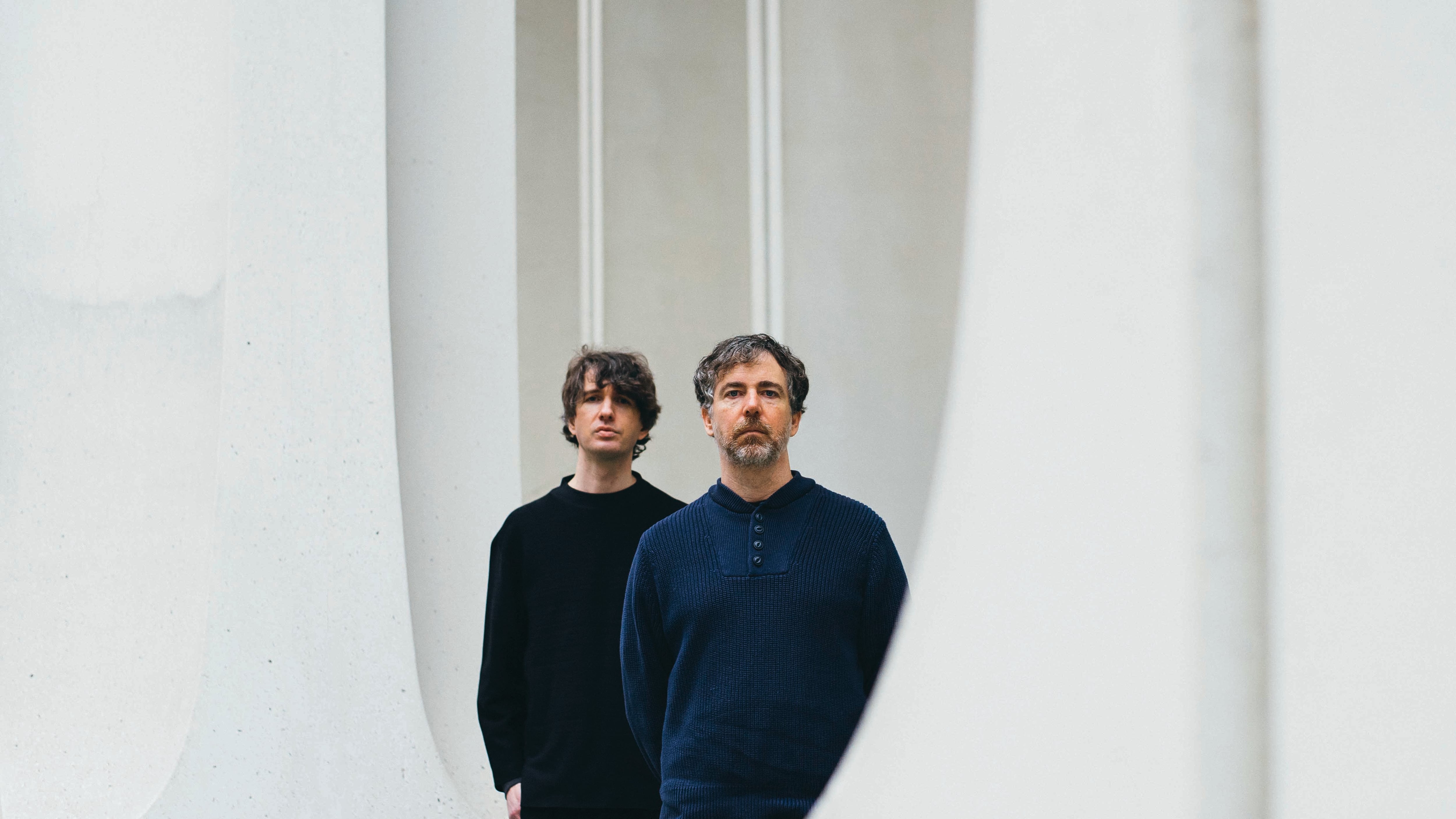
In 2017, an album called Reassemblage by a Portland band called Visible Cloaks took the experimental electronic music zeitgeist by storm. Influenced by then-obscure Italian and Japanese synth music but accessible enough to find fans outside of the noise underground that spawned the duo of Spencer Doran and Ryan Carlile, Reassemblage found its way onto the electronic and New Age album charts and received a coveted Best New Music rating from Pitchfork.
Since then, the duo’s been mostly quiet, releasing a mini album called Lex later in 2017 and a collaboration with Japanese ambient legends Yoshio Ojima and Satsuki Shibano in 2019. Yet, on the heels of a Portland show on Friday at the First Congregational United Church of Christ, Visible Cloaks has announced the release of Paradessence, its first noncollaborative full-length in nine years, out May 22 on RVNG Intl.
The title comes from the advertising concept of the “paradoxical essence” of a thing, first coined satirically by the author Alex Shakar in his 2001 novel The Savage Girl.
“The example [Shakar] uses is coffee, which is simultaneously relaxing and stimulating,” Doran explains. “What makes it desirable is that it contains both of these elements. That’s something I think about a lot—like Brian Eno’s original concept for ambient music of being both ignorable and interesting.”
Paradessence vaults far beyond the ignorable-interesting dichotomy—and the constraints of ambient music itself—to explore more interesting paradoxes such as the dichotomy between the real and the virtual. While Paradessence features contributions by Ojima, Shibano and other luminaries such as French composer Félicia Atkinson and Romanian violinist Ioana Șelaru, it also features the Componium Ensemble, a chamber orchestra of self-playing instruments devised by Doran.
“It’s kind of hard to quantify who the composer is on some of the stuff on that album,” he says. “There’s still a lot of use of virtual instruments, which are malleable in ways that aren’t possible in reality. We’re combining those with instrumentalists and really trying to blur that line between the two.”
This might seem frighteningly cutting-edge technology, but Doran cites the roots of generative instruments in thought experiments that go as far back as Archimedes. The namesake Componium is an early programmable instrument, developed in 1821 by Dutch watchmaker Dietrich Nikolaus Winkel; only one was ever built, and when Doran got to see it in the flesh at Brussels’ Museum of Musical Instruments, it was a revelation.
“It was this actual physical manifestation of these very early ideas around generative musical principles,” he says. “I thought it was really fascinating. It’s cool to see how far back you can trace a lot of these ideas.”
Traveling the world for musical inspiration is nothing new for Doran. Born in Arcata, Calif., Doran started making electronic music in middle school and found himself a minor electronic music star in Japan after submitting his homemade breakbeats to Japanese labels.
The opportunity to dig in Japan’s amply stocked vinyl crates (“so many of the world’s records ended up there in the ’90s”) led to his discovery of kankyō ongaku, or environmental music—Japan’s homegrown ambient music tradition.
“It was as good as any music that was happening globally around the same time, but no one really was talking about it,” he says. “I’ve always been interested in things that are underchampioned or not yet part of the canon.”
These two threads—West Coast noise and global crate-digging—would go on to define the trajectory of Doran’s career. After releasing a few CDs with various collaborators throughout the 2000s as Cloaks, he moved to Portland and reconnected with Carlile, a buddy from his teenage DIY days in Arcata who’d also found his way north, to form Visible Cloaks.
“[Portland] was a place where you could rent a room for $100 and have a part-time job and be able to focus on artistic practice,” Doran says. “It was still really cheap and there was a lot of interesting music community around places like Valentine’s and Holocene.”
Meanwhile, a 2010 mix called Fairlights, Mallets & Bamboo that Doran had made for a little-known blog started gaining traction online, opening Western ears to the world of kankyō ongaku. Doran’s expertise led to him curating a Grammy-nominated 2019 compilation, Kankyō Ongaku: Japanese Ambient, Environmental & New Age Music 1980-1990, for the Light in the Attic label.
It’s safe to say Doran has done more than anyone else to spread this music’s gospel stateside, but he feels the press often overemphasizes the influence of kankyō ongaku on his own work.
“It can be hard to undo a specific framing around something once it gets ossified in the informational feedback loop,” he says. “When I first started talking to Yoshio Ojima about doing a collaborative record together, he very much understood that we had these American influences, people like Carl Stone or the Lovely Music universe.”
Indeed, there’s no mistaking the music on Paradessence for anything from the ’80s, ’90s or any other time. These pieces duck in and out of silence, turning themselves inside out, like paper sculptures that might vanish entirely depending on which way you look at them. It’s unearthly, otherworldly stuff, but anyone who enjoyed Reassemblage will feel right at home, and it may even mint them some new fans.
SEE IT: Visible Cloaks debuts music from Paradessence with Harlan Silverman of Portland’s Cosmic Tones Research Trio and Omari Jazz at First Congregational United Church of Christ, 1126 SW Park Ave., uccportland.org. 8 pm Friday, Feb. 20. $43.76.