Skip to main content
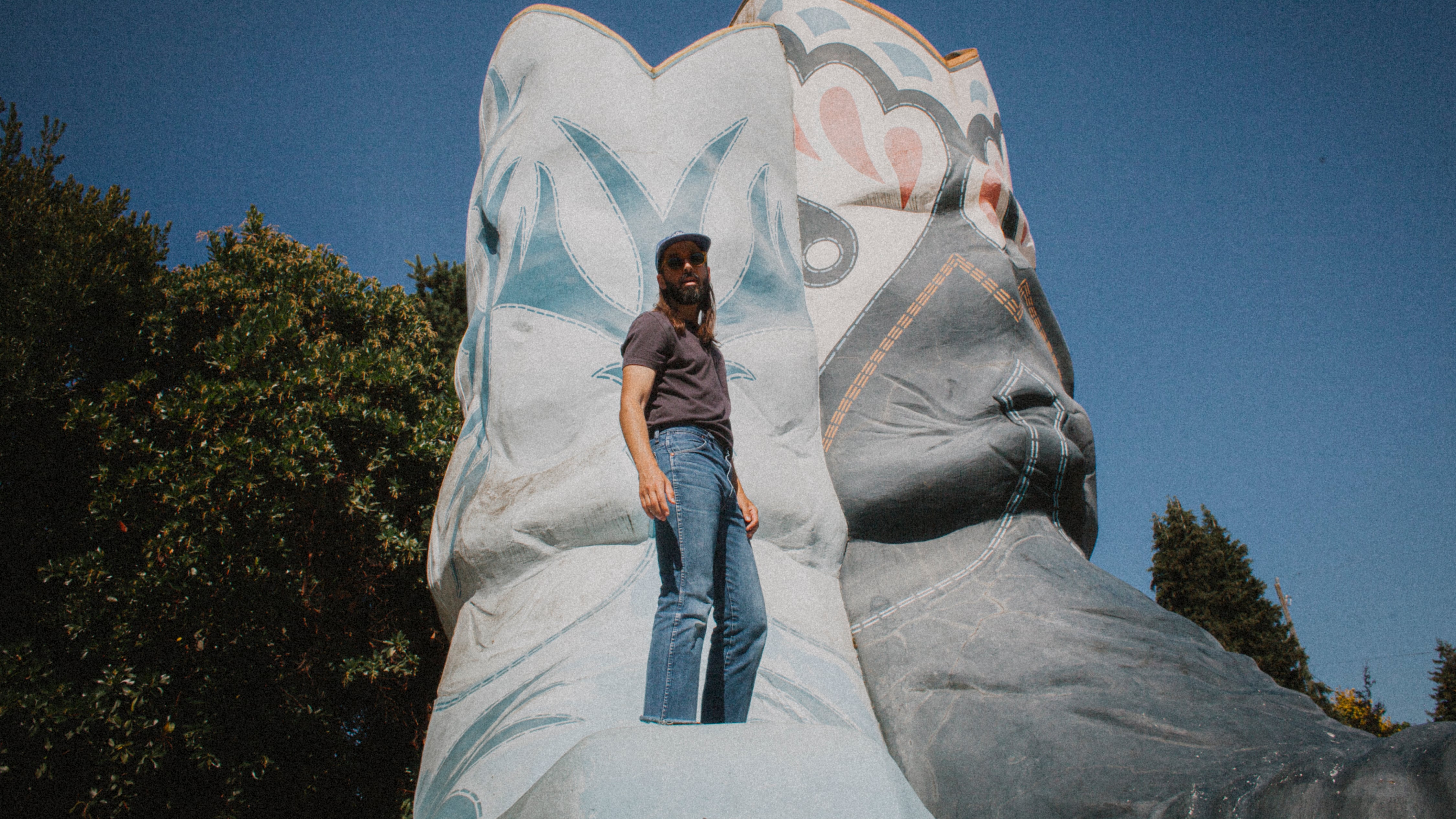
Music is just one thing Jeffrey Silverstein does. Offstage, he works as a freelance journalist, contributing regularly to publications like The Creative Independent; as a radio host; and as a special education teacher at an independent K–12 school in Portland. But it’s in his music that all of these facets of life cohere.
“If the Grateful Dead existed in an alternate universe where it operated adjacent to the 2010s Brooklyn surf-rock boom,” NPR once wrote, “that band would probably sound something like this.”
Born and raised in New Jersey, Silverstein made first foray in music with psych-rock band Secret Mountains, which began as a dorm-room songwriting endeavor in Baltimore around 2008. After a brief stint in Brooklyn, New York, where he worked at MTV and formed the duo Nassau with multi-instrumentalist Justin Wilcox, Silverstein relocated to Portland in 2018.
“I always joke that, for anyone who visits the Pacific Northwest in the summertime wondering if they could live there, the answer is going to be yes,” Silverstein tells WW. “That’s exactly what happened to us.”
Still, the rain hasn’t been all bad. Silverstein has produced three full-length albums over the past eight years, including You Become the Mountain, in 2020, and Western Sky Music, in 2023, as well as three EPs. Silverstein’s latest album, Doggone (Full Time Hobby, 29 minutes, vinyl $33, digital download $12), was released Oct. 23. Our conversation has been edited for brevity and clarity.
WW: You’re an educator and journalist by day, and a musician by night. How do those different parts of your life fit together and, perhaps, influence each other?
Jeffrey Silverstein: Honestly, I have no idea how. At this point, it’s not that I’m one thing “by day” and another “by night”—I’m all of those things all of the time.
It’s challenging sometimes, frustrating other times, but it does make you be really intentional about how, when and why you work. I hope that every time I make a new record, I’m working with more intention. I often quote Willie Nelson, who said, “You can’t make a record if you ain’t got nothing to say.”
How has your music changed over the years?
I’m clear on what I like and don’t like out of a song. I’ve learned a lot about communication, both with my instrument and with other players. I’ve learned a lot about being a band leader, too. I don’t have any music theory knowledge, but I’ve found new ways to describe what I want out of a song—the feeling, color, shape or mood. I feel that lack of technical prowess has helped me tap into more of the emotional side of my music, too.
In the early versions of this project, I was hesitant to sing. But over time, I’ve come to understand how your voice is just like another instrument, the kind that nobody else has. I’ve always been curious about the voice, but now I’m excited about using it alongside other textures I create.
Your music really leads with the music in that sense. Is that where it starts for you?
I’m a collector of phrases, snippets, field records and potential song titles. I’m in record stores all the time, studying credits, album art and typeface. I try to let it all seep in. Eventually, I get to a point where I’ve gathered enough information and have enough phrases and riffs to piece together the bigger picture—that’s where my writing typically starts. Songs used to start on the guitar with me. I used to build off riffs and chords, but now I do a lot of singing in the car and on runs, where I hum melodies into voice notes that I revisit later.
Where did the title of your new album come from? On your website, you describe your favorite definition of “doggone” as a proclamation of pleasant surprise.
There’s a song called “I’ll Be Doggone” by Solomon Burke that got me thinking about seeing something and being utterly surprised. I don’t think people associate country music with the Pacific Northwest, but I love this region’s quirky character, all the weird subcultures—folk music being one of them—and roadside attractions that sprout up and thrive here.
When I was researching ideas for the album cover, my wife told me about the Hat ’n’ Boots landmark in Oxbow Park near Seattle, and I fell in love with its history. It was created in the ’50s for a gas station, but it fell into disrepair over time. Decades later, a community in Seattle fought to restore and preserve it, which was a beautiful story to me. This album reflects that impulse to preserve unique, handmade, tangible art that’s born out of a local story.
A long list of Portland collaborators helped piece this album together, including producer Ryan Oxford (who’s worked with Y La Bamba and Rose City Band), bassist Alex Chapman, drummer Dana Buoy (of the band Akron/Family), and mastering engineer Amy Dragon (of Big Thief, Nathaniel Rateliff and Moon Duo credit).
It’s hard to say enough good things about Ryan. This is our fifth release together. His studio—the Center for Sound, Light and Color Therapy—is a really safe, comfortable space to be weird and explore. That’s where I found my sound and started to find myself.
There was a lot of trust [between everyone who played on the record]. We understood each other’s strengths and communications styles, and we worked really effectively in that sense.
I was also thrilled to feature several guests, like Merle Law, who is a wonderful songwriter in town. Same with Paul Damian Hogan. I somehow got lucky enough that Devendra Banhart worked on some of this with us, too, whom I’ve long admired.
For listeners who are just getting to know you, what’s the first song from this album you’d show them?
“Out of Tune,” which is the song that features Devendra Banhart. It’s one of my favorite tracks from the record.
And which song, record or artist would you assign to them as homework? You’re an educator, after all.
A massive influence for me over the years has been Andy Cabic, whose band is called Vetiver. They have a record called Tight Knit, which is my desert island album. That’s my homework assignment for Willamette Week readers.
GO: Jeffrey Silverstein’s Doggone record release show at the semi-private venue Rainforest Cafe (DM @jeffreee on Instagram for details). Saturday, Nov. 14. Free.