Skip to main content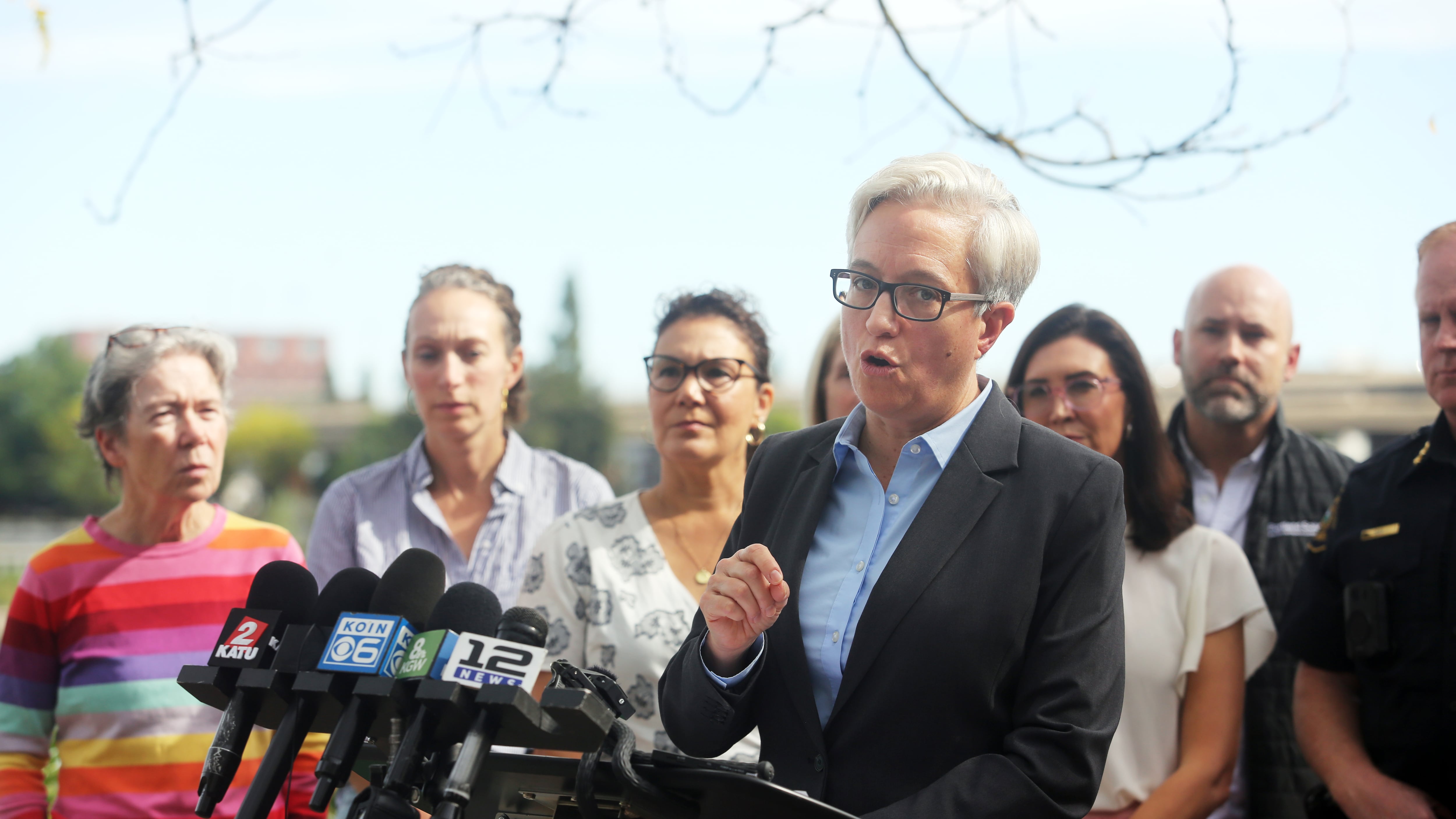
The U.S. Supreme Court’s Dec. 23 decision to block the National Guard from deploying to Chicago will likely set in motion a separate court’s review of Portland’s own National Guard case.
And while nothing is certain, the new ruling appears to increase Oregon’s odds of prevailing in its campaign to keep military troops from deploying to the U.S. Immigration and Customs Enforcement processing center in Portland’s South Waterfront.
Since the summer, President Donald Trump has sought to send National Guard troops to that facility to quell protests against his immigration policies—and to more generally restore order to a city that he has, against all evidence, described as “war ravaged.”
In a statement Tuesday evening, Gov. Tina Kotek said the Supreme Court ruling had all but settled the matter.
“This decision makes clear that the president cannot ignore the rule of law; he cannot send troops into American cities under false pretenses, without legal authority, and without our consent,” Kotek said. “In Oregon, 100 service members remain in limbo. It is past time for President Trump to send them home.”
The Portland case had been effectively paused for more than a month as appellate judges overseeing it awaited guidance from the U.S. Supreme Court, which was assessing the legal dispute in Chicago. Related legal battles have been playing out around the U.S. in recent months, raising profound constitutional questions: Under what conditions can the president deploy the military on domestic soil? And who gets to decide if those conditions are met?
A federal district judge had blocked the deployment of troops to Portland in November, having found that federal agents overstated the dangers they faced in the city. Portland’s real-world conditions, the judge found, did not in fact satisfy any of the relevant legal predicates under which the president could commandeer and deploy state National Guard members against the wishes of that state’s governor.
The Trump administration then asked the 9th U.S. Circuit Court of Appeals to overturn the decision. And on Nov. 19, the appeals court said it would pause briefings until the U.S. Supreme Court ruled on the related Illinois case.
“Once the Supreme Court rules in that matter,” the 9th Circuit wrote at the time, “this court will promptly set an expedited briefing schedule to allow for consideration of the emergency motion for stay pending appeal.”
The Illinois and Oregon cases resemble each other in important ways, though the cases have not taken identical tracks. In the Illinois case, the Supreme Court was concerned with a relatively narrow legal question. The relevant federal law empowers the president to federalize members of the guard if he is “unable with the regular forces to execute the laws of the United States.” The Supreme Court was interested in the meaning of the term “regular forces.”
The Trump administration argued it referred to federal law enforcement. But the Supreme Court’s majority said it likely in fact refers to the regular forces of the U.S. military. That’s a crucial finding, because the president is allowed to deploy the standing army only in narrow circumstances.
In other words, before Trump could deploy the National Guard, he would need to show that conditions in Chicago had reached the “exceptional” level where the Army could be deployed. “At this preliminary stage,” the majority of justices wrote, “the government has failed to identify a source of authority that would allow the military to execute the laws in Illinois.”
As a practical matter, the finding narrows the band of potential arguments that the Trump administration could make to the appeals court overseeing the Portland case. Indeed, in a November court filing, federal attorneys made part of their arguments with the premise that “regular forces” refers to federal civil officers, as opposed to the standing army—the premise the Supreme Court said on Tuesday was likely false.
In a statement, Oregon Attorney General Dan Rayfield said the Supreme Court ruling bolstered Oregon’s case: “The ruling has significant implications nationally,” he said. “In Oregon, for example, the Trump administration relied on the same flawed legal theory to attempt to federalize Oregon’s National Guard.”
Since pausing the Oregon case in November while it awaited the Supreme Court’s ruling, the 9th Circuit had directed the government to file weekly status update reports regarding the current status of any federalized Oregon National Guard.
Since then, no status updates have appeared in the public court docket. But asked Monday about the status of federalized troops, the U.S. military confirmed that about 100 Oregon National Guard members remained active under federal control around Portland. The ongoing training “includes deescalation, crowd control, and understanding the Standing Rules for the Use of Force,” said a U.S. Northern Command spokesman, when asked what the troops were up to. “The training is both academic and practical.”
Meanwhile, protests outside Portland’s U.S. Immigration and Customs Enforcement facility, which for a period heated up after Trump’s September announcement that he would send in the troops, have largely abated. Portland police told WW on Monday that, while they continue to monitor protest activity in the South Waterfront, in recent weeks, “officers have observed generally peaceful protest activity, with very little, if any, criminal behavior.”