Skip to main content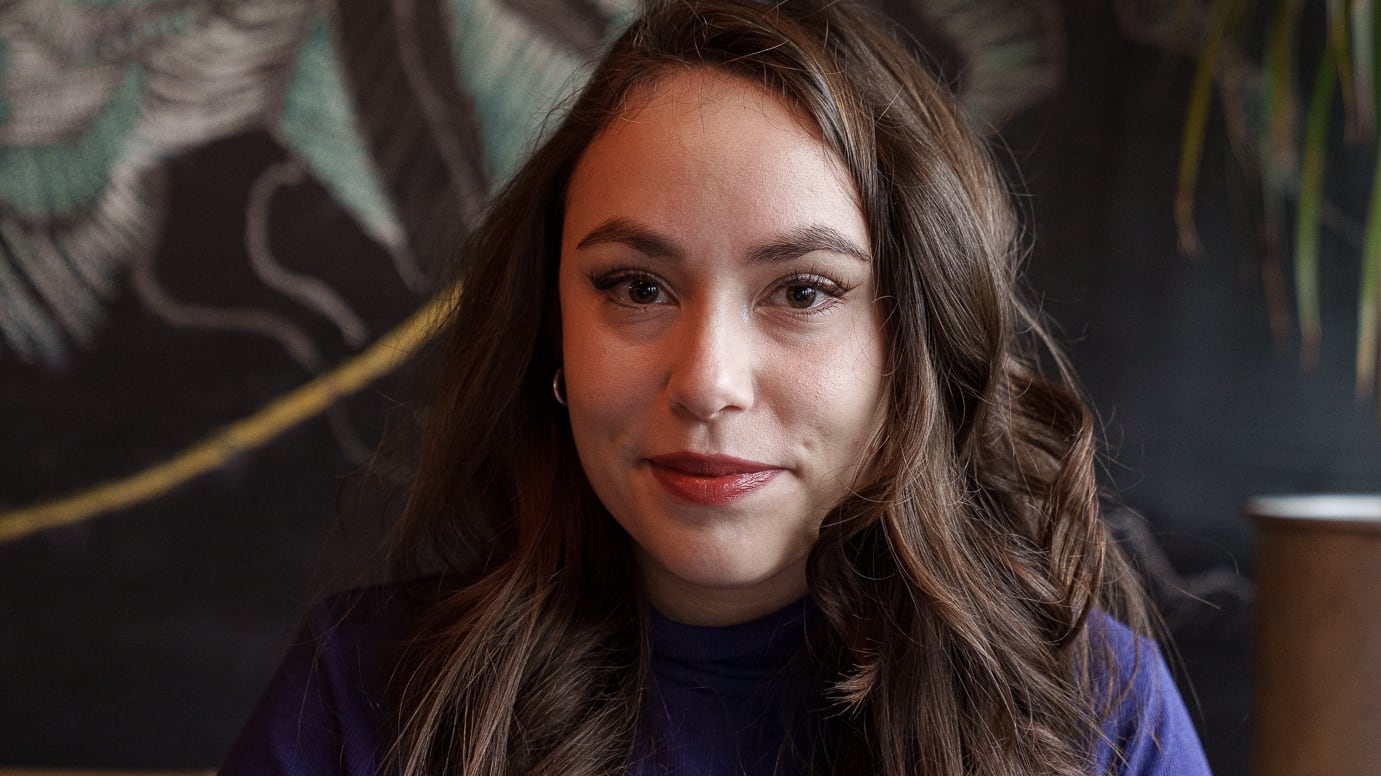
Portland City Councilor Angelita Morillo has a lot at stake in 2026.
With the City Council coming off an unsteady first year of 12 members governing a troubled city, it’s not always easy to determine who is in charge. A council vote on Jan. 7 will decide who serves as council president—a powerful position that sets the agenda and appoints committee chairs. Whoever takes the wheel, however, there’s a strong case to be made that Morillo is the councilor hitting the gas pedal.
At 29, she’s the youngest councilor and perhaps the most vocal member of the council’s progressive caucus. That caucus, better known as “Peacock,” has proven the body’s most organized faction, and able to mobilize constituents to pack the galleries.
Morillo has established herself as a leader of the Peacock caucus and, despite her ideological differences with some of the more centrist members of council, is well liked by them. Before seeking office, Morillo leveraged her biting criticism of former council members into an enormous social media following: 10,000 followers on Instagram; 49,000 on TikTok. She is the councilor most adept at digital populism—a post by her can galvanize the city’s left.
What’s more, her most cherished principles are on the ascent. Morillo joined the Democratic Socialists of America shortly after taking office in 2025 and has proudly embraced her identity as part of the DSA, talking frequently about how the richest people in Portland have long enjoyed outsized sway at City Hall. By last fall, The New York Times had parachuted in a reporter to see what Portland City Hall augurs for Mayor Zohran Mamdani’s first term. What’s more, Morillo is the only immigrant on the council (having moved from Paraguay to the U.S. at the age of 4) at a moment when Portland’s resistance to federal immigration crackdowns has thrust the city back into national prominence.
All of this would make Morillo the subject of intense debate even if she were taking a back seat on policy—which she isn’t. She championed a number of policies last year, some successfully. (A few others that were more controversial—like rerouting $4.3 million from the city’s homeless sweeps program to rental assistance, food aid, and resources for immigrants—failed.) She passed a fee for landlords leasing their buildings for detention purposes. She passed a ban on the use of AI algorithms to set rents. And she co-sponsored a policy with Councilor Eric Zimmerman that aims to eventually make code changes to speed up housing production.
In the process of pressing its agenda, however, Peacock courted controversy with its methods for strategizing—in particular a text thread, first reported by WW, in which councilors coordinated their moves as public hearings occurred. The six progressive councilors are the subjects of an inquiry by the Oregon Government Ethics Commission into whether they violated quorum rules with a closed-door meeting. (They say they didn’t because they weren’t discussing policy matters.)
Morillo and her allies argue that the DSA presents the only fully formed answer to Trumpism. And she argues that real change in this city requires dismantling the previous power structure—which means picking a fight with the Portland Metro Chamber and downtown property owners. That combative posture has won her a number of critics who say her agenda would deepen Portland’s plunge into a “doom loop”: a vicious cycle of fleeing businesses, shrinking tax revenues, and reduced government services. The business lobby, which has its own faction on the City Council, wants tax relief—and Morillo out of office.
Which vision for the city triumphs is what’s at stake in the 2026 election. Six of the 12 councilors currently holding office are up for reelection after just two years. Morillo, who represents Southeast and Northeast Portland in District 3, is among the names that will appear on the ballot.
Like we said: a lot at stake. So we decided it was time for a long conversation with Morillo. She agreed, and we met for coffee last week at the La Lucha in the Buckman neighborhood.
We asked her what Portland’s next year should look like, what she believes are the biggest risks to the city’s success, whether she thinks Portland really is in an economic downturn, and if she’s having fun. (She’s not.)
The interview has been lightly edited for brevity and clarity.
What’s the biggest threat to Portland’s success?
Angelita Morillo: I do think that we have to address our economy. A large part of it is that we’re not getting money from people staying in hospitality, and aren’t getting a lot of tourism here. I think that’s improving, and I think that’s in large part because we stopped talking poorly about our city all the time and reminding people what’s wonderful and lovely about Portland.
I also think that a huge challenge is going to be the federal government’s attacks on this city. We’re seeing them take away a ton of funding for homeless and housing programs, and next November, it’s going to be absolutely brutal.
I also think that if we’re not careful about how we invest our local funding we’re going to end up digging ourselves into a hole where we’re expanding shelter but not resolving homelessness.
If Mayor Keith Wilson tries to raise another $50 million in next year’s budget to continue his overnight shelters, would you support that budget?
I think I am going to hold out until I see more data on how this has all worked out. What we’re seeing is that a lot of people are becoming unhoused, about 245 people per month. And from what I’ve heard speaking from folks, there aren’t enough supportive services to get people into housing.
What data point would satisfy you as far as saying, OK, Wilson’s shelter plan is working, let’s do a second year of this?
I would need to see the transition from shelters to housing. Without that, we’re just warehousing people away.
Give the mayor a grade on his shelter plan.
I think the outcomes will speak for themselves.
Are we in a doom loop?
I don’t think we’re in a doom loop. I think inherently the economy has completely shifted, and we have to adapt to it, and I think folks that say we’re in a doom loop are just not creative enough to adapt to those changes.
In the districts, we have a really thriving scene. People are shopping a lot in their districts that they didn’t do pre-COVID. We’re seeing a lot of small businesses thrive in a way that they didn’t before.
What do you see as the future of downtown?
I think we had a lot of success with smaller things like the holiday ice rink and things that activate downtown. Making it an event space would be the best way to get people down there. I’d also love to see a Pioneer Courthouse Square area where the streets are closed and it’s a pedestrian-only place. I do love the idea of converting whatever buildings we can to residential.
The plummeting values of office buildings are already lowering tax revenues for the city, resulting in less money for municipal services. How do we deal with that?
I feel like I always see competing numbers on that, and there’s a narrative that some people might benefit from.
Is there a place you rely on to see accurate numbers about tax revenue losses?
Councilor Mitch Green’s office did a whole analysis on tax flight from the city, which was contradictory to what the Metro Chamber was putting out. I think that was very thorough.
That’s tax flight, though. The County Assessor’s Office is what values a property, which then determines property taxes. Is there a different source of information that we should be looking at?
No, I’m happy to look at the County Assessor’s Office. I’m very curious to hear what District 4 councilors want to do with downtown.
Is there a socialist policy you would like to see, or that Mayor Mamdani is championing, that could convince skeptics this is actually a viable platform?
Anything that centers working-class people and taxes wealthier people is a socialist policy. And also what do you mean by viable? Because I’m like, we are viable. We have four socialist councilors.
Sure, but there are socialist policies that haven’t passed in Portland so far. Is there a specific policy that, if passed, could make people join the DSA?
Make transit free in the city. We don’t have the taxing or funding to make any of that happen right now.
We also have what I would consider as more socialist policies in place right now that they’re trying to take away, like Preschool for All. The threat of PFA going away is terrifying to my constituents. I think it will continue to get attacked because people are using it as a leverage point in their reelection. Regardless of the public good that it does, everyone has something to prove to some of the business interests that prop them up. It symbolizes a success for the socialists that can’t be allowed to stand.
Investors have said, we don’t want to be in Portland right now. Should we care?
Yeah, I think we should care. That’s why I’ve worked with Councilors Jamie Dunphy and Eric Zimmerman to make code changes, to make building easier, and to waive system development charges. I think there’s also a balance…For example, I brought an amendment to track [housing builders’ production of their promised 5,000 units]. There’s accountability on both sides.
If you could get Portland Metro Chamber CEO Andrew Hoan to sit down with one person and listen, who would it be?
Probably some of our housing and homelessness service providers who know what things have worked and what hasn’t worked. We’re reinventing the wheel a lot and retesting things for the first time because we haven’t seen them, but that doesn’t mean other people haven’t seen what failed.
Historically at City Hall, a small handful of developers have had a lot of sway. What do you see those developers wanting that makes life harder for working-class Portlanders?
I think this is sort of a leading question. My main concern is that the rent is too high for the majority of Portlanders. So I would have that critique for anyone that is a real estate person who is trying to profit off of housing in this city. If you go to some of those parties and you talk to them, I’ve heard how they talk about working-class people, and they don’t care if they have to leave, in fact they’re like, that’s fine.
Is there a policy you are intent on passing this year?
Next year, we’re going to focus on the budget. We’re going to try to have a much longer runway to the budget and make sure we have done all the right outreach.
I’m really interested in passing a policy to create a consolidated data and privacy office [with Councilor Steve Novick]. We’ve seen that ICE has been able to use city data to track immigrants and activists.
Any other policies you want to champion?
I’m curious to work with Councilor Olivia Clark. We got that report back from the Portland Bureau of Transportation about the different funding options we have. Last year, I was talking to some of my colleagues, and they were like, we don’t want to rock the boat and scare the business interests with additional fees. But we’re reaching a hail Mary point where our roads are crumbling, so we’re going to have to figure out something.
What’s a mistake you made in your first year?
I’m really hungry to get stuff done, but sometimes I can move too quickly. I really messed up with the Morillo 1 budget amendment during the fall [technical adjustment ordinance]. I tried to reallocate partial funding from the sweeps program to rental assistance. We were moving quickly, and I didn’t do the right outreach to the different organizations. I think if I had brought people in first, it wouldn’t have been so controversial.
The progressive caucus, Peacock, has gotten a lot of criticism this year. About public records, meetings, and processes. How do you respond to those criticisms?
I think some people have good-faith questions, and I think some people are taking advantage of a political layup. I don’t think we violated the literal law or the spirit of the law. If we were trying to hide something, we wouldn’t have put it in a public records–requestable chat, and we wouldn’t have said the same exact thing in the meeting.
Why is the relationship between the council and the administration such a mess?
Part of it is that we’re figuring things out under the new form of government. But there’s also a tension between those trying to maintain the old existing power structures and people who are trying to change that. It’s been an uphill battle to get basic information from bureaus, or the mayor’s office.
What is District 3’s biggest problem?
We have a lot of dense apartment buildings, but the rent is just really high. We have a lot of one- and two-bedroom apartments and not enough housing for families to grow up in the neighborhoods. And we also have a lot of pedestrian deaths on 82nd Avenue and Southeast César E. Chávez Blvd.
Are you having fun?
No. I think being a public figure is inherently distasteful and painful. I didn’t ever really want to be a politician, but I really love my constituents.
What’s the hardest thing? From the outside, you’re one of the people who looks like you’re having fun.
I do love to laugh. I think that’s a very South American thing. But it’s very heavy to make decisions, especially establishing the new form of government and the attacks happening from the feds. It weighs very heavily on me what we are or are not doing for our constituents at this time.
What is the biggest misunderstanding that people have about you?
The biggest and most hurtful misunderstanding was the ICE permit stuff. That was very painful and continues to be. Sometimes, the closer you are to an issue, the more attacks you will get from the people who are closest to you. It’s very obvious as the only immigrant on council, how I’m getting treated, and the expectation on me to shoulder that.
Not from immigrants. But from people who claim that they’re fighting for us. But that’s OK—you know, boo hoo, heavy is the crown.