Skip to main content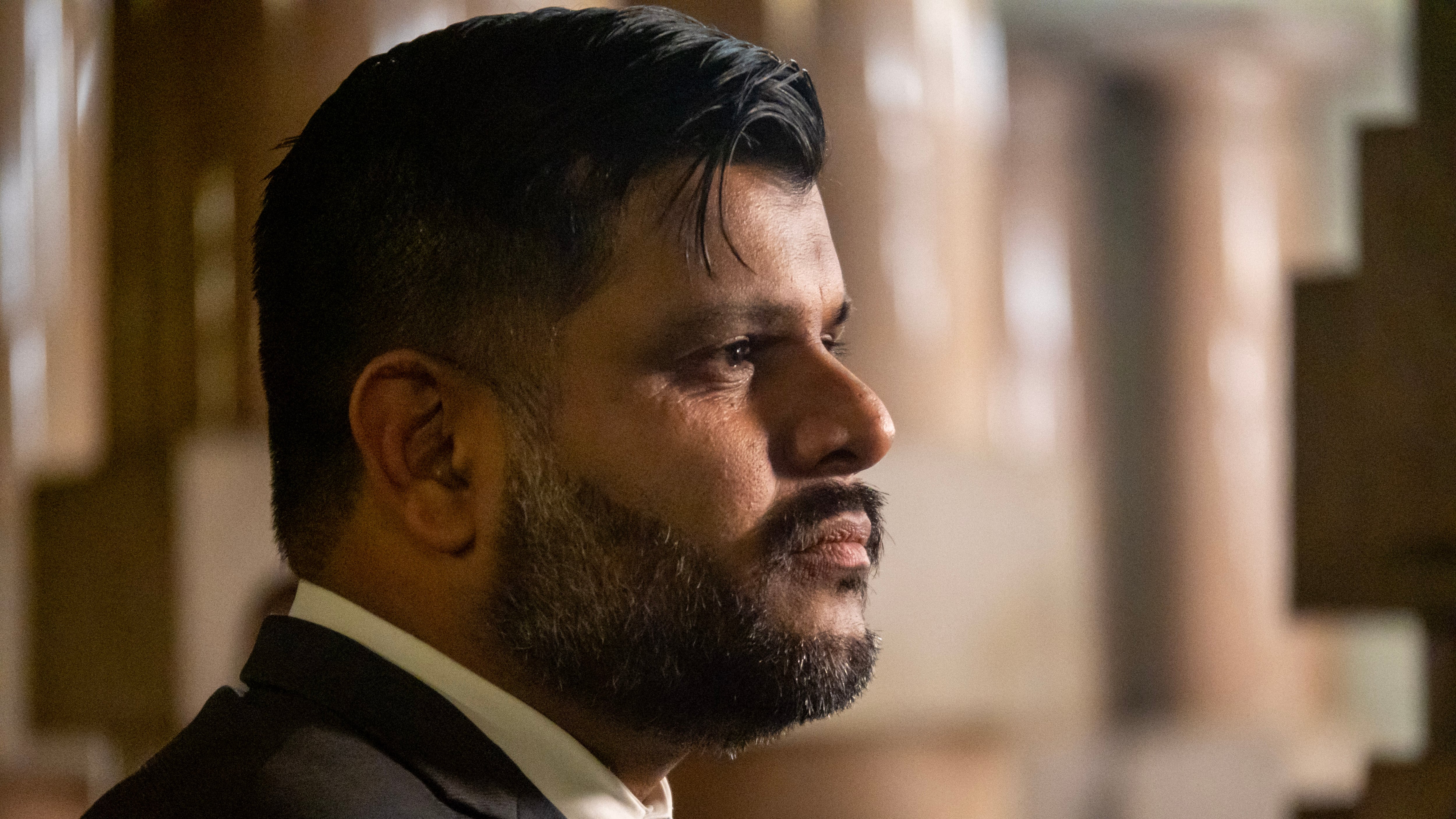
An extraordinary and violent event in Portland last week interrupted a heated debate over who should lead the City Council.
It also changed the dynamic.
On Jan. 8, the council began a second day of deliberations to elect a council president to lead the body in 2026. The first day had gone poorly. The council was split evenly into its usual two voting blocs: The progressive caucus, Peacock, supported Councilor Sameer Kanal, while the centrists on the council, who distrust Peacock, backed incumbent Council President Elana Pirtle-Guiney. But the bickering between the two factions had turned unusually personal and ugly.
The ferocity of the split had left councilors shaken; behind closed doors, both sides said they dreaded what the second day of voting would bring. But just 25 minutes in, an event of much greater magnitude trumped the vote for council president: A Border Patrol agent shot and wounded two people in East Portland.
In some ways, the grim news marked the realization of what Portland elected officials had long feared: violence at the hands of an occupying federal force bending a sanctuary city to its will. In other ways, the story proved more complicated, especially when Police Chief Bob Day conceded that the two wounded Venezuelan nationals had been linked by detectives to gang activity. All 12 councilors denounced the shooting.
In the hours that followed the news, however, it was the progressive bloc that mounted the most cohesive and forceful response to the feds’ actions. Peacock councilors acted unilaterally—positioning themselves as the force of moral clarity.
They could do that, in part, because Kanal and his allies have long been vocal critics of law enforcement.
Two other events that followed also made political prospects more difficult for centrist councilors who have historically aligned themselves with police and business interests. First, a video circulated on social media in which a Portland police officer appeared to say that he, too, would have shot legal observer Renee Nicole Good in Minneapolis. Second, the Portland Mercury published a series of texts sent by a prominent commercial real estate broker during the Jan. 7 council meeting in which he made racist and homophobic remarks about progressive councilors.
The result is that when the council resumes deliberations this week, Peacock will have a much stronger case that it can mount an uncompromised response to the right-wing agenda Portlanders most fear. And that may ease the path to securing a seventh vote for Kanal to become president.
The vote for president last week revealed that the hard feelings between Peacock and the centrist councilors are profound and far-reaching. The Jan. 7 debate was the culmination of a fractious year for the 12 councilors, and as the meeting persisted late into the afternoon, the jabs below the belt increased.
In particular, Vice President Tiffany Koyama Lane, a progressive, took hit after hit at President Elana Pirtle-Guiney. Koyama Lane characterized Pirtle-Guiney as power-hungry and unwilling to share responsibilities or information with her.
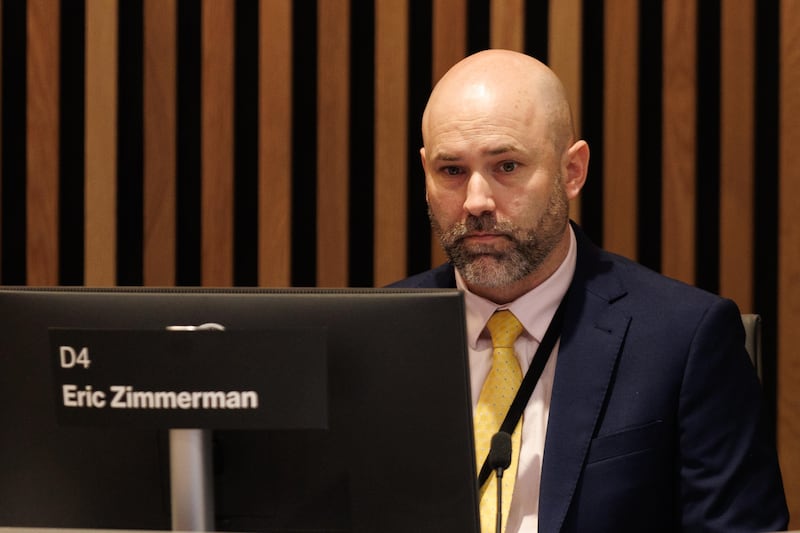
Councilor Eric Zimmerman responded midafternoon with an attack on Kanal, saying a recent “outburst” had “scared” him and worried him about Kanal’s temperament. (He appeared to be referring to an incident in which Kanal abruptly left council chambers in a foul mood.)
Zimmerman’s comments changed the tenor of the debate. Peacock councilors for the remainder of the afternoon focused on race, at one point alleging that the council centrists were engaged in racist stereotyping of Kanal.
Koyama Lane alleged that Pirtle-Guiney had a pattern of “berating people of color and those in subordinate positions, both inside this building and in public spaces.” (She brought up an incident last spring in which Pirtle-Guiney said “fuck you” to Kanal.) While Pirtle-Guiney didn’t respond to the allegations from the dais, she tells WW that her record shows she values “all of my colleagues and the important perspectives they bring to our work.”
The council ended the meeting after nine votes of 6–6, without a new president.
On Thursday, Jan. 8, deliberations were set to continue.
Councilor Zimmerman—a foe of Peacock—kicked off the meeting by nominating two new candidates from the centrist side of the council: Councilors Steve Novick and Loretta Smith. They accepted.
Councilor Angelita Morillo ignored the two nominations and implored Pirtle-Guiney to step aside. She called the centrists’ comments the previous day about Kanal “thinly veiled dog whistles.”
“An inability to pass the helm of power to somebody else, with different experience, knowledge and background, is completely unacceptable to me,” Morillo said. “It’s time to let a millennial man of color actually lead.”
Then, just 25 minutes after the meeting had begun, a somber Pirtle-Guiney told the council it needed to recess immediately. Councilors wordlessly hurried out of the chambers.
As news of the Border Patrol shooting leaked out piecemeal, it felt to many Portlanders that the worst-case scenario they feared had finally happened: On President Trump’s orders, the feds were here, and they were shooting Portlanders. The killing of Good in Minneapolis was at the front of people’s minds.
The next three hours at City Hall moved quickly. Back in chambers, Councilor Jamie Dunphy said, “I’m struggling to sit here right now and feel like I’m able to give this task my full attention.” Councilors postponed the vote for president to Jan. 14.
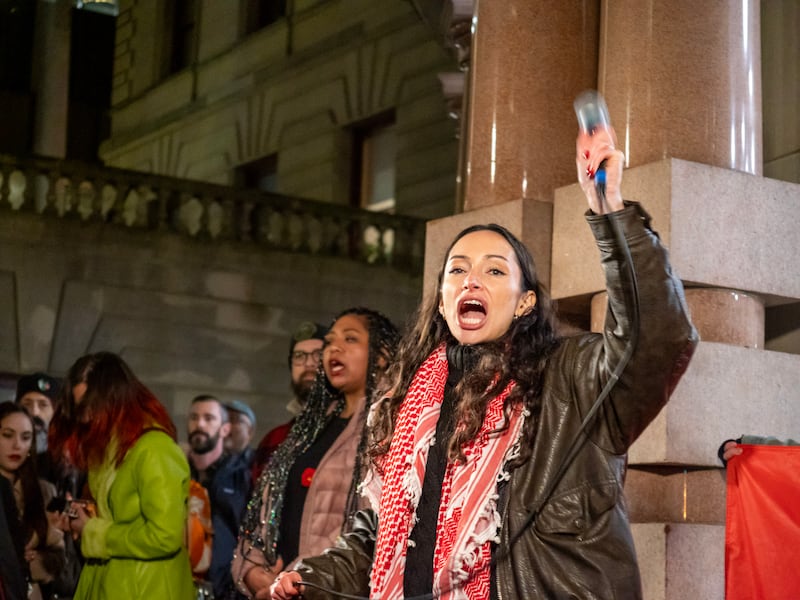
By around 4:30 pm, some members of Peacock, their staff and advisers had filtered into a conference room at City Hall to deliberate. The Portland Chapter of the Democratic Socialists of America, of which four of the Peacocks are members, soon after announced a vigil and rally outside City Hall at 6 pm, attended by “affiliated elected officials.” Another press release, issued soon after by Kanal’s office, announced a 6:30 pm press conference attended by all six Peacock members also outside City Hall—to attendees, the vigil and press conference were one event.
“Portland, we stand together and we’re going to keep standing together until every ICE agent is out of our city,” Kanal said at that event, surrounded by hundreds of people bundled against the cold. “Until that agency is taken down, brick by brick, and we salt the fucking earth.”
As Kanal was speaking, a more buttoned-up press event was being held two blocks east, on the 14th floor of the Portland Police Bureau’s Central Precinct. That one was headlined by Gov. Tina Kotek, Mayor Keith Wilson and Police Chief Bob Day. They decried federal activity in the city and expressed skepticism about claims by the U.S. Department of Homeland Security that the two wounded people were connected to the Venezuelan gang Tren de Aragua.
Why the two press conferences overlapped is not entirely clear. Two Peacock councilors tell WW on background that they were upset at how the Central Precinct press conference came together. A particular point of contention is that Smith was asked to speak at the press conference, but not Candace Avalos, a fellow District 1 councilor and a daughter of immigrants.
What is clear is that only the Peacock councilors were invited to speak at the City Hall vigil, and the media advisory from Kanal listed only the six Peacocks as attendees. Other councilors weren’t aware that the 6:30 event was happening at all.
Portland DSA co-chair Olivia Katbi says DSA planned the event and confirmed that the four socialist councilors would attend. Katbi said Dunphy and Avalos asked to join, and she says DSA was “happy to have them.”
“I was invited to speak at the DSA press conference, and I chose to take it,” Kanal says. “That’s all I’m comfortable saying on the record.” Morillo says she attended the vigil rather than Kotek’s press conference because “I also believe in the power of a people’s movement to effectively push back against authoritarian power, and I believe it’s important to put that belief into action. That is where I choose to put my energy when fascism is at our doorstep.”
Pirtle-Guiney says she wasn’t invited to the press conference outside City Hall attended by the six Peacocks. “We are a stronger city when we are united, especially in a crisis,” Pirtle-Guiney says. “Our only way to fight effectively is to stand as one against the federal interventions that threaten our community.”
Both at the rally and in comments made to WW afterward, Peacock councilors made it clear they thought their energy was best spent on the steps of City Hall, rather than at the Central Precinct next to their centrist colleagues. (Peacock Councilors Jamie Dunphy and Candace Avalos did attend the governor’s press conference, then left early to attend the event at City Hall.)
“Our strength is being able to speak to different communities in our own voices, but that we still know our common enemy,” Avalos says. “How I talk about what happened as the daughter of immigrants is going to be different from how Eric Zimmerman talks about it.”
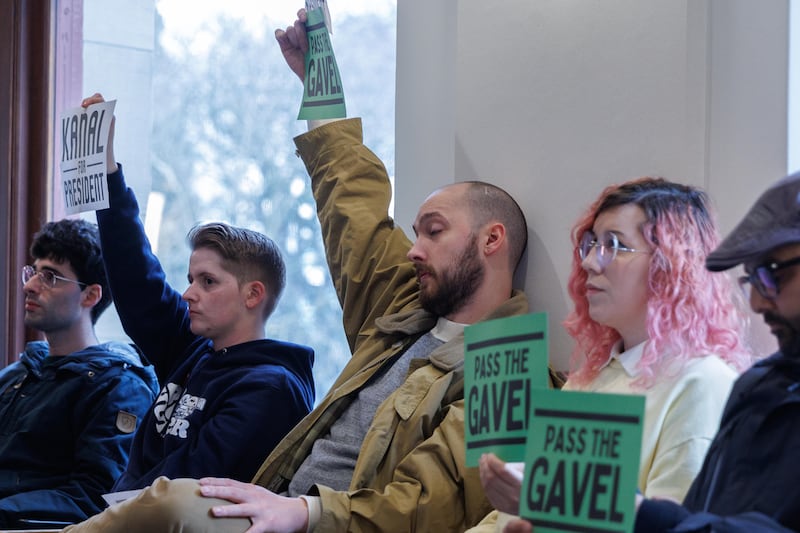
Over the next five days, two more events took place that could add fuel to Peacock’s push for Kanal’s presidency.
On Sunday, a video circulated on social media of a Portland police officer appearing to tell a protester he also would have shot Good “if she drove a car at me, yes.” Chief Day said later that day he’d reassigned the officer while the bureau looks into the incident.
That incident was politically significant because Peacock had alleged during the Jan. 7 council meeting that police union leaders were lobbying the centrist councilors not to vote for Kanal because of his past work on police accountability.
“Apparently, public safety leaders will lose their mind over Sameer Kanal if he gets to hold a gavel,” Koyama Lane said Jan. 7. “Scared of the dark-skinned man on the council.” (Portland Police Association president Aaron Schmautz says he made no calls to councilors, and called the comments “deeply hurtful and untrue.”)
Kanal tells WW of the video: “I want to be sure that when we send [Portland police] to stand between protesters and the federal government, that PPB is facing the way of the threat, which is the feds.”
The video—and Day’s reassignment of the officer—came just days after Peacock had emphasized the need for council to have a president at the helm that would push police accountability.
Then, on Jan. 13, another twist. The Portland Mercury reported that while councilors deliberated Jan. 7, commercial real estate broker Brian Owendoff sent a series of texts to associates that included racist and homophobic comments aimed at progressive councilors of color. (Reached by WW, Owendoff said the Mercury had violated privacy laws and that he was considering legal action.)
Crucially, Owendoff is one of the complainants to the Oregon Government Ethics Commission that Peacock caucus meetings violated public meetings law. (The ethics commission voted 7–0 in December to investigate the matter.)
Peacock councilors now say that Owendoff’s texts prove much of what they were saying the week before about how longtime power brokers at City Hall—including businessmen like Owendoff—create a system that progressive councilors say is unfair and hostile to them.
“In some ways I’m relieved that this was exposed because it reaffirms what the progressives and the people of color have been saying,” Morillo said in a statement to the Mercury and then WW. “This was all tied to the power dynamics we experience inside and outside of City Hall.”
The City Council convenes at 9 am Wednesday, Jan. 14, to elect a new president.