Skip to main content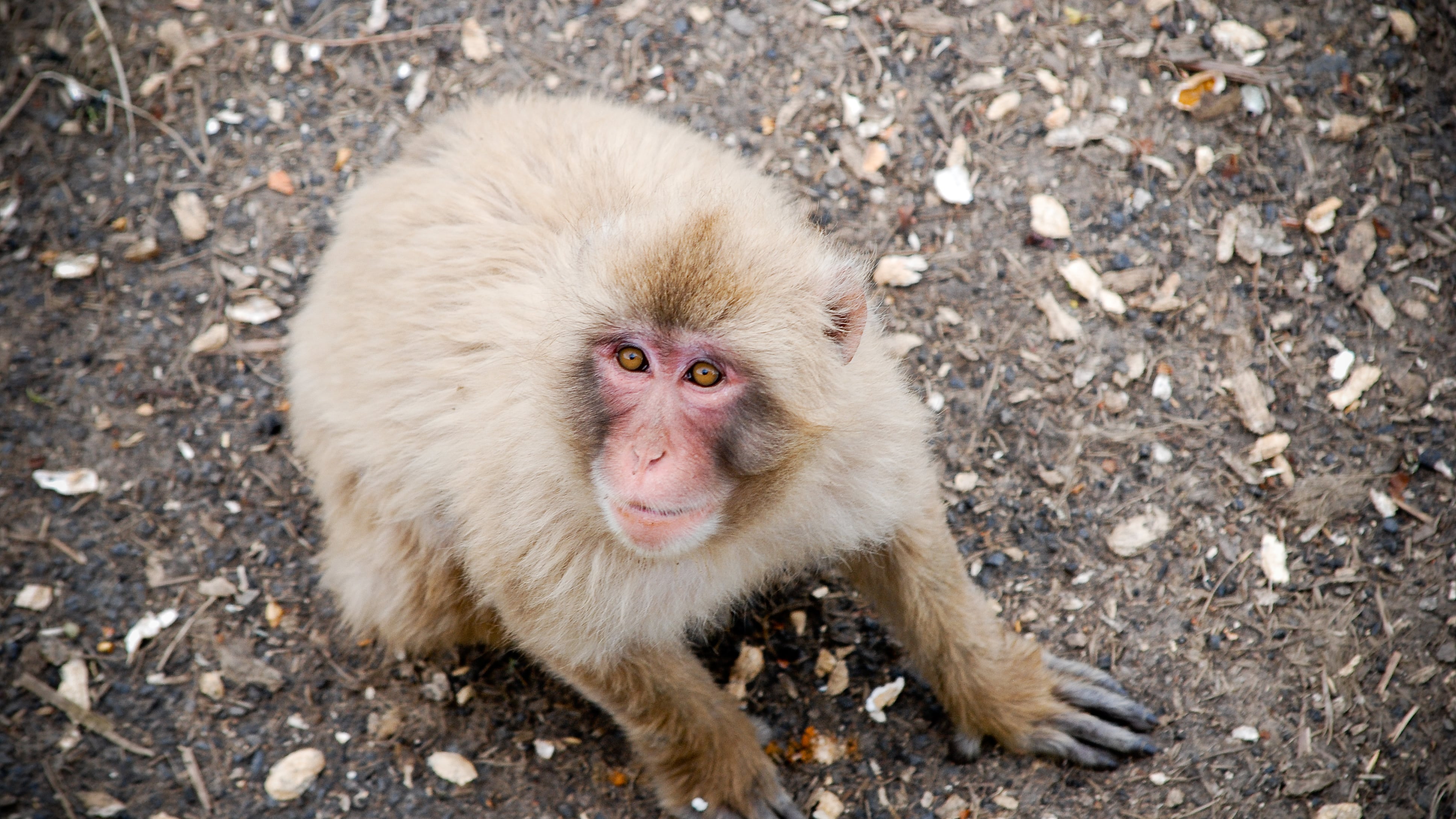
Is President Donald Trump TACOing on threats to defund monkey research at the National Institutes of Health, which pays most of the bills at the Oregon National Primate Research Center?
TACO is Wall Street parlance for “Trump Always Chickens Out,” and it describes how the president has threatened tariffs on trading partners, only to call them off when financial markets crash.
Similarly, the Trump administration has said it plans to cut funding to the NIH, taking particular aim at animal testing. That threat caused panic at the ONPRC, the 200-acre facility in Hillsboro where 5,000 macaques and other nonhuman primates are bred and used for experiments. The center is run by Oregon Health & Science University.
At a special meeting about the ONPRC today, OHSU board members grilled staff about the future of the center, given the uncertainty about federal funding. Asked by new board member (and former state senator) Betsy Johnson about what OHSU is hearing from the Trump administration, executives gave answers that suggest another TACO.
“We have continued to receive award after award after award,” said interim chief research officer Bonnie Nagel. “We have no hard data showing that the funding is going down. Aside from what seems like rhetoric at this point, we haven’t received any signal that it’s going down.”
Julie Hannah, OHSU’s associate vice president of government affairs, confirmed that.
“There are mixed signals coming from both from Congress and from NIH,” Hannah said. “Congress is poised to pass legislation that fully funds the NIH, provides a little bit of a bump, and provides infrastructure funding for the ONPRC.”
The Trump administration has indicated a bent against primate testing, which has been welcome news to animal rights groups betting that budget cuts could shutter the ONPRC, where, they say, many of the monkeys are kept under conditions that amount to torture.
In April, the federal Food and Drug Administration said it would cut back on animal testing “in the development of monoclonal antibody therapies and other drugs.”
Today, the U.S. Environmental Protection Agency said it would aim to end testing on mammals by 2035. The EPA’s Office of Chemical Safety and Pollution Prevention will implement “high-quality alternatives” to reduce testing on rabbits, mice, rats and dogs, EPA said.
“Unlike the previous administration, the Trump EPA will not delay scientific progress on developing alternatives to animal testing,” EPA administrator Lee Zeldin said in a statement. “We will pursue this goal while adhering to the law and the highest-quality scientific standards.”
OHSU’s board held a meeting today to discuss a report requested by state Rep. David Gomberg (D-Otis), who asked the university to tell the Legislature how it would respond should the NIH drastically cut funding to the ONPRC. OHSU is a public corporation that gets a small fraction of its $6.2 billion budget from the state. The governor appoints its board of directors.
To answer Gomberg’s questions, OHSU hired Huron Consulting Group, which helped Harvard University close its primate lab in 2015. The ONPRC is the largest of the seven national primate research centers that remain open. Huron examined options for closing the Oregon center in the event of NIH defunding, determining that the lowest-cost option was to keep it open, in large part because it’s costly to send research monkeys into a humane retirement.
The board heard testimony from the public on the matter. Representatives from People for the Ethical Treatment of Animals testified, alongside doctors from OHSU.
John Brigande, a professor of otolaryngology, began his testimony by describing a disease that is progressively rendering him deaf. Even with hearing aids, he can only hear every other monosyllabic word. A cure for his disease, and any like it, requires monkey research, he testified.
“Monkey hearing is unique in modeling the full complexity of human auditory function,” Brigande said, and the ONPRC is the only lab with experts in the field.
Animal rights activists countered that animal research, in addition to being cruel, is outdated. Most experiments can be done on computers and with technology such as human “bio ink,” which can be used to 3D-print artificial live tissue for experiments.
“Primate studies, despite their extreme expense, are small-batch and archaic,” said Garet Lahvis, a neuroscientist and former professor at OHSU who specialized in mice. “We can run thousands of experiments in a week rather than 20 monkey [studies] in a decade.”
Worst of all, Lahvis said, monkeys are kept in tiny cages that recall the Middle Ages.
“Would you house your children, or your grandchildren, like this?” he asked the board. “Or even your pets? I don’t think so.”
Union members made the case for keeping the center open, in part because it employs some 170 workers represented by the American Federation of State, County and Municipal Employees.
“We are not monsters,” said Angela Calabrese, a union member who works in animal care at ONPRC. “We are animal care professionals who care deeply about our monkeys. None of these people came to the primate center to start a career in animal cruelty.”
PETA issued a statement after the hearing, noting that almost all of the people who testified in favor of keeping the ONPRC open were employees there.
“Seemingly every speaker in favor of keeping the Oregon National Primate Research Center open, despite escalating costs and the irrelevance of experiments on monkeys, gets a paycheck from the center and holds a vested interest in keeping it open,” PETA senior vice president Kathy Guillermo said. “No one calling for its closure held such an interest. In fact, some in the animal protection community may be unemployed if the center closes.”
The OHSU board will continue to examine alternatives for the ONPRC’s future.