Skip to main content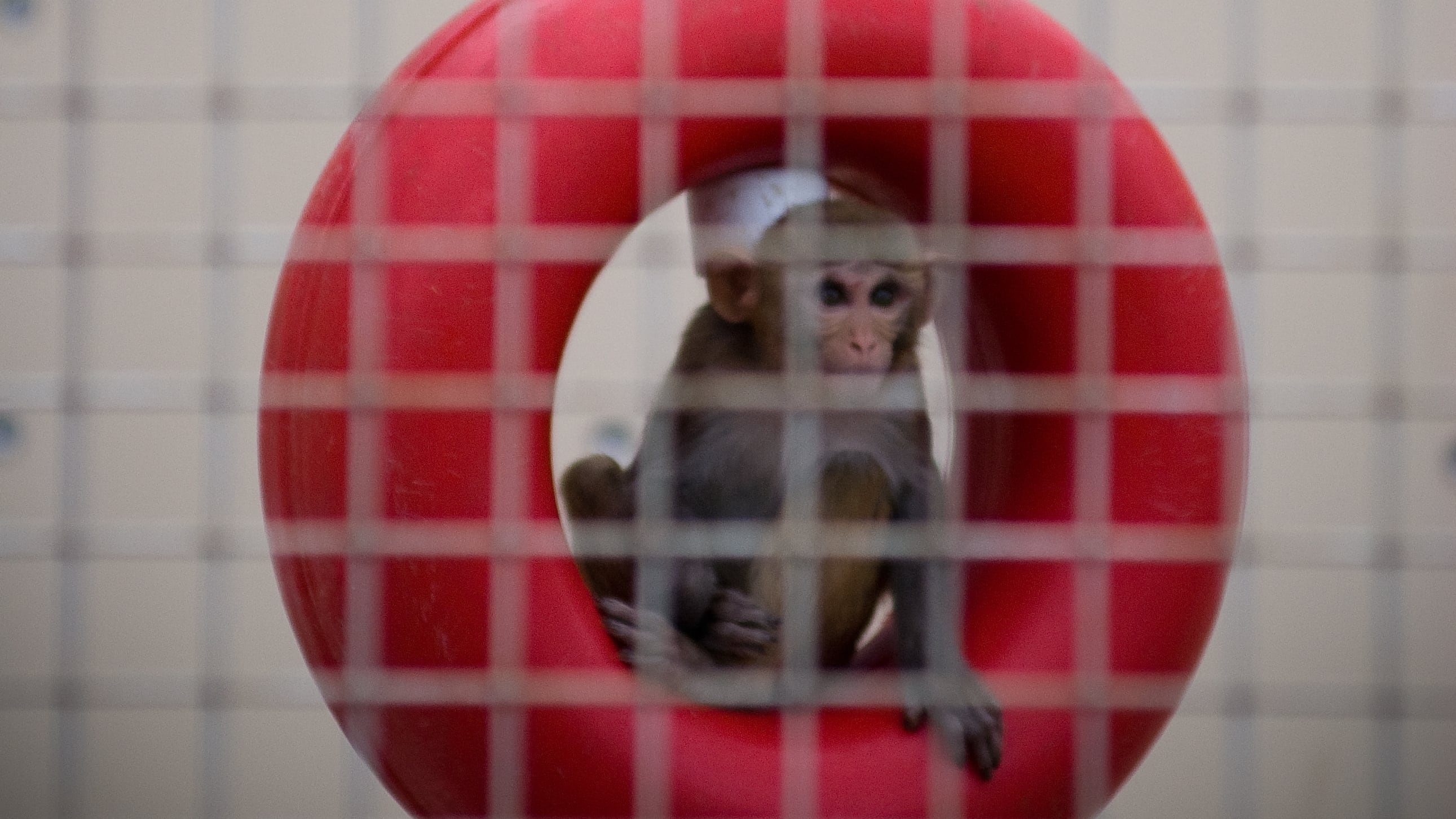
The 200-acre Oregon National Primate Research Center, long a target of animal rights groups, may become a sanctuary for the 5,000 macaques and other monkeys that live there.
At a special public meeting on Feb. 9, the board of directors at Oregon Health & Science University will consider a resolution to negotiate with the National Institutes of Health on funding the transition, OHSU said in a statement today.
OHSU administers the ONPRC, the largest of seven national primate labs.
Under the Trump administration, agencies including the NIH and the Food and Drug Administration have vowed to curtail medical testing on primates, creating an unusual alliance with People for the Ethical Treatment of Animals and other activist groups.
“OHSU has long been committed to advancing science in service of human health, guided by both rigorous evidence and a responsibility to reflect the values of the communities we serve,” OHSU president Shereef Elnahal said in a letter to the public today. “The Oregon National Primate Research Center has contributed meaningfully to that mission over many decades, and we recognize the importance of its work and the people behind it.
“We also recognize that science evolves,” Elnahal and two OHSU board members wrote. “Advances in technology, changes in ethical standards, and shifting public expectations are shaping how research is conducted across the country.”
There is no agreement with the NIH, OHSU said. Any negotiations authorized by the board would “center on efforts to protect the careers of OHSU West Campus employees,” where the ONPRC is located. About 170 workers at the ONPRC are members of the American Federation of State, County and Municipal Employees, a powerful force in Oregon politics.
“In addition to possible support for transitioning from primate research, NIH may explore the possibility of investing in other areas of science at OHSU, including biofabrication, gene therapy, and other non-animal models,” OHSU said.
PETA Senior Science Advisor Lisa Jones-Engel called the meeting “a new beginning for Oregon Health & Science University” that would “put the university at the forefront of cutting-edge research by casting off what has failed and embracing state-of-the-art science.”
In defending work at the ONPRC, OHSU has often pointed to advancements in the treatment and prevention of HIV infection, work on the effect of cannabis on reproductive health, potential cures for yellow fever, and possible vaccines against cancer.
The latest push to close the ONPRC started last year, when the Physicians Committee for Responsible Medicine ran advertisements on television and radio, showing inhumane conditions at the facility. Pressure built after Gov. Tina Kotek told leaders at OHSU that she’d like researchers to wrap up their work and close the center.
Her comments became public last March when Kotek spokeswoman Elisabeth Shepard confirmed Kotek’s sentiment after an inquiry from WW.
“While the governor has very limited authority under Oregon law to weigh in on the proposed [OHSU-Legacy Health] merger, she does believe that OHSU should figure out how to close its primate research center, just like Harvard University did 10 years ago,” Shepard wrote. “The governor has directly advocated for OHSU leadership to complete their current research obligations and move towards shutting the center down in a humane and responsible manner.”