Skip to main content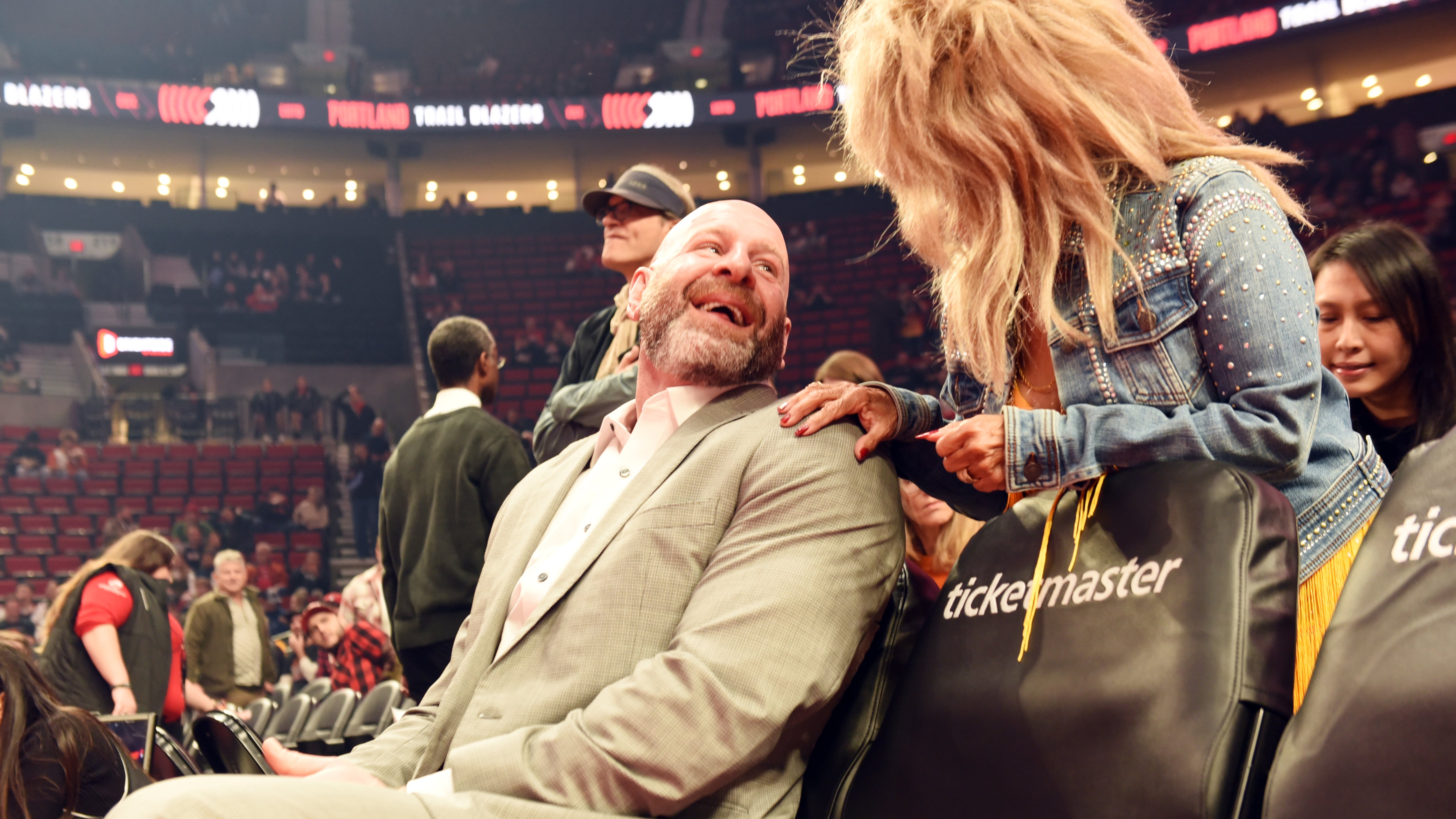
Joe Cronin says he doesn’t think about his job security. Which, if true, would make him one of the few people in Portland who doesn’t. And the crazy thing is, when he says this, you actually believe him.
Cronin, once a hulking prep center in Colorado—he actually played against Chauncey Billups in the 1994 Colorado 6A state championship game—has an exceedingly calm disposition and a shaved head. He comes across as a sort of Zen Thanos.
Since taking the reins as the 11th general manager in franchise history four years ago, Cronin has overseen the least enviable task in sports: tearing down a beloved, aging roster in order to rebuild younger and cheaper.
In effect, this meant shipping away veterans like CJ McCollum and Jusuf Nurkic, then intentionally losing a whole lot of games. In their first three seasons under Cronin, the Blazers posted a record of 81–165. That strategic futility made game-day tickets cost less than the street meat outside the stadium and, in the end, so thoroughly alienated Cronin’s franchise player, Damian Lillard, that he demanded a trade.
For those of you who have tried to erase the episode from your minds, Lillard said he would only go to one team, the Miami Heat, and Cronin, in his earliest days on the job, refused to accommodate him. For fans, it was like watching their parents fight in a restaurant—one where the food was bad on purpose. Cronin ultimately waited everybody out and dealt Lillard to Milwaukee for a king’s ransom.
Point being, Cronin wasn’t terribly popular in Portland (or in Miami, for that matter). What’s more, he was a different kind of personality than Blazers GMs of yore, from Bob Whitsett to Neil Olshey, who tended toward a swaggering arrogance that masked whether they knew what they were doing. Cronin, who started with the Blazers front office as an intern 20 years ago, spends his evenings with his wife, Megan, walking his dogs: Walter and Judy Lee, both Labradors, and a mutt named Bruce.
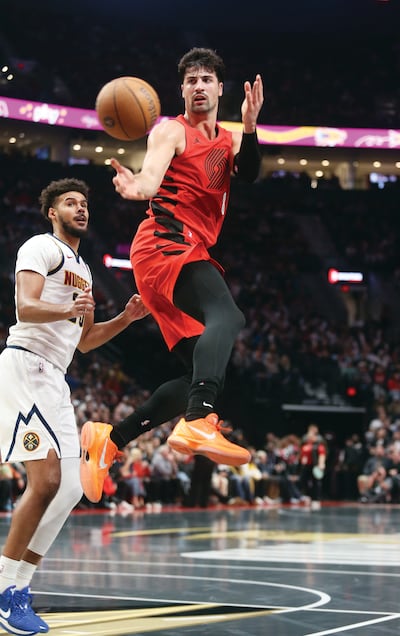
But look around. Lillard is back in a Blazers jersey—rehabbing from injury, sure, but also drawn to a roster of long, rangy wings who play dogged defense. Deni Avdija, a bruising forward Cronin swindled from the Washington Wizards, is now an All-Star. Toumani Camara has emerged as an All-NBA-level defender. The ever-mercurial (but still just 22-year-old) Shaedon Sharpe has taken another leap as a scorer. Donovan Clingan, in just his second season, has been dominant at times on defensive and the offensive glass.
Last year’s team showed the blueprint, going on an inexplicable run in January which saw them briefly turn into a defensive juggernaut, in the process saving the job of head coach Billups, who had appeared destined to return to his former life as a television analyst. Billups and Cronin were both given contract extensions by the outgoing ownership group, led by longtime Blazers owner Paul Allen’s sister Jody and his college roommate Bert Kolde.
Last summer’s prodigal return of Lillard, combined with the addition of veteran Jrue Holiday and whimsical social media coverage of newly drafted Chinese center Yang Hansen, gave the team positive headwinds heading into a season for the first time in years.
Then, with new owner Tom Dundon in attendance, the team lost its home opener to the Minnesota Timberwolves, and within 24 hours its head coach, Billups, was indicted as part of a federal sting uncovering rigged poker games run by the Mafia.
Billups was replaced by Tiago Splitter, a first-time head coach who had spent the previous season in France. Remarkably, Splitter has kept the team relevant, posting a 27–29 record entering the All-Star break, which ends for the Blazers this Friday when they host the Denver Nuggets at Moda Center. The Blazers currently sit at ninth in the Western Conference, which would see them qualify for the postseason for the first time in five years if the season were to end tomorrow.
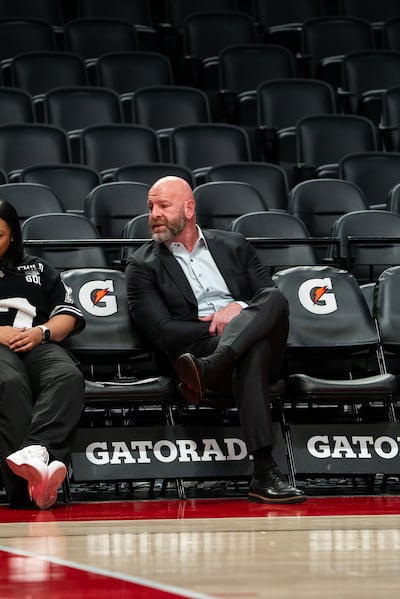
Mike Schmitz, the Blazers’ assistant GM who has developed a cult following for his detailed player scouting, says Cronin inspires the front office by example.
“No one’s going to outwork him,” Schmitz says. “There’s a really healthy balance of humility and competitiveness. I don’t think there’s an ounce of him that wants to be just OK. Those are the type of people you want to fight for, work for, and go to battle with.”
All of which leads to the question Cronin says he isn’t thinking about: whether Dundon will retain him. When Dundon bought his other sports franchise, the pro hockey Carolina Hurricanes, he cleaned house, effectively firing the GM.
So it seemed as good a time as any to ask Cronin to make his case for keeping his job. Shortly before the break—and the day after his 50th birthday—WW sat down with Cronin on a video call to discuss the past, present and future of the team’s roster.
Topics he would not discuss: the likelihood of Dundon moving the team, if and when Splitter would get the nod as permanent head coach, or whether the Blazers made a serious trade offer for Milwaukee Bucks superstar Giannis Antetokounmpo. We asked Cronin about all of these, and he politely but firmly declined to answer. So we won’t waste your time including those exchanges in the interview below, which has been edited for brevity and clarity. He did, however, talk about the luxury apartment Paul Allen built in the rafters of Moda Center.
WW: Have you met Tom Dundon yet?
Joe Cronin: Yes. With the league’s permission, we were able to connect a little bit early on, after he acquired the team, and just have some introductions, some initial conversations. So that was good. And encouraging.
Have you pitched him on keeping your job?
No, I haven’t. Not that it doesn’t cross your mind, but it’s something I don’t particularly worry about. I’m so focused on just doing a great job, for as long as I have it, that that’s all I really lock in on.
What would your pitch be?
Just the massive steps we’ve taken. It’s the players we have now, how bright their futures are, the cap flexibility we have, the draft assets that we have, and the multiple tools that we have to continually get better. So it’s leaning on the work that we’ve accomplished so far.
You’ve spent much of the past four years tearing down the roster and building it back up. Are we looking at the finished product?
I don’t know that it’s ever a finished product. The roster’s still not where it needs to be yet. I’m really happy with the steps we’re taking and where we’re headed, but we know that we’ve still got to get more talented.
Will the next five years make the past five worth it?
You hope in any rebuild that there’s a light at the end of the tunnel. The previous season we made some good steps that second half of the year. This year, we’ve been a little up and down. I want to see this group be at least mostly whole and show us what they’re capable of.
While we’re really optimistic about the futures of each of our guys, some of this is up to them. Like, OK, when are you going to take that next step? And we’re seeing some of them do that. We saw Deni [Avdija] take a huge step, which definitely speeds up our progress. We’ve seen Toumani [Camara] be a very, very capable starter who’s only 25. So some of this is happening in real time. We’re still learning what these guys are and where we’re headed.
Almost every team in the NBA eventually builds around one guy. For a little while, the Blazers were building around Dame, and when the rumors started percolating about Giannis, it felt like, oh, it could be time for us to build around one guy. Is there a guy on this team right now? Have you identified who you’re building this team around?
Yeah, currently it’s Deni. Deni emerged into an All-Star this year, and really he’s just getting started. He is 25 years old, taking massive steps the last two years with us—but even prior [with the Wizards], he was well on his way to becoming a guy. So, that’s one. We feel we need multiple.
Your predecessor, Neil Olshey, famously said that he didn’t think it was easy or even possible to get free agents to come to Portland. Was he right?
To be determined. We haven’t spent much time in the free agent market yet during my tenure. We went young. We just didn’t have a lot of roster spots or cap space to play in the free agency market. But I’m confident in our ability in the future to do so. I think what we’re building is a well-respected organization, a team that others will want to play for. We saw it with Dame. I mean, of course he had massive ties to the city and organization already, but he also believed in what we were building. I don’t know if he would’ve come back if he didn’t believe in the roster.
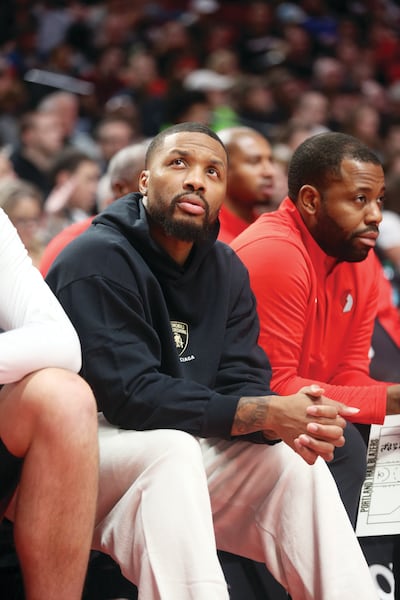
It was very famously in the press that you and Damian Lillard were not buddies for a while. How did you go about mending fences?
I think our foundation was strong enough to weather what we went through. And there was a mutual respect, even after the trade, that still existed. There was still such a strong mutual respect and admiration for each other—at least me for him, I don’t want to speak for him—but it just wasn’t awkward. We sat down a few times at his house and had really good conversations. A little bit of it was us talking about what we wish we would’ve gone differently, but it was mostly just looking forward. What happened happened. From my perspective, it was telling him, look, this organization still thinks the world of you and would love to figure this out. So it was very seamless, probably more so than anyone thinks it was.
Is there a point in that conversation where you had to say the magic words, “I’m sorry”?
I don’t think I had to. I’m pretty sure I did.
But I am sorry. I regretted how that went. When Dame left, it never felt right for me. It didn’t feel right, him being in another uniform, and the day he chose to come back, that was an incredible day for me and for this organization—and I think for the city.
Did you have a visceral reaction?
I was by myself. I was in Vegas at Summer League, and I was in my room. So I wasn’t able to celebrate or anything, but I was just so incredibly happy. I just had a big smile on my face, like, OK, we did it. He’s back. Throughout that day and evening, I got so many notes and messages and heard so many stories about how everyone just kind of went nuts. I got notes from other players and things like that: All is right in the NBA again, Dame’s back with Portland. I could feel those ripples and it was really cool.
Are you aware of the degree to which you live rent free in the heads of Miami Heat fans?
I am not.
You don’t go online at all?
I try not to. I try to avoid most of that.
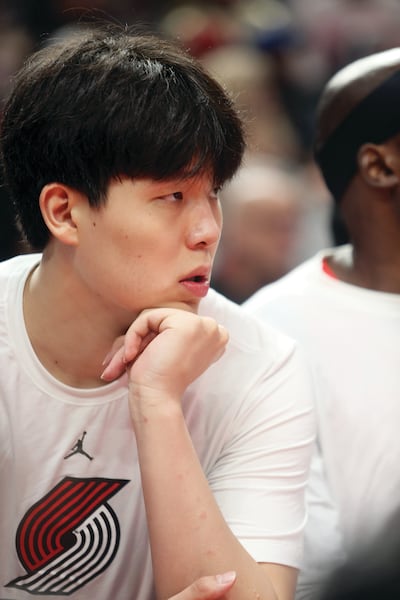
How would you describe the experience of having Yang Hansen on the team? From a media perspective, jersey sales, how has he transformed the franchise in these early days?
Like many rookie seasons for guys, it’s been up and down for him. And he’s still definitely trying to find his stride, but we’ve really enjoyed having him in our building. Hansen has such a terrific attitude and spirit about him. He lights up a room. And now our challenge is getting him to be the best player that he can be. We’re working on that.
As far as impact, I’m not super tuned into all the numbers stuff, but I’ll see a few things here and there about ratings in a Summer League game. And it’s great to see how passionate the Chinese fan base is about him and how much they love the game of basketball.
There were people—John Hollinger was one of them—who were openly skeptical that drafting Yang Hansen was a purely basketball decision. How do you respond to those criticisms?
I don’t care. I don’t care what they say. I really don’t. We’re consumed by building the best basketball team possible, and business decisions had nothing to do with drafting Hansen, from Jody [Allen] all the way down.
When do you expect a resolution on the Chauncey Billups situation?
I don’t know. It’s something that I’m not really active in and really can’t talk about, either.
That situation is just unheard of in the NBA. Did you have any conversations with players in those first 48 hours?
That was a heavy day. We got everybody together as a group that day and talked things through. And then multiple side conversations in the subsequent days about everything—not just what had happened, but also where we’re headed and what we need to get done.
Are you the kind of guy who gives a Al Pacino in Any Given Sunday kind of speech? Or is it more of just like one-on-one quiet talks?
More one-on-one. I’m pretty reserved and soft-spoken and definitely prefer the one-on-one environment. I think often players do, too.
Can we ask you a weird one? Paul Allen’s apartment atop Moda Center. Have you visited it?
I have, once.
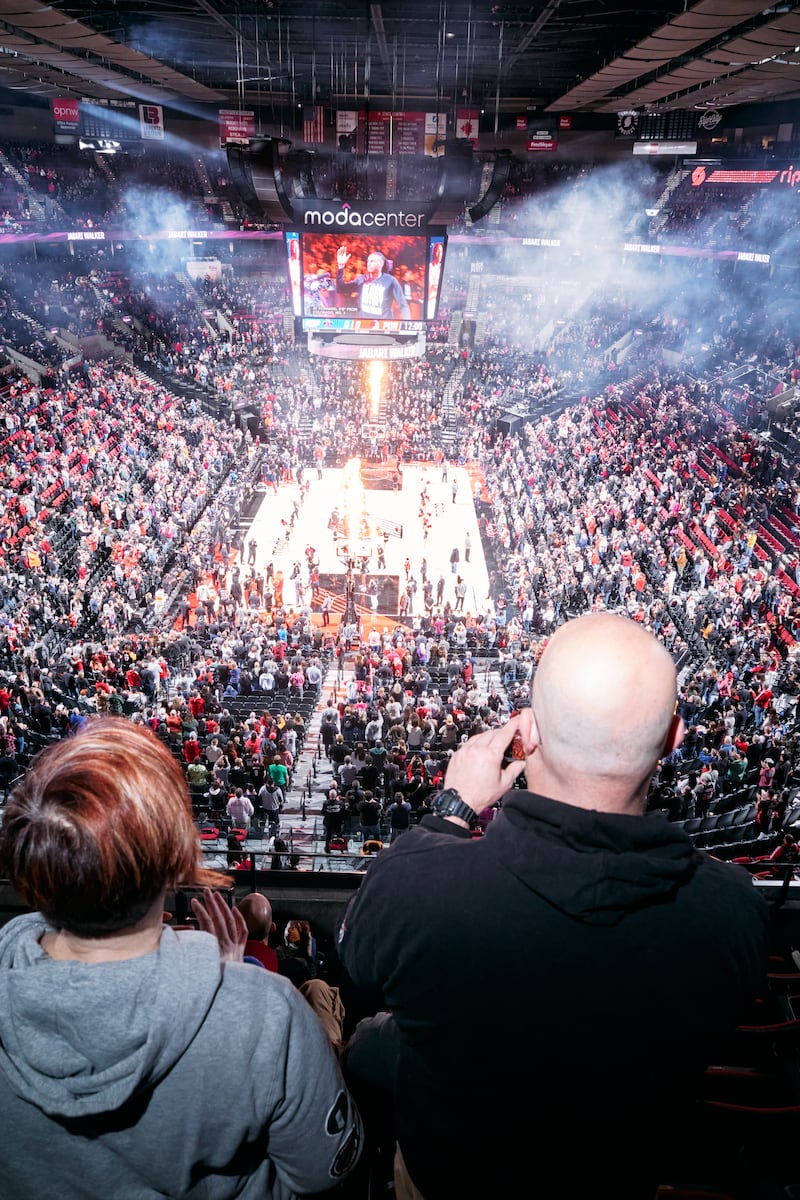
It exists? We’ve never been sure if it actually existed.
It exists. I wasn’t sure, either. I had heard things, and I never really asked any questions. And then finally just asked, “Hey, can we see it?” And this was probably three years ago. So for 17 years, I had never visited it, never asked. I don’t know why, I just probably didn’t want to bother anybody. But finally I was like, I gotta see this thing, what’s in it? And, it’s an apartment.
With a bed?
There’s bedrooms and a regular apartment, with a seating area where you can look through a window down onto the court. It’s sweet.
How does that work? Is the window in the floor?
I’m pretty sure it’s got to be a floor-to-ceiling window and you’re way up there. It’s really high; it’s above the 300 level. So it’s hard to see, but you could see the court. It’s more like just to enjoy the whole arena environment, not specifically to be able to watch the game. ’Cause you’re pretty high up there. But yeah, you can see the whole arena ’cause it’s at the end. It’s pretty cool.
What do you think makes Portland special as a basketball city?
I’ve been here in Portland 20 years now, and to be able to experience the love this fan base has for this team, it has been incredible. It’s such a passionate fan base. It’s such an educated fan base. At the arena or even at road games, a lot of times I’ll do a little lap around the concourse and just look for Blazer fans and just say hi real quick. Those die-hards: There’s just so many of ’em. It’s a really cool thing the way this fan base has connected with this team.
How important to you is it that you get to see this all the way through?
It’s very important to me. You start something, you want to finish it. I realize the league and life don’t always work that way. But my goal is just to go through this with no regrets. I’m going to work as hard as possible, I’m going to do the best job possible, and if it does ever end, I’m going to hold my head high and walk away.