Skip to main content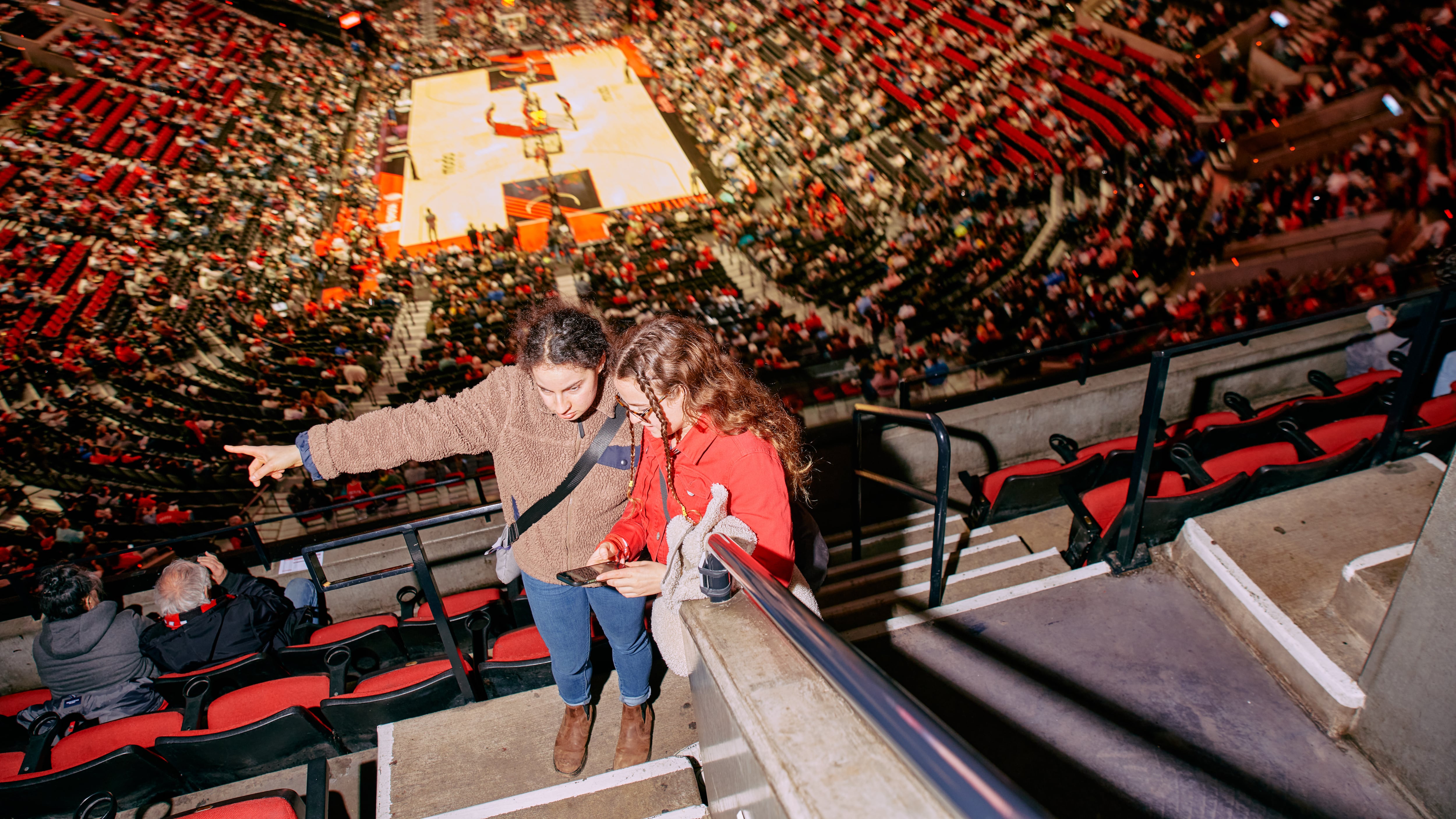
The 1995 grand opening of the Rose Garden is within living memory of many Portlanders. News reports from opening weekend detail a VIP benefit with comedian Dana Carvey and the chance to ice skate, shoot baskets, and tour the Portland Trail Blazers’ locker room. I was a kid and went to the $1 public opening the next day to run through the new fountains.
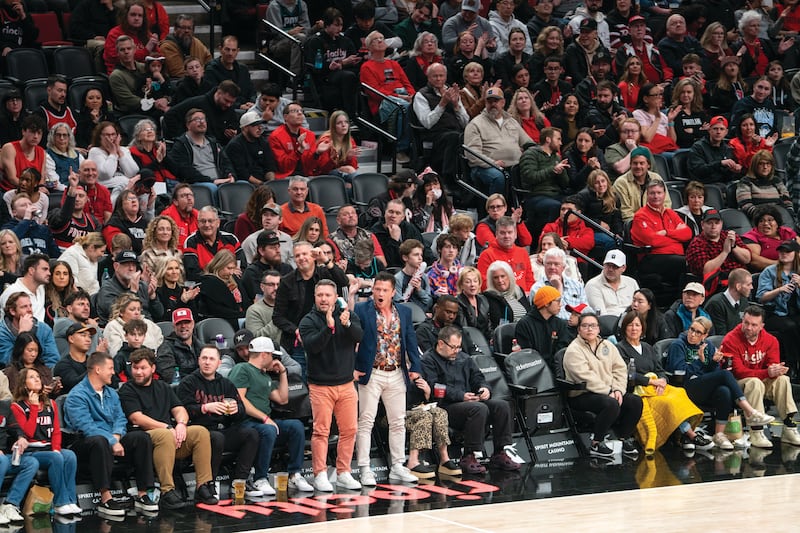
The Rose Garden is called Moda Center now—a local health insurer bought the naming rights—and if there’s something wrong with it, the flaws escape me. Just earlier this month, I went to a Portland Trail Blazers vs. Memphis Grizzlies game and had a great time. Thanks to a recent six-game losing streak temporarily tanking ticket prices, I could afford excellent last-minute 100-level seats and hear every sneaker squeak and see every fist bump. During halftime, I had my choice of good local food vendors I’d see in the city, like Top Burmese, Ranch Pizza and Fifty Licks. Instead, I went to a futuristic “Just Walk Out” kiosk where artificial intelligence watched me grab my snacks and then automatically charged my credit card.
It was hard to see the architectural urgency that is making politicians at multiple levels of government scramble for $600 million to meet the expectations of a new owner, Tom Dundon…or else.
Whether the Blazers might leave town is a question above my pay grade. What I wanted to know was: What would $600 million change about the arena? And who, exactly, are those changes for?
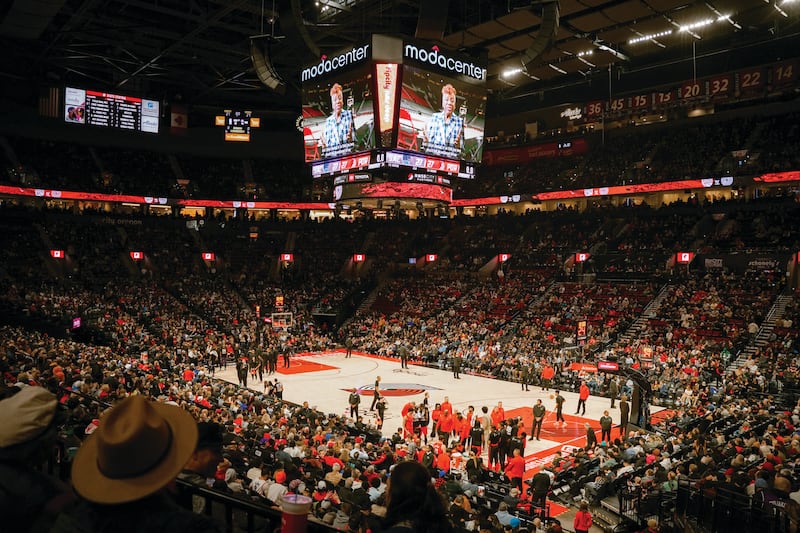
“Your experience is not unusual,” says Charles Boyle, the Trail Blazers’ director of public affairs. “We take a lot of pride in how Moda Center has been maintained since 1995. A lot of people still have a great experience there, myself included.”
But Boyle and a variety of industry insiders say that stadium architecture trends have long passed Moda Center by. Concourses are now wider and more wired, luxury suites offer more perks for VIPs, and the back of the house is ready to welcome whatever stage theatrics modern pop stars have planned. A Moda Center renovation would be about “keeping up with the technological changes and expectations of fans,” Boyle says.
One statistic keeps getting repeated as the Moda Center renovation funding story has escalated this month: It’s the oldest arena in the NBA that has not undergone a major renovation. About half a dozen arenas in the country are older, though, including New York’s Madison Square Garden, which opened in 1968 but has since been renovated twice. All of the other cities with arenas that were built in the ’90s around the same time as the Rose Garden—such as in Minneapolis, Salt Lake City and Phoenix—have been overhauled.
The Rose Garden was designed for the 1990s fan experience, which centered on getting butts in seats, and quickly. Now, Boyle contends, fans expect to be wined and dined while taking in the action on the court.
“The way fans want to experience games and events has changed,” Boyle says. “Instead of sitting in your seat, you might want to get some of those local foods and not miss a big chunk of the game.”
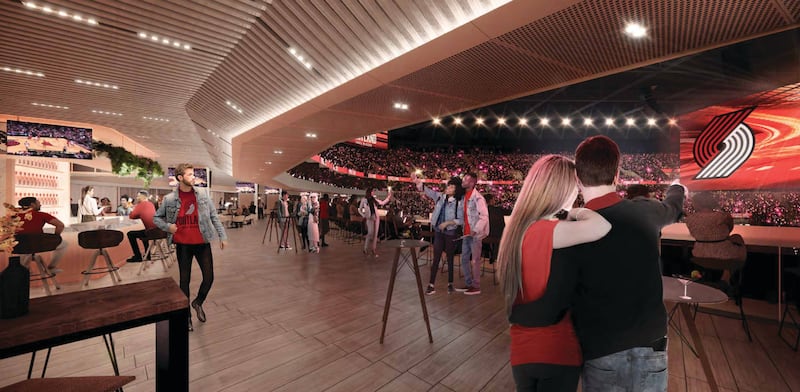
Modern stadium concourses are bigger than Moda’s and have “eddies” for people to hang in and have a drink, while still being able to see the game, architect Chris Roberts says. The eddies are also built to be a great backdrop for social media.
“There’s always the Instagram moments now that people are looking for,” Roberts says.
Roberts is a principal architect at Portland-based Opsis Architecture. He has focused on sports and recreation for the past decade, mostly at the collegiate level. Opsis designed the new basketball arena at University of Idaho, renovated UI’s Kibbie Dome, and is currently working on an expansion of Boise State University’s Albertsons Stadium (the one with blue turf).
The current Moda Center setup of seats only being stratified among 100, 200 and 300 levels? Very old fashioned, Roberts says. Those levels will hold, but newer stadiums scatter nicer (and higher-priced) seating options throughout the building.
Moda’s luxury suites are very ’90s in that they are high up and far away from the court, and all about the same size, seating 16 to 20 people. (There are a few that are larger and some “studio suites” for four to eight.) Now, arenas are introducing “ledge” and “loge” seating—which are semiprivate, smaller suite spaces that are a step up in quality from 100-level tickets.
It’s a way to attract new luxury ticketholders, like buying a Pearl District condo before that house in the West Hills.
“Maybe you’re a young entrepreneur, and you can’t afford a suite, but you could maybe start out with a ledge seat, and then maybe that’s going to move you on to a loge, and so on,” Roberts says. “There’s still a large investment, but it gives you other price points.”
Of course, these are price points that offer a team owner new ways to squeeze money out of fans who can afford to splurge on games more than they already do. It’s fair to ask whether this is the fan’s version of (gulp) gentrification. Will we be paying twice for the privilege of seeing the Trail Blazers in person—once with our tax dollars and again on game night?
Roberts says that renovation does not automatically trigger across-the-board price increases, and often include upgrades to general admission seats and nosebleeds. Think well-designed, standing-room-only zones at concerts that are cheap but also feel intentional, rather than secondary. But ticket prices depend entirely on the strategy of the ownership group, he says.
For their part, the Trail Blazers are talking the talk of inclusivity. The renovation will touch all parts of the arena, including the 300 level, Boyle says, and the team expects to continue promotions such as Sunday Family Fundays and discount ticket packages.
“We continue to look for ways to drive value for families and other budget-conscious fans,” Boyle says. “That won’t change after a renovation. Instead, fans should have a greater range of options when looking for tickets and experiences available to them.”
To be sure, some of the upgrades are more egalitarian—if also far less sexy. The essential infrastructure of the place—the HVAC system, the plumbing, the electrical—all needs updating, industry insiders say. Concerts are only getting more elaborate, with some stars arriving with dozens of semitrailer trucks’ worth of equipment, all of which requires lots of loading docks and modern rigging systems.
Other tech upgrades would be more obvious to fans. People have gotten used to having their ticket on their phone, but modern arenas go many steps further and offer apps for game day that help fans find their seats, suggest meals to their liking, give updated game statistics, and even offer online gambling options. Teams want to keep that content in house and—surprise!—sell ads on it.
“A lot of it is kind of focused on how do you really maximize the experience and how do you make money off of it?” Roberts says.
That experience starts on the approach to the arena, Roberts and others say. Right now, Moda Center is on a bit of an island, with the parking structures serving as de facto blockades. It would be nice if it could weave into the community more naturally and boost the Albina neighborhood.
That work has already begun, with the Portland Trail Blazers partnering with the nonprofit Albina Vision Trust to create the Albina Rose Alliance, an action plan to restore Lower Albina into more of the vibrant Black community that was displaced by the construction of the freeways and Veterans Memorial Coliseum in the 1960s.
Ultimately, what state and city leaders are agreeing to is a real estate deal. If it happens to have a nicer snack bar, so be it.
“The Blazers are a keystone for Portland, and it’s been wonderful for the last, whatever, 60 years it’s been,” Roberts says. “I think this is a great opportunity to reset and look at the next 60.”