Skip to main content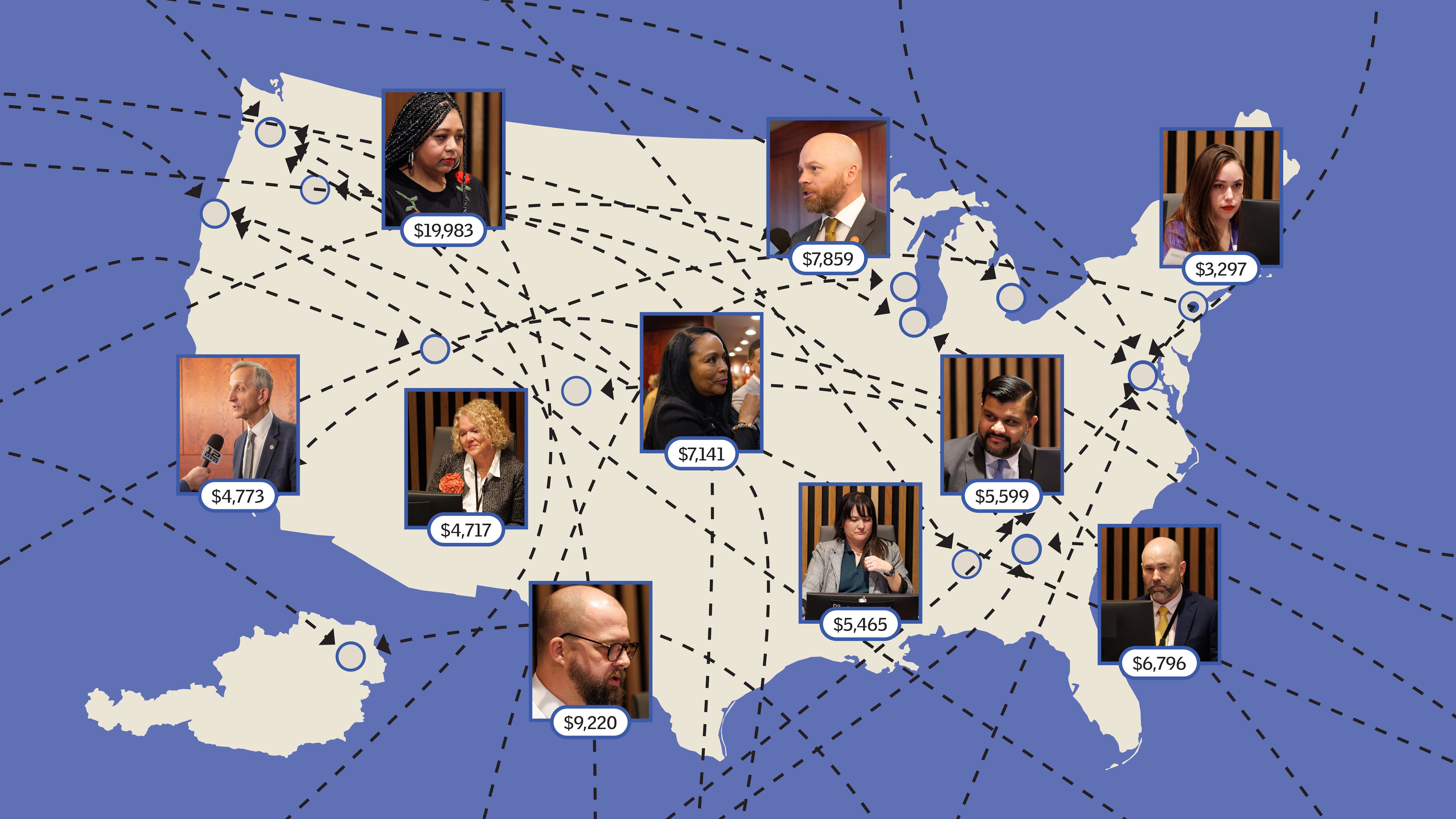
How much time should an elected city official spend in other cities? In their first year on the job, Portland city councilors took very different approaches to that decision.
In February, WW requested each councilor’s travel reimbursement forms, along with those of Mayor Keith Wilson. The documents, provided in April, show the taxpayer-funded trips each councilor went on during their first year in office.
The receipts account for trips taken between January and December 2025.
In some cases, the receipts offer a window into the priorities and political affiliations of each councilor, particularly those who traveled more frequently to attend conferences and forums and to meet with public officials in other cities. (For councilors who traveled little or not at all, less can be gleaned.)
One councilor—Candace Avalos of District 1—spent just shy of $20,000, double what the next-highest spender spent. The runner-up, now-Council President Jamie Dunphy, spent a little over $9,000.
Mayor Wilson spent a total of $4,773 on trips.
The accounting of councilors’ trips comes on the tail of a heated budget session, the second consecutive one in which they labored over dozens of amendments seeking to avert painful cuts to parks, police, fire and other employees as the city faced a crushing budget hole. The budget discussion ended last week on a low note for all councilors after the two council factions failed to come up with a compromise that would have saved at least some of the 150 job eliminations proposed by Wilson’s budget.
One of the points of tension in those discussions: the size of council office budgets, from which councilors pay for their travel.
Councilors Steve Novick, Tiffany Koyama Lane and Dan Ryan have repeatedly lobbied to trim office budgets in favor of funding services or small projects. Others, most vocally Councilor Loretta Smith, have argued against it, saying their office budgets are necessary to fulfill Portlanders’ desires to be more connected to their representatives.
There are a few important caveats to the data below.
The expenses account only for trips taken by the councilors themselves; they do not account for trips or travels taken by their staff. In some cases, councilors had their lodging, flights or meals paid for by conference organizers; because those costs were not incurred by the city, they are excluded from the tallies below.
In other cases, councilors paid for portions of their own trips. Councilor Mitch Green, for example, paid for his own meals during a social housing trip to Vienna. Councilor Jamie Dunphy paid for his own meals on two trips. And Mayor Wilson paid for his own flight back from a Los Angeles trip.
The lists also do not include work-related trips councilors may have taken that were not paid for by the city since the records obtained by WW reflect only city-funded trips.
Candace Avalos
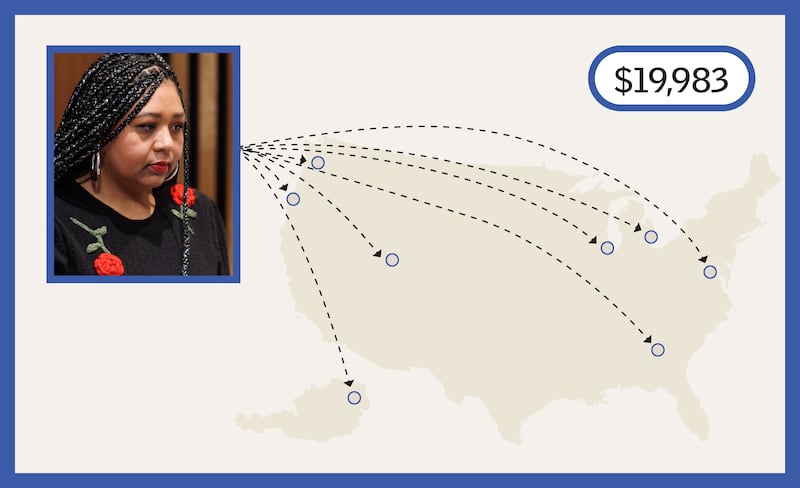
Total spending: $19,983
Number of trips: 8
Destinations: Atlanta with Mayor Wilson to explore housing and homelessness strategies pursued by the city and by private company PadSplit; Chicago for a conference hosted by Local Progress, a progressive advocacy and political group; Washington, D.C., for the National League of Cities Congressional Conference; Detroit for the Women of Color Conference hosted by the progressive nonprofit organization Democracy Rising that offers “Councilor Avalos opportunities to strengthen her leadership skills, conduct research, and facilitate ongoing community building”; North Bend for the League of Oregon Cities Spring Conference; Salt Lake City for the National League of Cities City Summit; Seattle for a screening of a short film that focused on Avalos’ 2024 campaign for City Council and to “speak to the success of Portland’s recent implementation of ranked choice voting”; and Vienna for a trip to learn about social housing.
What her office says: “Councilor Avalos has traveled when necessary to connect with national experts, local government leaders, and policy practitioners to bring back ideas and best practices that help make Portland’s government more effective, efficient, and accountable to the people it serves.”
Jamie Dunphy
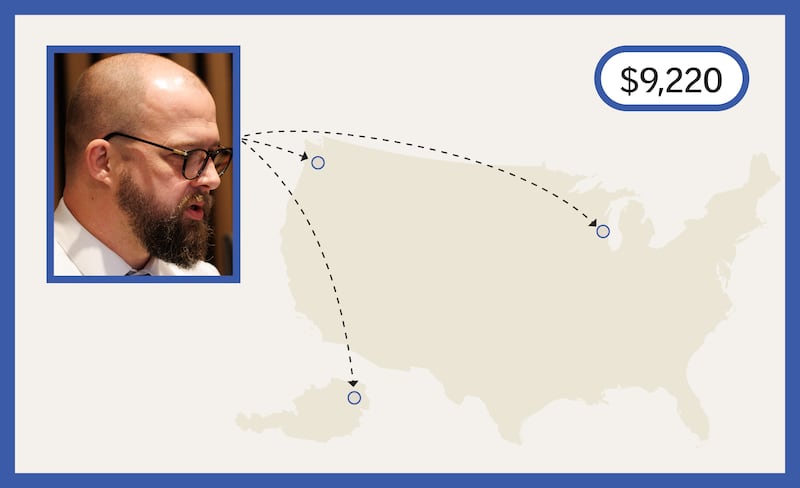
Total spending: $9,220
Number of trips: 3
Destinations: Milwaukee, Wis., for the National Independent Venue Association Conference to speak on a panel “regarding protections for city music ecosystems”; Seattle for the Music Policy Forum, during which he spoke on another panel; Vienna for the social housing trip.
What he says: “I firmly believe in not reinventing the wheel…I believe in learning what is working in other places, what isn’t working, and just bringing those lessons home. The ability to travel to other cities, states, or countries provides unique experiences and deeper understanding than a PowerPoint presentation ever could.”
Mitch Green
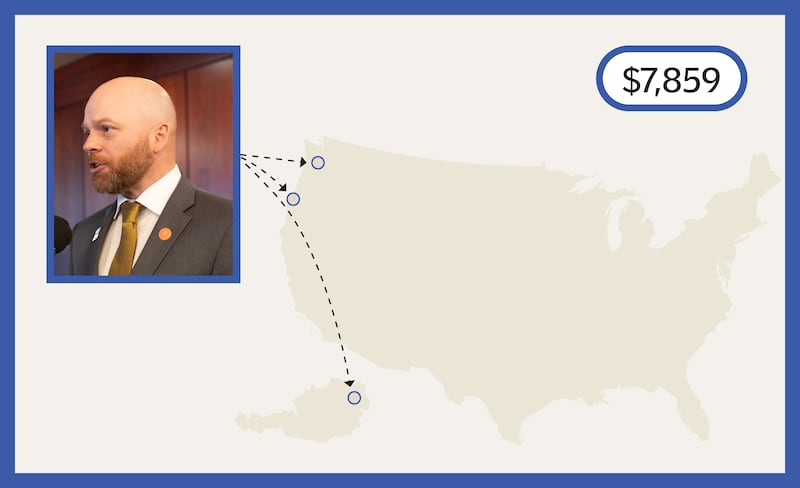
Total spending: $7,859
Number of trips: 3
Destinations: Seattle to attend the Western Social Science Association’s annual conference, and specifically to attend the Association for Institutional Thought’s forum, where Green went to “network and engage in dialogue with other social scientists and thought leaders to further understanding around economics and social justice issues” and where he gave a talk titled “From the Ashes of the Old: How a Socialist Institutional Economist Won a Seat on Portland’s City Council”; Vienna for the social housing trip; and North Bend for the League of Oregon Cities Spring Conference.
What he says: “Attendance at meetings of scholars across a range of disciplines provides an opportunity to stay abreast of advances in the fields, learn about applied policy problems in other jurisdictions and case studies, and exchange ideas. It’s important to develop and maintain the ability to independently evaluate the merits of policy proposals as they intersect with economic development to protect taxpayers and ratepayers from lobbyists who are always pitching new ways to spend public money.”
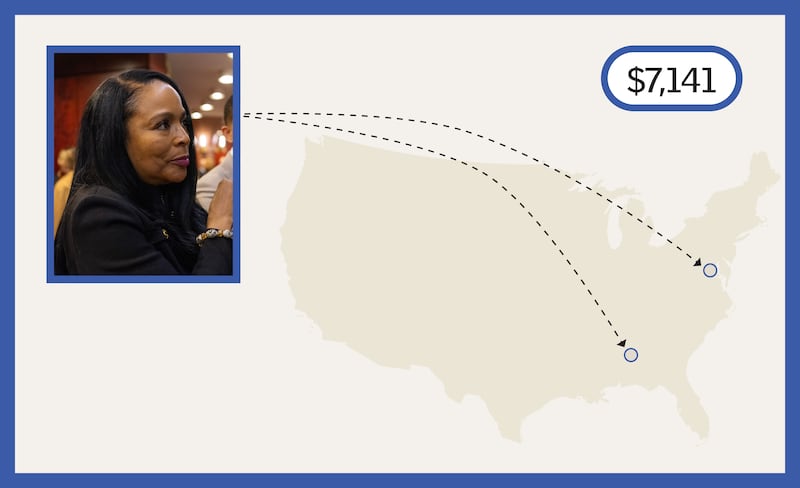
Loretta Smith
Total spending: $7,141
Number of trips: 2
Destinations: Birmingham, Ala., for the 39th Annual National Organization of Black County Officials Economic Development Conference, and Washington, D.C., for the National League of Cities Congressional Conference.
What she says: “We attended [D.C.] for professional development and to lobby the Oregon congressional delegation on specific policies to increase affordable housing in the city of Portland and city requests for federal funding.”
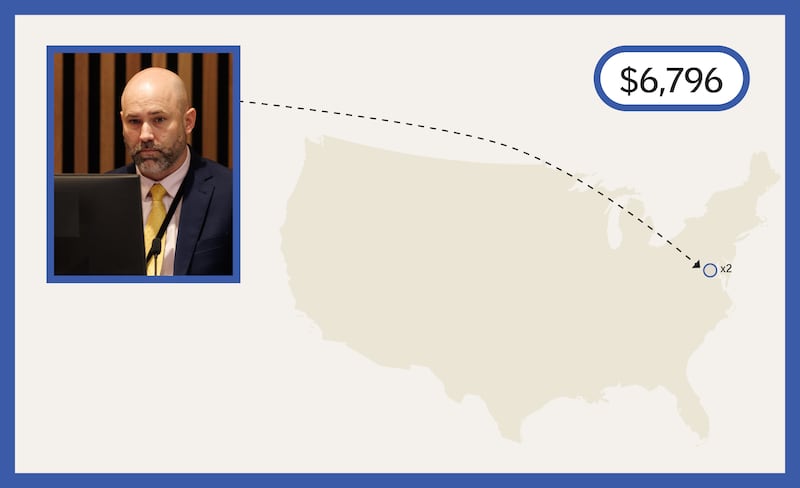
Eric Zimmerman
Total spending: $6,976
Number of trips: 2
Destination: Washington, D.C., for the National League of Cities Congressional Conference, and D.C. again for the LGBTQ+ Victory Institute conference, where he moderated a panel.
What he says: “It’s important that city councilors represent Portland beyond our city limits. The conversations we have with the federal government and the relationships we build with elected officials across the country matter.”
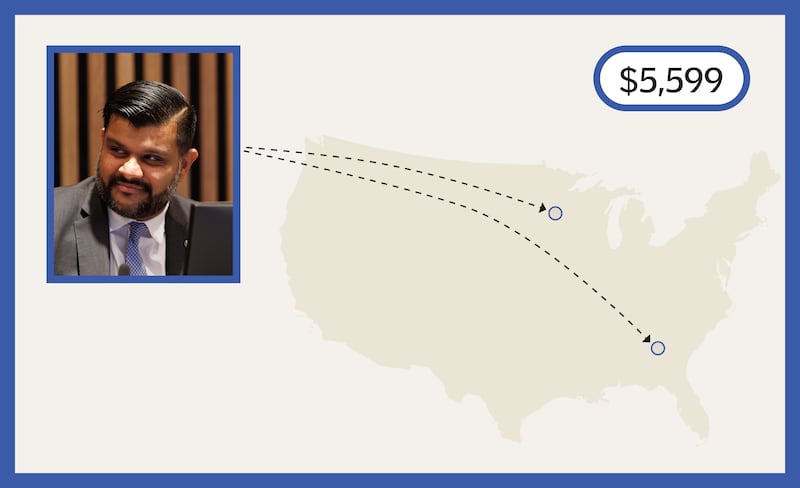
Sameer Kanal
Total spending: $5,599
Number of trips: 2
Destinations: Atlanta for the Asian American Pacific Islander Lead Summit, and Minneapolis for the National Association for Civilian Oversight of Law Enforcement conference to discuss models for policy accountability.
What he says: “Portland’s challenges aren’t wholly unique—no city’s are—and we don’t always need to reinvent the wheel to find strategies to solve them. Our travel budgets as councilors are tiny fractions of the city budget...there’s certainly a balance in how much travel is practical and prudent, and every opportunity is weighed accordingly to ensure that the benefits justify the cost.”
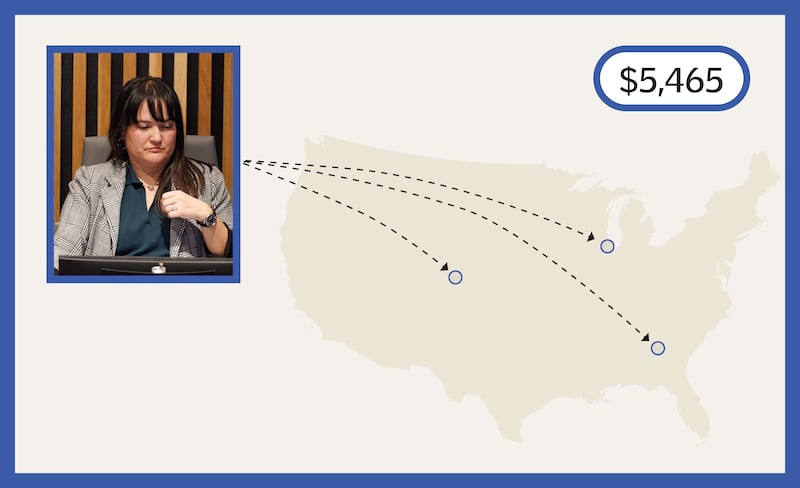
Tiffany Koyama Lane
Total spending: $5,465
Number of trips: 3
Destinations: Atlanta for the Asian American Pacific Islander Lead Summit (a convening of AAPI elected officials); Chicago for progressive political group Local Progress’ 2025 National Convening; and Denver for an Immigrant Rights Strategy Convening hosted by Local Progress.
What she says: “These connections have been invaluable...I have been able to collaborate with Seattle city councilors around housing and with Minneapolis city councilors regarding an increase in ICE activity.”
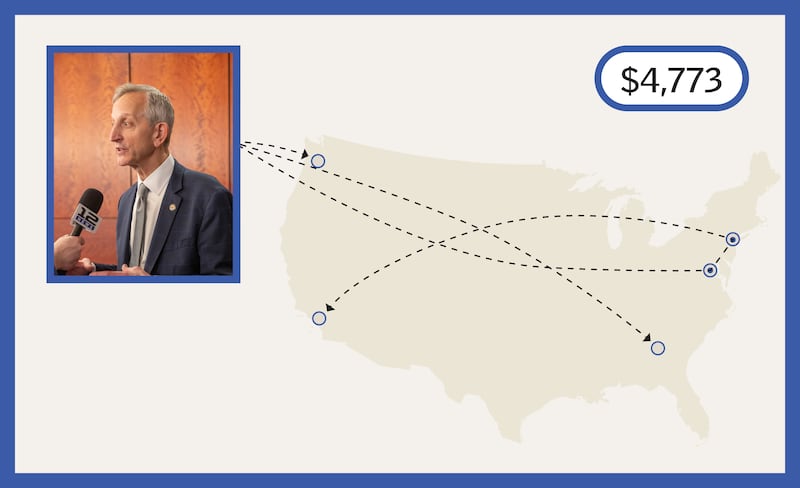
Mayor Keith Wilson
Total spending: $4,773
Number of trips: 3
Destinations: Washington, D.C., to meet with Mayor Muriel Bowser about the city’s homelessness response and shelter program, about its navigation as a sanctuary city under the Trump administration, and its drone policy. While there he also attended a high-speed rail conference. From D.C., he took the train to New York City where he met with leaders at Newlab, a tech platform based in Brooklyn that connects startups with material resources and venture capital, then flew to Los Angeles to meet with Mayor Karen Bass about homelessness. In August, he traveled to Atlanta to meet with the founders of PadSplit, a room-sharing tech startup based there, and to learn about the city’s response to homelessness and housing. In October, he drove to Seattle for the Connect Cascadia Annual conference to “represent Portland in regional discussions on economic growth, innovation, and transportation.”
What his office says: “The mayor believes that strategic travel, when it directly supports Portland’s priorities, is an important part of effective leadership.”
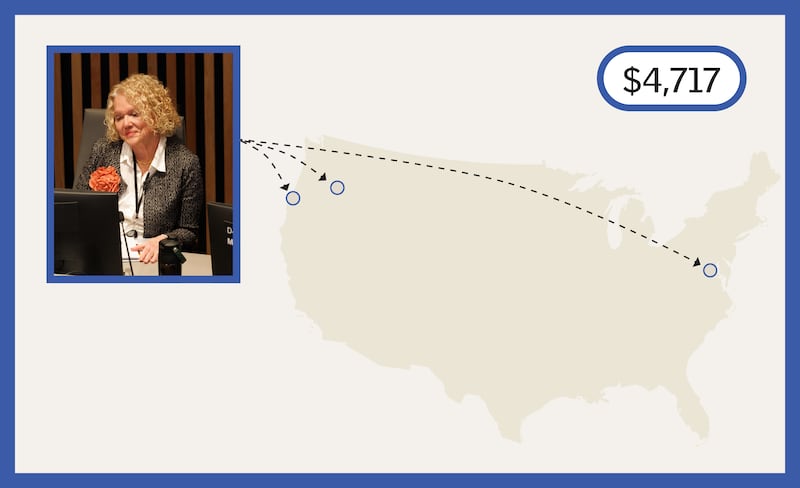
Olivia Clark
Total spending: $4,717
Number of trips: 3
Destinations: Washington, D.C., for the National League of Cities Congressional Conference; North Bend for the League of Oregon Cities Spring Conference; and Pendleton for a meeting of the League of Oregon Cities board, on which Clark sits.
What she says: Clark says the amount of travel appropriate for a councilor “depends on the councilor’s responsibilities.”
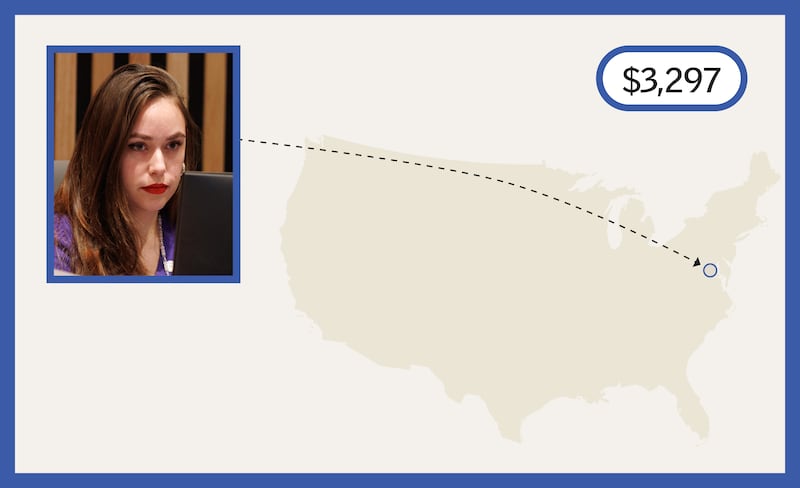
Angelita Morillo
Total spending: $3,297
Number of trips: 1
Destination: Washington, D.C., with the Joint Policy Advisory Committee on Transportation (a Metro-convened board of local elected officials on which Morillo serves as an alternate member) to lobby federal lawmakers.
What she says: “Work-related travel should align with a councilor’s duties and directly support the City’s policy and funding priorities. In this case, Portland participated in a long-standing, Metro-organized regional advocacy trip to Washington, D.C., where we met with Oregon’s congressional delegation and federal partners to advocate for transportation investments.”
Councilors Steve Novick, Elana Pirtle-Guiney and Dan Ryan did not take any trips on the city dime, according to city records.
“In our first year on council, as council president, my focus was on setting up our new form of government and serving Portlanders,” Pirtle-Guiney said. “I felt it was important to spend as much time here as possible in order to that.”
Ryan said in a statement: “This work is local. Most of the time, travel isn’t necessary. Some complex projects and mission-critical issues may necessitate travel related to fact-finding, research, and best-practice sharing in a nonpartisan setting. However, I don’t think taxpayers should be on the hook to cover travel costs associated with partisan political gatherings—campaigns, not City Council offices, should be paying for that.”
Novick said there’s occasionally a conference that’s worth going to, but warned that “one shouldn’t overdo it!”