Skip to main content
Some Portlanders guzzle while Oregon burns.
This issue marks the 10th edition of Hydro Hogs, our survey of the largest residential water consumers in Portland (and its posh suburb to the south, Dunthorpe). WW has conducted this exercise for 25 years, and it’s never felt more timely.
Water just seems more precious in a wildfire season that’s burned more acres statewide—2.3 million—than in any prior summer. Portland wakes each morning to see Mount Hood cloaked in smoke from a blaze that recently threatened Timberline Lodge. The chop-chop-chop of sprinklers watering palatial lawns is a grating noise on days like Aug. 5, when Portland had the worst air quality of any major city in the world.
What better moment to measure aquatic excess? In the following pages, you’ll find the 21 largest residential water consumers from June 1, 2025, to May 31, 2026. As we have since 2001, we used records from the Portland Water Bureau and the Palatine Hill Water District, which serves the unincorporated Dunthorpe neighborhood in Multnomah County, where many of Portland’s wealthiest families have estates.
This year’s top guzzlers are the thirstiest yet. To be sure, no one cracked the single-property record—that honor still goes to Jordan Schnitzer, who in 2003 used more than 2 million gallons. But five households used over 1 million gallons of water, the most we’ve ever seen.
Still, think twice before reaching for the pitchforks and torches. (Especially the torches.) As dire as this summer appears, the Portland metro area isn’t in a drought. The 19 million gallons soaking the 21 homes listed in the following pages could trickle out of the Bull Run Reservoir, the source of Portland’s drinking water, without anybody noticing.
So why do we insist on publishing our neighbors’ sopping secrets? We’re plenty aware that this project elicits gawking laced with resentment, and it clearly hasn’t inspired the biggest hogs to curtail their consumption. Indeed, the subjects reliably tell us they consider this issue an unethical invasion of their privacy.
But there are noble reasons to carry on. As our state—and the whole damn world—gets hotter, drier and more prone to devastating fires, the water we take for granted is not guaranteed. Neither is the public’s right to know who is being greedy. When The Source in Bend set out to do its own version of Hydro Hogs in 2021, it was thrown into a protracted legal battle with private Avion Water about whether the utility had to release its customer records. A court ruled it didn’t, and The Source hasn’t attempted the project again.
Finally, we like to think we’re providing our top users with a public service announcement: Check for leaks! You might be wasting water you’re not even aware of.
Speaking of leaks: We removed households from the list if they reported a leak to their utility and were issued an adjustment to their bill—that’s how the Portland Water Bureau and Palatine Hill Water District each cover homeowners’ extra costs from leaks. If homeowners told us they had a leak but Portland or Palatine declined to give them an adjustment, they stayed on.
We did our best to contact every person who appears in the following pages. We knocked on doors, left notes for people who weren’t home, and tried diligently to get their explanations. Some were contrite, others defiant.
Do anything 10 times, and you start to notice patterns. What stands out most from our years of hog wrestling isn’t the outrage or the excuses. It’s how oblivious Portland’s biggest water users are to how much they gulp. So maybe that’s all this is: a reminder.
Let’s see how the other half splashes.
Sophie Peel contributed reporting to this story.
#1
Homeowners: Josh and Kristine Collins
Water used: 1,157,984 gallons
Water bill: $15,242
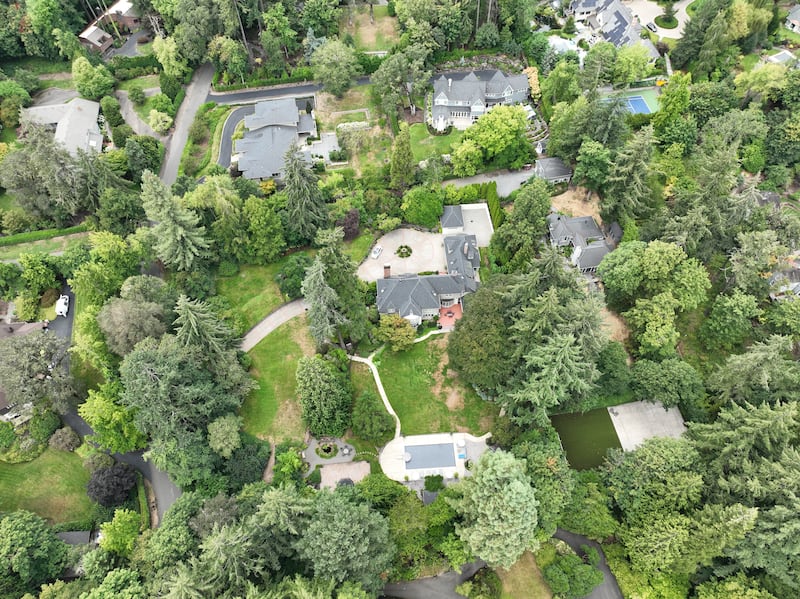
After many appearances on the Hydro Hogs list, this Dunthorpe estate has finally reached the top. Practice makes perfect.
The Collinses purchased the 8,200-square-foot home in 2018. By then, the property had already made the Hydro Hogs list twice under its previous owner: former Trail Blazers forward Rasheed Wallace. (Sheed made the list in 2004, when he used a whopping 1.6 million gallons, and again in 2006.) Kristine and Josh Collins had been climbing the Hog hierarchy themselves: They were #12 in 2015 while living at a different home, although the Palatine Hill Water District confirmed a leak in that case. Three years after buying Wallace’s home, they finished at #8.
In fairness, there’s a lot to irrigate. The home sports multiple lush lawns in front of and behind the house, and a driveway circles a tiered fountain surrounded by blossoming flowers. The Collinses spent much money and time nursing the land back to life after Wallace, traded to the Pistons, spent 13 years as a largely absentee owner.
Josh Collins, a former Marine captain decorated in Operation Desert Storm, is a co-founder and partner at a Portland private equity firm, where he and his partner focused on oil and gas funds. He was previously CEO of the Portland saw chain manufacturer Blount International, which sold to a group of New York private equity firms in 2016 for $855 million. As of 2021, when Blount changed its name to Oregon Tool, it was the world’s top saw chain manufacturer and a major player in tractor attachments. Josh left in 2020 to return to his private equity practice, which he co-founded in 2008.
Kristine was previously a lawyer at the U.S. Securities and Exchange Commission and, according to her LinkedIn, has sat on the boards of the Oregon Symphony and Riverdale School Foundation.
Kristine opened her door on a bright July afternoon. Sporting chunky tortoiseshell glasses, she sighed when two WW reporters introduced themselves. Kristine did not need to hear why we had come knocking. “Oh, no,” she said. “No comment.” Then she closed the door.
How much water did they use?
Enough to run the Ira Keller Fountain for 90 minutes without reusing any water.
Prior Hog honors: 2015 (with an asterisk), 2021

#2
Homeowners: Philip and Sarah Nelson
Water used: 1,126,566 gallons
Water bill: $16,139
The top water users in Portland proper, Philip and Sarah Nelson own a black and white Colonial Revival a short stroll from Portland Heights Park in the Southwest Hills. The brick walkway to the front door has multiple flights of stairs, and cuts through three artificial turf lawns. But the house also has a large grass lawn bordered by delicate flowers, evergreens and bushes. A handsome fountain offers a centerpiece.
Both Nelsons are lawyers. Phil co-founded the business and real estate law firm Slinde Nelson in 2010. In 2023, Phil’s business partner Nicholas Slinde received a reprimand from the Oregon State Bar for representing both the fraudulent real estate company Iris Capital and the marijuana business Cura Cannabis, in which Slinde had a 15% stake. There is no indication that Phil Nelson was aware of Slinde’s actions.
After that, the firm effectively dissolved. Phil now works at a law firm called Salt Law Group. Sarah Nelson has run two of her own law practices. In 2018, she founded a practice focusing on arbitration and mediation services for personal injury cases.
“We have had a few significant leaks that we’ve remedied. We are always looking for ways to conserve water,” Phil Nelson says. “Now that this has been brought to our attention, we will take a close look at how to conserve more effectively while not letting the mature trees and greenery suffer.”
The Portland Water Bureau says the property was not issued a leak adjustment.
How much water did they use?
Enough to take a shower for 391 consecutive days.
#3
Homeowner: Trinity Venture LLC
Water used: 1,098,888 gallons
Water bill: $28,986
There’s usually one or two Hydro Hogs per edition that don’t make a whole lot of sense.
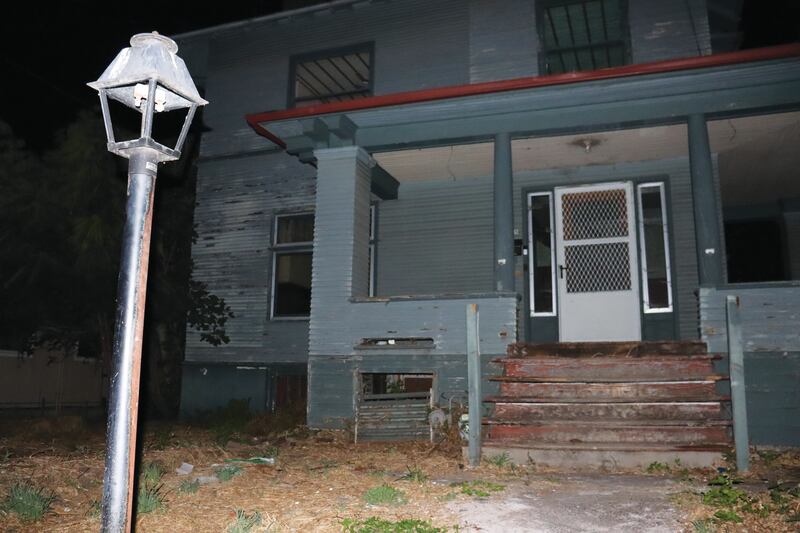
The dilapidated three-story home on a quiet street just north of Ladd’s Addition is this year’s ugly duckling. At one point, it may have been a handsome home, with a stately porch and large windows. But the siding is crumbling as are the wooden steps to the porch. No one appears to live there.
Property records show the house was purchased in May for $505,000 by Trinity Venture LLC. It was relisted for sale in July for $599,900. As of mid-August, its asking price on Zillow had dropped by $30,000.
Trinity Venture LLC was incorporated in Oregon last April, a month before the purchase. The company is registered to Peter Kharitonenko and Ivan Didyk. When WW reached Kharitonenko by phone and told him his property was one of the city’s top residential water users, he responded: “I would not be able to help you with this information. Probably pick somebody else, some other project, something. I don’t have the time and I’m not into that right now.” Then he hung up.
The city says the property’s water use first increased in August 2024, and the city issued at least seven notifications of high water use and explained its leak detection and adjustment policies multiple times. But the property owners never reported a leak, the city says. It’s not clear why this property’s water bill is so much higher than the other top Hogs’ bills.
Kharitonenko and Didyk are both real estate developers based in Vancouver, Wash. (Didyk is also an ICU nurse.) They separately own multiple companies and are both active on social media. Didyk posts regular updates about a duplex he is building in Camas.
Most of Kharitonenko’s posts are collaborations with Supporting Stone, a Christian evangelism nonprofit of which he is the vice chairman and president. Kharitonenko also runs a YouTube channel focused on how to apply biblical principles to be a successful boss. One example Kharitonenko gives is paying employees on time.
How much water did they use?
Enough to provide the cooling for a medium-sized data center for three and a half days.

#4
Homeowner: Jordan Schnitzer Living Trust
Water used: 1,087,668 gallons
Water bill: $15,417
Jordan Schnitzer may be Portland’s greatest hydrator of the century. This year marks his sixth appearance in Hydro Hogs—in 2003, he used a record 2 million gallons, which he blamed on a leak. He escaped the Hog roundup in 2021, but has made up for his absence by returning to the top five.
Schnitzer is best known as the scion of one of the wealthiest families in Oregon, a major real estate owner and patron of the arts. His art collection boasts 22,000 pieces, which he frequently loans to museums.
Schnitzer Properties, of which Schnitzer is president and CEO, has holdings across the Western United States, including office towers and apartment blocks in Seattle, San Francisco, Salt Lake City, Phoenix and Las Vegas. The company’s website says its portfolio totals 31 million square feet.
Schnitzer himself owns multiple homes, and it isn’t clear how often he resides in this one. The Schnitzer Living Trust bought the property for $4 million in 2020; it looks out over a fenced tennis court at a stunning view of Mount Hood. Tall bushes block any clear view of the house. Metal gates in front of the driveway are designed to evoke reeds swaying in the wind. A man who identified himself as doing maintenance inside the house spoke briefly to WW through the gate buzzer, but hung up without saying if the homeowners were in.
Schnitzer’s chief of staff, Erica Hetfeld-Schpak, declined to confirm if this is Schnitzer’s primary residence, citing the privacy of his “young children.”
How much water did the trust use?
Enough to fill 42,157 kiddie pools.
Prior Hog honors: 2001, 2003, 2006, 2007, 2015
#5
Homeowners: Karl and Katherine Spielmann
Water used: 1,066,722 gallons
Water bill: $15,490
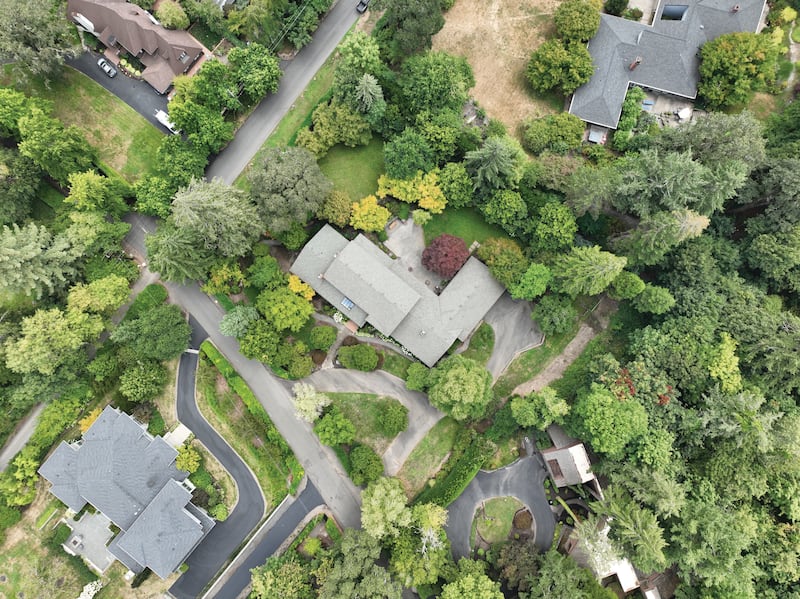
When WW knocked at the door of this $2.6 million Portland home, no one answered. Visible through a front window was a large empty room with nothing but a parquet floor, a black piano and what appeared to be part of a deconstructed gold-painted fireplace. A large window on the other side of the room looked out onto bushes and trees so green they seemed to glow in the late July sun. Green and white hydrangeas nuzzled against the house.
Karl Spielmann has worked as an executive at multiple asset management companies, including as a portfolio manager at multiple firms in London and a managing director at Bain Capital in Boston. He is currently the head of the financials portfolio at the hedge fund Rokos Capital Management, which has offices in London, New York City, Abu Dhabi and Singapore and manages about $22 billion as of early 2026. (Spielmann appears to work at the New York branch.) Rokos made more than £1.2 billion—around $1.6 billion—last year, giving the fund’s manager, billionaire Chris Rokos, a £477 million payout.
Karl co-owns the property with his wife, Katherine, who has deep family ties in the Pacific Northwest. Her father, Robert Dwyer, was a prolific transpacific businessman, importing lumber from Southeast Asia and beer from Singapore, according to his obituary. In the late 1970s, he was tapped to serve on the official U.S. delegation to reestablish trade with China under President Jimmy Carter’s administration.
The Spielmanns did not respond to multiple calls requesting comment and a letter left at their Portland home. The mailing address on their property tax records is a house in Weston, Mass., a colonial town of 11,000 about 15 miles west of Boston that Forbes has called “the quaint home of America’s billionaires.” The Weston home appears to be the couple’s primary residence, and it’s unclear how often they’re at the Portland property. The lack of furniture would suggest not especially often. Public records suggest the property has been in Katherine’s family since the 1970s.
How much water did they use?
Enough to brew 34,410 standard kegs of beer.
#6
Homeowners: The H. L. Corbett Estates Home Owners Association
Water used: 1,047,273 gallons
Water bill: $14,956
Correction: The print version of this story incorrectly attributed the water usage at this address to Andrew and Stephanie Gault, who own the home where the bill is sent. They are not the customers who used the water. WW regrets the error.
The true story is more complicated, and perhaps more interesting. The million gallons of water were actually used by The H. L. Corbett Estates Home Owners Association to irrigate the common green space in the neighborhood, an enclave of Dunthorpe. The bill is split between 22 members of the HOA. (It amounts to 47,600 gallons per member home—far less conspicuous consumption.)
While the looping roads Corbett Estates neighborhood surround several patches of greenery, by far the largest portion of the 4.22 acres of HOA-maintained green space is a mowed grass lawn that slopes down gracefully from a 1910 white Colonial Revival. In 1979, it was subdivided from the neighborhood’s showcase home. It now serves as something of a private park for 22 households, although as HOA treasurer Steve Jewell noted in an email to WW, “neighbors and others freely pass through for activities such as walking dogs, hiking and bicycling.”
How much water did they use?
Enough to provide 20,140 adult elephants’ daily water intake.

#7
Homeowner: Emily Emanuel
Water used: 960,499 gallons
Water bill: $12,914
Tech money buys a big yard. Emily Emanuel co-founded LegitScript in 2008, which vets internet sellers and advertisers to prevent cyberscams. Major companies like Google, Facebook and LinkedIn have hired LegitScript, according to its website. (Emanuel left LegitScript’s board in 2022.) She also founded the venture capital and private equity firm Stargazer Ventures and became the owner and CEO of the Portland Oregon Women Entrepreneur Roundtable, or POWER, in 2023. POWER has now closed, per its website.
Emanuel’s nearly 6,400-square-foot home was designed by famed Portland architect Roscoe De Leur Hemenway in 1924. Emanuel purchased the home for $3 million in 2022. She’s flanked her front door—which is magenta, with an elephant-head knocker—with a variety of bright flower bushes. Her large lawn looked freshly mowed, with only hints of brown peeking through.
When reached by text, Emanuel said she has been actively restoring her property recently, including many new plantings and mature trees that required substantial water. She has also dealt with multiple irrigation issues, including a broken pipe, she said, but didn’t apply for leak adjustments. (Her water utility, Palatine Hill, does not issue adjustments for irrigation leaks.)
“We’re continually evaluating ways to conserve water as the landscape matures and the system stabilizes,” Emanuel says.
How much water did she use?
Enough to fill a typical water park.

#8
Homeowner: Erik and Susan Krieger
Water used: 958,255 gallons
Water bill: $12,716
The Kriegers’ lawn is dotted with skyscraping evergreens. Just visible through a brick gate next to their garage is a garden sporting vibrant orange flowers. More evergreens tower behind the house like a stage curtain.
Erik has been a managing partner since 2003 at the private equity firm Riverlake Partners, which he founded. He is also a senior adviser at Alkali Partners, a mergers and acquisitions firm based in Portland. Before Riverlake, Erik was CEO of Cleanpak International, a major cleanroom manufacturer used by semiconductor and pharmaceutical companies. He’s also president of Bridge to Kids, which holds charity golf tournaments to raise money for organizations helping underprivileged children.
When WW told him by email of his place on this list, he responded, “I do my best to conserve my water usage as it is very expensive to water a relatively large lot. You can write what you want…but it seems silly to waste your time on folks who use not much water per square foot.”
Krieger told us he had an irrigation leak on his property, which he only realized after receiving his water bill. He hired a leak detection service and a plumber to fix the leak. According to an invoice from the detection company that Krieger shared, a schedule 40 PVC pipe was leaking at a fitting.
Unfortunately for Krieger, Palatine Hill has a policy against issuing leak adjustments for irrigation leaks. It therefore refused to reduce his bill. “Now,” Krieger tells WW, “you are ‘grinding salt into the wound.’”
“You just publish rubbish…and do not complete any due diligence,” Krieger later wrote. “I generally like the press…but this is the sort of thing that is really worthless.”
How much water did they use?
Enough to sustain all 12,000 runners in the Portland Marathon for 80 years.
#9
Homeowners: Tim and Sarah DeArmond Jones
Water used: 947,782 gallons
Water bill: $12,208
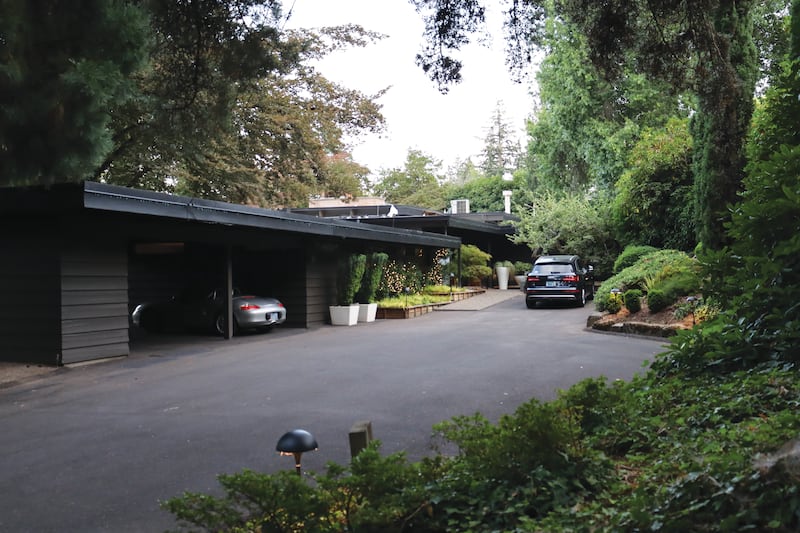
The Joneses’ home is on a hill in the neighborhood of Dunthorpe that looks out over South Portland. Running lights line the edge of the roof and wrap around the trees that circle the Joneses’ driveway. The house’s large lawn is shielded by trees and shrubs circling the back yard. The Joneses purchased the home in 2000 for $550,000, about $1 million in today’s dollars.
Tim Jones is a sports and lifestyle photographer in Portland who has worked with major sportswear brands like New Balance, Nike and Adidas, as well as Apple and Teen Vogue. He seems to specialize in action shots of athletes running. His personal portfolio is a mix of old diners at night, cars and close-ups of perspiring soda bottles.
When asked about his water use, Jones let out a sigh and responded, “Yeah, yeah, yeah, I’m not interested in talking to you leftists.”
Jones called back 25 minutes later to inform WW that the property had a large water leak, which he has since fixed. He then followed up, “I can’t tell you how much I hate your little paper and you little smartass fuckers who think you’re environmentalists and know nothing of the environment. That’s just all I have to say.”
The Palatine Hill Water District says the Joneses’ property was not issued a leak adjustment.
How much water did they use?
Enough to fill 3,791,124 Nalgene water bottles.
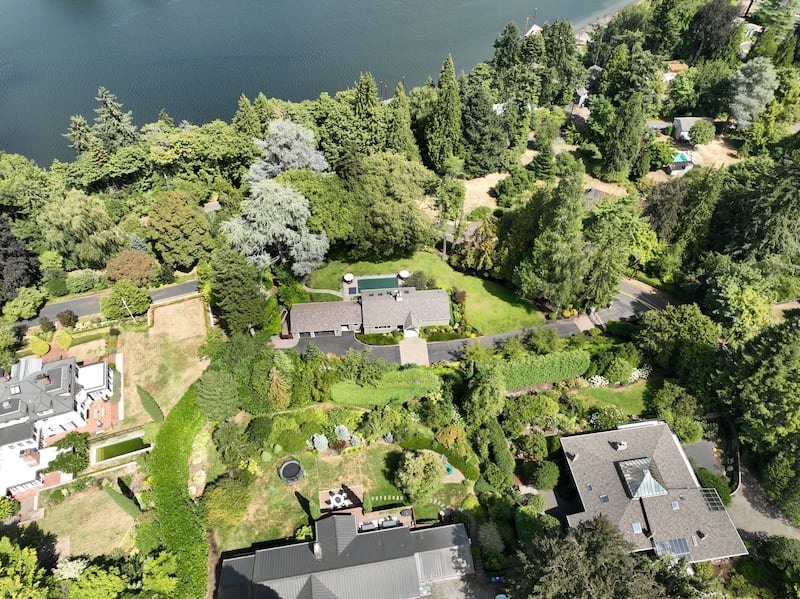
#10
Homeowner: Cindie Furman
Water used: 947,034 gallons
Water bill: $12,196
When WW approached Cindie Furman’s house, two women were exiting a car in a driveway and a man had just driven off in a Mercedes-Benz through the stone pillar gates. Two large brown “guard dogs” (as described in a sign out front) came running down the long driveway and gently rubbed against these reporters’ legs. One of the women, wearing a silky skirt, asked, “Are you lost?”
When we inquired about the home’s water use, the woman ushered us out of the driveway, saying, “I’m not the best person to ask.” These reporters were shooed off the property before they could ask her connection to the listed property owner. It’s unclear if either of the women were Furman herself. Furman did not respond to multiple calls, texts, emails and a letter left by the property’s mailbox.
Cindie Furman runs TMC Vacation Rentals in Packwood, Wash., which owns 63 cabins in the area near the east entrance of Mount Rainier National Park.
Her father, Bill Furman, was CEO of the leading global railroad equipment manufacturer The Greenbrier Companies until 2022. Greenbrier reported nearly $2 billion in revenue in the first three quarters of fiscal year 2026. The company has manufacturing locations in the United States, Mexico, Western Europe and Brazil.
Cindie’s mother, Joyce, was an active philanthropist in Portland and the surrounding areas. She once gave $800,000 to the Portland Parks Foundation, on whose board she served, to build Holly Farm Park in Southwest Portland, according to her 2009 obituary. The park is a 6-mile drive west from the home that landed on our list.
How much water did she use?
Enough to fill 1,894 adult-size dunk tanks.
#11
Homeowner: Paul Brenneke
Water used: 930,577 gallons
Water bill: $12,440
Paul Brenneke is famous for a shopping spree. He was the founder and executive chairman of what was once called Sortis Holdings, a Portland-based firm known for its pandemic-era investments in hospitality businesses across the city, such as Bamboo Sushi, Sizzle Pie and Blue Star Donuts, followed by multiple lawsuits alleging unpaid bills. Sortis narrowly escaped bankruptcy through a settlement in 2025 with four creditors who claimed the company owed them collectively more than $8 million.
Brenneke’s 9,500-square-foot house in Dunthorpe was purchased for just over $2.5 million in 2001. The stark white home, embellished with columns mounted on the front porch, looks out onto an array of intricate lawns and gardens. A pool with multiple cabanas and a fireplace with a bowling green lawn mark either end of the massive estate. The main porch looks out at an abrupt wall of shrubbery.
The Brennekes did not provide a comment by press deadline.
How much water did he use?
Enough to make 310,192 sheets of paper.
Prior Hog honors: 2015, 2021
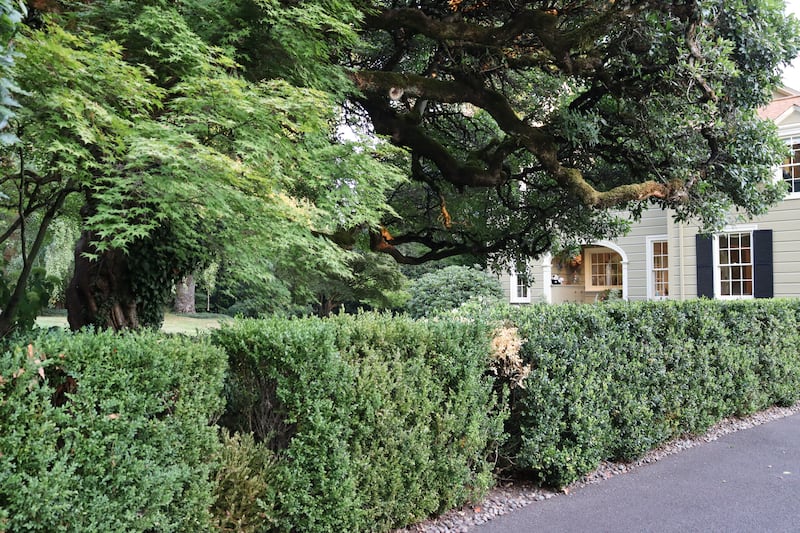
#12
Homeowner: Henry Hillman Jr.
Water used: 916,364 gallons
Water bill: $12,316
Hillman, who finished first on the Hydro Hogs list in 2015, is the descendant of a prominent industrialist family in Pittsburgh. He used the family fortune as a springboard to buy a shoe company he later sold to Reebok, then a robotics company. Hillman’s foundation gives hundreds of thousands annually to local nonprofits, and over the years he’s sat on various boards, including for the Portland Art Museum and Oregon Ballet Theatre.
His $9.8 million house on Portland’s westside is outfitted with several sculptural installations in the driveway, including a wooden horse that resembles the work of artist Deborah Butterfield. Hillman is himself a cast-glass artist of some renown, as well as the primary owner of Elephants Delicatessen. (The flagship location was partially destroyed earlier this year in a fire set by a homeless woman who was using a torch lighter to search the deli’s dumpster for food.)
The only person home at Hillman’s property when WW knocked on the door was a worker power-washing the well-manicured tennis court adjacent to the lengthy driveway. The manager of Hillman’s foundation said he would reach out to WW with a comment, but he never did. He also didn’t respond to a letter left on his front stoop.
How much water did he use?
Enough to water the International Rose Test Garden for 18 weeks.
Prior Hog honors: 2015, 2021
#13
Homeowners: Tom and Lisa Brenneke
Water used: 901,403 gallons
Water bill: $11,758
Tom Brenneke (Paul’s brother) was not entirely surprised to hear he’d made the Hog list for the first time. He says he was unaware of the amount of water he used, but knew he’d made an error in his seasonal landscaping irrigation.
“This is not how I want to end up in the press,” Brenneke says. “For us, this is a landscape irrigation issue.”
Brenneke is president of Guardian Real Estate Services, a development and management firm that evolved from his father’s company, Guardian Properties, in 2002. In the early 2000s, Tom and his wife, Lisa, undertook an extensive renovation of their Portland Hills Italian-style home, which was built in the mid-1920s and is on the National Register of Historic Places.
The 1.5-acre Norman farmhouse features an outdoor pool with cannon water features and extensive Mediterranean-style landscaping to create what Lisa, a former Calvin Klein model, called “an Italian oasis” in a home profile in Portrait magazine.
After living in his house for 13 years, Brenneke says his water use is “higher than it should be” and he will be directing his landscaping team to look into the issue.
How much water did they use?
Enough to clean 75,116 cars at a professional car wash.
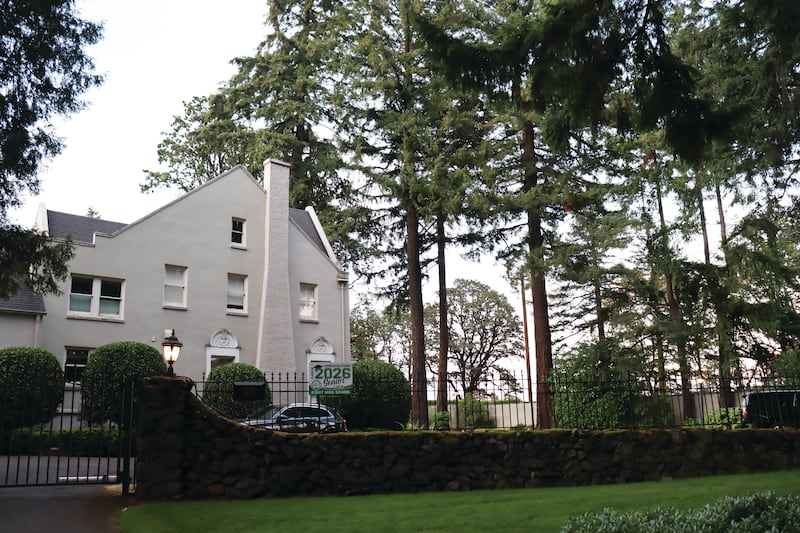
#14
Homeowners: Farid and Maryam Bolouri
Water used: 892,426 gallons
Water bill: $11,965
Farid and Maryam Bolouri own their Dunthorpe home under a joint family trust. Farid owns Bolouri Dental Group in Milwaukie, where he has worked since the early 1990s, according to his LinkedIn. (Now, rinse!) Their social media pages suggest a family passion for golf.
The 6,000-square-foot house is hidden behind a tall row of hedges. Purchased in 2006 for $1.8 million, the tall white house peeks over the profusion of shrubbery separating the property from the road.
Upon being told her house was on the Hydro Hogs list, Maryam Bolouri responded with a cheery “OK, no comment” and hung up.
How much water did they use?
Enough to fill 892 saguaro cacti.
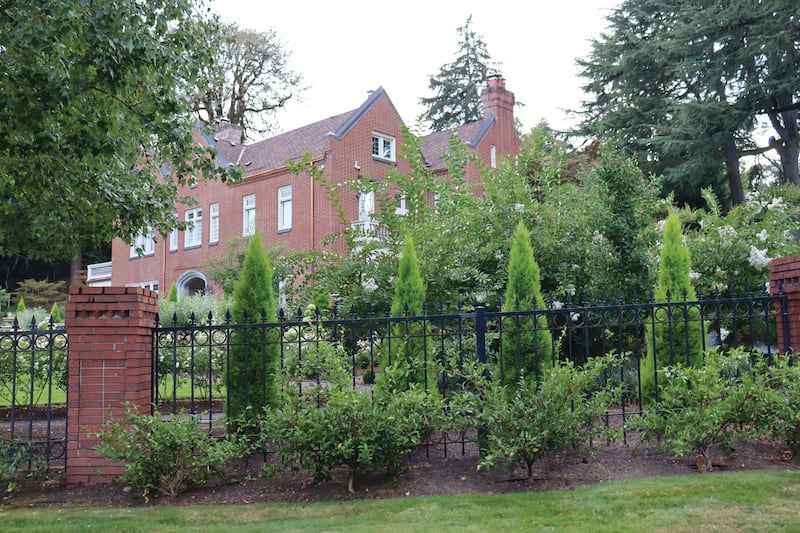
#15
Homeowner: Daniel Nguyen
Water used: 849,039 gallons
Water bill: $11,363
State Rep. Daniel Nguyen (D-Lake Oswego) is the second state lawmaker to appear in the two most recent editions of Hydro Hogs. (State Sen. Kate Lieber, D-Beaverton, finished #3 in 2021.) The moderate Democrat, up for reelection this midterm season in House District 38, chairs the House Committee on Economic Development, Small Business and Trade.
Prior to his election to the Oregon House in 2023, Nguyen founded what would later become the Bambuza Hospitality Group, a collection of 13 Vietnamese restaurants across Seattle, Portland, Salt Lake City and Santa Ana, Calif. (You’ve probably passed a Bambuza outpost in Concourse E of Portland International Airport.) He’s still the chief financial officer of Bambuza.
Nguyen owns a 9,710-square-foot, $4.3 million Tudor that’s listed on the National Register of Historic Homes. The Dunthorpe home’s gate opens to intricate and expansive gardens outfitted with a three-tiered fountain, a two-story porch, and perfectly aligned rows of white flowers.
Nguyen says his property is really more of a “little urban farm.”
“We grow tomatoes, cucumbers, peppers, squash, Japanese eggplant and chayote, along with rau răm, watercress, perilla, Thai basil and lots of flowers,” Nguyen says. “Our irrigation is on during the growing season and the dry summer.”
How much water did he use?
Enough to water 581 mature tomato plants for a year.
#16
Homeowners: Paul Schneider and Lauren Eulau
Water used: 831,086 gallons
Water bill: $6,708
Paul Schneider sounded cheery when he answered the phone. But when WW reporters identified themselves, his tone seemed to drop. “I can’t talk right now,” he said. “Call me back another time.” Then he hung up. He did not respond to follow-up calls and texts.
Schneider and Eulau co-founded the Portland designer jewelry brand Twist. The stores in Portland and Seattle offer sparkly and colorfully gemmed jewelry running up to $150,000. The couple’s artistic business endeavors began in the 1960s with Schneider as a ceramicist and Eulae a weaver after they met at the University of Oregon.
Their 5,500-square-foot house perched in the Southwest Hills neighborhood went through a modernist renovation, which was featured in Architectural Digest. It now features floor-to-ceiling French doors that open to a breakfast garden, an outdoor pool, and a long, rectangular floor plan.
How much water did they use?
Enough to mine 152 ounces of gold.
Prior Hog honors: 2021
#17
Homeowner: Richard Buchanan
Water used: 805,652 gallons
Water bill: $10,970
Richard Buchanan is one of the more elusive figures on this year’s list. What we can piece together from public records and old newspaper clippings is that Buchanan was a senior trader in mortgage-backed securities at the New York firm Donaldson, Lufkin & Jenrette.
Buchanan lives at the Elliott R. Corbett House, listed on the National Register of Historic Places. The house is a massive Colonial farmhouse—nearly 10,000 square feet—built in Dunthorpe in 1915 by the architectural firm Whitehouse & Fouilhoux for Elliott Corbett, who became vice president of the First National Bank in 1919. The home features outdoor terraces, multiple lush green lawns, and a large pool. The garden is filled with roses and boxwood hedges, and framed by soaring trees.
Buchanan bought the Corbett house for $4 million in 2022. He also appears to own a waterfront mansion in Tillamook.
Buchanan did not respond to a request for comment and a letter left on his doorstep.
How much water did he use?
Enough to provide a year’s worth of water for seven typical households.
#18
Homeowner: Edmund Jensen
Water used: 785,455 gallons
Water bill: $10,178
Edmund Jensen was a giant of the American banking industry in the late 20th century. He was the CEO of Visa International Inc., the world’s largest bank card group, for four years in the 1990s, and a board member before that. Visa added microchips to its cards under Jensen’s tenure as chief executive, and began operations in a host of countries, including China, Russia, Germany and Brazil.
Before Visa, he was president of U.S. Bancorp in Portland in the 1980s, as well as an executive at Technicolor and National Industries. He’s also a prominent philanthropist.
“I didn’t know I was on that list,” Jensen says when reached by phone. Jensen says he had a major issue with his pool that required completely draining it. He suspects that’s behind the high water use. When WW told him records show he used 785,000 gallons, Jensen responded, “I had no idea. Thanks for telling me.”
How much water did he use?
Enough to manufacture 20 cars.
#19
Homeowner: Dennis Pastega
Water used: 741,319 gallons
Water bill: $11,174
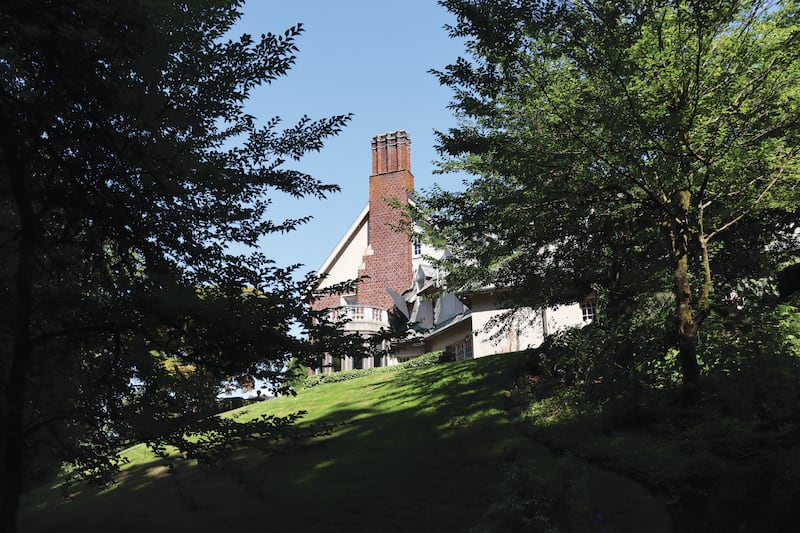
This Jacobethan–Tudor mansion, listed on the National Register of Historic Places, takes up more than 14,000 square feet and looks like a prestigious East Coast university, replete with brick and carved-stone archways and a covered walkway with hanging lanterns. The circular driveway is paved with brick. The lawns are intersected by more brick pathways. The bushes are carefully shaped into semicircles.
Dennis and Christine Pastega co-founded Tillamook’s Blue Heron Cheese and Wine Company in 1979, after getting inspired by French farmsteads on a trip to Europe. The company originally focused on brie but has now expanded into other artisanal cheeses, as well as Pacific Northwest wines and microbrews. The company’s property features a petting zoo (with pigs!), wine tastings and a campground.
The Pastegas’ home was built by architect Albert Doyle in 1918 for Frank J. Cobbs, a Michigan lumber baron with massive holdings in Oregon forests. (Doyle also designed the Multnomah County Central Library, the Meier & Frank Building and the four-bowl Benson bubbler.)
Pastega purchased the home for $3.1 million in 2024. “The property has undergone extensive improvements over the past two years,” says Jason Pastega, Dennis’ son, “including an irrigation system that, among other plants, keeps nearly 200 trees from drying out and becoming a fire hazard for the area.”
How much water did they use?
Enough to run all of Portland’s Benson bubblers for two weeks.
#19
Homeowners: Jonathan and Whitney Malkiel
Water used: 741,319 gallons
Water bill: $10,080
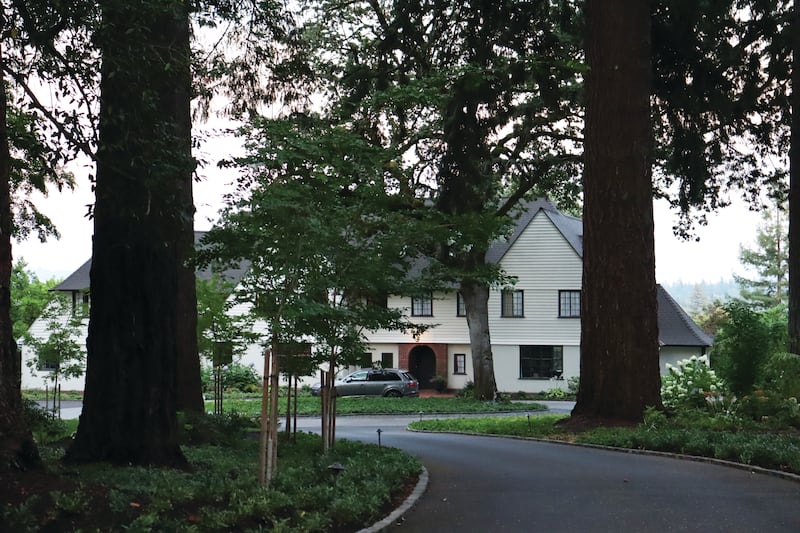
The Malkiels purchased their Dunthorpe home for $2 million in 2012. The property is covered in sweeping evergreens, and surrounded by bushes broken only by a brick gate topped with lanterns.
Jonathan Malkiel was previously an associate at Eastdil Realty, a Manhattan-based real estate investment company. Whitney Malkiel has worked as a Nike executive for more than two decades. Most recently, she was vice president and general manager of Nike’s global women’s division, from 2020 to 2023.
They are a family of champions. Jonathan and Whitney Malkiel both played varsity lacrosse at Princeton in the 1990s. Jonathan won two lacrosse championships. Whitney won an ice hockey championship. Now, their son plays Princeton varsity lacrosse, and he’s already won a national championship.
The Malkiels declined to comment for this story.
How much water did they use?
Enough to make 46,332 snow cones.
Correction and update: The print edition of this story included Jack Jagla among the largest water users. He says his water consumption was the result of a large water main break. After paying $10,000 in water loss and $10,000 in plumbing repairs, Jagla says he’s surprised he wasn’t higher on the list. “A tough first year of homeownership,” Jagla tells WW.
After publication, Jagla provided documentation from the Palatine Hill Water District showing that he received a bill adjustment for his water main break. He has been removed from our online list, as others who received adjustments were. WW regrets the error.