Skip to main content
On Friday, Portland Public Schools Superintendent Dr. Kimberlee Armstrong rolled out her final recommendation for school closures across the district, suggesting the district axe 10 elementary schools.
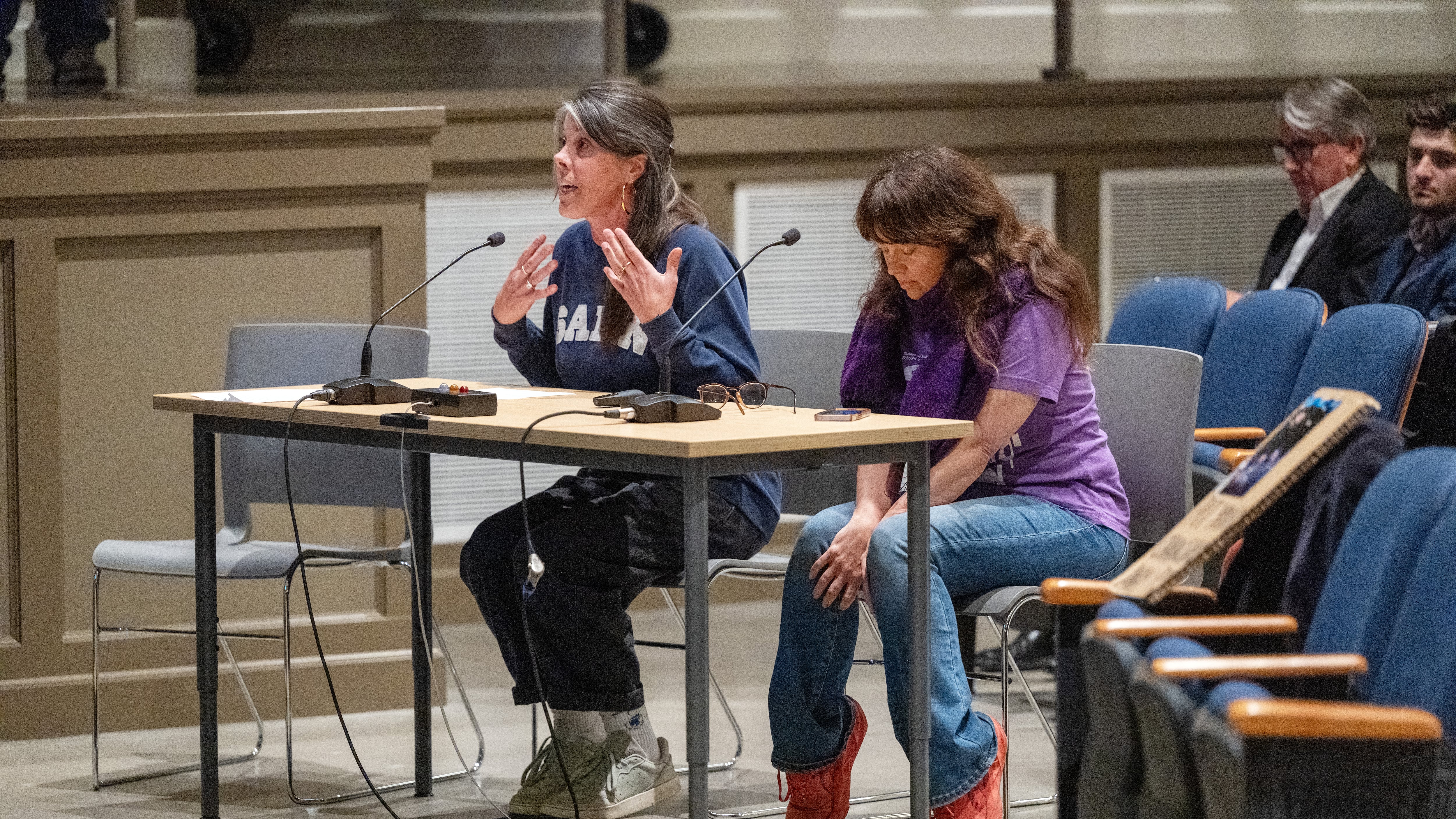
The pill is not going down easily in Portland. At a Tuesday School Board meeting, the protesting crowd packed Benson Polytechnic High School’s auditorium full, sending booming chants at the seven-member board to “save our schools.”
PPS officials have felt the heat. As they’ve presented painful decisions, officials have also tried to explain the rationale behind school closures. They say the big advantage is that fewer buildings will result in comparable learning environments for students across the district, who will be able to attend well-resourced schools that are staffed with more robust programming.
Parents have been picking apart data that PPS has displayed to back school closures for months. But the release of the final recommendation comes with a 60-page memo that parents and teachers say partly runs counter to the district’s goals of providing better support to students. From staffing concerns to large projected class sizes at receiving schools, some families say they’re struggling to understand what benefits closures will bring.
At least some Portland School Board members are taking notice of all the pushback, and community questions are starting to inform the ones asked on the dias.
Multiple board members have begun to suggest amendments to Armstrong’s school closure proposal based on feedback from community members. On Tuesday, board members noted they’d be armed with a plethora of questions for the upcoming Dec. 1 meeting, the first opportunity they’ll have to ask detailed questions and share in-depth concerns about the final recommendation. Still, they will work in a tight timeline; the board is set to vote on whether to approve the recommendation on Dec. 15.
In between now and then, a cascading and seemingly endless series questions from parents and teachers illustrates the final push to protest school closures.
“Families are being promised that closing schools will ensure the remaining schools have more. Educators and families have long asked to see details,” said Portland Association of Teachers president Alisha Chavez at a Wednesday press conference. “The data confirms what we’ve long suspected: The numbers don’t add up.”
A primary concern for the teachers union surrounds staffing. Aided by some parents with a knack for data, they point to a section about projected school staffing under the status quo versus under Armstrong’s closure proposal, buried toward the end of the memo, which seems to show that PPS will lose a couple dozen more school-based full time employees under the proposal than if it maintains the status quo heading into the 2027–28 school year. (In either scenario, the district forecasts shedding hundreds of full time equivalent positions in schools thanks to a $65 million budget hole.)
Richard Smith, the district’s senior director of data and accountability, tells WW that the district has “struggled to tell our story a bit,” on the staffing piece, but broadly clarifies that the district is anticipating it will have to reduce the same amount of FTE positions in either scenario. “Staff reduction is really the same in status quo or recommendation, with a slight, really, with no difference in the end,” he says.
He says that the district is targeting reducing 243 FTE school-based in the status quo, and 253 FTE in the superintendent’s recommendation. (This number is high, and includes the assumption that the district sets aside about 20 FTE to reallocate based on needs that arise in spring and fall.) Under the status quo, Smith says the district is aiming to reallocate 34.5 FTE. Under the superintendent’s recommendation, Smith says the district will similarly reallocate 34.5 FTE, and another 21 or so will be placed specifically in schools receiving students affected by closure.
Smith adds that school closures would allow the district to realize “programmatic efficiencies” that could mean more educators are spared under the superintendent’s recommendation than under the status quo. In the recommendation, the number of school-based staff cut “still includes a large amount of educators…but there might also be some reduction of administrative assistants or even admin.”
Multiple parents WW spoke to said inconsistencies like the one around staffing numbers cause unease, especially with closure decisions looming. The School Board is expected to take a vote on the matter on Dec. 15.
Alexis Córdova, an Irvington Elementary School parent, also voiced concerns about the FTE that the district would reallocate under the school closure proposal, pointing to an attachment in the closure materials that details allowable uses for reallocated FTE. That attachment states that reallocated staff could be used for “instructional coaching, academic intervention, school climate support, social work, or duty support.” Notably, Córdova flags that there’s no mention of allowable FTE going toward a classroom teacher.
Other questions surround the district’s data around class size. The data PPS has presented would indicate that class size ratios remain unchanged. But individual school breakdowns indicate that at least some of the students affected by closure would enter into receiving schools with class sizes much larger than what they experienced this year and are projected to experience next year.
For example, Buckman Elementary School students, who would have an average class size of 21 students per class under the status quo in 2027–28, would be split between Abernethy and Sunnyside. Abernethy is forecast to have 28.4 students per class under Armstrong’s recommendation, and Sunnyside is forecast to have 27.
The combination of larger class sizes and the potential lack of staff to orchestrate support for individual students, Córdova says, makes it hard for parents to buy what PPS is selling.
“Every error in this plan lands in the classroom: fewer adults, bigger classes, and just less room for students in the school,” Córdova said Wednesday. “That’s why we’re asking the board to vote no on Dec. 15 and pause the closures.”
Classroom quality concerns also extend into what receiving facilities can accommodate. Parents at Rose City Park Elementary School have expressed concerns that Vestal Elementary, which is set to receive the Vietnamese Dual Language Immersion program, lacks the classroom space necessary to accommodate the programming. Parents say that while the program requires 12 classrooms to function effectively, Vestal has available six.
McKay Larrabee, a parent of students at Sunnyside K–8 and Mt. Tabor Middle School, has worked on rightsizing efforts, including enrollment forecasting, for other school districts nationwide. On Wednesday, she cautioned that underlying the district’s rightsizing decisions are several assumptions that families will continue to choose the programs or schools they do, even if they are moved to other buildings. She warned that such assumptions could have real consequences if the closure decision goes through.
For example, Larrabee noted that Creston Elementary, which is set to close, will feed into Atkinson Elementary. To make room for Creston students, and as part of a PPS effort to consolidate Spanish dual language immersion, Atkinson’s DLI students will move out of that school.
“The model assumes that most families will follow that program, but what if they don’t? What if they stay at their neighborhood school and then they add in Creston with the additional students that will compound over time?” Larrabee asked. “You can see how Atkinson might become overwhelmed quickly. Decisions based on inaccurate data create capacity crises that PPS will not be able to easily fix.”
Margaret Calvert, PPS’s executive director of school planning and modernization, said at a Tuesday School Board meeting that PPS plans to take inventory of where families will go in January, including if they will move with their programs, following the board’s Dec. 15 vote.
All of this comes as PPS itself acknowledges that the painful school closure process will ensure just half of its elementary schools and 47% of its middle schools hold enough students in 2031–32 to meet district thresholds that would allow PPS to provide adequate resources. Granted, those percentages are much higher than if the Portland School Board refuses to close schools, in which case just 18% of elementary schools and 13% of middle schools would meet those thresholds.
There continues to be debate between some parents, educators and the district about if the consolidation process will meet the needs of the district’s historically underserved students. Those range from concerns that receiving buildings have not been assessed to determine if they can accommodate students in special education, to concerns among Latino families that concentrating Spanish dual language immersion programs will make it easier for federal immigration enforcements to target them.
Still, the district’s memo shows that higher percentages of students in poverty, special education, multilingual learners, and those underserved by race, will attend schools in 2031–32 that meet district thresholds for robust programming.