Skip to main content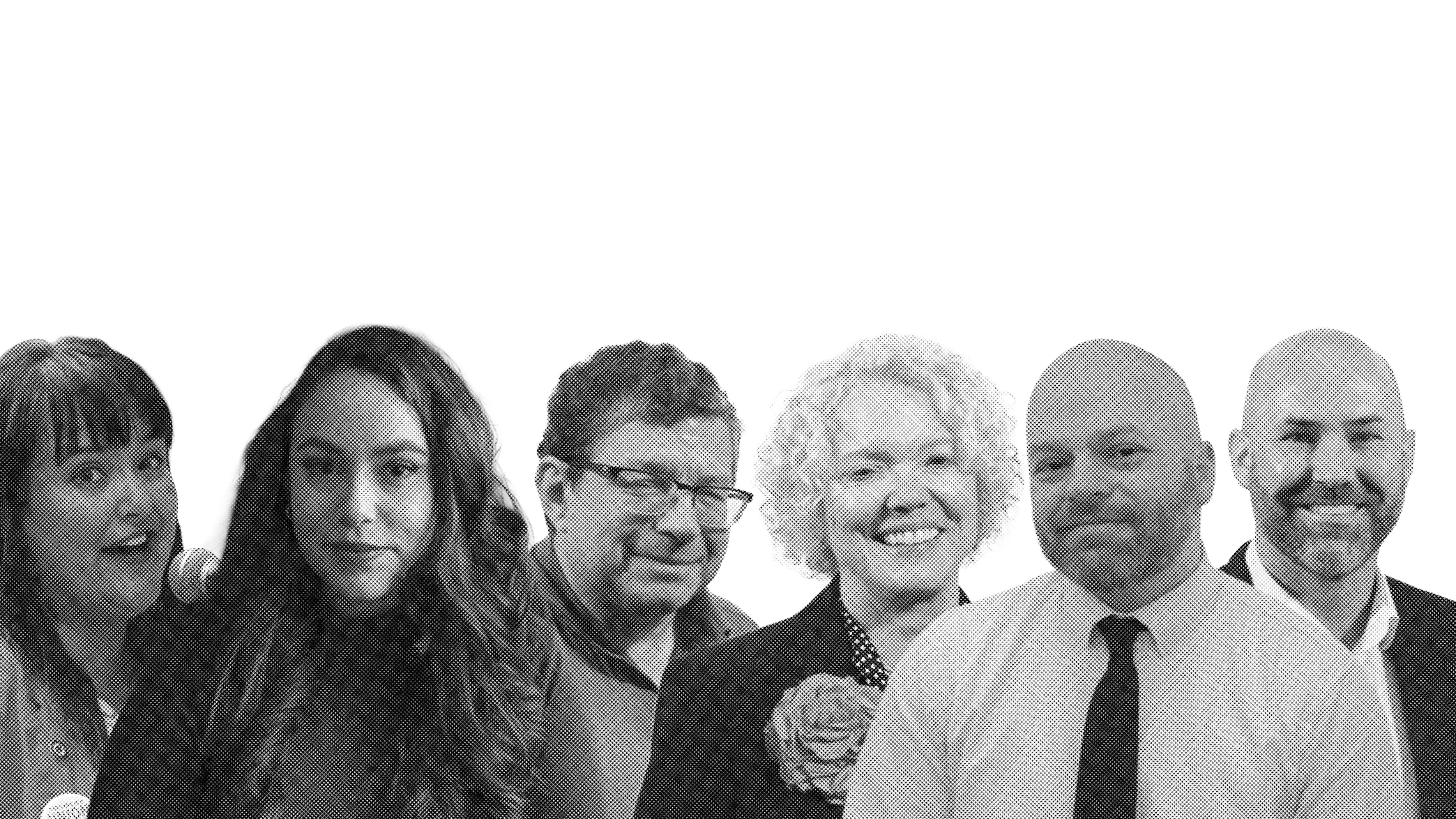
Six seats on the Portland City Council are up for grabs this November. Three members of the council’s progressive caucus and three members of the centrist caucus are up for reelection. That means interest groups on both sides of the ideological divide hope to shake one of the councilors loose to gain a 7–5 majority on the council.
WW is in the process of bringing in all of the candidates running for City Council into our offices for endorsement interviews. So we took the opportunity to ask all six incumbents what really causes the fractures that have occasionally led to contemptuous remarks and name-calling on the dais.
Here’s what each had to say. Their responses have been lightly edited for brevity and clarity.

Tiffany Koyama Lane, District 3: “When we see a lot of 6–6 votes, they’re in pretty specific areas, like the budget or around police accountability. When it’s that, it’s based on some of the values that [the six of us] ran on. The six [Peacocks] came forward and said very transparently in a press release that we stand together on a number of issues: climate justice, economic justice, police accountability. There are also quite a few crossover ties, though. I see those six folks as my home room. You don’t have to get along with everyone perfectly in your homeroom, but we are clear—we have it on the board what we stand for.
“But there’s passing periods where I work with other folks. The cross ties are important and I think they give the body some texture.”
Angelita Morillo, District 3: “I think the divide is frankly between the old guard and the new guard that is coming in. The majority bloc of councilors that are the moderates or conservatives, they’re all endorsed by the Metro Chamber. They’ve all been endorsed by business groups, and I don’t mean small business groups necessarily. So there is a difference in values and who we’re representing and why. This is politics; we can’t pretend that who our endorsers are and who is in our ear regularly does not influence us.
“To be frank with you, I think the progressives are holding the line on different issues. The defunding of the Office of Police Accountability, that was a hard line for many of us. We can’t pretend that those philosophical differences don’t exist. It’s also not lost on me that the vast majority of the progressives on council are councilors of color, people of different marginalized identities, who are not served by these traditional systems and who are fighting back against the old systems.”
Steve Novick, District 3: “I think there are some issues where there are policy differences that you could reasonably describe as ideological. I think the Peacocks generally think that no homeless camp should ever be removed, and some of the rest of us think that although we don’t believe in indiscriminate sweeps, there’s some homeless camps that pose health and safety issues that need to be addressed. There’s also frankly some issues where Peacock bands together and I cannot figure out what the heck the ideological justification is.”
Olivia Clark, District 4: “My big takeaway is the generational difference. There’s a difference between the people who are younger, the Peacocks, that don’t know what it means to compromise; they have a very difficult time with it.
“There’s a lot more performance in that caucus than there is on the other side of the aisle. Maybe people who grew up with social media, that might be part of it.”
Mitch Green, District 4: “I think there’s performance happening on both sides. Almost all 12 councilors put on a performance for the public, and some, like Dan Ryan, perform quite a lot, and so does Loretta Smith, and both are not in Peacock. There may be a generational difference, I’m not disputing that. But the places where we’re really 6–6 is during the council president election and the budget amendments leading up to the final action.
“If you can’t talk to each other behind closed doors because of public meeting law, you’re going to have that performance. Because you do represent different political spectrums, that performance makes that sharper. I think there’s far more compromise than we see in the big, heavy moments.”
Eric Zimmerman, District 4: “We remain a nonpartisan elected body. [But] when you establish a caucus, there’s an aspect of that that feels somewhat partisan. The difference that exists here is that [our caucus], we don’t walk into votes in lockstep, knowing how every person is going to vote.
“I’m not a member of the Peacock group, but it looks like from the outside that you’re really not allowed to step out. Don’t you dare step out. For me, that bumps up against nonpartisan. That’s not what a city council is about. I would hope that that would wane.”