Skip to main content
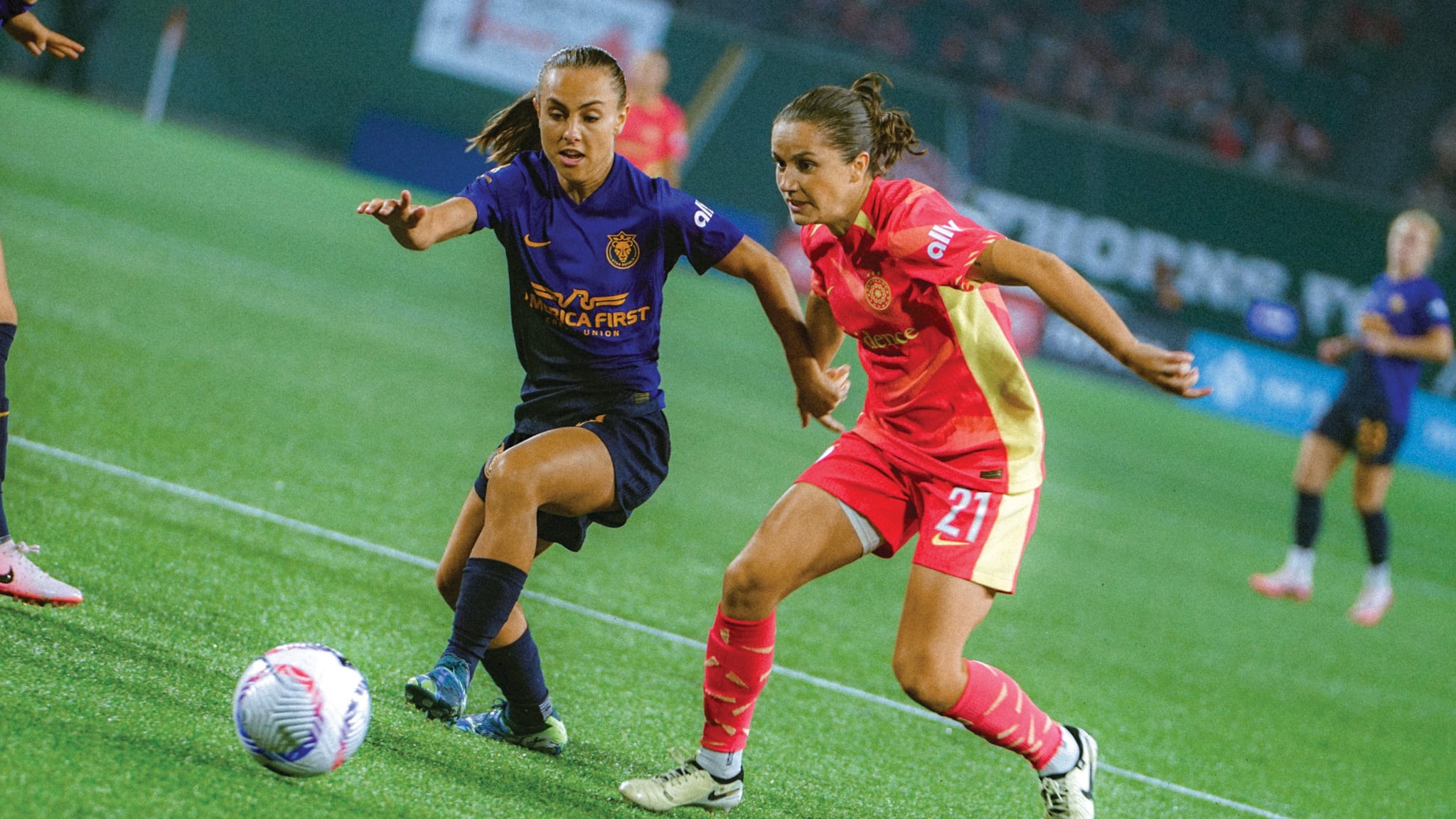
The Portland Thorns have been on a wild ride: clinging to a playoff berth, winning just two of their last eight matches heading into last weekend, before closing the regular season with a decisive 2–0 victory over Houston.
Good thing they have Jessie Fleming at the wheel.
The Canadian midfielder has earned herself a reputation for being relentless; she works hard on the pitch, and she never stops running. She’s also the club’s iron woman of 2026—she played every minute of every game this year—and has a goal and two assists to show for it. Fleming donned the captain’s armband throughout parts of the season, including in Portland’s last six matches heading into playoffs.
“Sometimes you have to scrape out an ugly win,” she adds, “or sometimes we have a lot of injuries or a red card. That’s frustrating, and I don’t want that to be the case. But you have to be able to roll with the punches.”
It’s unclear how far the Thorns can get in the postseason, which starts Sunday, when Portland faces the third-place Washington Spirit in a win-or-go-home quarterfinal match at noon. The game streams on ABC.
But this much is certain: With Fleming on the team, they won’t quit.
“Jessie is such a good leader on the field,” defender Jayden Perry said in a postgame press conference in September. “She may not be the loudest, but she’s running from side to side, just putting the work in regardless of what that means.…Seeing how much work she puts in makes me want to do the extra sprint back.”
Fleming is certainly the first to admit she’s not a roaring presence on the pitch, but she’s more than happy to lead by example.
“Jessie leads by example, but she’s also super intentional as a leader,” midfielder Shae Harvey said after the Thorns lost to the Boston Legacy last month. “She always knows what the team needs, what the individuals around her need, and she always pulls someone up when they need it.”
Harvey’s reflection sounds a lot like Fleming’s own when she talks about the multitude of players who have modeled leadership to her throughout her career. On the Thorns, those were retired Canadian soccer legend Christine Sinclair and U.S. national team defender Becky Sauerbrunn. (Sauerbrunn now serves as a technical consultant for Portland.)
“Those two were always good at portraying a calm and a confidence to the team,” Fleming says. “They were able to see a lot of situations with a level head, and at the end of the day, they knew when to intervene with an individual or when to ask someone if they need help or when to support someone.”
For Fleming, learning how to best support her teammates goes hand in hand with the adaptability that’s key for a successful team.
The Thorns had a meeting a couple of weeks ago where players paired off and discussed various struggles they’ve faced throughout the season. “It just highlighted that we’re all experiencing things,” she says, “whether it’s a period of a lack of confidence or maybe someone misses their loved ones back home, all these human things and also on-pitch–related things.
“I’m definitely learning to try to meet people where they’re at,” she adds, “and get a better understanding of where people are at before you ask something or demand something of them on the pitch.”
Now, Fleming’s understanding of the ebb and flow of a soccer season—and her willingness to accept that in her teammates and in herself—will be instrumental in the Thorns finding ways to beat top-tier opponents in the next couple of seasons. (Fleming extended her contract with the club through 2028 earlier this year.)
“I would like to see the club continue to push to get back to where we were four years ago, five years ago and consistently be a top-three team in this league,” Fleming says. “Consistency in our play and really solidifying an on-field identity.”
But the Thorns are still in the mix this year, too. We’ll see just how resilient they are in D.C.