Skip to main content

As the Prosper Portland board of commissioners decides how to address the controversy that engulfs the agency’s executive director, long-simmering disagreements about the role that Prosper plays in the city’s economic health have resurfaced at City Hall.
It’s been one month since WW reported that Prosper executive director Cornell Wesley had signed three no-bid contracts with two of his college friends totaling $456,000. And it’s been nearly two weeks since the union representing 60 of Prosper’s roughly 90 employees alleged in a letter that Wesley fostered a toxic work environment that led the union to question whether he “can continue to effectively lead this agency” (“In This Economy,” WW, Nov. 18).
After two weeks of silence from the Prosper board and Mayor Keith Wilson, board chair Tavo Cruz addressed the union’s allegations for the first time on Tuesday morning.
“The board is aware of the concerns that the union and other stakeholders have, and we are taking steps, within the legal and institutional constraints we have, to address those concerns,” Cruz said. “Please bear with us and know that Prosper Portland’s staff and its volunteer board are working hard to build Portland’s economy.”
Cruz’s statement stops short of taking a position, and offers little clarity about how the board plans to navigate the mess. But behind the scenes—as onlookers have waited for the board to make a move—the burning controversy has ignited little fires everywhere.
On one front, it has revived conversations among Portland city councilors about Prosper’s future and whether the city must bring it under closer supervision to ensure it responsibly spends taxpayer dollars. That the agency that’s supposed to reinvigorate Portland’s lagging economy appears to be coming apart at the seams has caused a hum of discussion among councilors about how best to get to the root of the agency’s problems.
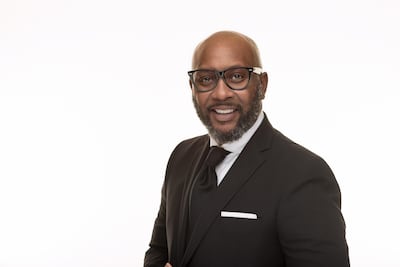
Meanwhile, Mayor Wilson and the Prosper board are dealing with an exasperated workforce and an embattled executive director whose next move is uncertain. Unionized agency staffers continue to press the board to address their allegations about their boss, and more recently, some leaders of BIPOC organizations have surfaced concerns about what they say is an erosion of public trust under Wesley’s tenure.
City Council President Jamie Dunphy says the conversation has snowballed from an isolated issue—Wesley’s three no-bid contracts—to much bigger questions about the 90-employee agency’s overall health and whether, under its current leadership and arm’s length distance from city oversight, it can do its job of rebuilding Portland’s economy.
“What actually happened here?” Dunphy asks. “Who made the decisions? What are the concerns in the letter from the union, and is there validity to that?
“And then there’s the ultimate question of, knowing all that, what do we do now?”
AFSCME Local 3769 sent its letter to the Prosper board and Wilson on Nov. 11. In it, the union alleged Wesley had created a workplace where employees who challenged his leadership were intimidated and feared retaliation.
In the days that followed, WW has learned, deputy city administrator of community and economic development Donnie Oliveira spoke to Wesley. According to three people familiar with that conversation, Oliveira told Wesley he would have to rebuild the trust of his workforce. (Sources differed on whether Oliveira’s delivery was more akin to a pep talk or a directive.)
It’s not clear if Wesley plans to leave the agency or remain at its helm. Wesley was out for unexplained reasons from Oct. 29 to Nov. 13, and sources tell WW that he has not been seen around the office recently and has skipped a number of scheduled meetings. At an all-staff meeting last week, Wesley appeared remotely and announced that Lisa Pettinati, who’s been with the agency since July, would be his new deputy executive director. He did not address the union’s allegations.
Although the Prosper board has said little publicly about its plans to address the controversies, sources say board chair Gustavo Cruz has been in conversations with top administrative staff about the matter.
As the board grapples with the tender matter of Wesley’s future, a growing chorus has implored the agency to reckon with the alleged internal dysfunction.
At the Prosper board’s monthly meeting last Wednesday, a handful of people giving public testimony called for the board to investigate the union’s allegations. Board members remained silent during the meeting, not responding to the testimony. (Despite time carved out on the board’s agenda for a routine executive director’s report from Wesley, he did not appear at the board meeting, either remotely or in person.)
Prosper employee Faythe Aiken, a project manager and former president of the Prosper union, implored the board to discuss the union’s letter in the executive session following the board’s public meeting.
“We don’t want to make a production. We don’t want more media attention. This is not a witch hunt, an overreaction, or a personal vendetta,” Aiken said, flanked by two other agency employees who served as past presidents of the Prosper union. “This is a distress signal, right in front of you, by very capable public servants. When we tell you there is a problem, there is a problem.”
Joy Alise Davis, executive director and president of local nonprofits and Prosper grant recipients Imagine Black and Imagine Black Futures, testified that the agency had, under Wesley, eroded its equity team. “I’m deeply concerned about the lack of equity commitments that have been implemented since this new executive director,” Davis said. She specifically noted the recent departure from the agency of Chabre Vickers, who served as the director of equity, policy and communications.
Vickers’ termination has emerged as a factor in the Prosper union’s discontent—and for some Prosper community partners, too.
“You all know very closely what happened with Chabre Vickers,” Davis said. “The silence is really alarming, and I think it is a really big disservice to both Portlanders and the many communities that have worked over the years to shape this organization to be the one that focuses on equity.” Indeed, the agency also eliminated its racial equity and inclusion specialist position in June. Prosper spokesman Yume Delegato says the agency “remains committed to equity” and that the board’s equity policy “remains in effect.” But he acknowledged the agency’s equity council, which is supposed to meet monthly, hasn’t met since May 2026. Delegato says it will resume meeting in December.
Davis’ testimony touched on a frequent concern voiced by local community leaders who intersect with Prosper: A few longtime Prosper staffers who fostered trusting relationships with the BIPOC and small business communities have left under Wesley.
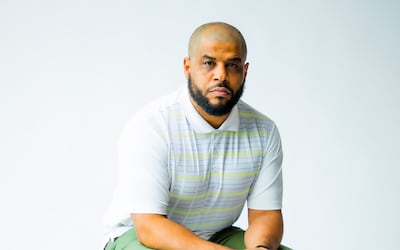
Stephen Green sits on Prosper’s community budget committee and worked for the agency for 10 years before co-founding the small business advocacy group Better Business. He says the departure of Vickers, and other staff who played an integral role in Prosper’s attempts to create tax increment financing districts that have more buy-in and participation from the communities in which they were placed, has eroded some of the trust Prosper built with underserved communities.
“I imagine it’s not great to lose folks like her internally, especially when you have so many newer folks that are new to Prosper,” Green says. “That makes the work harder, not easier. I’d be really concerned about the path forward if you’re losing that kind of institutional knowledge and trust with the community.”
Green says the mayor and the board must reckon with the union’s allegations and unhappiness if they want the agency to move forward. “When you’re at that point with the union, you got to get that solved,” Green says. “I don’t know how you do the hard, complicated work of Prosper when you’ve got stuff like that unresolved from the inside.”
Prosper’s turmoil has certainly caught the attention of the Portland City Council. And while councilors have historically disagreed about what exactly is lackluster about the agency’s operation, most agree the agency is underperforming.
“The entire City Council has started to evolve towards the perspective that something isn’t right here,” Council President Jamie Dunphy says.
Left-leaning members of the council have generally characterized Prosper as an insiders’ club that still panders to moneyed interests. Meanwhile, some of the more centrist members of the council have suggested that Prosper is unfocused and spends too much of its money on nonprofits and not enough on large-scale development projects that would reinvigorate the city’s economy. (Prosper tends to push back against both of those charges.)
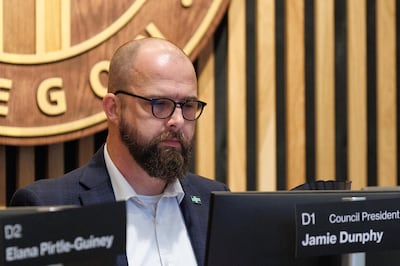
Dunphy says the council will hold a work session in January to discuss the future of Prosper: whether it should remain independent of the city or move directly under the mayor’s administration, and how it moves forward from the recent controversy. (Dunphy has been clear about his desire: to make it a proper city agency that reports to Wilson and has a budget set by the council. “The arm’s length relationship between the city and Prosper is endangering public dollars and leading to bad outcomes,” he says.)
Meanwhile, Councilors Elana Pirtle-Guiney and Candace Avalos are exploring what an oversight hearing of Prosper might look like as part of Dunphy’s efforts. “The questions raised over the last month about Prosper Portland’s leadership deserve clear answers,” Pirtle-Guiney says. “While Prosper has some independence from the city right now, they need to be held to the same standard around how they handle public resources and how employees are treated.”
Councilor Mitch Green, a frequent critic of Prosper, says the past few weeks have exposed an agency far more broken than most assumed. Whether Wesley stays or goes, councilors tell WW, the conversation about the future of Prosper will happen.
“Prosper spends a lot of public money. The public has the right to know what it’s doing, why it does what it does, and if the board is capable of exercising oversight,” Green says. “And if they won’t, then Portlanders would be right to ask what the City Council and the mayor are going to do about Prosper.”