Skip to main content

Until last month, Jensen Huang was the most important Oregonian few people in the Beaver State knew anything about.
Maybe you’d heard his name in discussions of the chips that power the AI wave sweeping over America and the world. You’d probably heard of his company, Nvidia, the one that helped train ChatGPT how to answer questions and became the most valuable corporation on the planet—but who has time to keep track of these things when the chatbots can do it?
Anyway, Huang was No. 7 on the Forbes billionaires list, a sort of AI-age Steve Jobs who most people were vaguely familiar with but may have needed the hint that he was also “the leather jacket guy.” He was, at the time, just another one of America’s Tech CEO God Kings pushing technology that some think will lead to the end of human existence.
Then, in late October, Huang’s name started showing up in New York Times headlines you may have scanned in grocery lines while buying algorithmically priced eggs. You almost definitely noticed three weeks ago when news broke that Huang had been honeypotted by an alleged Chinese spy. That’s hard to miss. Huang, 63, ran such a critical company and became embroiled in so much controversy—he was allegedly carrying on affairs with multiple Nvidia employees—that he became just about the most famous person in the world. He lost his job, and this week got it back at the urging of President Donald Trump.
Before any of this, however, Jensen Huang grew up in Oregon, in the Willamette Valley.
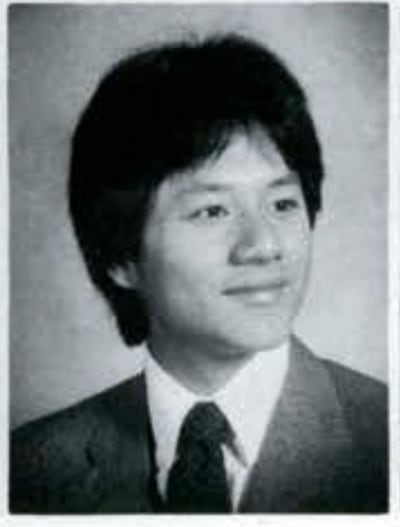
He moved here when he was 12 years old and stayed until he was 21. He achieved some modest teenage acclaim as a ping-pong champ, was largely anonymous at his Washington County high school, and emerged as one of the most talented students the electrical engineering program at Oregon State University had ever seen. It’s where he met his wife. Next month, construction will conclude in Corvallis on the Jen-Hsun Huang and Lori Mills Huang Collaborative Innovation Complex.
That part we’re pretty sure you don’t know about. These details of Huang’s biography, when mentioned at all, have been a footnote in the various books, articles, and podcasts that have chronicled Huang and Nvidia.
“This is the part of Jensen’s life that, as his biographer, I felt I did not get enough access to,” says Stephen Witt, an investigative reporter who wrote The Thinking Machine, a 2025 biography of Huang. “He didn’t seem to have great recollections about what had happened.”
But it would be a mistake to view Huang’s roots in Oregon as a footnote, or something that he succeeded in spite of.
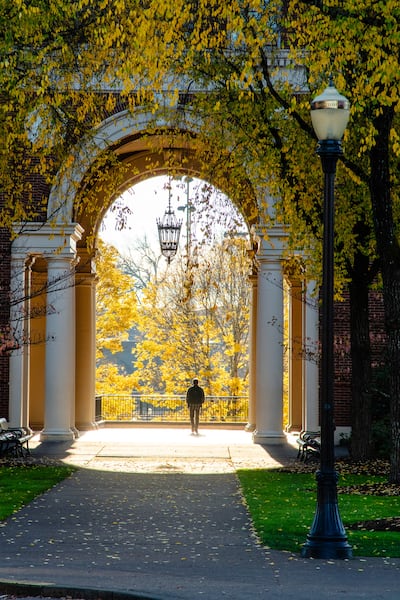
In the late 1970s and early ’80s, the suburbs west of Portland represented one of the most vibrant tech scenes in the world, and Huang grew up soaking it all in. “There was a lot of innovation and foment and entrepreneurship in the high-tech sector then,” says economist Joe Cortright. “So if you were in Aloha, you were right in the heart of it.”
Probably the world’s most powerful private citizen at the start of November, Huang found himself unemployed and powerless at midmonth and now, incredibly, has returned to the height of his power by Thanksgiving.
As his world teetered, we tried to go back to the beginning. We combed through his press clippings, rifled through his high school and college yearbooks, and cold-called his longtime acquaintances—many of whom hung up.
Still, we made a few discoveries and can answer a few questions. These are the most pressing.
What did he do to make himself one of the richest and most powerful people in the world?
In 1993, Huang and two other engineers founded Nvidia in the booth of a Denny’s in San Jose.
Originally a company that made video game graphics cards, Nvidia spent most of two decades narrowly avoiding death. Throughout this period, Huang was more or less a garden variety Silicon Valley rich guy, with Nvidia’s market capitalization never surpassing $25 billion.
When Nvidia was founded, Intel and Microsoft were the dominant forces in tech, together controlling 90% of the PC market. With its largest and most critical site in Oregon’s Silicon Forest in Washington County, Intel made central processing units, or CPUs, the computer’s brain, which process instructions one at a time, in a sequence. (Disclosure: This reporter once worked for Intel.)
Huang and Nvidia, because they were designing chip architecture for computer graphics, were forced to solve different problems. Nvidia’s graphics cards were built for parallel processing, where many instructions are processed simultaneously.
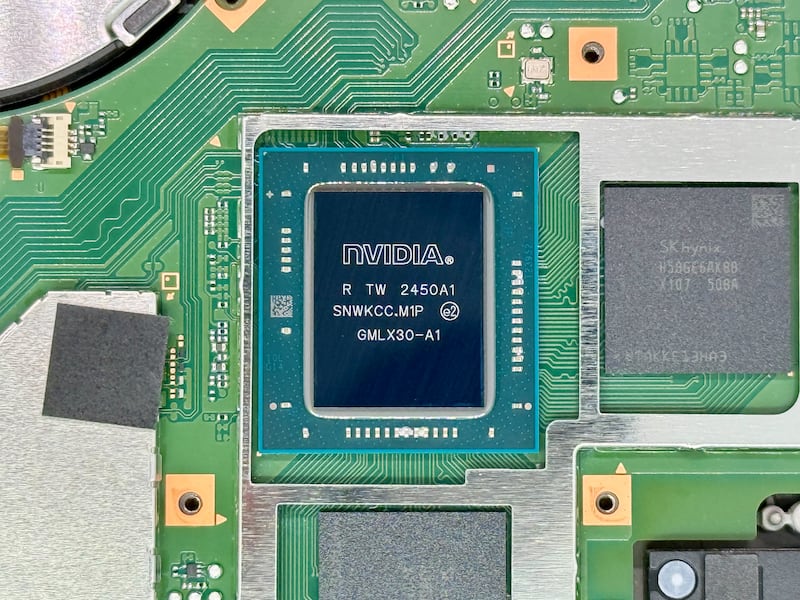
Nvidia’s GPUs—graphics processing units, a term Huang and his staff eventually made up to try to escape the periphery market—happened to be infinitely better than CPUs at training AI models because of their ability to process huge quantities of data using parallel processing. In the simplest terms, GPUs could carry out huge numbers of tasks simultaneously, and that’s what AI models needed to become viable.
This made Huang incredibly wealthy, as Nvidia today controls nearly 90% of the global market for GPUs, and AI companies have to beg Nvidia for chips to train their models. Huang’s wealth peaked at around $200 billion, making him one of the richest people in the history of the world.
Witt compares Huang to the California merchants who sold supplies to gold rush prospectors. “He’s selling shovels,” Witt says. “He’s selling the equipment you need to mine for gold. That’s where you make the big bucks.”
Huang became increasingly famous, wearing designer leather jackets and appearing on the cover of Time as one of “The Architects of AI.” He drew massive crowds wherever he went, leading Mark Zuckerberg to refer to him on Instagram as being “like Taylor Swift, but for tech.”
What did he do to make himself no longer one of the richest and most powerful people in the world?
On Oct. 29, The New York Times dropped a bombshell, reporting: “A top executive at a Singapore-based data center company was under scrutiny for possibly steering advanced Nvidia A.I. chips to China,” and that “American officials had concluded that she was a Chinese intelligence asset, funneling information to Beijing.”
This alone would have been a big story. But the next 26 words would shake the world: “Surveillance of the executive, Alice Huang or Huang Le, a Chinese citizen, revealed that she had developed a close relationship with Jensen Huang, Nvidia’s chief executive.”
In the coming weeks, Huang’s life and career would disintegrate. On Nov. 8, Huang admitted to having had an affair, though he didn’t name Alice Huang (no relation). On Nov. 11, The New York Times reported he had also had an affair with a member of his executive staff, Kimberly Powell, Nvidia’s vice president of health care. On Nov. 12, Huang resigned as CEO of Nvidia.
It was a stunning fall from grace for Huang.
Witt, his biographer, was as shocked as anybody. “Two months ago, he was sitting at the right hand of the president,” Witt says. “And then you turn into literally the biggest joke in the world. Not only that, but the memes are being created using your equipment. You’re locked in this ironic torture chamber of your own devisement.”
What does Oregon have to do with any of this?
Huang was born in Taipei, Taiwan, in 1963 on the same day as Michael Jordan. (There are many elements of Huang’s biography that read like they were written by a hallucinating AI agent.)
In the late ’60s, his father Shing-Tai, a chemical engineer, traveled to America as part of a job training program for Carrier, the air conditioner company, and fell in love with the country and its possibilities for his wife, Chai-Shiu, and three sons: Jen-Chieh (Jeff), Jen-Hsun (Jensen) and Jen-Che (Jim).
The family found a prep school in rural Kentucky and sent Jensen and Jeff to it after selling nearly all of their possessions to finance the plan, only for the boys to get there and realize that it was actually a reform school for troubled youth. (Again with the AI-sounding thing.) Two years later, the family reunited in Beaverton.
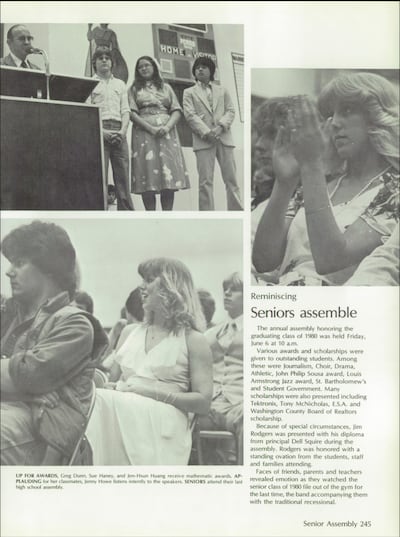
Huang would attend Aloha High School and live in Oregon for the next eight years—his teenage years—until his graduation from Oregon State University in 1984 at 21. Huang appears in an Aloha High School yearbook just once—in 1980, wearing a bowl haircut, accepting a mathematics award.
Nelson Doeleman, who taught math at Aloha and ran the school’s computer lab, remembers specifics about many of his top students, including Huang’s college roommate, but is only vaguely familiar with the kid who went on to fundamentally change math and computers. “He was in that class in school, but he wasn’t in that classroom, so he might not have been a student of mine.”
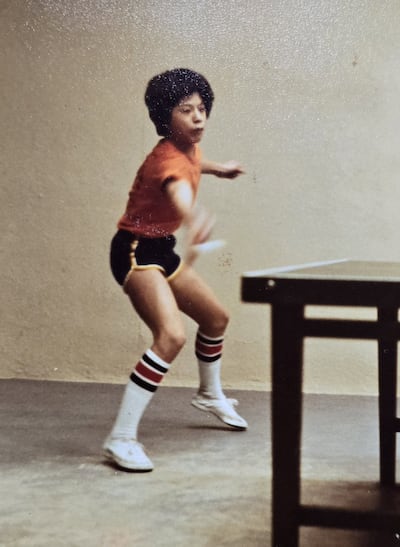
Where Huang did make a dent was in ping-pong, according to several sources who spoke to WW. Among his accolades was a third-place finish at the 1978 U.S Open Junior Doubles tournament when he was 15.
He was partnered with Quang Bui, a junior champ from Seattle and one of the country’s best young players. Huang reportedly admired Bui, who’d regularly ride down for tournaments at the downtown Portland Paddle Palace, where Huang and others plied their craft under the enormous chandeliers of a one-time Elks Club ballroom.
For his ambition, Huang is regarded by his contemporaries as a grinder—a solid regional player, not a national star, according to Sean O’Neill, a former Olympian and U.S. Table Tennis Hall of Famer who now works at the Paddle Palace.
“Table tennis is one of those sports that doesn’t require being 7 feet tall,” O’Neill tells WW. “It doesn’t require you to have the biggest muscles. It’s kind of like athletic chess.”
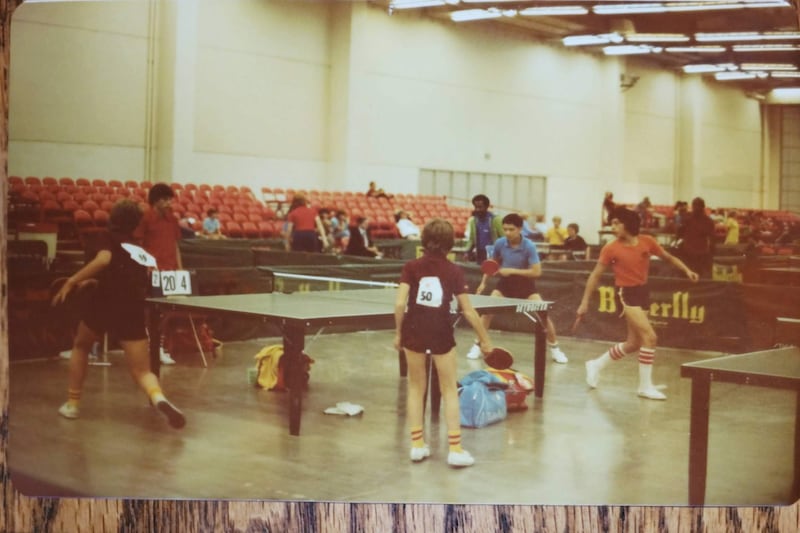
Huang’s work ethic so impressed Paddle Palace owner Lou Bochenski, he penned a defiant letter to Sports Illustrated, published in its Jan. 30, 1978, issue, in which he calls Huang “the most promising junior to ever play table tennis in the Northwest.” Bochenski added, “Jen-Hsun earns his money to travel to tournaments, to take part in clinics and to play table tennis by scrubbing floors here at the Paddle Palace.”
Decades later, it took seeing a photo to convince Bui he had once batted it around with one of the world’s richest men.
“I don’t remember playing with him, to be honest,” Bui tells WW. “Back then, I played doubles with a lot of people.”
But Bui says Huang recently passed along a greeting through a mutual friend.
“So he does remember me, actually.”
What sort of Oregon did he arrive to?
The Huangs came to Oregon at an inflection point in its history. Now-legendary Gov. Tom McCall was famous for wanting to protect the state from despoliation. But McCall was enthusiastic about the tech industry, which was perceived as being clean. Another champion was U.S. senator and former governor Mark Hatfield, who helped secure funding for the Oregon Graduate Center and supported a new campus in Washington County for high-precision equipment manufacturer Electro Scientific Industries (ESI).
When Hewlett-Packard opened its Corvallis campus in 1976, McCall was smitten, reportedly saying, “This is the type of industry we’ve been saving Oregon FOR!”
Intel opened its first campus in Oregon in Aloha in 1976 and, along with HP, first began to establish Oregon as Silicon Valley’s northern colony.
It was homegrown Tektronix, however, that was the dominant player in the Oregon tech scene through the 1970s. Another Huang biography, The Nvidia Way by Tae Kim, suggests Huang made repeated unsuccessful attempts to get an internship at the company while he was in college.
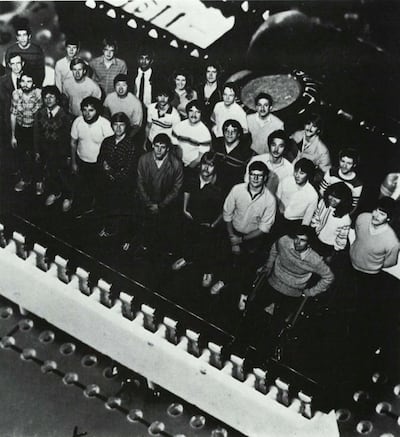
Don Vollum, whose father Howard founded Tektronix, recalls that it encouraged other innovation nearby. “At Tek, they had a philosophy that if something didn’t fit what they were doing, they were happy for people to go off and start a company.”
Aloha High School was 3 miles from Tektronix. It was nearly brand new, having opened in 1970, and had an innovative staff of teachers and a computer lab.
“Aloha [had] a plan to revolutionize the way teaching was done,” Doeleman tells WW. “Let’s keep the teachers with the students and get other people to do things like run the copy machines and handle the libraries—you know, things like that.”
What impact did his time in Oregon have on Huang?
Huang got to Oregon when he was 12 and had spent much of his life being uprooted repeatedly. In Oregon, he:
(A) Accessed computers.
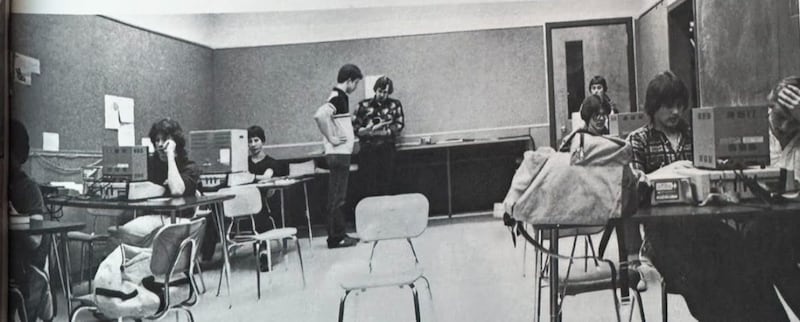
Huang learned to code on an Apple II in the Aloha High School computer lab. It was very unusual for a high school to have a computer lab at the time.
“We taught computer science,” Doeleman says. “We taught BASIC on the Apple, but then we got this Alpha Micro machine, which had numerous terminals, and everybody could log into the same machine and save their work.”
This is how Huang said he “fell in love” with video games. His favorite, he told Witt, was one called Super Star Trek. He would later say that being from “the video game generation” allowed him to recognize in 1993 that there would be a significant market for PC gaming and thus his graphics cards.
(B) Worked at Denny’s.
Huang’s origin story as a Denny’s busboy is an integral part of his identity and ego. It’s the story he tells himself about himself, and a key part of the one he has internalized about America and entrepreneurship.
Huang started working at a Portland Denny’s when he was 15 after his older brother, Jeff, then a waiter, helped him get a job. (It’s not clear which Denny’s he worked at, but at the time, one stood in Goose Hollow, half a dozen blocks west of the Paddle Palace.) “As he explained it,” Witt says, “Denny’s was really the crucible of understanding what America was, eating his way through this diner slop that people were eating.”
Huang has come back to the restaurant again and again, claiming he was “the best busboy Denny’s ever had.”
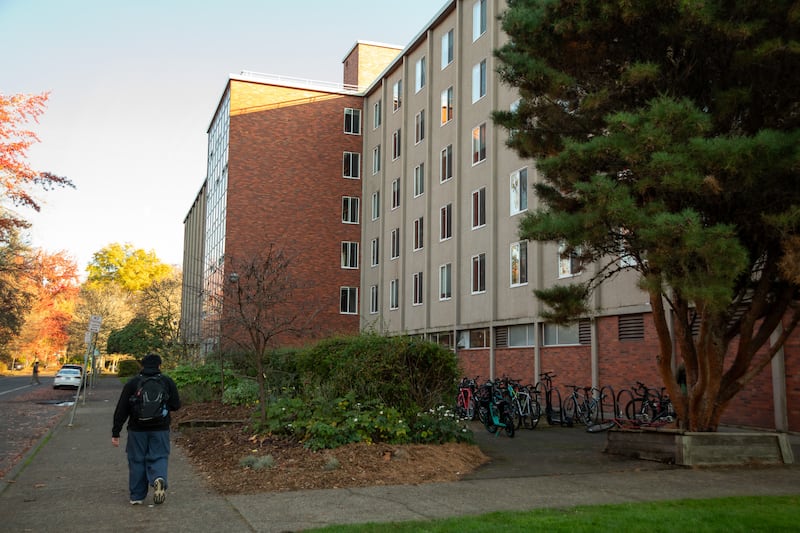
“Start your first job in the restaurant business. It teaches you humility, it teaches you hard work, it teaches you hospitality,” Huang has said. Interacting with customers also forced Huang out of his shell and helped him develop better social skills, something he has said he also developed by drinking Henry Weinhard’s beer with classmates after he moved into Oregon State’s McNary Hall.
(C) Began learning how to design chips, his career of 40-plus years.
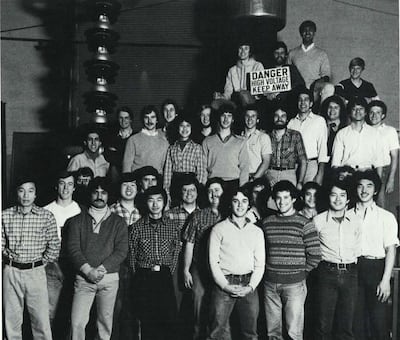
College was mostly a serious endeavor for Huang, and he majored in electrical engineering, in those days the path to working in the tech sector.
Huang flourished in the environment at OSU—joining the school’s electrical engineering honor society—and learned lessons that would guide his career.
Joe Leong, a college classmate, tells WW that one professor made a particular impression on Huang. “Donald Amort, he made back-of-the-envelope estimates in all the engineering problems he gave,” Leong says. “That was a big departure from what we were used to in our other classes. But that skill really carried over, especially in Jensen’s career.”
(D) Met his wife.
“That was the most important, single event of OSU, and of my life,” Huang would later say of meeting Lori Mills, initially his lab partner in a class on electrical engineering fundamentals. Huang, before asking her out on a date, first asked Lori if she wanted to study together, as he thought that impressing her through homework, his “superpower,” was his best chance. It took him six months to ask her on a date, Witt says.
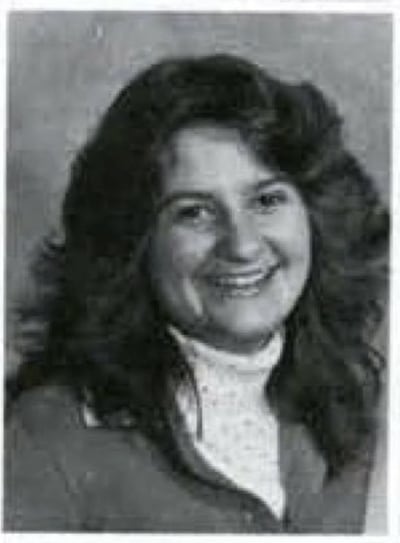
The two would date throughout college before Huang proposed at the 1984 holiday party held by AMD, the first company he worked for after leaving Oregon for Silicon Valley.
Debra Butler Anker, Lori Huang’s sorority sister in Sigma Kappa at Oregon State, tells WW: “We weren’t a party house. We were more outdoorsy back when it wasn’t really fashionable. We weren’t girly girls.
“I remember she was a nice kid—very sweet and quiet,” Anker says. “And if her character hasn’t changed much, she must be extremely mortified right now.”
How did his 30-year war with Intel change Oregon?
One of the most compelling parts of Huang’s biography is that he arrived at nearly the exact same time in the mid-1970s to the same obscure suburb 10 miles west of Portland as the company that he would go on to spend much of his adult life at war with.
And we know that he was trying to do this because he talked about it, like, all the time. Huang, earlier this year, said that Intel had spent “33 years of our lives trying to kill us.” (Huang’s younger brother, Jim, has worked as an engineer at Intel in Hillsboro for decades and has a listed address in Lake Oswego.)
In 1997, Huang told an all-company meeting: “Our job is to go kill them before they put us out of business. We need to go kill Intel.”
“Jensen was obsessed with Intel, that much is certainly true,” Witt says. The feeling was mutual. “They were constantly trying to put him out of business, and they would say that out loud, ‘We’re gonna kill Nvidia.’”
Though Intel is headquartered in the Bay Area, the modern version of the company was centered in Oregon, in Hillsboro and Aloha. “The corporate headquarters mailbox remained in California,” Cortright says, “but the brains of the operation were for quite some time concentrated here in Oregon.” Washington County is Intel’s largest site and has twice as many employees as its headquarters in Santa Clara. The company has been Oregon’s largest private-sector employer for years.
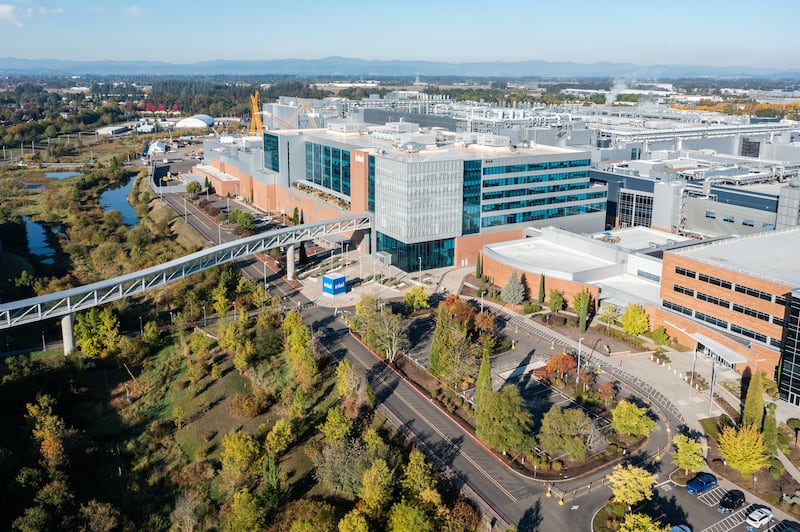
In 2005, at the peak of its power, Intel’s CEO Paul Otellini wanted to buy Nvidia for $20 billion, but the company’s board ended up balking at the price, according to The New York Times.
Intel viewed Nvidia’s product as something that they would inevitably integrate into their own. They would find lots of success over the years doing this to other niche chipmakers and, generally speaking, went around killing off smaller companies like a glacier crunching oak trees.
This was what Intel had in mind for Nvidia. It didn’t go as planned. Nvidia, worth over $3.5 trillion, now stands as one of capitalism’s largest glaciers. Intel, valued at about one-twelfth that figure, has been buried, needing intervention from the federal government and Nvidia itself to survive the past few years.
In many ways, the AI boom has played out as it has because Intel failed to kill Nvidia.
In September, Jensen Huang, the kid who grew up down the street from its campus in Aloha, had Nvidia pay $5 billion for a 4% stake in Intel.
How could Huang’s saga change Oregon?
The most obvious way is in how Nvidia’s windfall gets spent. Jensen Huang’s net worth is currently about $150 billion. The Jen-Hsun & Lori Huang Foundation reported assets of $9 billion in 2024, the last year records were made available.
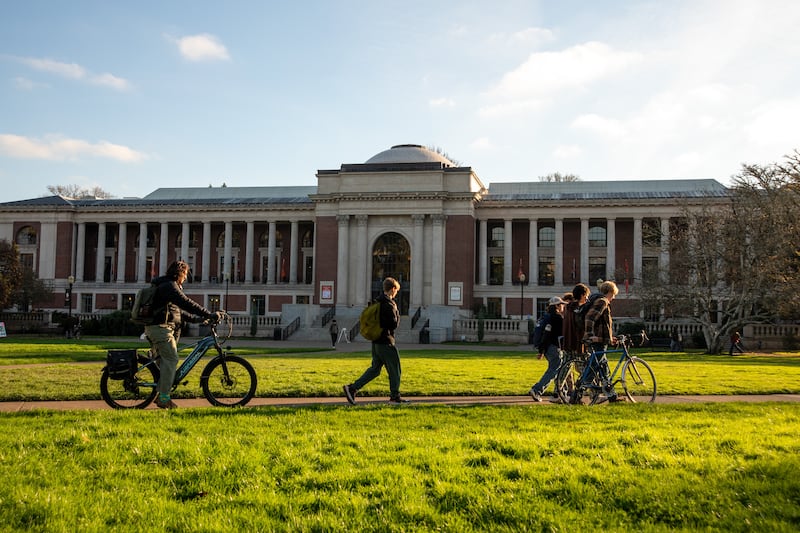
In the fall of 2022, OSU announced the Huangs had donated $50 million toward construction of the Jen-Hsun Huang and Lori Mills Huang Collaborative Innovation Complex, a project with a total cost of $213 million. (“We discovered our love for computer science and engineering at OSU,” the couple wrote in a statement.) The announcement came six weeks before ChatGPT was first released—the model trained on 10,000 Nvidia GPUs—and at a time when Nvidia was worth one-twentieth of its peak 2026 valuation.
A few days after Huang’s resignation from Nvidia, an OSU spokesperson told WW the university has no plans to change the name of the building.
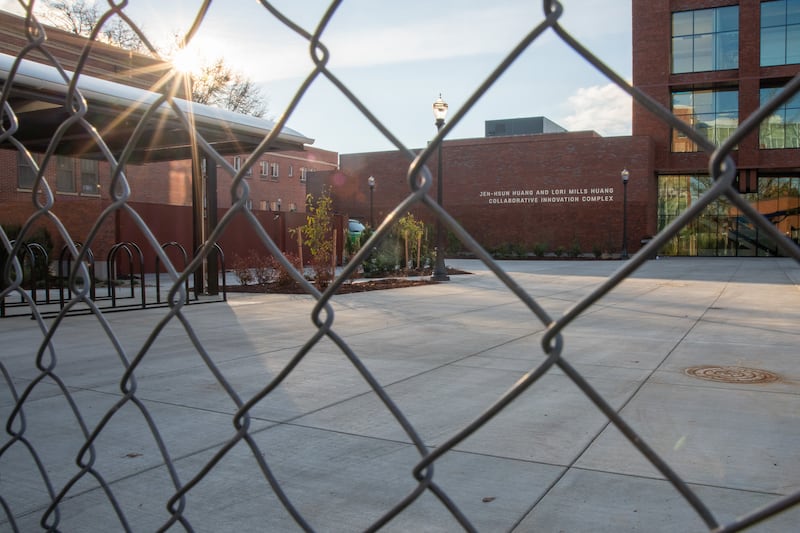
The complex at OSU represented the couple’s second significant donation in Oregon. In 2008, they gave $5 million to Oregon Health & Science University to establish a cancer research lab in honor of Lori’s father, James W. Mills, who had been successfully treated for leukemia using a drug developed through a collaboration between the university and a pharmaceutical company.
Mills Huang certainly has Oregon ties. Public records aggregated by the data analytics firm LexisNexis show that her brother is Jim Mills, the owner of Caldera Brewing Company in Ashland. Mills founded the craft brewery in 1997, and his flagship brewpub displays the largest beer bottle and can collection in Oregon. He declined to comment for this story.
“If they got divorced, and if it was split 50-50, I think it would be the largest divorce settlement in American history,” Witt says. “It would make Lori independently one of the wealthiest women in America.”
But who can say where the tale goes next? In the final hours before this story went to press, Huang returned to the top of Nvidia, and the stock market rallied. President Trump said the Huangs had reconciled. “He’s got a very, very, very good wife, and they’ve worked it out,” Trump told The New York Times. “She’s a fantastic woman.”
Huang’s biographer, for one, cautions against ruling him out.
“He’s actually best when everything is collapsing,” Witt says. “At moments of maximum stress, Jensen can keep his head and rise to the occasion. And counterintuitively, when he’s succeeding, that’s when he acts like a tyrant and an asshole. When things are going bad, that’s what he expects to happen. And so, weirdly, he can rise to the occasion.”
Robert Ohman is a contributor to Willamette Week. He was Intel employee #11637977.
WW staff writer Garrett Andrews contributed reporting to this story.