Skip to main content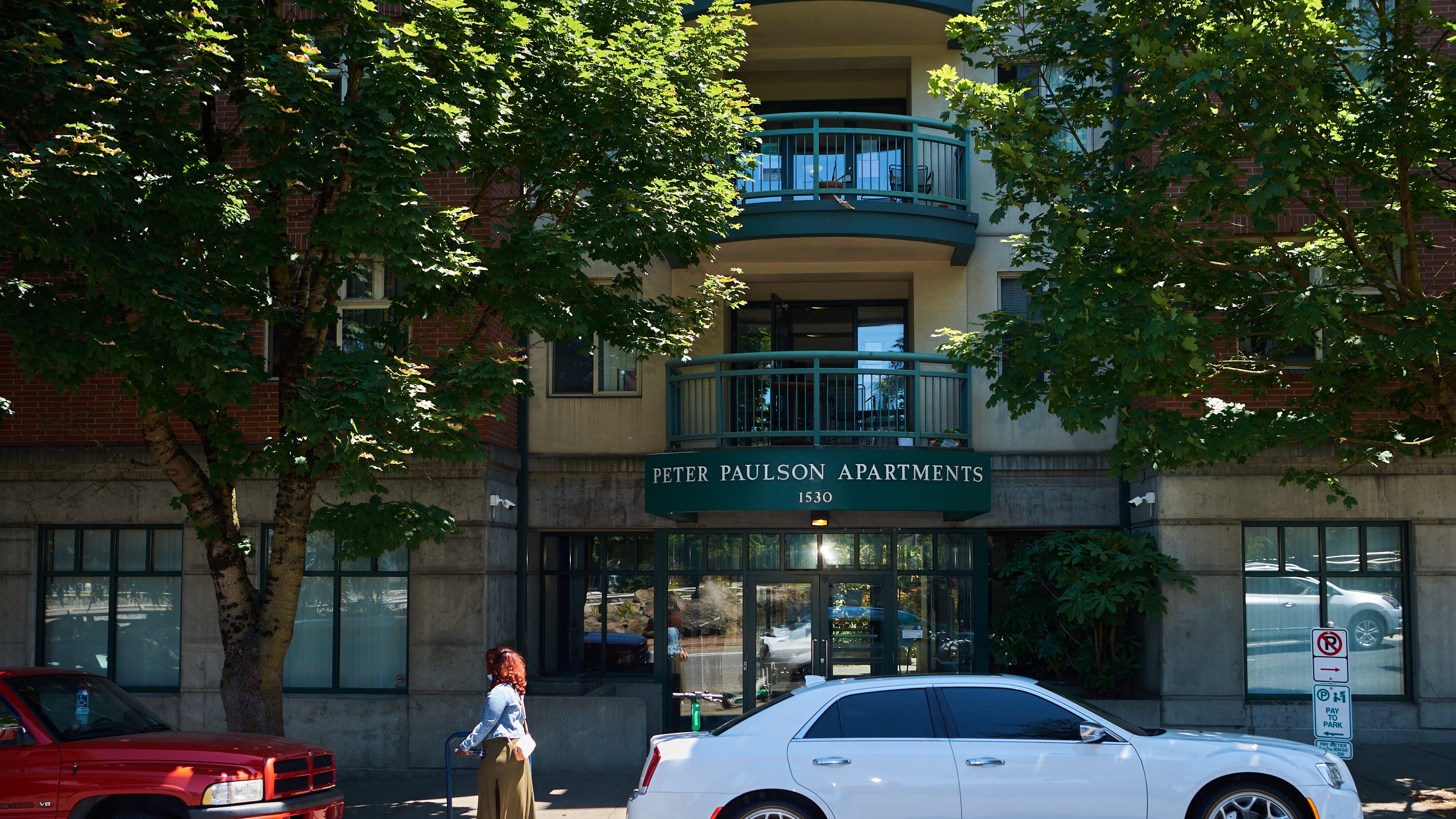
Home Forward, the city of Portland’s housing authority, is sitting on 956 empty affordable apartment units, according to a Nov. 7 vacancy report the agency provided to WW last month.
Home Forward has 6,847 affordable units across the Portland area. That means 1 in every 7 units sits empty. The 14% vacancy rate for the housing authority is more than double the 6% overall vacancy rate for the city, and double the affordable housing vacancy rate.
Meanwhile, as units sit unoccupied, 7,500 people are living unsheltered on Portland’s streets every night, according to the most recent data from Multnomah County.
Those figures add complexity to the essence of public dialogue around affordable housing in recent years, both at the city and state levels: namely, that the primary cause of the housing and homelessness crisis is a lack of supply.
To be sure, supply is a problem. But the crisis is far more nuanced than that. Nearly half of Home Forward’s units, according to spokesperson Rylee Ahnen, rent to tenants at the 60% area median income level. (The second-largest chunk of Home Forward units—29%—rent to 50% AMI. The third largest to 30% AMI, which constitutes 12% of Home Forward’s stock.) But as market-rate rents drop, they’ve started to match rents charged for the 60% AMI units. When prospective renters seek a place to live, they’ll often choose a market-rate unit instead of a subsidized unit at the same monthly price. That means demand for Home Forward’s 60% AMI units —which constitute much of the nonprofit’s overall portfolio—is lagging, so many of them sit empty.
To be sure, where the deepest shortage of affordable housing lies is in the 0-30% AMI range—or deeply affordable housing. Rents for those units have crept up in recent years to the point of being unaffordable to those in that income bracket, Ahnen says.
“Fundamentally, this is an affordability problem. Other housing providers across Multnomah County and the state are facing similar pressures as ‘affordable’ rent levels drift further from what families with the lowest incomes are able to sustainably afford for housing,” Ahnen says. “The long-term solution is simple, but it’s not easy: We need more resources for rental assistance to create deeper levels of affordability in our housing system.”
The nonprofit housing authority cites a number of other factors, too, that create such a staggering vacancy rate. A number of the properties are freshly built, so Home Forward is just now finding tenants to fill them. Two other properties in recent years—Pearl Courts and The Yards—had “extensive flood damage after the sprinkler system burst during the [January 2024] ice storm,” Ahnen says. “While repairs were taking place, city code prevented us from leasing any units until the city inspector had signed off,” something inspectors did on both buildings just recently, Ahnen adds.
A group of tenants this week successfully lobbied Home Forward to ditch a rent increase at the Yards, arguing that the building remains in poor shape nearly two years after the storm damage. “Given everything we’ve been through the last two years, The Yards Tenants Union calls on Pinehurst and Home Forward to abandon the blanket rent increases set to take effect for every tenant on January 1, 2026,” wrote the tenants in a Dec. 4 email.
Even without the buildings in a lease-up period and the units in need of major repairs because of weather damage, Home Forward still has 597 empty units across its remaining buildings. That’s out of a total of 6,083 units in those buildings.
In some of Home Forward’s apartment buildings, nearly half the units lie vacant. That’s the case at the Helen M. Swindells building in the Old Town neighborhood, where 52 out of 105 units are vacant. Eighty-four of the 240 units at the Lloyd District’s Louisa Flowers building, which is made up almost entirely of 60% AMI units, are vacant. And at the Rosenbaum Plaza downtown, 28 out of 76 units lie vacant. (The Rosenbaum, Ahnen says, recently had a flood that damaged multiple units.)
As for the Helen M. Swindells and the Louisa Flowers buildings, Ahnen says part of the reason the vacancies are high is that they are both “located in neighborhoods that are farther away from some of the city amenities folks might be looking for.”
A recent report by the real estate firm CoStar, first reported by The Oregonian, estimated there were 1,863 affordable apartment units sitting vacant across the city out of 25,409 total affordable apartments. If that number is accurate, half of those are Home Forward units.
Ahnen says Home Forward is “[working] closely with the city of Portland and other community partners as part of [Mayor Wilson’s] housing strike team to coordinate on issues like addressing vacancy rates and achieving housing stability.” Ahnen says prongs of that strategy include “lowering rents when possible,” leasing incentives like free rent the first month, and more targeted marketing to prospective tenants. Rents at The Pearl and The Yards will soon be lowered, Ahnen says. And rents at the Swindells building have already been reduced.
The Portland Housing Bureau, which is a funding partner in about half of Home Forward’s total units, echoed the agency in saying that it’s working with Mayor Wilson’s team to place people in vacant units. PHB spokesman Gabriel Mathews says the bureau is working to “pinpoint vacancies and help households move out of shelter and into permanent housing” but, like Home Forward, did not say how many families the city had recently helped move into vacant Home Forward units.
PHB says 18,000 affordable units across the city are bound by the city’s affordability restrictions because the city helped fund the projects. But Mathews says the bureau doesn’t track real-time vacancy data across its portfolio, so it can’t say how many of those 18,000 units are occupied.
Meanwhile, Home Forward faces an estimated $35 million budget gap next year, in large part due to insufficient funding from the U.S. Department of Housing and Urban Development to cover the costs of its Housing Choice Voucher Program. Already, Home Forward has felt the brunt of those funds drying up: In August, it stopped issuing new vouchers.