Skip to main content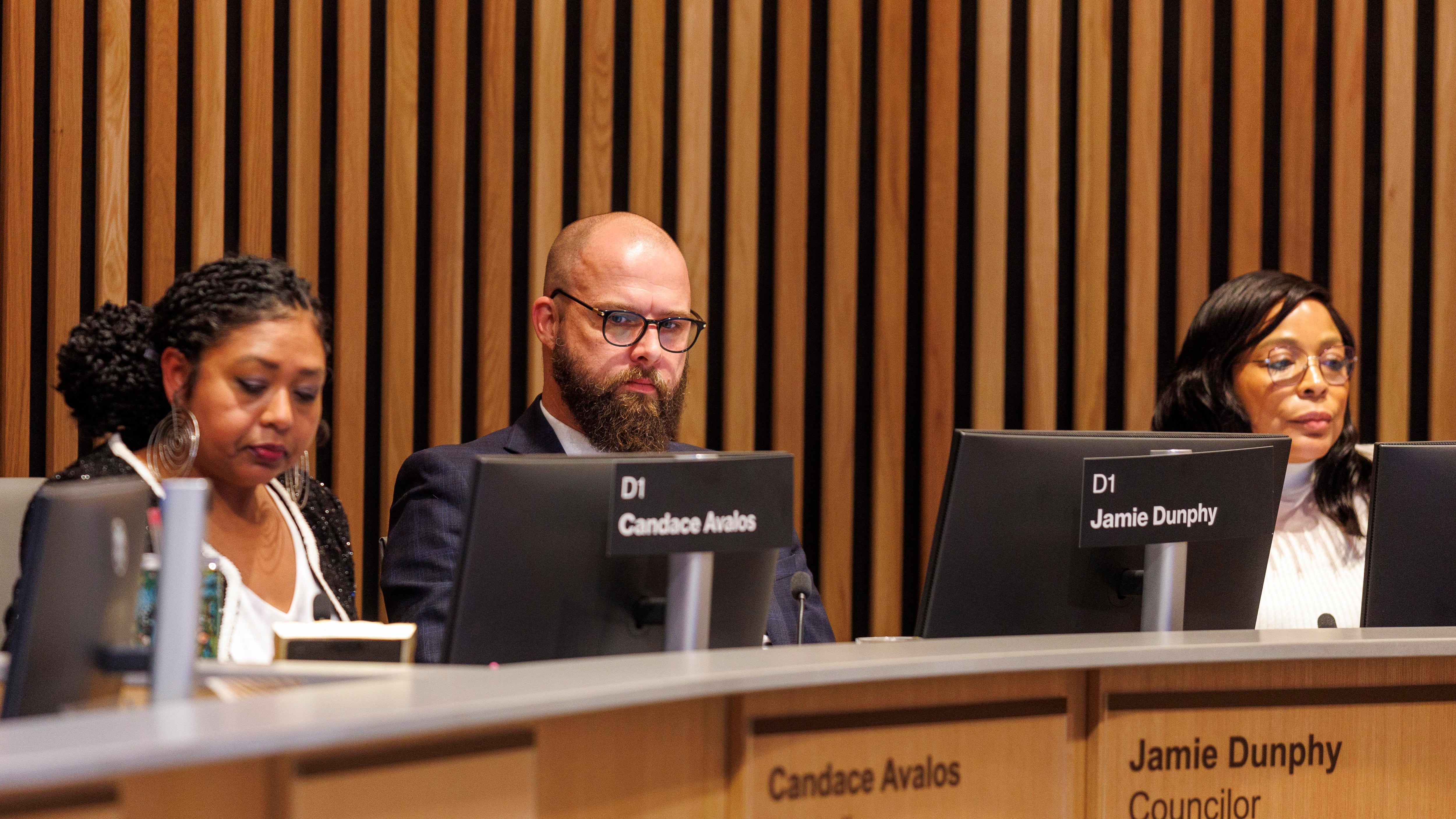
The Portland City Council advanced a $8.5 billion budget on Wednesday that saw substantial cuts made across all bureaus, with the steepest cuts in the fire, police and parks budgets and close to 145 positions axed.
Councilors spent two long days debating and voting on dozens of amendments brought forth by their colleagues to Mayor Keith Wilson’s proposed budget, which is the blueprint from which the council works. Facing a $160 million general fund deficit, Wilson—with few substantial changes by the council—proposed closing the gap by drawing heavily from reserves and contingencies, using Portland Clean Energy Fund revenues, and increasing fees and charges.
For the most part, Wilson’s proposed budget went unchanged. Only small tweaks were made, largely a product of the council reaching what seemed a frustrating stalemate for all parties on various amendments that would have meaningfully restored some of the cuts to public safety.
The long meetings were punctuated by tense exchanges between councilors from the council’s left flank and councilors from its more moderate faction. Accusations flew about impure motivations, votes driven by pettiness, and inflexibility at the expense of the city.
Below are highlights of the city’s $8.5 billion upcoming budget and the meaningful changes made by the council this week. The council votes in June to approve a final budget.
Public safety: Wilson’s proposed budget sought to slash $21.7 million from the Portland Police Bureau and $7 million from Portland Fire & Rescue. Among his proposed cuts in the Police Bureau were gutting the public safety support specialist program, which sends unarmed personnel to low-acuity calls; cuts to administrative personnel; and cuts to technology. Among his proposed cuts to PF&R were a fire engine in North Portland, reducing hours that the bureau’s two-member rescue teams are available (called CHAT), and delaying planned equipment replacements.
By the time the City Council passed the budget on Wednesday, little had changed from Wilson’s document. The council did, however, restore funding for the fire engine and partially restore cuts to CHAT, Portland Street Response, and the Office of Violence Prevention.
The council passed a proposal by Councilor Angelita Morillo that slashed $2.5 million in proposed additional security money available to councilors to restore some funding in Portland Street Response and the fire bureau’s CHAT program. Her amendment also partially restores funding for the city’s Office of Violence Prevention and the Ceasefire program.
Another amendment championed by Councilor Sameer Kanal restored funding for the engine at Fire Station 22 in St. Johns by taking $2.5 million from the business license tax reserves. And an amendment by Council President Jamie Dunphy to save the jobs of some police desk clerks and youth outreach staff passed, using $1 million in savings from reduced pay increases for nonunion-represented staff earning more than $150,000 annually.
Most council amendments seeking to restore funding to the public safety bureaus failed because the council kept reaching a familiar 6–6 stalemate between the more progressive flank of the council and its more moderate flank. Proposals that perished in a deadlock included a proposal by Councilor Olivia Clark to use $10 million from the the city’s new police accountability body to restore cuts in fire and police; a proposal by Councilor Mitch Green to slash management to fund the continuing operation of a fire engine in North Portland; and a proposal from Councilor Steve Novick to slash the city administrator’s office budget, councilors’ budgets and security budgets to restore cuts in the police and fire bureaus and gun violence programs.
Homelessness and housing: Even as disenchantment with Wilson’s overnight shelter program has grown in recent months, the City Council opted to make few changes to Wilson’s homelessness budget. Granted, Wilson proposed major cuts to his own shelter program by proposing to slash $18 million, which is about one-third of its overall budget.
Most proposals seeking to cut into the shelter program also died but, as is typical now, the subject matter led to heated and at times bitter debate amongst councilors.
A proposal from Councilor Mitch Green, backed by all five of his progressive caucus members, proposed putting much of Wilson’s shelter budget in a reserve account only to be released once shelter providers—in particular the embattled provider Urban Alchemy—fixed some of the serious issues they’ve been accused of allowing inside camps. Green’s amendment also would’ve used $3 million in shelter funding to help stand up more self-governed homeless camps, a shelter model that’s remained nascent.
The more moderate flank of council, however, cast nay votes against Green’s amendment, resulting in a 6-6 vote. (A tie results in a failed proposal.) The debate stretched the patience of both flanks of council, and Wilson, who characterized the amendment as a “defunding” mechanism. Members of the progressive flank accused the mayor and moderate councilors of allowing a provider accused of enabling sexual abuse and drug dealing inside camps to continue operating without consequence.
“Are we just going to write them a check for 12 months and hope that it’s going to get better on their own?” Green asked.
Wilson’s proposal to backfill cuts to the Public Environment Management Office and the Impact Reduction Program, which sweeps homeless camps, using $5.8 million in Portland Clean Energy Fund dollars poked at an open sore; left-leaning councilors (and some moderate councilors) have historically opposed using revenues from the climate tax to backfill budget holes. But a proposal from Councilor Candace Avalos to take back the PCEF money failed. (The council did pass an amendment from Councilor Mitch Green that re-routed $1 million in camp sweep funding to hygiene, sanitary and laundry programs for those living on the streets.)
Perhaps one of the tensest moments of the evening came when Councilor Sameer Kanal proposed using $2.5 million to help fund two housing projects led by Black nonprofits. Councilor Loretta Smith earlier this year pushed hard for the council to fund those two very same projects using un-budgeted housing funds, but the council at the time opted to fund other priorities.
Smith took issue with Kanal’s proposed funding source, and councilors took sides.
“When the game gets a little crazy, you go with that team captain that sticks to the play that you’ve done 100 times, that everyone’s on board with,” said Councilor Eric Zimmerman about Smith. “We should reject this amendment because I think this has turned into some weird football.”
Councilor Avalos went after the moderate flank. “It’s ridiculous that we’re now put in this position where half a council simply doesn’t want to do it because they want it their way,” she said. “After we got lectured earlier: ‘Compromise is not just your way, compromise is working together.’ That’s embarrassing.”
Council President Dunphy and Smith began arguing, and Dunphy repeatedly banged his gavel to declare Smith out of order. At one point, Smith retorted: “You’re out of order! Make me stop, Mr. President.”
Smith voted against the proposal, saying she had an ordinance set to be heard by the council next week that would fund those two projects with a different funding mechanism. Kanal’s amendment died by a 6-5-1 vote.
Staffing, parks and trees: Wilson proposed axing 145 positions from the city’s payroll to help shore up the budget deficit, and most of those positions will indeed be eliminated under the council’s approved budget. But the council did, via an amendment, direct City Administrator Raymond Lee to come back in the fall with a study of how to eliminate management jobs that could incur savings of $3.3 million.
Councilor Koyama Lane led an amendment that successfully restored $3.2 million in cuts that would have axed 14 tree permitting staff from the city’s permitting department.