Skip to main content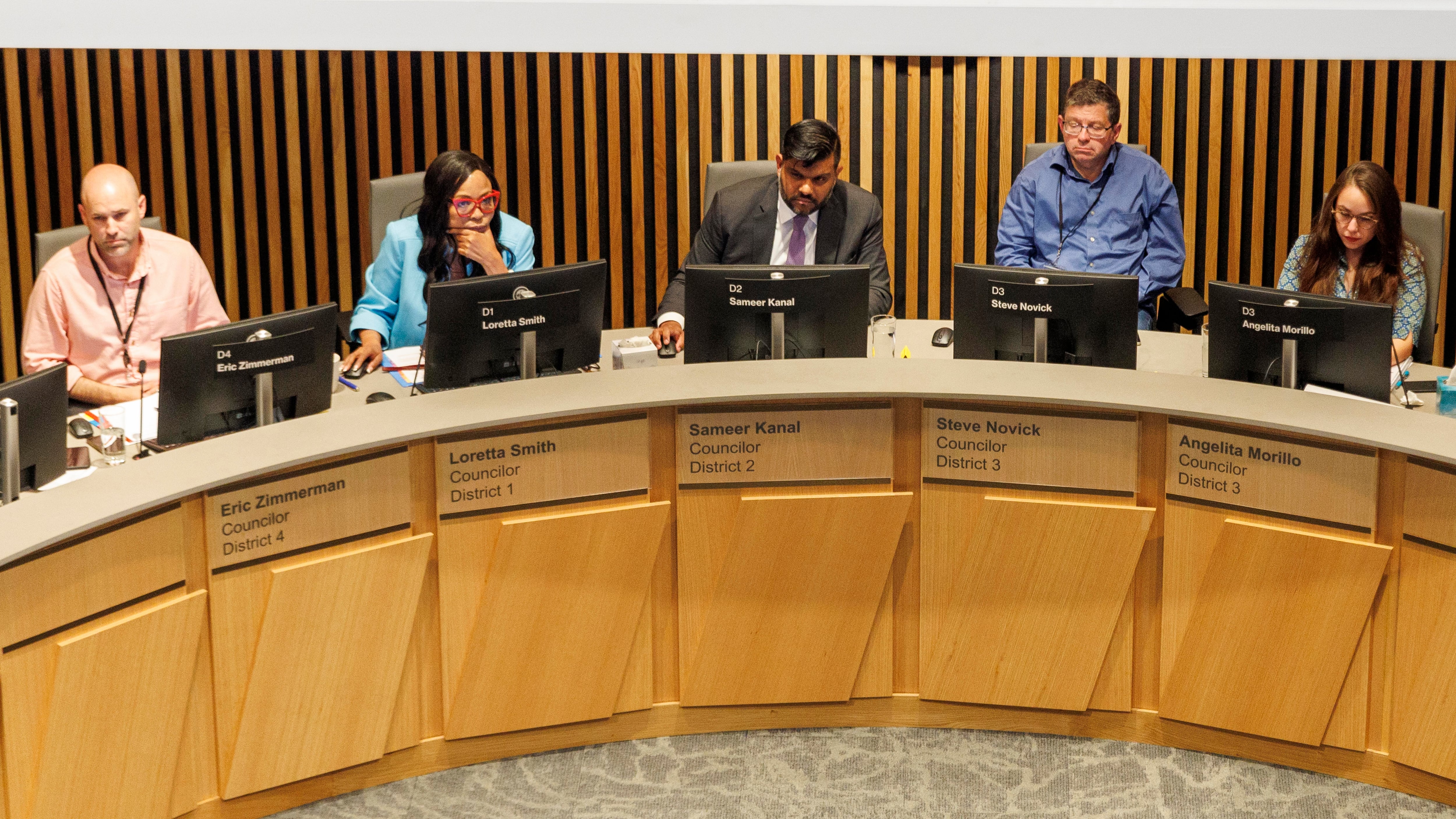
The Portland City Council on Wednesday voted 9-2 to pass the city’s $8.5 billion 2026–27 budget, which will result in steep cuts to public safety, parks and homeless services—and the elimination of about 150 city jobs.
No councilor was happy about the final product. In statements before passing the budget, councilors took turns panning the very budget they would soon vote to pass.
Some criticized their colleagues for failing to support specific budget amendments that sought to save employees from impending layoffs; the barbs followed a tense few weeks in which councilors from the progressive and moderate caucuses failed to come up with a compromise that would preserve at least some jobs and services slated for cuts, including public safety.
That stalemate turned increasingly bitter as the budget process limped along.
Even though the budget passed Wednesday night, five councilors announced Thursday morning they plan to bring an ordinance to the council that attempts to reverse some of the cuts to parks, fire, police and other personnel.
So while the budget is passed, the council can still opt to make sweeping changes to it—meaning the fight appears far from settled.
Progressive caucus councilors Angelita Morillo, Sameer Kanal, Candace Avalos, Tiffany Koyama Lane and Mitch Green said in a Thursday morning statement that they were bringing an ordinance that would preserve 48 jobs, restore reduced hours for Portland Fire & Rescue vehicles, restore funds cut from the Police Bureau’s unarmed response teams, and restore some cuts to parks maintenance and operations.
In other words, they said they would move to reverse several cuts that are officially now baked into the 2026–27 budget.
The councilors would fund the $12.7 million ordinance using $7 million in future interest accrued by the city’s climate tax and by tapping other contingency funds for an additional $5.6 million.
“This ordinance is about preserving core services, transparency, and making sure future cuts are based on evidence—not rushed cuts,” Morillo said in a statement.
The progressive caucus’s ordinance might not be the only one seeking a second life after the budget process. Councilor Olivia Clark, who unsuccessfully tried to restore some public safety cuts by tapping money from the new police accountability office, tells WW she is working on another proposal herself.
A spokeswoman for Morillo’s office said no other councilors outside of the five sponsors were consulted in the crafting of the ordinance.
“The sponsoring councilors drew up elements of the priorities heard from all 12 councilors during the discussion,” spokeswoman Amane Badhasso said. “The hope is that there will be an opportunity to find that compromise and shared vision with more deliberative space. The hope is that there’s a reset, a focus on outcomes, and an opportunity for all our colleagues to support this ordinance to show up for our city.”
The city’s chief financial officer, Jonas Biery, had warned councilors against bringing further amendments to the budget on Wednesday evening as the council approached a final vote.
“The reason for that is because humans have to do the work to implement council’s action,” Biery said. “In prior years, we’ve requested 10 business days so we can do the work completely and accurately. We’ve squished that to eight business days.
“We are putting extreme strains on the system and people that do that work. Continuing to expand and move that discussion will prevent us from having an implementable budget on July 1st...and exposure to potential labor complaints, potential vendor complains, potential legal risks.”
The budget office did not immediately respond to a request for comment about whether an after-budget change—like that proposed by the five councilors—would pose similar problems.