Skip to main content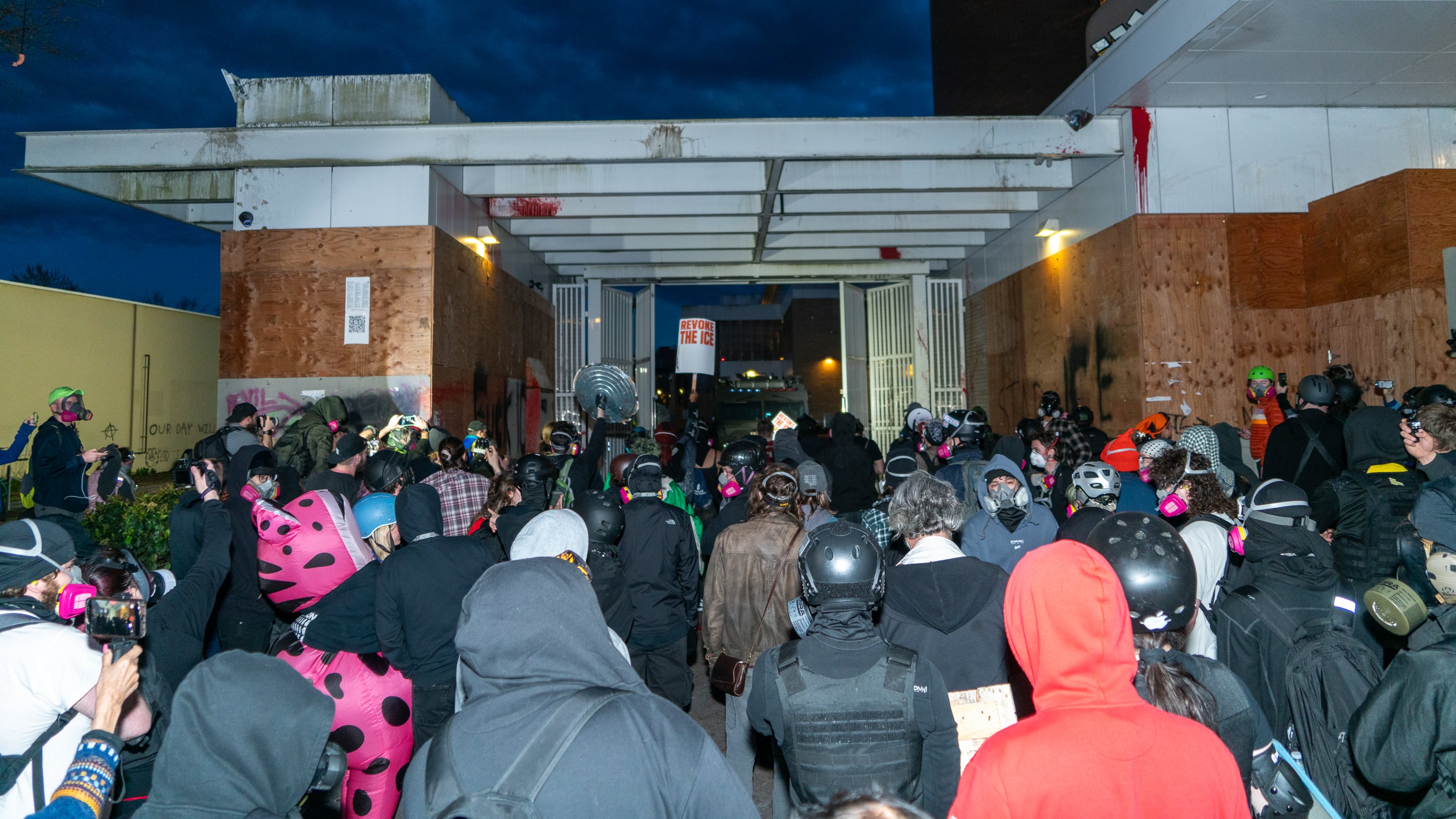
The city’s Hearings Office on Friday upheld findings that the owner of a South Portland building violated city land use laws by repeatedly allowing his tenant, U.S. Immigration and Customs Enforcement, to hold detainees for more than 12 hours. The decision goes into effect in 14 days, at which point the city can begin fining building owner Stuart Lindquist $934 a month if the violations aren’t corrected, and double that if they persist after three months.
The city filed land use violation findings in September against Lindquist, a real estate developer, which found that Lindquist had allowed ICE to hold detainees at the building for over 12 hours at least 25 times between October 2024 and July 2025, in violation of a 2011 agreement. The city also found that Lindquist had violated building code by using plywood to board up the office’s first-floor windows after protests began last summer.
But a decision on whether to uphold those findings was stuck in legal limbo for months.
Charles Koutras, the city’s chief hearings officer, released his decision only hours after Judge Steffan Alexander of the Multnomah County Circuit Court temporarily lifted a May 22 stay granted by Judge Judith Matarazzo, which had paused the city ruling. A hearing that Matarazzo set for Aug. 14 to discuss the stay remains in place to consider disputes that may arise following Koutras’ decision.
“The City has proven both violations by a preponderance of the evidence,” Koutras wrote in his decision, before considering and dismissing 12 defenses brought by Lindquist’s attorneys.
The decision was first reported Friday by Oregon Public Broadcasting. Lindquist declined to comment when reached by WW on Saturday.
Koutras’ final determination on the violations was originally slated to be released June 3. But Lindquist’s attorneys argued Koutras’ decision to expedite the decision process due to security concerns “lacked neutrality” and asked Matarazzo to pause the ruling, which she did on May 22. The city responded that the stay undermined the democratic process and asked that the final decision be released. Alexander appeared to agree.
Friday’s hearing was scheduled to discuss five writs of review filed by Lindquist’s attorneys, which argued that Koutras had acted improperly by failing to disclose ex parte—or one-sided—communications between him and the city that led to his decision to expedite the process, and for not recusing himself from the case. Lindquist’s attorneys also alleged they had not been given a fair process because the expedited timeline didn’t give them enough time to compile their case. “We don’t believe we got a fair shake, your honor, and that’s all we want,” Thomas Rask III, one of Lindquist’s attorneys, told Alexander during the Friday hearing.
Alexander’s order made that issue tangential by lifting the underlying stay, although such arguments will likely come up on Aug. 14. However, he did order all ex parte communications to be released—except those between Koutras and his attorneys. It’s unclear if private communications between the city and Koutras even exist.