Skip to main content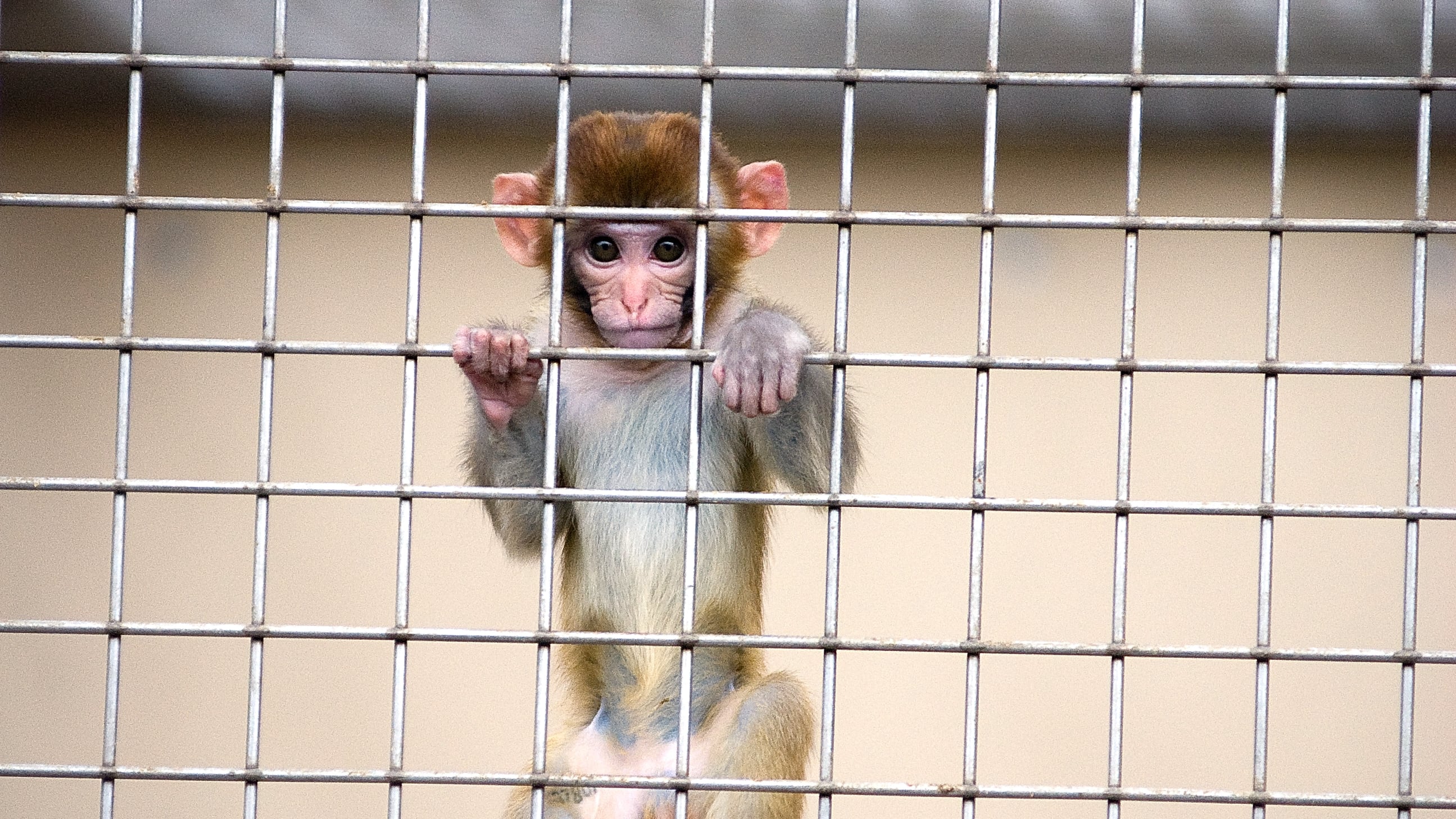
The Oregon Health & Science University board on Monday approved a plan to negotiate with the federal government over the future of the Oregon National Primate Research Center.
With the vote, OHSU formally launches a process that could—though by no means certainly will—culminate in the transformation of a nationally significant scientific research center into an animal sanctuary.
Determined to end animal-based experiments they describe as immoral and ineffective, animal rights activists declared a major victory. “This is a glorious day for monkeys and for science,” senior vice president Kathy Guillermo of People for the Ethical Treatment of Animals said in a statement.
Yet OHSU board members emphasized that the conversation was by no means over. “A vote to negotiate is not a vote to abandon you,” board member Chris Abbruzzese told the assembled crowd at the public meeting, many of whom fiercely opposed the resolution on moral grounds of their own: the lifesaving value of primate research.
Abbruzzese emphasized that no matter what the board did, the primate center—sustained in large part by National Institutes of Health funding—faced peril in a political climate increasingly hostile to animal research.
“The question before us is not whether ONPRC is at risk,” he said. “It is. The question is whether we manage that risk by engaging with NIH or by refusing to engage.”
Critics of the resolution, however, cast it as a hasty and rash response to political pressure. “Simply announcing the resolution has undermined OHSU’s credibility as a science-based institution,” ONPRC director Skip Bohm told the board. “Scientists across the U.S. are questioning OHSU’s reliability as a research partner.”
But in the end, after the two-hour meeting, board members passed a version of the resolution that—even as it includes new provisions to protect ongoing research—establishes the conditions for the primary center’s eventual transformation.
In concrete terms, the resolution opens a 180-day period in which OHSU president Shereef Elnahal and his team may negotiate with the NIH on an agreement that among other things:
- Continues all currently approved research.
- Seeks input from faculty, unions, and the animal protection community.
- Provides for investment in new areas of science like bio-fabrication and gene therapy.
- Considers the protection of jobs at the ONPRC.
- Provides for the financial and management support to “provide maintenance, operation and administration of an animal sanctuary.”
Notably, the resolution also directs the ONPRC, home to some 5,000 primates, to pause unnecessary breeding of new monkeys during the negotiation process.
But it also allows ongoing research to proceed. And it did not, in the end, include a provision that would have blocked primate center researchers from seeking new grants during the 180-day negotiation period.
That last provision was removed in an amendment proposed by Abbruzzese, the board member, who warned that it would have constituted a “poison pill” for the ONPRC, when what the board was trying to accomplish was to open up space for discussion about the the institution’s future.
The amendment also introduced language emphasizing that the ongoing primate research should continue in areas where validated alternatives do not yet exist.
“This amendment creates guard rails so that regardless of any of our individual views, and regardless of the various external pressures bearing down on us, the pace of any transition is governed by published science, not by anyone’s preferred outcome,” Abbruzzese said. “The principle behind this amendment is no different than replacing a bridge. You don’t close the old span until the new one can carry the load. If alternatives are truly ready, no one should object to a process that proves it.”
Board members noted that, once talks with the NIH conclude, they may still reject an agreement that doesn’t meet their standards. Still, Monday’s vote marks a new phase in a spirited debate over animal research that has escalated in recent weeks as animal rights activists find common cause with figures in the Trump administration that have vowed to curtail medical testing on primates.
Many of those urging to close the sanctuary down, a group that includes Gov. Tina Kotek, argue the research is not just ethically suspect, but scientifically suspect too.
“OHSU can continue with outdated monkey models, or can move forward with more modern human relevant humane research methods,” said state Rep. David Gomberg (D-Otis), a longtime critic of the ONPRC.
Physicians Committee for Responsible Medicine president Neal Barnard said in his own statement, “Physicians all over Oregon are delighted to see a transition away from monkey experiments toward better research methods that will help our patients.”
Others rejected the claim that the primate-based research was outdated. Union members condemned the board for not pushing back harder on a campaign they said appeases misinformation-peddling fearmongers, and which is funded by deep pockets.
And many scientists who spoke, in person and over video call from around the nation, emphasized their respect and care for the creatures they work with. They cited numerous health care innovations—on HIV and neurodegenerative disorders, for example—that primate research has made possible.
“The science conducted at the ONPRC saves lives,” said OHSU professor Monica Hinds, who leads a lab at the primate center that she said has conducted research pivotal to the creation of anticoagulants that prevent strokes and heart attacks. “There are no alternative methods at this time that can fully replicate the complexity of primate coagulation biology.”
In their remarks before the final vote, board members emphasized the “monumental” stakes of the decision before them.
OHSU president Shereef Elnahal said the primate center decision ranked among the hardest he’s ever had to make, and that it required many steps and the collective wisdom of many. Where the discussion might have played out behind closed doors, he said, OHSU leaders chose to make it transparent—and he pledged that it would remain so going forward as he ensures that all necessary voices get heard.
“What I want to commit to all of you,” he said, “is that whatever happens next will not be under a veil.”