Skip to main content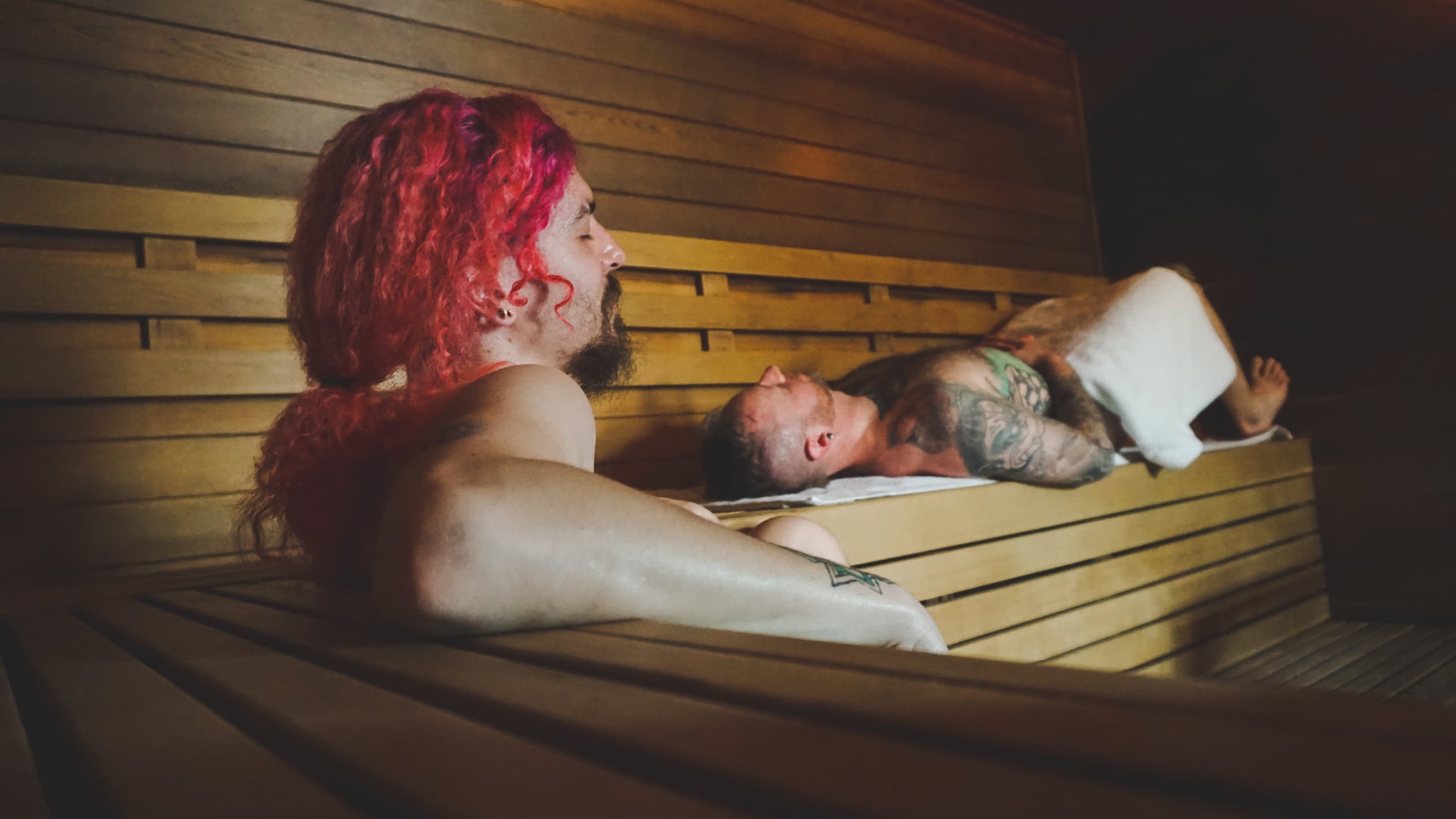
The Guinness World Records statistic goes that Finland as of 2013 has more than 3 million saunas—about 0.62 per capita. Meanwhile, Minnesota, a Finnish immigrant hotbed, proclaims itself the sauna capital of North America.
Oregon is no Finland, but according to Michael Calcagno, it might be something like Minnesota. The Portland-area sauna operator says he has some sauna-nerd counterparts in Minnesota, and by his lights the commercial sauna offerings here in Oregon are just as robust.
This article will not resolve the question of North American sauna supremacy. But what is clear is that the saunas are popping up all around Oregon and beyond. And the rules might need some adjusting.
First, the boom: Earlier this year, Calcagno for his birthday spent a month visiting all the open-to-the-public saunas he could identify within three hours of Portland—he excluded the Seattle-Tacoma area. He found about two dozen that had opened in the past five years.
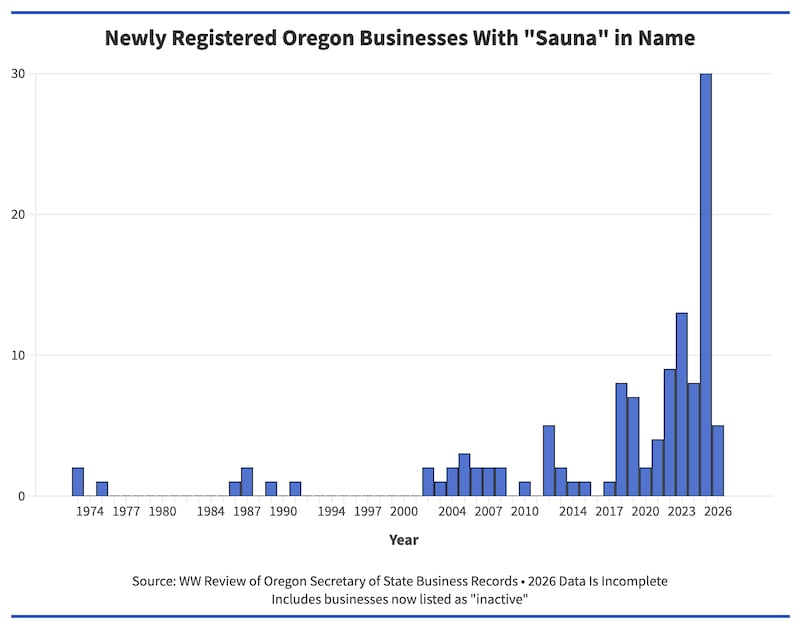
A separate WW analysis reached a similar conclusion. Public data on saunas is scarce, but Oregon business records offer some clues.
A search of the word “sauna” in the Oregon Secretary of State business registry turns up 119 results, dating back decades. Some are no longer active, a small proportion of listings appear redundant and, of course, not all businesses with “sauna” in the name are necessarily in the sauna trade. (There are also operations, like the Common Ground Wellness Cooperative or Cascada, that offer sauna but do not have “sauna” in their name.)
Caveats aside, the data shows an unmistakable trend. Of the every “sauna” businesses listed on the registry since 1973, 72% were formed from 2018 onward. More remarkably, 30 of them—25% of the total—were newly registered in 2025 alone.
These businesses take different forms. When Calcagno and his wife “pivoted to our passion, which is sauna,” they set up SaunaGlo, a brick-and-mortar shop in Milwaukie. Others are mobile units, on trailers, which plop down wherever they can. Many more people, left out of both the Calcagno and WW analysis, have put saunas in their yards and homes and Airbnbs.
The reasons are not hard to understand. Sweating people to the core with near-200 degree temperatures, saunas offer well-documented health benefits. Calcagno, for his part, found it improves his mental health. He says he and his wife are not the meditating types, but a sauna-sesh puts real space between him and his problems. Plus, it facilitates good conversation.
All this said, it is clear that regulators have a bit of catching up to do. WW this week examined a dispute in Montavilla over smoke emissions from a wood-burning sauna, which suggested government wood-smoke rules might merit an update.
There is at least one other gray area that has emerged. Sarah Mayo, the operator of that Montavilla sauna, told WW that clients often ask if she has a cold plunge—a bath of very cold water many people like to include in a circuit with their sauna sessions. She said she must respond that it’s unfortunately not practical under current Oregon regulations.
This is because, unless she were to empty the cold plunge after every “use”—an impracticality—it would be regulated like a “public aquatic venue” and thus subject to an array of requirements that the Oregon Health Authority says are met by no commercially available plug-and-play style cold plunges it is aware of.
There are, of course, alternatives to a proper cold plunge. Some sauna trailers set up shop by waterways so customers can dunk during breaks. Mayo said her customers sometimes cycle through a cold shower.
Meanwhile, many saunas lean into the regulatory gray area, and offer cold plunges anyway. There are, after all, creative ways to define the word “use,” and Calcagno says the state has not caught up to “entrepreneurs who are bootstrapping it and want to offer a cold plunge.”
Calcagno says that such gray areas are not good—they tend to become an issue when something goes wrong—and he worries of a looming crackdown. He also points out that installing a cold plunge aligned with the stricter interpretation of Oregon regulations would not be realistic for an institution that lacks major investor capital.
So he supports some reform on the regulatory front. For now, though, he is applying his organizing energies in other ways. He said 1,000 people attended the first-ever Willamette Sauna Festivaali he put together back in February. “There are some people who think it’s kind of weird,” he said. “So we’re trying to make it not weird by doing it in a public park.”
Correction: An earlier version of this article misspelled the name of the Michael Calcagno’s sauna business. It’s SaunaGlo, not SaunaGlow.