Skip to main content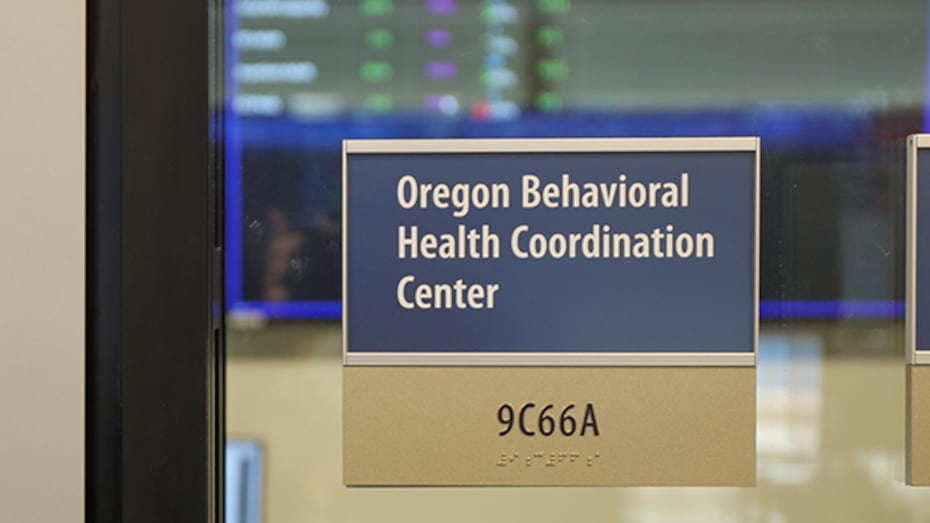
Early this year, WW wrote about frustrations with the Oregon Behavioral Health Coordination Center—a data project to centrally track capacity statewide at mental health and addiction treatment centers that, millions of dollars in, has coordinated little actual care (“Command and Control,” Jan. 28).
Though the Oregon Health Authority moved to force residential treatment providers to send it their real-time bed capacity data early this year, a recent hearing before lawmakers showed providers were still only rarely consulting the center to place patients.
The data center reported that in August, for example, its staff coordinated three placements, one of which was canceled.
“I’m not going to hide my shock and disappointment at this,” said state Sen. Lisa Reynolds (D-Portland) after Oregon Health & Science University officials presented their work to the Senate Interim Committee on Early Childhood and Behavioral Health. She pointed out the center itself has about five staff. “I know there’s been quite a bit of money allocated to the system. I’m just not seeing the there there.”
OHSU tells WW that activation data is not the full picture. Activations, spokeswoman Sara Hottman says, “happen as an effort of last resort” and “are a very small part” of how the system gets used.
She says the system is primarily an “operational tool meant to provide real-time system insight for providers and those placing individuals into care.” Hottman says the data center sees an average of about 38 total log-ins per day from such providers.
The real-time data is not available to the general public, another point of contention. So is the fact that OHA routes some capacity information regarding outpatient care to another database, run by the nonprofit Lines for Life.
“I just don’t understand why we have these silos,” Sen. Reynolds said.
OHA early this year told residential treatment centers to stop sending capacity data to Lines for Life, which has run a low-tech public-facing tracking system for years, in an effort to centralize reporting in one place and boost reporting rates to the OBCC, given the millions of dollars the state has poured into it and its potential to aid understanding of how the state’s complex behavioral health care system flows and hangs together.
Indeed, this has been a bright spot: OBCC leaders say residential and secure residential treatment facilities are almost all reporting to the OBCC now. Substance abuse facilities lag, but reporting rates have improved. Notably, though, most are still reporting their capacity data manually, underscoring the challenges of wielding modern technology to track a system full of parochial and lower-tech providers with small budgets.
Ultimately, many agree that the OBCC vision is worthy. But the paltry use by providers shows lingering questions about its purpose, especially if the data is only available to clinicians and care coordinators, but not the general public.
Lines for Life CEO Dwight Holton says the two databases—Lines for Life’s public outpatient database and OBCC’s nonpublic inpatient database—ought to integrate to be more useful.
He tells WW the data should be easy to access and use as a way “to actually get connected with treatment”—which he believes should be the core purpose. He adds, “I think we can do that in the short term while OBCC builds out, while mental health providers build up their data capacity and their tech capacity.”
Asked whose job it is to integrate the systems, Holton says, “I think OHA has a leadership role.”