Skip to main content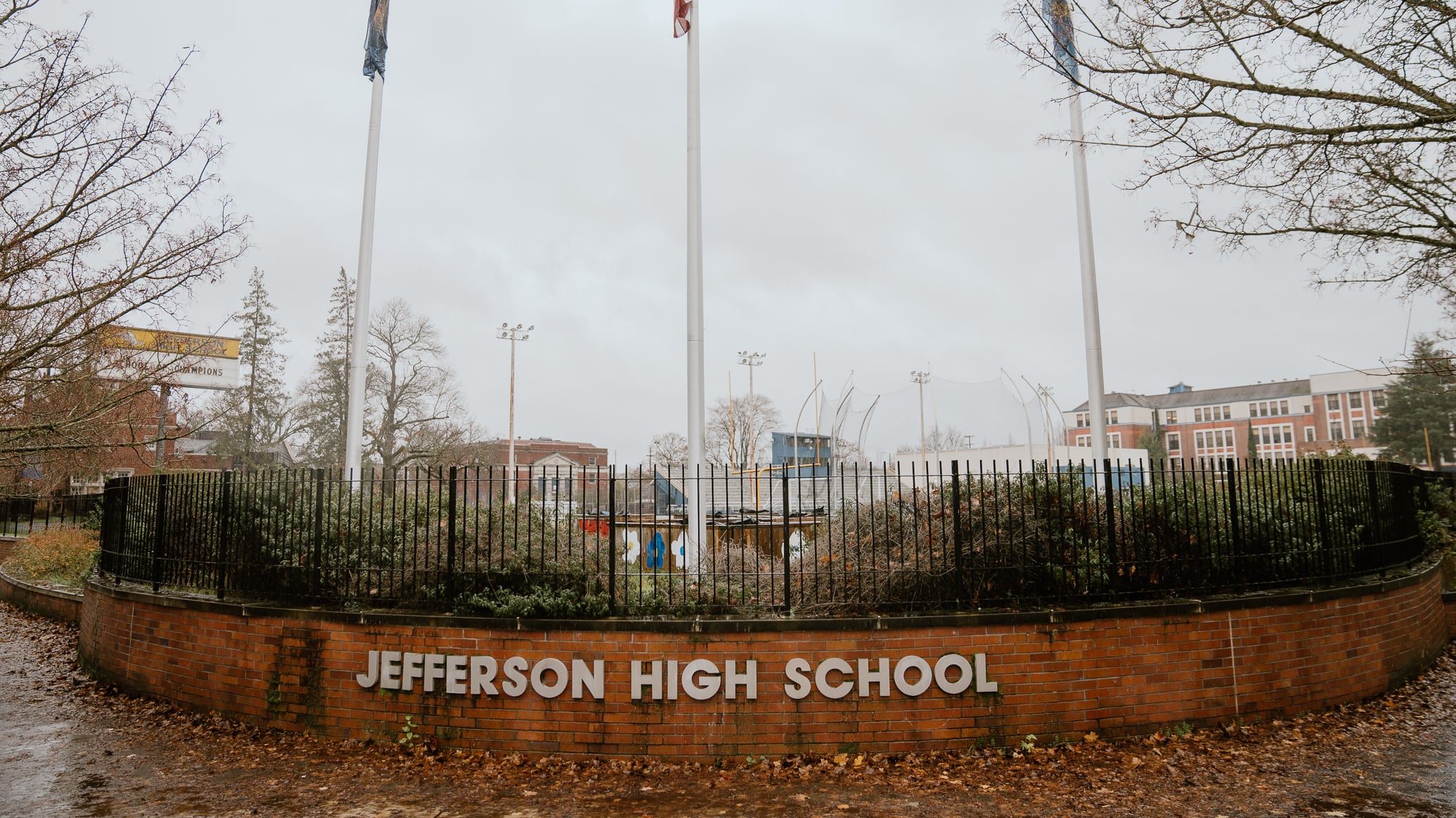
Portland Public Schools will not pursue an attempt to open the lower floors of Jefferson High School early in the 2028–29 school year, abandoning its brief hope that Texas-based construction firm Procedeo had devised a strategy that would allow students to access the modernized building months ahead of schedule.
In new documents made public late Friday, Procedeo admitted that the timeline it had previously proposed was not in fact realistic. A feasibility study the firm authored found the strategy it had suggested would at best shave only a few months off students’ return.
That admission revives questions about the $60 million contract PPS inked with the Texas firm to oversee the timely delivery of major bond projects, including three high school modernizations and the Center for Black Student Excellence. The district awarded that contract after Procedeo pitched its plan for a speedy Jefferson rebuild—one the district’s own staffers said was implausible.
Now, Procedeo has backtracked.
Representatives for Superintendent Dr. Kimberlee Armstrong could not be immediately reached for comment.
The Jefferson modernization project, funded by a total of $466 million approved by voters with money in both the 2020 and 2025 school bonds, has stalled for years, and completing Jefferson as early as possible has become a key priority for some of the district’s top leaders, including Armstrong.
In June, PPS contracted with Procedeo to deliver a report presenting options on how the district could expedite Jefferson’s modernization.
Procedeo’s report cost $149,500 and was presented to the district in late October.
It included an option referred to as “shell,” which the firm wrote could allow students to occupy the first and second floors in the newly modernized Jefferson by the fall of 2028. While the full building, as planned, would still open in fall of 2029, the shell option offered a way to start using the new school. The district had already previously considered and rejected the other two options the firm presented, a portables option and a swing site option.
PPS therefore instructed Procedeo to pursue the shell option—with the first step being conducting a feasibility study. That study, conducted by Procedeo and expected to go in front of the Portland School Board’s facilities and operations committee Tuesday, appears to undercut Procedeo’s previous proposition.
In fact, a phased opening with shell construction would only be able to shave off between six weeks and three months off Jefferson’s opening date—making the first and second floors available earliest in June 2029, when students are let out for summer break. Colas Hoffman Construction, Jefferson’s general contractor, also determined that such an option would cost the district about $558,000 more.
The findings raise some questions about Procedeo’s recommendation to PPS.
At a Dec. 9 School Board committee meeting, Sarah Norman, a Procedeo employee who is now the district’s executive director of the Real Estate, Infrastructure and School Enhancement department, said she had personally attended to similar shell construction projects in Texas and Washington D.C. Her testimony led to School Board members and PPS officials commenting that it was “the only option” to build Jefferson faster. (At that meeting, School Board members encouraged the district to examine the possibility of such an option.)
“The whole purpose is accelerating the timeline for Jeff…especially with [Procedeo] having some experience,” Dr. Jon Franco, the district’s senior chief of operations, said at that meeting. “I think it’s definitely worth…our recommendation would be the shell for further exploration.”
The feasibility study, which Procedeo produced, concluded that Colas Hoffman found the shell option “does not provide a meaningful schedule advantage.” While Colas Hoffman concluded that there could be about $400,000 in savings from a slightly faster construction process, operating in occupied classroom spaces for six weeks could cost about $960,000 in labor efficiency loss. “Subcontractors’ labor will be less efficient through the construction of the upper floors due to access constraints and restrictions,” a Colas Hoffman letter in the feasibility study read.
The findings may give new weight to skepticism around the Procedeo contract the School Board approved in December, which awards the firm up to $61.5 million for five years of work overseeing program management services the district’s school construction bonds. Back in September, Kiesha Locklear, then a PPS employee with the now-defunct Office of School Modernization, warned that Procedeo was making “impossible” promises.
“Just a few months ago, Procedeo claimed that they could cut up to 12 months and $100 million from the Jefferson project,” Locklear said then. “Anyone in this building with the expertise to engage such a consultant would have known that that was impossible and would never have hired them.”
In a presentation scheduled to go in front of the School Board next week, district staff wrote that they would drop the “shell” option and stick with the original plan to open Jefferson by August 2029.
“Technically feasible,” they wrote of the shell option. “But due to the minimal schedule advantage identified throughout feasibility study, Leadership, along with RISE’s full agreement, has determined the best course of action is to remain on the current project schedule with an anticipated move-in date of August 2029.”