Skip to main content
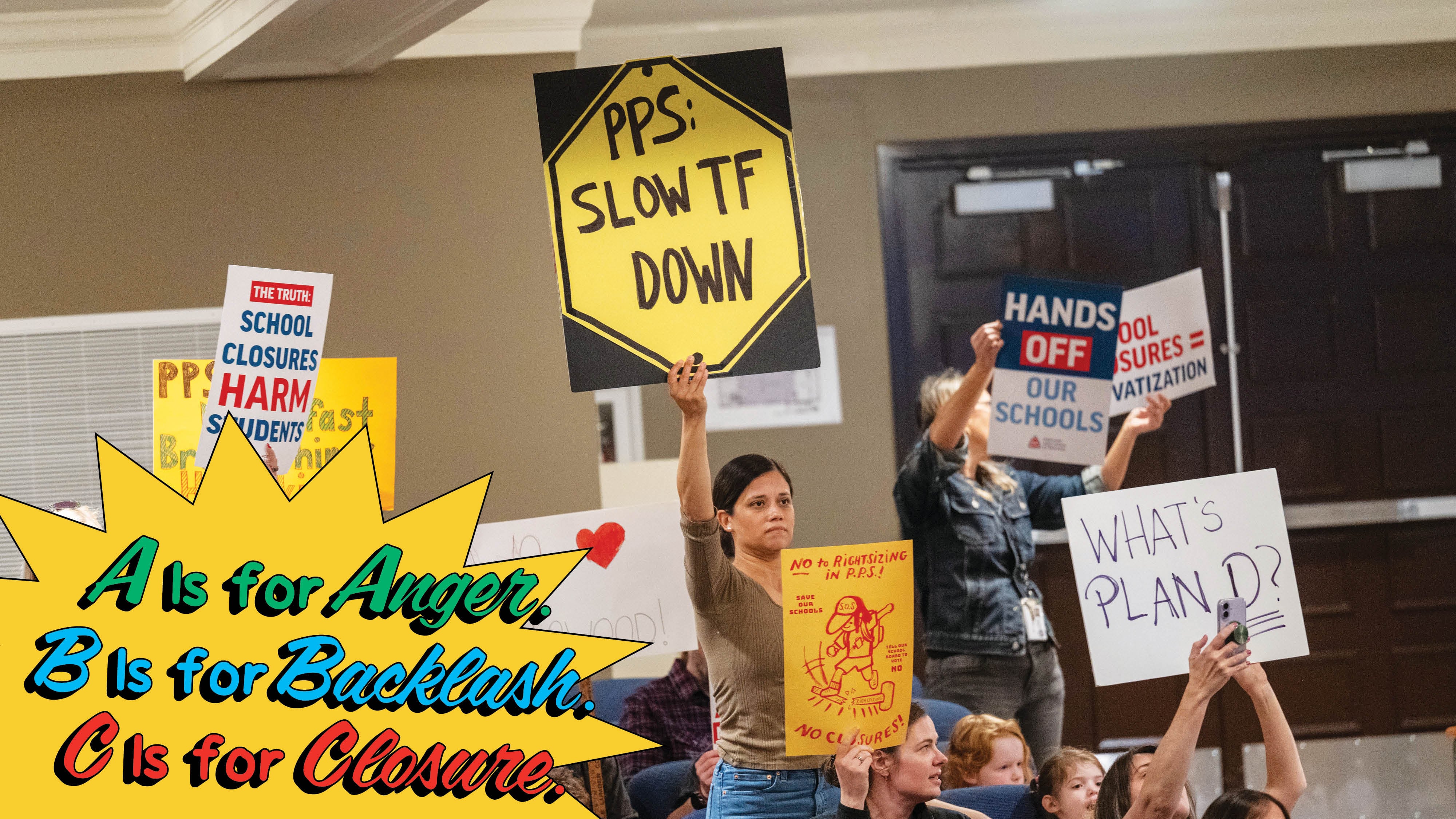
To understand the fury that now engulfs Portland Public Schools, you first need to feel the grief.
Lynn Dao feels it. It hits her every time she remembers reading her first book cover to cover. That book was Double Fudge by Judy Blume, and she was in the fourth grade, lounging on a beanbag chair in Mrs. Lewis’ class at Marysville Elementary School.
The eldest daughter to immigrant parents who spoke little English, Dao struggled in class to remember how to ask if she could use the bathroom. She didn’t pass her first state reading exam until sixth grade. Teachers and staff at Marysville who believed in her changed her life, she says.
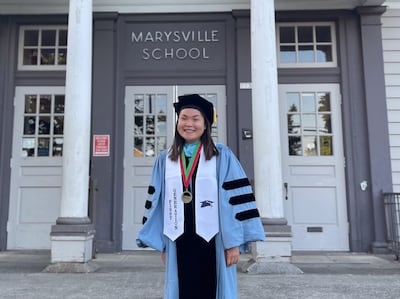
Dao, now 28, graduated last spring from Columbia University with a doctoral degree in health education. Her dissertation credits her Marysville teachers, and she took her graduation photos in front of the school.
Since moving home to Portland, she’s volunteered some time at Marysville each week to teach science at its after-school program—one of her latest lessons, on magma and lava, featured the classic baking soda-and-vinegar volcano.
But PPS is now discussing whether Marysville should close.
The Title I school, where 51% of students experience poverty and their families speak 19 different languages, is one of about a dozen schools that the district has identified for closure.
PPS faces a persistent enrollment decline that its leaders say has left school buildings across the city underresourced. So, earlier this month, the district released two scenarios, labeled A and B, that would respectively close 14 and 11 schools. If the process goes as PPS leaders plan, the Portland School Board will approve Superintendent Dr. Kimberlee Armstrong’s recommendations by December, and the vast majority will go into effect by fall 2027.
Marysville is on both lists. If these suggestions remain unchanged, the school could soon stand locked and empty.
“It would break me to know that students in the neighborhood wouldn’t have the same education that I did,” Dao says. “That pains me to know that that’s a possibility.”
Stories like Dao’s echo all across PPS. In Portland, school buildings are the defining features of many neighborhoods. They’re where families find others to carpool their kids to soccer practice, and where many access social services like food pantries and utility assistance.
No wonder, then, that the idea of shuttering 11 to 14 schools has caused many communities great pain. And in Portland, that pain has quickly turned into anger.
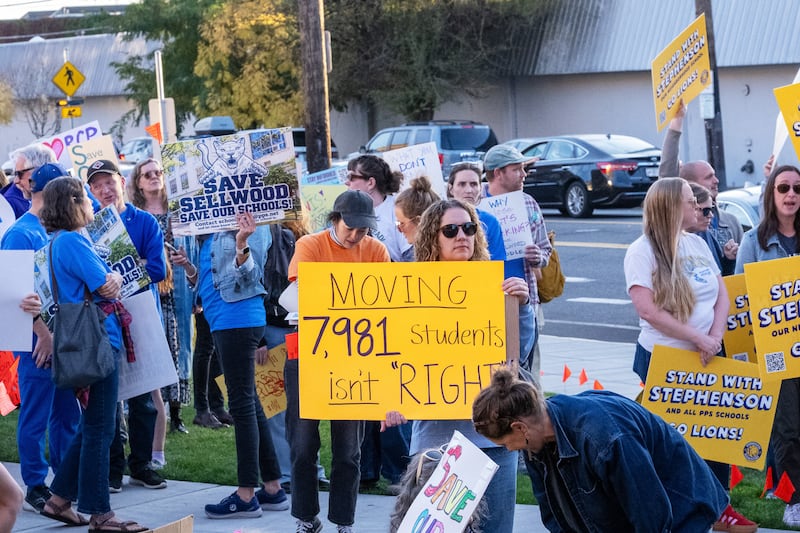
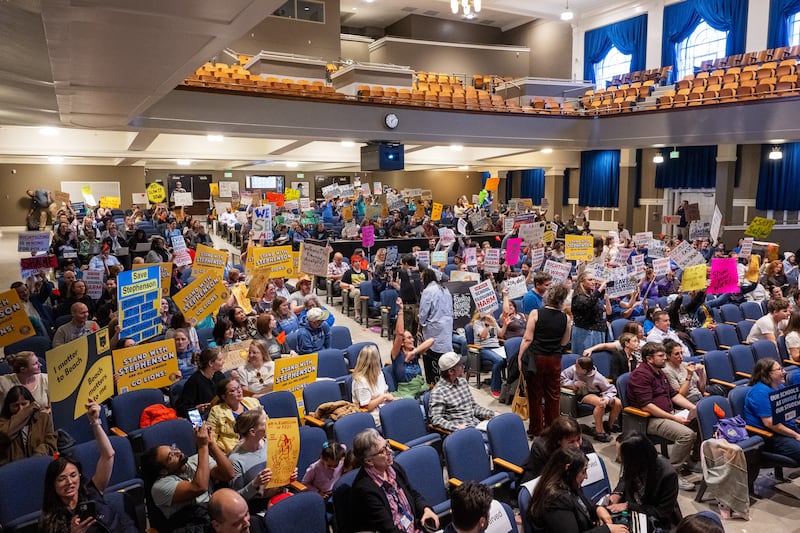
Since the district released its scenarios on Oct. 5, it’s felt a furnace blast of rage. At a School Board meeting the following day, hundreds of protesters broke through a line of security guards trying to limit capacity. Packed board rooms have chanted for Armstrong to resign. And a protest movement has kicked into gear: From big rallies to signs outside individual schools, families and educators have begun advocating against school closures, or at least for more explanation about the rationale behind them, asking hundreds of questions and picking apart every data point.
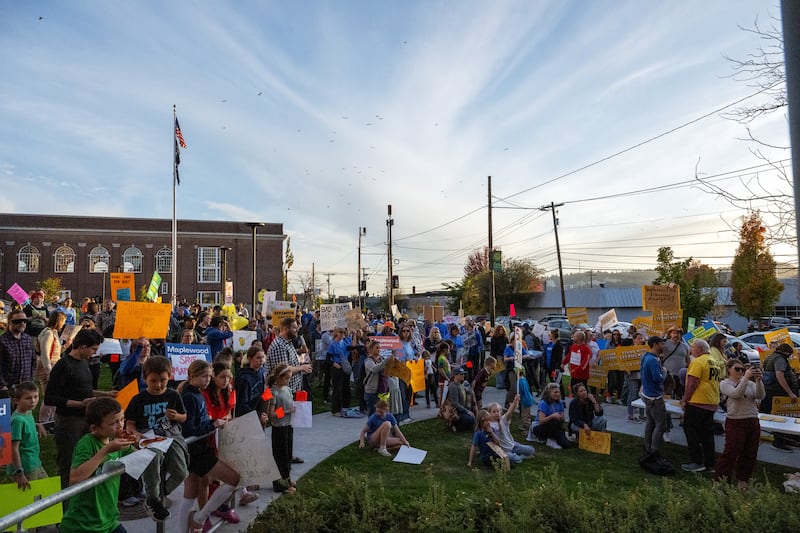
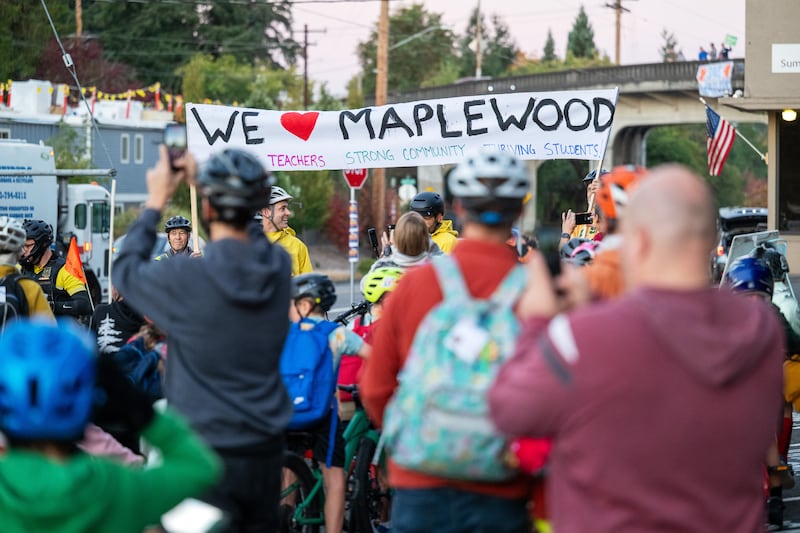
Amber Kinney, a parent to two children who attend Maplewood Elementary School, and a third who recently moved on to Jackson Middle School, is one of them. At the crack of dawn on Oct. 16, she and her husband—who founded Maplewood’s bike bus—began a long rally ride across the neighborhood that drew 400 attendees, all there to advocate for the school’s survival.
She tells WW that parents have been the backbone of public schools: Kinney spent five years “banging my head against the bureaucracy of PPS” just trying to turf the often-muddy field at the school so kids could play there.
“I will never spend five years trying to get turf in another school in PPS in my life if this happens,” she says. “I have no confidence that PPS would value it or keep my school open, and that is the core betrayal that we are experiencing.”
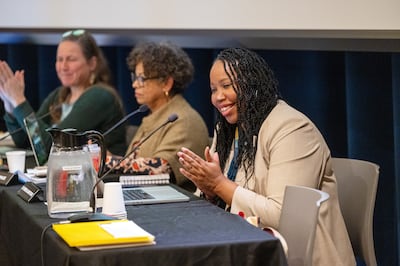
Nationwide, heated protest movements have derailed closure efforts, at times growing so contentious that superintendents have been ousted and districts have withdrawn closure plans entirely. The pressure here is mounting, too. Gov. Tina Kotek recently wrote Armstrong a letter urging the district to take its time. State representatives have come out to board meetings to speak about the schools in their districts. It’s been two decades since Portland has seen this much agitation around the future of schools and neighborhoods.
“I lie awake at night feeling sick about this decision, and I have the privilege of voting,” School Board member Virginia La Forte says. “I can’t think of a decision in recent memory that will have a greater impact on Portland.”
In the past two weeks, WW has tried to catalog who’s getting angry as these school closure lists sink in for school communities across Portland. Through more than 50 interviews with students, parents and educators who represent 26 distinct coalitions, we’ve tried to give readers a study guide.
If there’s one commonality we’ve identified, it’s that most protesters want more information, and want the district to converse more meaningfully with them before slamming school doors shut.
In the following pages, you’ll meet some of the people organizing a tidal wave of backlash—and learn about their many visions for a better process. Maybe you’ll find the group that’s right for you.
Broad Coalitions
Save Our Schools PDX
Members: About 850 members, with three petitions that have amassed more than 1,800 signatures combined.
At a large table in Coava Coffee Roasters’ flagship shop on the Central Eastside, four organizers for Save Our Schools PDX couldn’t agree on how little they’d slept in the past couple of weeks. In the span of an hour, each one of them received dozens of notifications from the Whatsapp group of the largest protest movement to PPS’s school closure decisions.
The movement started last year as a little project for a group of parents at Rieke Elementary in Southwest Portland, says organizer Matt Coolidge, whose son attends first grade there. Throughout the school year, Coolidge says, talk swirled about the possibility of closures, and the coalition formed with the understanding that activism would be more powerful in numbers. Over the summer, the group started attracting other parents in Southwest Portland before crossing to the eastside.
The coalition is so broad that its members don’t agree on all the little things. Coolidge sees Save Our Schools as “a town square” meant to help guide many families through their first foray into advocacy, connecting those with similar interests and questions. And he says the group’s goal is to work with the district to come up with constructive alternatives: improving recruitment or increasing education funding in Salem.
The coalition is helping parents identify common ground. “It’s recognizing that you can’t boil the ocean overnight, but you can at least try to start winnowing down a focus to articulate,” Coolidge says. “If we’re bound by one shared principle, it’s, we see a lot of issues with this current proposal.”
Emiliano Vega, another organizer, says parents are realizing they’ll have to live with results that current PPS leaders won’t oversee. He notes that the bulk of the School Board’s members are completing their terms in just a few months, and that Armstrong is already halfway through the average tenure of a superintendent.
“A lot of people get activated in the parent community when they see that shared governance is not a reality for them,” Vega says. “The school says, ‘We’re going to tell you what the options are,’ as opposed to ‘How do we fix this problem together?’”
Portland Association of Teachers
Members: More than 4,000. A petition PAT is circulating has gathered more than 4,500 signatures.
Less than 24 hours after PPS released its school closure scenarios, its largest union hosted a rally outside PPS headquarters that attracted more than 700 protesters. The teachers union has protested potential closures since last year, but momentum has grown as a decision nears. Teachers are thinking a lot about how school closures might affect their employment and working conditions. “There is a $65 million deficit, and there’s the school closure stuff,” says PAT president Alisha Chavez. “[PPS officials] keep on saying that they’re not tied together, but they are. How can they not be?”
The union has been meeting with its members weekly since the scenarios were released, Chavez says, hosting Save Our Schools summits in conjunction with school PTAs and families at various locations across the city. It has consulted other teacher unions that have grappled with districts closing schools. She says that in order for PPS to emerge from the closure process with only minor scrapes, it must seek the buy-in of teachers at every turn. That hasn’t happened, she says. “People are feeling like things are done to them rather than with them,” Chavez says. “The people who make these decisions, sure, they can see the numbers. But educators and staff—they see the school as a community, and there are definitely missing pieces to all the numbers that are on a spreadsheet.”
Title I Coalition
Members: More than 100
In the spring, PPS indicated that school enrollment numbers would be one of many factors it weighed in selecting schools to close. Soon, a small group of concerned parents at Sunrise Elementary began to build this coalition of Title I schools: locations that receive extra federal funding for serving high percentages of students from low-income families. These schools are often among the district’s most underenrolled because of systemic disinvestment, parents argue. As WW has previously reported, the group fears the district will target a disproportionate number of Title I schools for closure, as it has done previously (“No Place Like School,” April 22).
Since then, the district has identified six Title I schools for closure in each scenario—that’s 43% of schools slated for closure in Scenario A and 55% in Scenario B. (Currently, 43% of elementary and middle schools in the district are Title I schools.) Leslie Brown and Sara Buxton, two of the group’s organizers, say the district should work harder to minimize impacts to low-income communities.
Their group, which they emphasize doesn’t speak for every Title I family, splits from others in a key way: While many school communities are agitating for the district to pause the process, Brown says that’s a nonstarter for many Title I schools, which “are the underresourced schools in the status quo, so that’s also not a neutral solution.” She adds: “None of these scenarios are great. We’re just trying to push on where equity is a gap in all of them.”
Padres Para La Educación Equitativa Para La Comunidad Latina
Members: Still mobilizing.
In North Portland, this coalition’s inception is so new that it still lacks a formal name. (Its working name translates to Parents for Equitable Education for the Latino Community.) Yet its organizers say they are scrambling to contact a vulnerable community whose needs PPS has failed to meaningfully consider. Across the district, about 19% of PPS families are Latino, with 1 in 3 opting to participate in dual language immersion programs, says Carolina Iraheta Gonzalez, a parent of two children in the immersion program at Beach Elementary School.
PPS proposes centralizing its dual language immersion programs by closing and moving about half of the Spanish programs into hubs around the city. For example, K–5 DLI programs in North Portland that currently draw from neighborhood schools would transfer to César Chávez, which would become an elementary school. Gonzalez says creating Spanish language hubs is a complex endeavor. “They really want to sell this to parents and families,” she says, “and so they have not been willing to discuss any of the potential consequences.”
Rudy Ulin, another organizer who is a parent to two PPS students, says the Latino population in North Portland is not a monolith of Spanish speakers. Many families speak Indigenous languages, which means materials translated into Spanish won’t reach everyone. Other families don’t own cars or the parents don’t drive—that’s a problem if their kids must attend school miles away from where they live. And families who rely on before- and after-school services to provide child care during working hours are concerned those programs wouldn’t be accessible.
All of that’s especially frightening in the context of federal immigration enforcement, Ulin says. There’s intense anxiety that by centralizing Spanish programs into hubs, the district would inadvertently expose Latino families to immigration agents. “What we want is to see that our feedback, our comments, are being integrated so that another solution can be more reasonable,” he says, adding that the coalition wants the process paused, especially to more robustly engage families who speak other languages.
Special Education Parent Teacher Student Association
Members: 60 paid members, but the group has gathered input from hundreds of families at various engagement sessions.
This group of parents, students and staff focused on advocating for students with disabilities relaunched at the beginning of 2026, says media coordinator Gina Berce Lipor, the parent of a child with disabilities at PPS. SEPTSA’s big concern: Under PPS’s current proposals, the district has concentrated students who need special education services at receiving schools that are already “disproportionately in poverty,” she says. The group released a 36-page report on Oct. 20 detailing that problem, among others. “Our main thesis is that this will, as it stands, have a disproportionate impact on students with disabilities, and especially those who are multiply marginalized,” Berce Lipor says.
The coalition has questions about how PPS will implement closures. These include how buildings are being used—special education students often need more space than students enrolled in general education, including break and sensory rooms to help with emotional regulation. There are concerns that schools set to receive more students with disabilities won’t have space. And Berce Lipor says a lot of family anxiety is growing around whether crucial relationships between staff and students will carry over to new schools.
“The district tends to view special education through the lens of the individual education plan, which quantifies ‘this is exactly how many minutes of speech services you get, this is how many minutes of pull-out time in the learning center room that you get,’” Berce Lipor says. “What the IEP doesn’t fully address is these environmental things like the relationships.”
Rightsizing the Right Way
Members: Eight organizers and more than 450 signatures on a petition from 57 school communities.
Rightsizing the Right Way is an offshoot of a local group called Families for Equity in Schools, which mobilized shortly after the 2023 teachers strike to protest what they saw as an imbalance between the district’s neighborhood and focus option schools.
Focus option schools are enrolled by lottery in the district and provide students with specializations in subjects like interactive history or science, technology, engineering, arts and math. Because funding follows students who leave their neighborhoods to access such programming, the group’s argument is that focus options prevent kids who don’t attend them from receiving a full breadth of resources. In other words, the group has protested “the way the system is organized to give families choices that largely benefit white and/or privileged families,” says Elizabeth Doerr, who helped launch the coalition in Portland.
District leaders have justified keeping focus options over the years because they say it offers families choice. Doerr, a parent to a student at Faubion PK–8, says she’s convinced it’s the district pandering to a group of families who aren’t committed to begin with and can threaten to walk away.
Rightsizing the Right Way calls for the district to preserve neighborhood schools and send focus options back to neighborhood programs. “Every kid wants a robust arts program; every kid deserves an environmental program,” Doerr says. “We don’t want to deprive students of these experiences. We just want more students to have them.”
Safe Structures PPS
Members: 80
This parent advocacy group formed as PPS was on the campaign trail for its $1.83 billion school bond. Safe Structures forced PPS to earmark $100 million in bond funding for seismic upgrades at the eight to 10 schools that posed the greatest risk of collapse in an earthquake.
The group is alarmed to see PPS has included on both closure lists buildings where the district has made or is slated to make large seismic investments. That includes a couple of schools that received full retrofits, like Marysville and Lewis elementary schools, and schools identified under a rigorous district process for upgrades: Rose City Park and Beach elementary schools.
Safe Structures wants more detail on how PPS incorporated risk scores into its broader methodology to close schools, information about how PPS might repurpose buildings that benefited from seismic improvements, and answers about what will happen to the bond money Safe Structures helped secure. “Portland voters approved the 2025 bond with a clear expectation that it would make the most dangerous schools safer,” parent advocate Per Olstad wrote in an Oct. 20 letter to Superintendent Armstrong. “It was always understood that the rightsizing initiative might impact the seismic plan, but that does not relieve PPS of its ongoing responsibility.”
Regional Coalitions
Some other broad coalitions across Portland are organized less around a specific issue and more by region. They include the St. Johns Defenders in North Portland, whose leader, Bill Righter, a James John parent, sees the broader implications for small businesses and the neighborhood’s economy if schools leave. The Southeast PTA Leadership Coalition, organized by Creston parent Lauren Shumaker, is reckoning with how PPS might better understand the consequences of the Southeast Guiding Coalition, a recent process that redrew boundaries in the region and led to disruptions for many students within those boundaries. And a loose coalition of more than 300 North and Northeast Portland parents sent a long letter to elected and school officials on Oct. 12, spelling out numerous concerns about overcrowding and DLI proposals. Riley Peck, a Beach parent who authored that letter, says parents from different schools have mobilized en masse to have a louder voice and avoid duplicating complaints. Parents chatting quickly realized there were many holes in PPS’s plan. “You know that expression of like if you see one ant, you have one ant. You see two ants, you have a problem?” Peck says. “Yeah, that’s what this is.”
Such regional coalitions show that the impacts of school closures extend well beyond those on the closure list. But they also tend to overlap with the coalitions that have formed at each of the schools targeted for closure under one or both of the district’s scenarios. So let’s look closer at those.
Individual School Coalitions
Beach Elementary School (North Portland)
Students enrolled*: 284
Where they end up: Neighborhood students to Chief Joseph Elementary School, Spanish DLI to César Chávez.
Families were shocked that this Title I school was slated for closure, says Beach Community Union co-chair Regina Very-Modesto, who has one child in the second grade Spanish dual language immersion program. After all, the elementary spans an entire city block and could absorb many extra students, she says. (PPS has also identified Beach for targeted seismic improvements with work slated to begin in summer 2028.) Very-Modesto says families are worried about sending their children to overcrowded schools, increased transportation times, and a reduction in diversity if the DLI program is pulled elsewhere. “Having something advertised in October decided on in December is, quite frankly, upsetting to a majority of the folks,” she says.
Buckman Elementary School (Southeast Portland)
Students enrolled: 244
Where they end up: Abernethy Elementary School (50%) or Sunnyside (50%), which would become an elementary school.
For years, Buckman boasted an arts program unrivaled by any other elementary: providing instruction in visual arts, music and dance. This year, those three teachers were cut to part time. Yet Buckman, a Title I school, continues to embrace its arts focus. Each year, its Parent Teacher Association puts on an art show and sale; students get their first opportunity to run their own business by selling handmade goods. Courtney Ranstrom, a parent to a third grader at the school and the Buckman PTA’s treasurer, says many parents hope that, if Buckman does close, it will be allowed to take its arts focus with it. But the community has a lot of questions about where its students would end up, including the half of the student body who attend the school through the lottery. And the biggest concern, Ranstrom says, is that nobody has explained how leaving Buckman is better than the status quo. “That seems to be missing,” she says.
Creston Elementary School (Southeast Portland)
Students enrolled: 201
Where they end up: Atkinson Elementary School, CRIS to Glencoe Elementary School.
Creston Elementary has been home for more than two decades to the Columbia Regional Inclusive Services Deaf and Hard of Hearing program. Much of the ire around the PPS closure scenarios is the suggestion that the roughly 30 students in the program would split from the broader school community. PTA vice president Sarah Horn says she was not shocked that the Title I school appeared on the closure list, given its low enrollment. Still, she says parents are pushing for information from PPS to understand the underlying data of its decision and to advocate that the whole student body stick together. The CRIS program is so integrated in the school that Horn says even kids outside the program sign to each other in the halls. “To me, it just is saying these students are other,” Horn says. “And they’re not. They’re part of our community.”
Irvington Elementary School (Northeast Portland)
Students enrolled: 240
Where they end up: Beverly Cleary, which would become an elementary school.
Irvington Elementary School PTA president Liz Leavitt says the school’s got a close-knit feel thanks to longtime staff and a strong principal. The proposed closure of Irvington, Sabin and Buckman, Leavitt says, is raising concerns that a huge swath of inner Northeast Portland will be without any neighborhood schools, even as significant redevelopments like Lloyd Center are on the horizon. Many parents wonder if trusted staff would be allowed to accompany students through a difficult transition. “The majority of our folks have a lot of questions about the process that remain unanswered,” Leavitt says, adding that most respondents to an internal school survey indicated they hoped advocacy would keep the school open.
James John Elementary School (North Portland)
Students enrolled: 359
Where they end up: Neighborhood students to Sitton Elementary School, Spanish DLI to César Chávez.
James John Elementary lies in the heart of St. Johns, right next to the public library and a couple of blocks from the community center, says PTA community care committee lead Courtney Savoie. That means the Title I school’s students are embedded in a network of support. The school community has rallied around families struggling after federal SNAP cuts and in the wake of immigration raids in North Portland, she says. Savoie says families have been shocked by the district’s proposal to send its Spanish dual language immersion program to DLI hubs. “It doesn’t feel like that is a separate part of our school or our community,” she says. “That feels very tied in.” Savoie says the school community is concentrating on reaching out to its many immigrant families, especially those who speak Akateko, an Indigenous language the district hasn’t translated its announcements into.
Lewis Elementary School (Southeast Portland)
Students enrolled: 224
Where they end up: In Scenario A, Duniway Elementary School. In Scenario B, Lewis remains open.
In 2017, Lewis Elementary School was the beneficiary of about $1.2 million committed to the school for a full seismic retrofit. Now, it appears on PPS’s Scenario A for possible closure, a choice attributed to what the district deems insufficient enrollment. Parent Will Howell, who handles communications for the school’s PTA, says that’s a result of the district’s actions when it redrew and implemented new boundaries in 2023, so PPS should just undo the changes. “Why would the district not want to keep as many kids as possible in earthquake-safe buildings?” Howell says. “After investing so much taxpayer money to make our building safe, PPS shouldn’t waste that investment.”
Maplewood Elementary School (Southwest Portland)
Students enrolled: 278
Where they end up: Hayhurst Elementary School (70%) or Rieke Elementary School (30%)
The community around Maplewood can see the product of a PPS school closure from nearly two decades ago; the blighted former site of Smith Elementary School lies just a five-minute drive south. Parents worry about a similar fate for the Maplewood building, which stands on a vibrant strip in an otherwise remote part of the Southwest Hills. The community is asking the district to remove the school from both closure scenarios. Ibraheem Riad, the school’s PTA president last year, says the school’s enrollment is growing and that it boasts a high capture rate and good student outcomes. Under the rightsizing proposal, about 30% of the school’s students would leave the seismically safe building for Rieke Elementary, one of the district’s most dangerous. “It’s like you’ve put all this work into this car, it’s safe, and you go and throw it in the junkyard and [pick] another car that’s going to need all this work,” Riad says.
Marysville Elementary School (Southeast Portland)
Students enrolled: 300
Where they end up: Arleta Elementary School
Marysville Elementary School families say they were surprised to see the school on the list, especially since it’s the recent recipient of a $7 million full seismic retrofit, which just concluded in September. District leaders have said they plan to delay this closure until fall 2028, to ensure some students displaced by a previously redrawn Southeast coalition boundary wouldn’t have to change schools three times during their elementary years. The school runs food and hygiene pantries, employs a full-time social worker, and helps coordinate meals and supplies for students, says parent Becky Leonard, part of the school’s family club. In the days since PPS released scenarios, Leonard says much of the work has concentrated on informing families, but notes it’s been hard especially because some materials haven’t been translated. “Everybody here has two working parents, and we’re a Title I school,” she says. “So it’s not like people have a lot of time to browse the internet or attend all these public meetings that are happening.”
Metropolitan Learning Center High School (Northwest Portland)
Where they end up: A neighborhood, alternative or focus option high school.
Metropolitan Learning Center high schoolers face possible closure for the second time in six months. PPS tried to close the high school grades suddenly ahead of the 2026–27 school year, citing underenrollment. In February, advocacy for the school succeeded; PPS leaders said they would support efforts to boost enrollment at the school. The PTSA says those efforts stalled, and that some families have left, fearing for the stability of MLC after closure threats. Roxy Radick, a senior at the high school, says having the rug pulled out from under the school again has been devastating to students, many of whom came to MLC because they didn’t fit in elsewhere. “It’s a lot of kids’ last ditch effort, frankly, to stay in school,” Radick, 18, says of MLC. “It’s just a lovely place because it feels safe and accepting and it’s pretty necessary.”
Peninsula Elementary School (North Portland)
Students enrolled: 250
Where they end up: Rosa Parks Elementary School
Peninsula Elementary recently unveiled a depaving project that replaced two tennis courts’ worth of blacktop with a nature-based learning and play area. That took three years of work, says Danae Hutson, the PTA president, who says it’s the community’s hope that the project benefits some of the school’s most vulnerable students. The Title I school serves a larger percentage of students with disabilities on individualized education programs than PPS’s average, and Hutson says the district has not factored in the extra space that special education programs require as it weighed how many kids were using the building or where they’d head to next. PPS must better communicate to families how moving to Rosa Parks Elementary might make the learning experience for students better, she adds. “All we know is what we are going to lose,” Hutson says. “The more analysis comes out, I think the more people are starting to question whether or not Peninsula was centered at all in this conversation.”
Rose City Park Elementary School (Northeast Portland)
Students enrolled: 391
Where they end up: In Scenario A, neighborhood students to Scott Elementary School. In Scenario B, Rose City Park remains open.
Rose City Park appears on PPS’s Scenario A for closure and is one of the district’s largest elementary schools, according to an advocacy website to save the school. It houses the district’s Vietnamese dual language immersion program in a historically Vietnamese neighborhood. Families are greatly concerned by the prospect of splitting neighborhood and DLI kids into two separate receiving schools. Many parents have students on both sides of the school, the site notes. There are also facilities concerns: Rose City Park is one of two buildings slated for a full seismic upgrade, and families have secured city funding to revitalize its school yard. “When it comes to rightsizing’s alleged benefits,” reads a petition with more than 1,700 signatures, “the end doesn’t justify the means.”
Sabin Elementary School (Northeast Portland)
Students enrolled: 236
Where they end up: Dr. Martin Luther King Jr. Elementary School
Even as talk of closures swirled, Miranda Rake, a parent of two Sabin students and part of the PTA, says no one imagined that a “school desert” of sorts would form under the district’s proposals in inner Northeast Portland. One of the biggest concerns for Sabin community members is that, in order for Dr. Martin Luther King Jr. Elementary School to receive Sabin’s students, its Mandarin dual language program, which comprises a majority of the current student body, would be moved out of the school. “It doesn’t feel good at all,” Rake says, adding that King is no easy commute for many Sabin families. Another revolves around Sabin’s social emotional support classrooms, which assist students who need the most behavioral support from the district. PPS has tossed families of those students around before, Rake says, and they need stability. The district hasn’t provided much of a plan for where they’d end up, she adds.
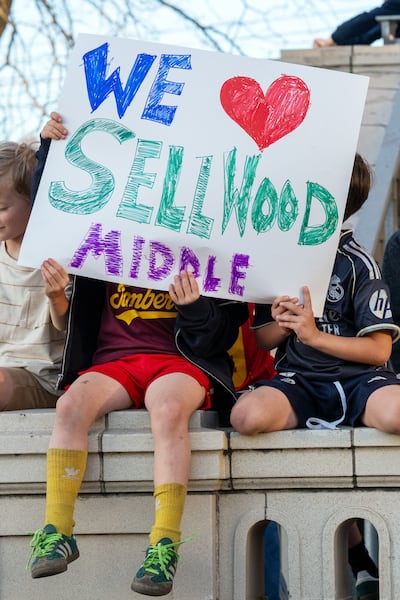
Sellwood Middle School (Southeast Portland)
Students enrolled: 523
Where they end up: At Hosford Middle School or Brentwood Middle School, depending on neighborhood.
Sellwood is the only middle school identified for closure on both lists. If approved, it would close in fall 2028. The proposal caught the community off guard, says PTA president Tara Stein, who adds that the school has been successful by many of PPS’s metrics: Its students perform well on state tests, and the school produces good outcomes for students with special needs. Stein says parents want to know if the district can look at metrics beyond enrollment projections, which have been inaccurate in the past, and whether it has factored in future plans for increased housing in the region. Stein adds that she’s concerned PPS doesn’t understand that parents could turn elsewhere. “I think people are starting to lose faith that PPS has their best interest at heart and that they’re really focused on the kids,” Stein says.
Stephenson Elementary School (Southwest Portland)
Students enrolled: 271
Where they end up: In Scenario A, at Markham Elementary School (70%) or Capitol Hill Elementary School (30%). In Scenario B, Stephenson remains open.
Stephenson Elementary lies in the residential hub of Arnold Creek, where parents say the school hosts the only playground and community gathering space easily accessible in the area. It also houses the neighborhood’s earthquake communications emergency node. The school would close in Scenario A, but not Scenario B. The community has concerns that Markham Elementary, set to receive students from Stephenson, would be over its capacity and present logistical challenges. (They also note that Markham, the only Title I school in Southwest Portland, would lose its status under such a proposal and has already weathered several transitions, including a yearlong closure from a January 2024 ice storm.) “Plain and simple, our goal is to keep Stephenson open,” says PTA president Gillian Charles says. “It is a critical asset to this community and to PPS.”
Sunnyside K–8 (Southeast Portland)
Sunnyside’s building is not slated for closure. But parents say that proposals to shift the K–8 to a K–5 and eliminate its environmental focus option status effectively mean the school would be transformed. Hanna Neuschwander, a parent to two students at Sunnyside who sits on the school’s PTSA, says the school’s nine-year program is meant to empower generations of students to speak up for change—the school’s students have lobbied successfully to pass legislation at the state Capitol, including a recent bill that banned polystyrene foam from food containers. Sunnyside families are calling for the district to pause its closure process until PPS can publish savings figures and justifications for each decision. “We very much feel that our school is being closed,” Neuschwander says. “In terms of our learning community, it’s being dismantled.”
Woodmere Elementary School (Southeast Portland)
Students enrolled: 224
Where they end up: Whitman Elementary School
The Woodmere Parents Group is the primary advocacy effort at this Title I elementary school located in the Mount Scott neighborhood. President Alyssa Brainard says the group’s obvious hope is that Woodmere keeps its doors open, but that parents are more broadly concerned by how PPS’s own enrollment policies have affected who attends their neighborhood school. She says about 49% of eligible families attend school elsewhere, whether at other neighborhood (20%), focus option (27%) or charter schools (2%). “Simply consolidating buildings without addressing these underlying issues risks perpetuating the same inequities,” Brainard said in a statement. “If PPS doesn’t address the policies contributing to declining enrollment (it’s not just population decline), we’re not solving the problem.”