Skip to main content
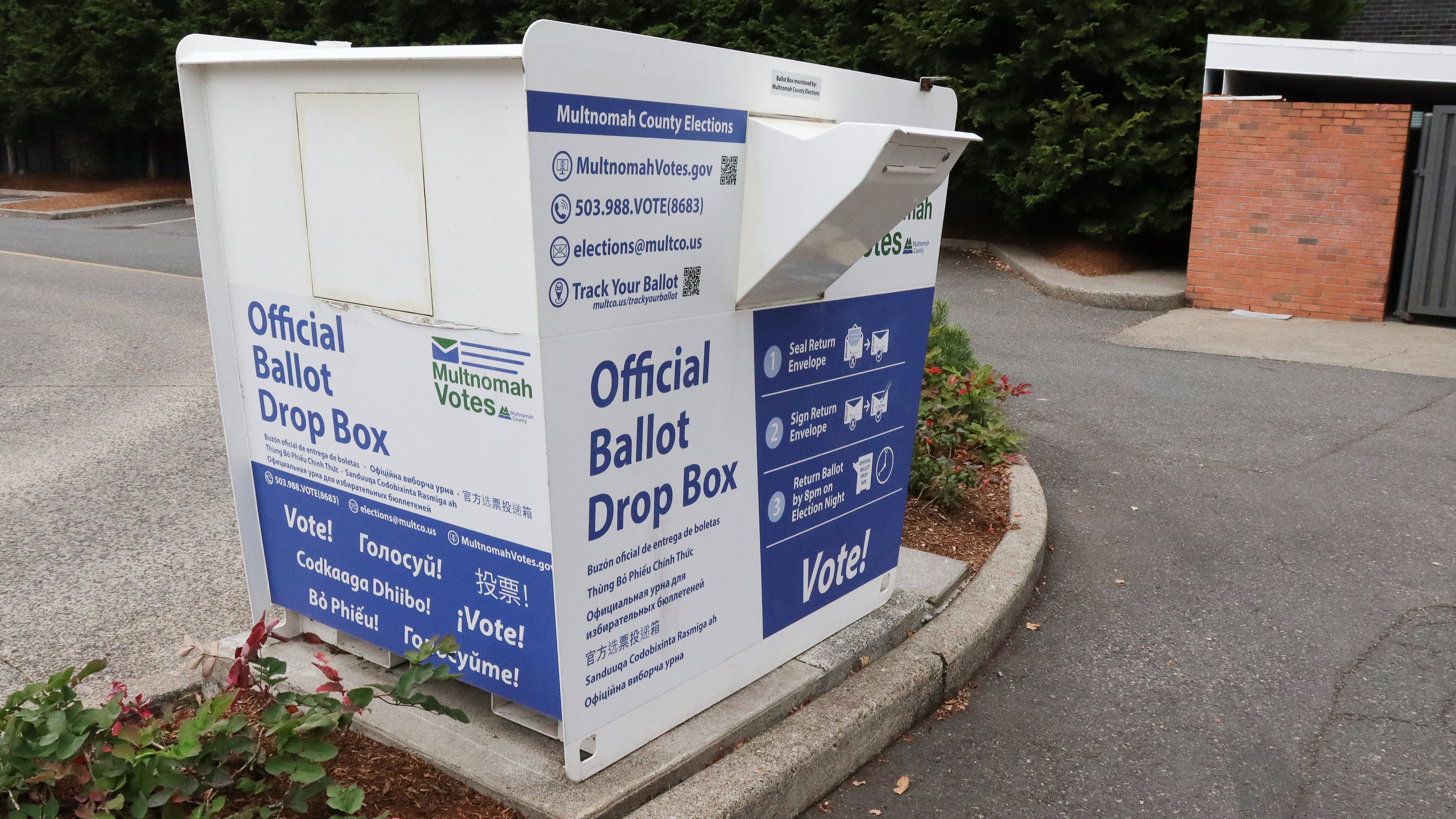
In September, with Donald Trump threatening to use the Postal Service to undermine Oregon’s vote-by-mail system, Oregon Secretary of State Tobias Read urged Oregonians to use the state’s more than 300 ballot drop boxes rather than send away their ballots in the mail.
To that end, Read persuaded the Legislature to allocate $618,000 in emergency funds so his office could add 20 new drop boxes around the state.
“Secretary Read’s work to maintain access to vote by mail is essential during this time of unprecedented federal challenges to our elections,” House Speaker Julie Fahey (D-West Eugene) said on Sept. 10.
As of press deadlines this week, 17 of the new drop boxes were online and able to accept ballots, according to Read’s office. But of these, only three had been installed by Oct. 14: the date ballots began reaching voters and thus, a major milestone in the election calendar.
A fourth and fifth—in Deschutes and Lane counties—were added Oct. 15. The remaining new drop boxes were installed between Oct. 21 and 26. That means about a week passed between voters getting their ballots and the new drop boxes opening to receive them.
Secretary of State spokeswoman Tess Seger says much logistics go into installing a ballot drop box, which slowed the process. In Tillamook County, for instance, installation required an underground scan for buried utilities and securing a contractor able to work off-hours.
“The goal is still to get to 20 total drop boxes by Election Day,” Seger said, “but even getting to 15 is pretty remarkable.”
The $618,000 was part of an overall $1.25 million in emergency funding, which covered two additional components. One was expanding the use of BallotTrax ballot tracking software—then only in use in five Oregon counties—statewide. (On Oct. 14, Read’s office announced voters in all counties could receive BallotTrax alerts when their ballot was received by the state for counting.) The third funding component is related to data management and clearing inactive voters from state voter lists. That money, $480,000, allows counties to send updated voter confirmation cards to inactive voters.
With less than a week to go before the 2026 midterms, Oregon voter turnout is on a record-breaking pace.
Oregon has counted 26.5% of active voters already submitting a ballot six days out from the midterm election.
On Wednesday, the Oregon Secretary of State’s office reported around 827,300 people had submitted a ballot out of the state’s 3.1 million active voters (aka people with up-to-date voter registration).
At a week out in the previous midterm cycle—in 2022—19.7% of active voters had turned in their ballot. Final turnout that year was 66.9%—or just over two-thirds of voters—a record for a midterm in Oregon.
On Tuesday, in Multnomah County, 105,900 people had turned in a ballot. Of those voters, 68,700 were Democrats, 18,400 were nonaffiliated, 12,700 were Republicans and 4,200 were independents.
Of the 730,000 voters who have so far cast ballots statewide, 321,400 have been Democrats, 222,000 Republicans, 135,400 nonaffiliated and 40,600 independents.
Monday saw the largest single-day total with 208,000 ballots dropped off statewide. Of that 36,000 were in Multnomah County. No other day saw half as many ballots submitted in Multnomah County.
This election season has been characterized by numerous attempts by Trump to undermine the integrity of U.S. elections—pushing discredited claims of voter fraud, filing preemptive litigation in case Republicans lose, and generally seeking a greater role for the federal government. He’s also targeted mail-in voting, a system used exclusively in Oregon and seven other states and Washington D.C. The Trump administration’s efforts to quickly impose new election-related rules on the U.S. Postal were delayed by legal challenges, including several filed by Oregon Attorney General Dan Rayfield, and ultimately largely defeated at the U.S. Supreme Court.
Late last week, the U.S. Department of Justice began notifying counties in all 50 states—Multnomah County among them—that the Trump administration would deploy election monitors to polling locations. In response to the unprecedented move, Multnomah County election director Tim Scott said the county was committed to transparency and warned federal officials to follow the law.
“We expect that our federal partners will be following our observer procedures just as we would for any group or individual,” Scott writes.
This election season, Read—the state’s top election official—has circuited the state addressing crowds of worried voters at town hall meetings held to discuss voting. In early September, Read asked the Legislature for emergency funds so his office could install 20 additional ballot drop boxes at “high-impact” locations around the state.
On Tuesday, in small, coastal Tillamook County, where turnout already far exceeds last election with 31%, county clerk Christy Nyseth was preparing to drive to the Nestucca Fire District office in Beaver to unlock the county’s newest ballot drop box. The location, the county’s 10th drop box, could save some voters a drive of up to 15 miles—or 30 miles both ways.
But by far the most popular of the county’s drop boxes this election has proven to be the one at the clerk’s office at the Tillamook County Courthouse.
“We’ve had several hundred people every day come through security into our office to hand deliver their ballot. We normally don’t. We normally get a handful, maybe 50,” Nyseth says. “Over the last maybe like four years, people have just been more concerned about putting their ballots back in the mail. And so we’ve always encouraged dropboxes. We tell people, hey, they’re safe and secure. You can use them.”