Skip to main content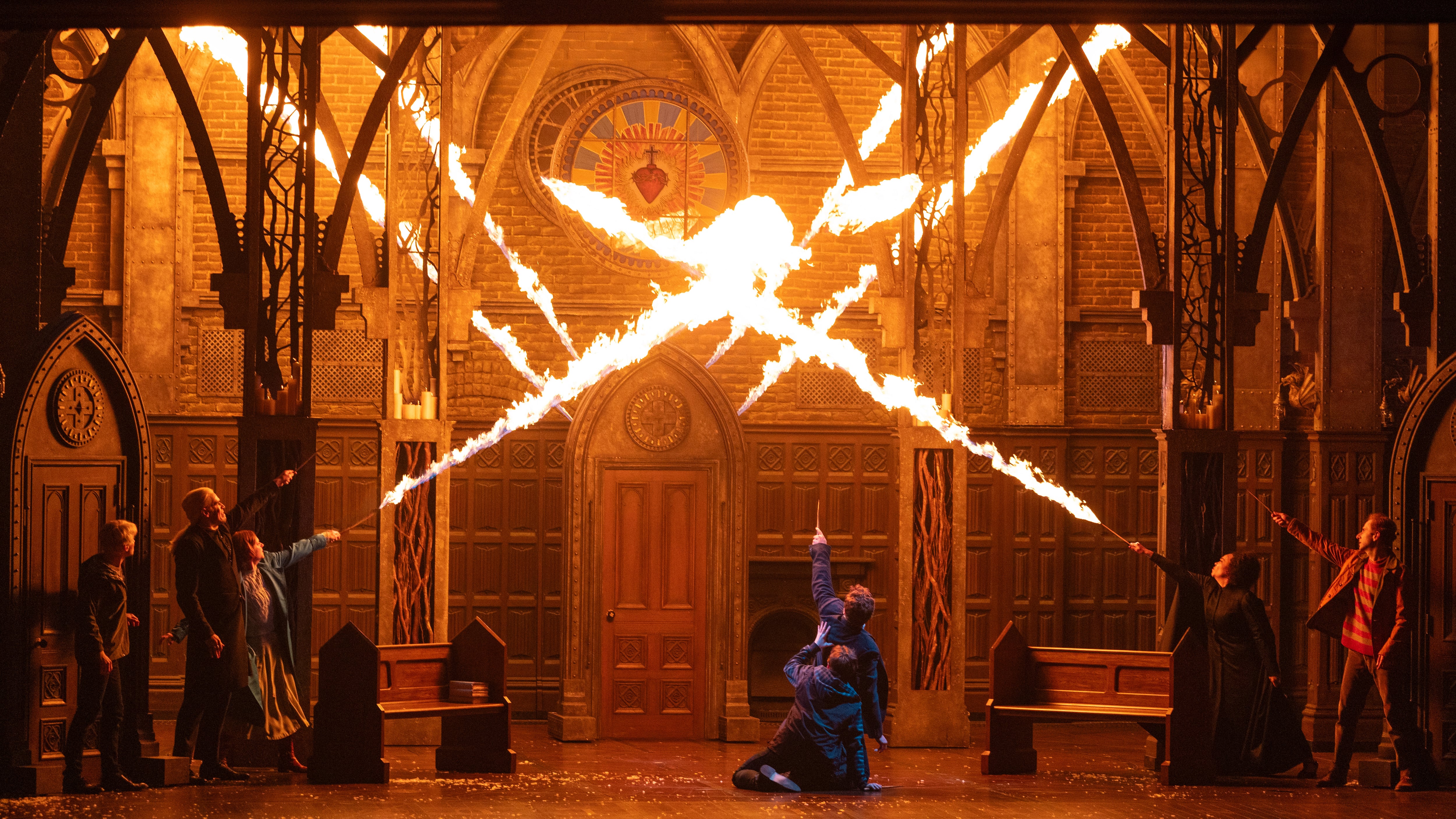
Growing up isn’t easy. This is the central conflict of Harry Potter and the Cursed Child, the touring Broadway production playing at the Keller Auditorium through Aug. 15. Reconciling first loves and childhood fixations is also a problem many Harry Potter fans have been forced to grapple with. While millennials grew up with the series and have since introduced it to their children, some fans have become disenchanted in light of author J.K. Rowling’s activism against the trans community. The irony of the real-life conundrum and the one in the play is especially felt in the newest iteration of the show, which, after being condensed from two long plays into one, found itself with a “gay ending.”
Cursed Child by Jack Thorne features grown-up versions of the main Harry Potter crew and a next-gen twist. It picks up where the book and movie series end, during an epilogue in which Harry drops his son Albus off at the train to Hogwarts. Albus befriends Scorpius, the son of his dad’s nemesis, Draco Malfoy. The boys get into trouble with time travel and land back in the timeline of the original series.
The play premiered in the U.K. in 2016 and in the U.S. in 2018. It was originally a two-part theater event spanning about eight hours of material. But after the pandemic, the creative team retooled the script to fit the story into one show. Most of the edits are simple cuts, but there is one notable change. The penultimate scene in the two-part version features Scorpius asking out a girl, whereas in the one-play version, he tries to befriend her instead. While there is no explicit statement that Albus and Scorpius, the two boys, have romantic feelings for each other, there is a significant implication in the text and in the acting choices.
In the final scene, the one-play edition adds a line in which Albus tells his dad, “You do know, right? That Scorpius is the most important person in my life. That he might always be the most important?” Harry accepts his son’s declaration, and the subtext is clear: These boys are gay.
Sounds a bit like fanfiction, yes? There is infinity fanfiction out in the world, including a lot dedicated to the unmistakable chemistry between Draco and Harry (enemies to lovers is one of the most popular tropes, after all). It makes sense that their similarish sons would have similarish tension, but to put it in the official play is a bold choice. The only canonically gay character in the series, Dumbledore, never has a real relationship and his sexuality is completely off the page.
The change is also surprising considering J.K. Rowling’s animosity toward the LGBTQ+ community. She is a vocal TERF (trans-exclusionary radical feminist) who donates to anti-trans organizations and founded her own J.K. Rowling Women’s Fund, which fights to “retain women’s sex-based rights.” Yet she is involved in the development of Cursed Child. So, while she doesn’t support everyone in the LGBTQ+ community, she must have approved the “gay ending.”
Rowling’s politics have turned many onetime fans anti-Potter. Affinity groups have called for boycotting the books, movies, plays, theme park, merchandise, new HBO series, and any other Potter-affiliated content that would financially benefit Rowling, giving her means to continue to advocate against trans people. Daniel Radcliffe, who played Harry in the movies, issued a statement in 2020 arguing that “transgender women are women.” And while he disagreed with Rowling, he didn’t disavow the series. If fans saw themselves in the stories or found them helpful, he wrote, “that is between you and the book that you read, and it is sacred.”
Radcliffe’s blessing goes a long way, though one can be a fan without financial contribution.
If Portland is boycotting this production, it’s doing so quietly. Some Broadway in Portland season ticket holders posted online about selling their seats and donating the money to LGBTQ+ charities. But there were no protests or empty seats at the opening this weekend. Droves of spellbound Portlanders made their way to the Keller—many in costumes—to see some magic.
And there is some magic onstage. The illusions in Cursed Child are elite. In several instances, it’s impossible to figure out how they did it. A spell that turns one character into another happens before your eyes. Characters disappear into a telephone booth as if they’re being sucked in. Actors fly, shooting flames from their wands. More classical stagework is just as masterful—there is a beautiful sequence with moving staircases.
For lovers of the series, especially those who grew up with it, the story hits you in the feels. Harry’s grief and guilt haunt his son and every moment onstage. Favorite characters like professors Snape and McGonagall make cameos, and the new generation of characters are fully realized, with their own sophisticated arcs regardless of romantic intent.
Still, the sexuality change from the first version of the play to this one feels significant amid the current wave of anti-trans and -LGBTQ+ sentiments and legislation. Far more coded displays of queer identity have had great impact throughout the history of theater. Even within the confines of the Potterverse, even with the conflict among the fans, connection is the pervading theme of Cursed Child. And, dramaturgically, the gay ending makes more sense.
SEE IT: Harry Potter and the Cursed Child at the Keller Auditorium, 222 SW Clay St., 503-417-0573, portland5.com. 7:30 pm Tuesday–Friday, 1:30 and 7:30 pm Saturday, and 1 and 7 pm Sunday, through Aug. 15. $55.40–$224.25. 8+.