Skip to main content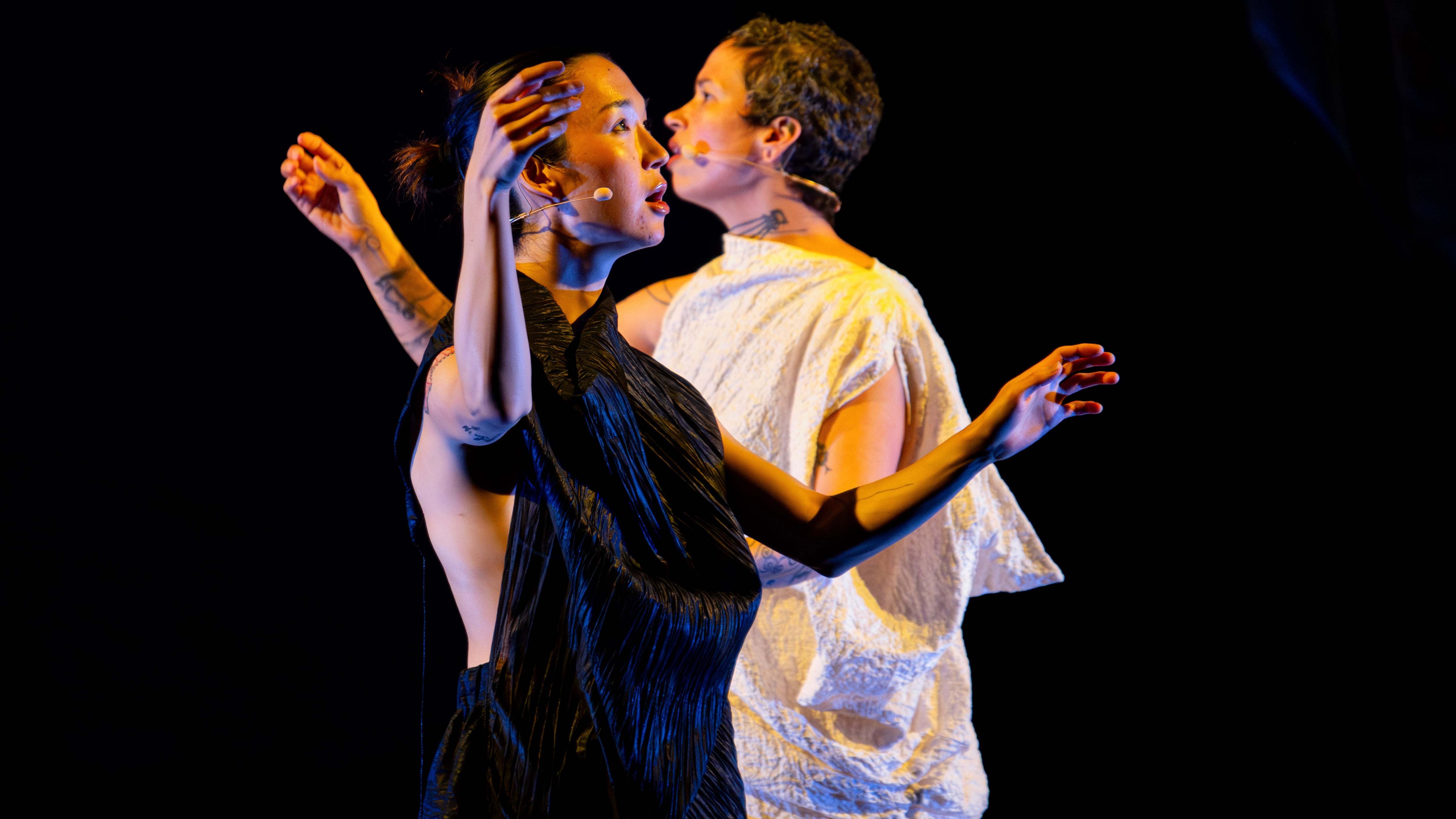
The Portland Institute for Contemporary Art’s annual Time-Based Art festival gives new credence to that old Leonardo da Vinci quote, the one about how “art is never finished, only abandoned.”
The annual festival is famously and beautifully strange. It debuts new works of performance art, many of which are still in progress, and the majority of which require some element of audience participation.
The 24th edition of the festival spans five days from Sept. 9–13 in multiple venues.
Exactly how much time the 52 artists and collaborators involved in this year’s fest have spent on their projects can vary widely. While some have been formulating their plans for years, none, of course, will ever be finished. The iteration of the work we see at TBA is a living thing.
“In a sense we are watching them create in real time,” says Erin Boberg Doughton, PICA’s artistic director and curator of performance. “Due to the nature of live performance, the work is slightly different each time and is only ‘final’ when it is shared with an audience.”
The shows all fall into the broad category of performance art, though the experience is not like going to a play. “We don’t often include performances of scripted plays or existing compositions,” Doughton says. “It’s often multidisciplinary projects that use movement, sound, text and design to create kinds of work that defy categorization.”
Over the years, the festival has played with its own, larger structure. It was previously an epic marathon run of performances. Coming out of the pandemic, it grew more diffuse, splitting bookings across a few weekends. This year, it’s one very busy weekend, with seperately ticketed shows spread across town (all-access festival passes are available as well). Venues include Reed College, the Winningstad Theatre, New Expressive Works, The Lantern and the Dekum Street Theater, in addition to PICA’s Northeast Portland campus.
The schedule also includes several artist talks, as well as a block party–style bar garden with outdoor seating and, to finish strong, a free pancake breakfast on Sunday.
If the beer and pancakes didn’t get the point across, Doughton stresses that, however high-minded TBA might come across, it’s pretty easy to find your footing at the festival.
“You don’t have to know anything about the shows to have a good time at TBA,” Doughton says. “Take a chance on something. Show up with a sense of curiosity and an open mind.”
For a head start, Doughton talked us through five standouts on the lineup:
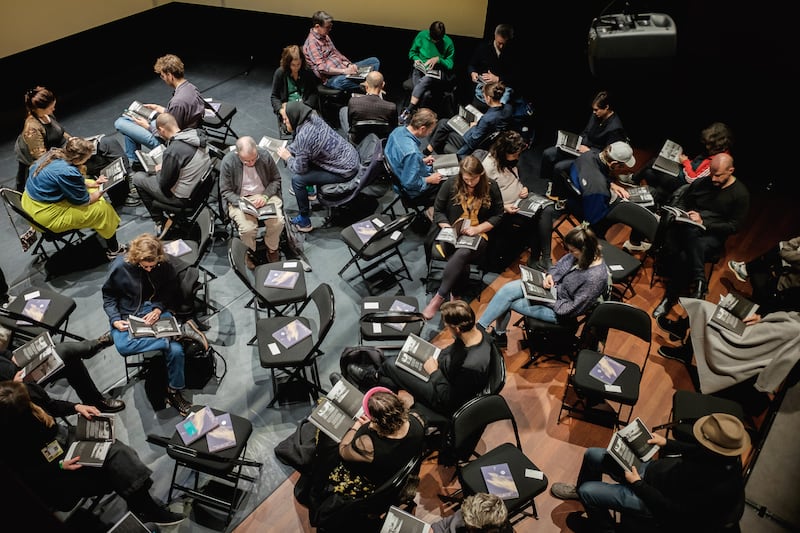
Borderline Visible by Ant Hampton
The gist: This immersive theatrical event is a kind of audio-guided tour through an artist book. Hampton, a German artist, calls the project a “live book.” The story follows two artist friends traveling together from Switzerland to Turkey, collecting items and voices of the people they encounter.
Doughton’s take: “It reminds me of being transported to another world through a book or a radio story, with the twist of sharing that experience with your fellow audience members like a play or a movie.”
New Expressive Works, 810 SE Belmont St. 6 pm Friday, 4 and 6 pm Saturday, 4 pm Sunday, Sept. 11–13. $10–$50.
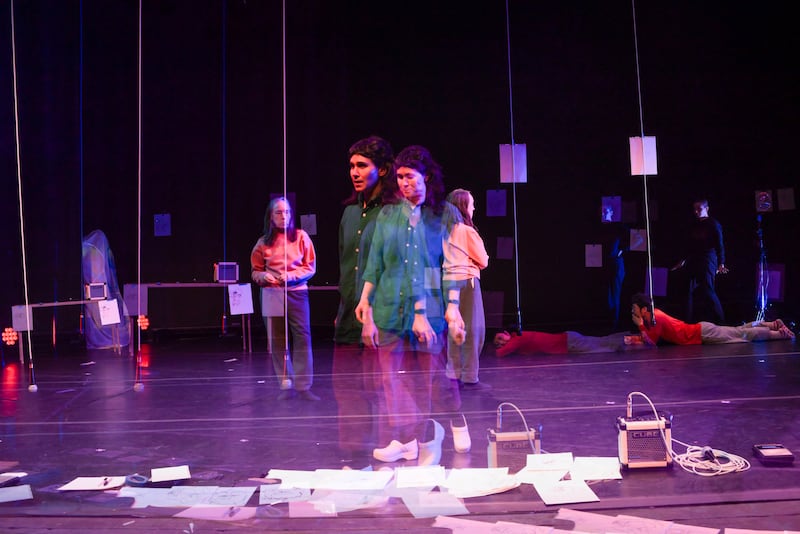
By My Own Hand, Part 5: INVISIBLE TOUCH by Allie Hankins
The gist: This dance/performance piece is the final installment of a long-running series inspired by psychotherapy, astrology and dream interpretation. Hankins’ previous performances in the series were solo. Now, the Portland artist has enlisted a group of local performance heroes—Linda Austin, claire barrera, keyon gaskin, Takahiro Yamamoto and Lu Yim—to tell the final chapter.
Doughton’s take: “It’s a kind of queer autobiography using tape loops, microphones and layered vocal scores to explore memory, self-definition and transformation.”
PICA, 15 NE Hancock St. 6 pm Thursday–Saturday, 4 pm Sunday, Sept. 10–13. Free.
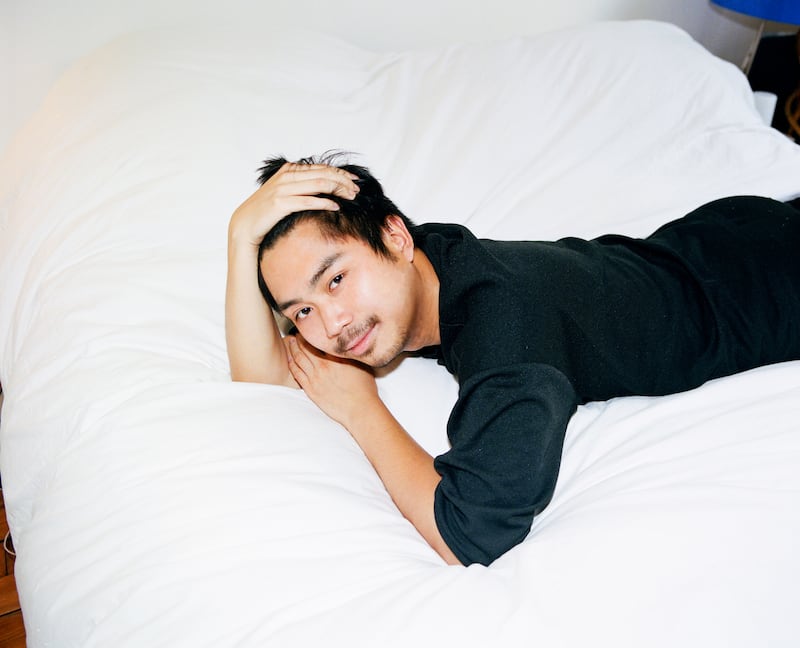
Goldberg Variations by Clayton Lee
The gist: Lee, a Canadian artist and curator, based this interactive performance piece on pro wrestler Bill Goldberg. Thematically, it’s about the “blueprints of sexual desire and fantasy.” Lee delivers the audience there via an “unfiltered reckoning with his sexual and romantic history.” Also, Bach is involved.
Doughton’s take: The promotional copy teases a surprise twist. And Doughton says that “the artist adapts the project to each city, using local collaborators for parts of it that are somewhat improvised.”
PICA, 15 NE Hancock St. 8 pm Friday and Saturday, Sept. 11 and 12. $25–$50. 18+.
How does it feel to look at nothing by Holland Andrews and yuniya edi kwon
The gist: This operatic performance blends music, ritual, dance and improvisation to explore queer parenthood and trans pregnancy. It is created and performed by a married couple—Andrews, a longtime Portlander, moved to New York in 2019—who aim with this performance to bring a new spirit into the world.
Doughton’s take: “Andrews is known for their otherworldly voice, and kwon is an experimental violinist, among other things. Their work is elegant and ethereal both musically and visually.”
Winningstad Theatre, 1111 SW Broadway. 8 pm Friday and Saturday, 2 pm Sunday, Sept. 11–13. $25–$50.
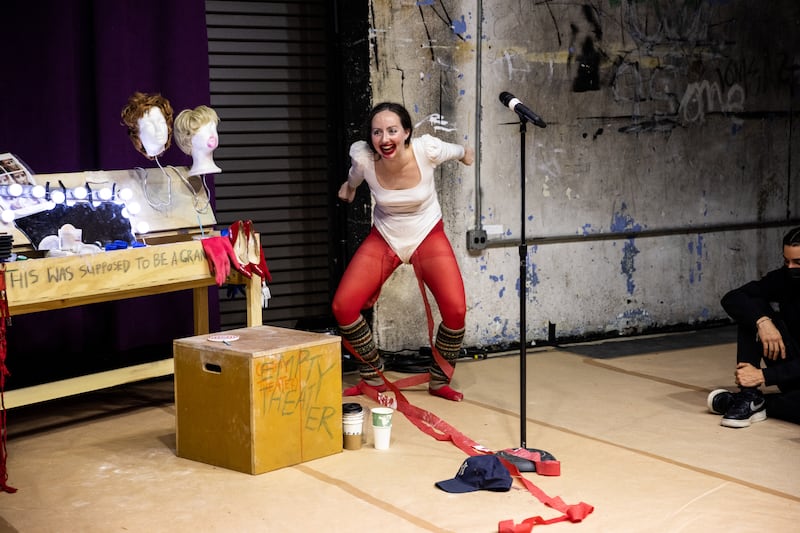
Sad Boys in Harpy Land by Alex Tatarsky
The gist: Tatarsky, who is based in New York and Philadelphia, described this project to Doughton as “a clown show about wanting to die.” The performance, co-produced by Reed’s theater and Russian departments, blends humor and drama and references everything from Goethe to Seinfeld.
Doughton’s take: “On one level, it’s a semiautobiographical coming-of-age story—messy, funny and existential. It also continues the tradition of artists using absurdism as a response to fascism and focuses on collective struggle rather than focusing on individual malady.”
Greenwood Theatre at Reed College, 3202 SE Woodstock Blvd. 8 pm Friday and Saturday, 6 pm Sunday, Sept. 11–13. $25–$50.