Skip to main content
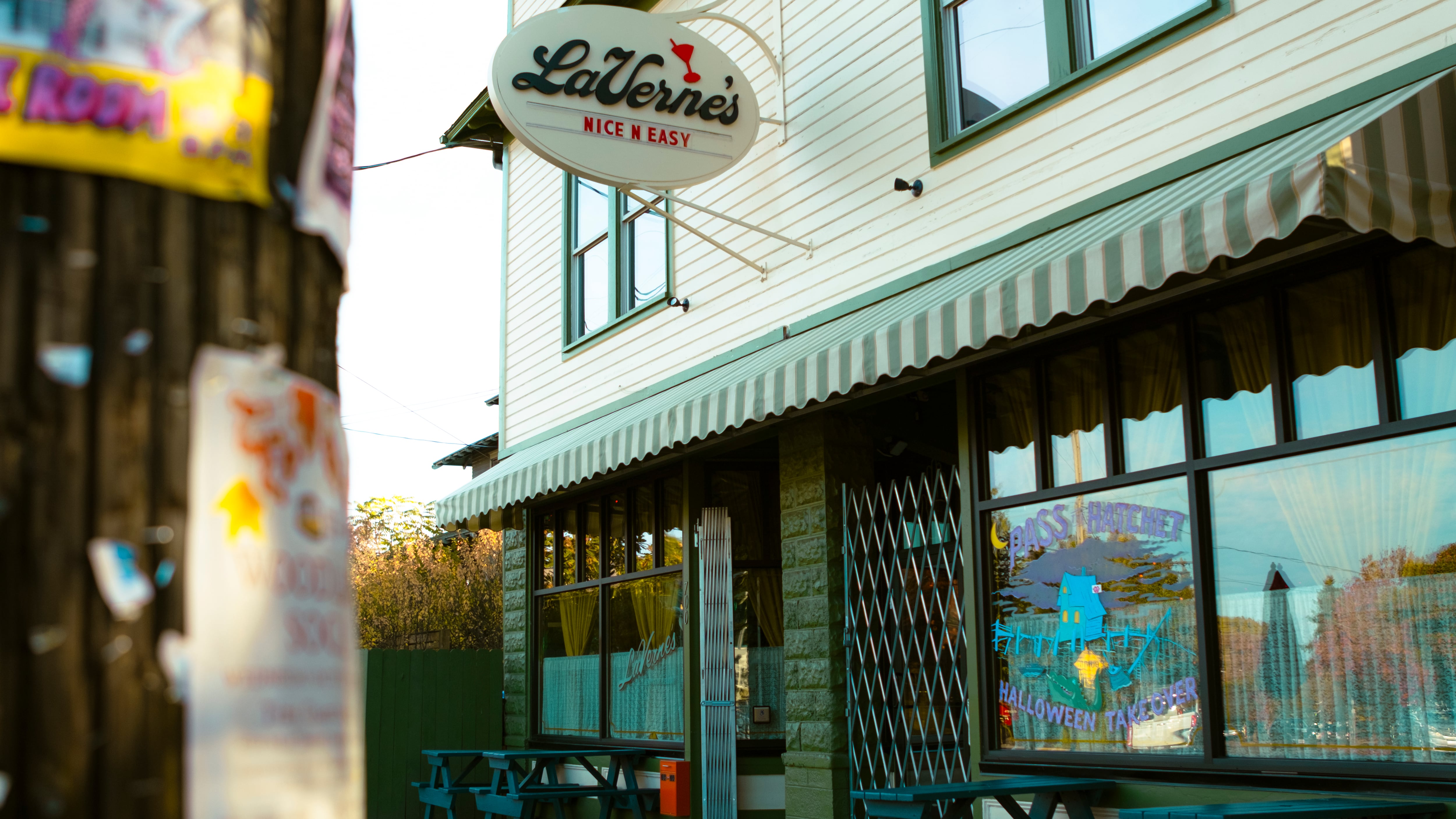
The Dekum Triangle, the nucleus of the Woodlawn neighborhood, is today surrounded by an assortment of small businesses that, in their own way, exemplify a new Portland landscape.
LaVerne’s, a faux dive from the team behind Hey Love, specializes in rotisserie chicken and craft cocktails. Breakside Brewery’s flagship pub holds down another corner of the triangle. Woodlawn Coffee, P’s & Q’s Market, an Electric Lettuce dispensary, and a newly designated farmers market at the tip of the triangle form a closely knit commercial center that nails Portland’s specific brand of cool.
You could easily say this pocket of the city is thriving. It’s a great hang. It’s where I live. And you better believe I’m here evangelizing its merits to you, dear reader. Yet at the same time, I can’t help but measure this buzzy version of my neighborhood against its history.
Like so many of Northeast Portland’s formerly redlined neighborhoods, beneath Woodlawn’s contemporary landscape is a faint outline of what this area used to be. Twenty years ago, when I first arrived in Portland, the triangle was a primarily Black, working-class neighborhood. Most of my neighbors were Black, the small businesses were largely Black- and BIPOC-owned, and even Safeway and Walgreens had majority Black and BIPOC staffs. According to one Portland State University study, 50% of the city’s Black population lived in North and Northeast Portland around that time.
Woodlawn immediately felt like home to this mixed-race L.A. transplant, and that feeling shaped my view of Portland. While the city has diversified in the 21st century (its population was almost 80% white in 2000, compared to 68% per the 2020 Census) its Black population has actually dropped by about 1 percentage point since the turn of the millennium.
In 2006, people outside Woodlawn would balk when I mentioned I lived there. It was dangerous, crime-ridden, scary and full of gangs, these balking people told me. Having grown up in mixed-income neighborhoods across Southern California, I could confidently say Woodlawn was the cleanest and safest neighborhood I’d ever lived in. Replying “Woodlawn” when asked where I’d settled felt like a flex. The conversation-ending descriptors I got in return seemed informed less by any experience on Dekum Street than by the neighborhood’s significant Black population.
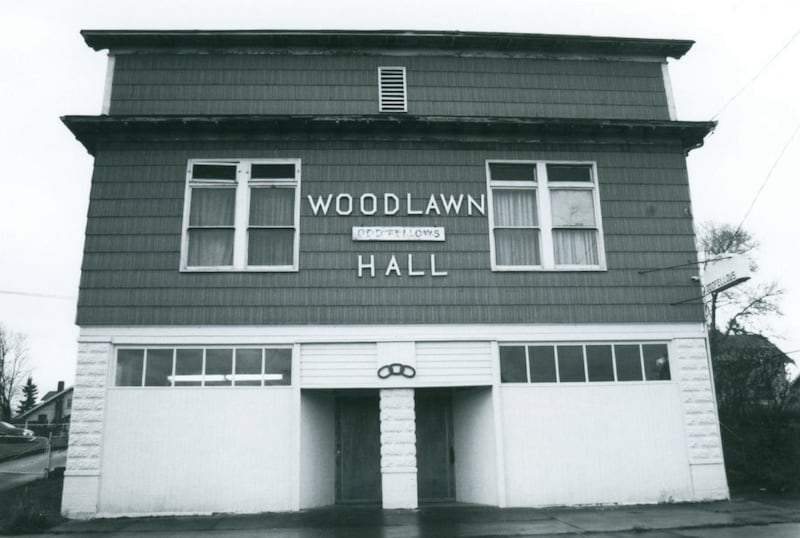
But even then, the neighborhood was beginning to shift. In the building that now houses LaVerne’s, a counterculture coffee shop specializing in something called American Pho shared space with a musty secondhand store. The latter became Woodlawn Swap and Play, a play space for preschoolers. Over the years, the building also housed the short-lived Cannabis Cafe, which predated weed legalization, and Oregon Public House, billed as the nation’s first nonprofit pub.
Its history as a community hub predates all of these businesses. It was once the Woodlawn Oddfellows Lodge, and the upstairs ballroom has long hosted graduations, weddings, and other milestones. Today, it too is operated by the team behind LaVerne’s, which occupies the ground floor.
Aaron Hall, part of the team behind the restaurant, understands that the business has inherited more than an interesting floor plan.
“It was really important for us to know, honor and understand the history of both that building and of the neighborhood,” he told me.
Hall, who grew up in Northeast Portland, said the team consulted longtime neighborhood figures, including the Woodlawn Neighborhood Association’s neighborhood historian, Anjala Ehelebe, and worked to understand the building’s past before deciding what it might become. The décor incorporates references to the Oddfellows and Black Portland history, alongside art and contributions by people who live and work nearby.
“We wanted our clientele to be first and foremost from Woodlawn,” he said. “We really wanted to be a neighborhood bar.”
It’s an encouraging ambition. But it also raises a question that has followed the Dekum Triangle as long as I’ve known it: What does it mean to build a business for a neighborhood, and what does it mean to build one that turns the neighborhood into a destination?
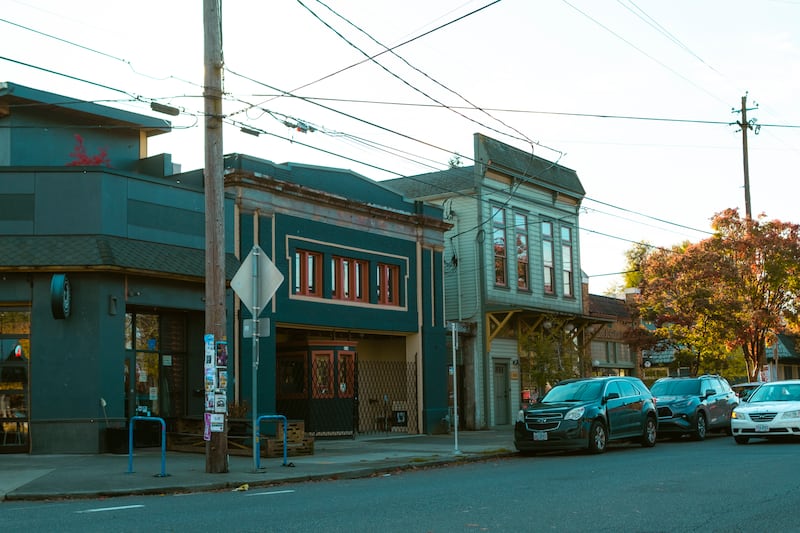
In 2007, Good Neighbor Pizzeria opened on the corner of Dekum Street and 8th Avenue, signaling the arrival of a new Portland sensibility. A Yelp review from its first year lamented a live DJ playing techno and house music that could be heard through residential blocks. (For the record, Good Neighbor shifted gears and evolved to meet the neighborhood where it’s at.) From there, the timeline of hospitality businesses moving into the neighborhood paints an easy image of the trend. Firehouse restaurant set up in 2008 and Breakside Brewing in 2010, followed by P’s & Q’s Market in 2013 and Campana in 2018. And here is where the reference to that TV show goes. But the truth is that the economic forces reshaping Woodlawn were bigger than pizza and pasta and IPAs and DJ sets.
The generation of homeowners I’d come to live among was aging out of their homes and selling below the market median, in part because the stain of redlining still informed how longtime Portlanders viewed the area. Other neighbors were forced out by the growing cost of what had been a relatively affordable, accessible place to raise a BIPOC family. In 2023, KGW-TV ran a docuseries titled Inside Woodlawn, reporting, “More than half of the students at Woodlawn Elementary don’t live in the neighborhood because their families can’t afford to rent or own homes there.”
High Water Mark, which opened in 2014, is a bar and music venue named in reference to the mark left by the Vanport Flood, which displaced thousands of Portlanders, many of them Black, and contributed to the movement of Black families into already redlined Northeast Portland neighborhoods. Vanport is not merely a tragic chapter in Portland’s past; its aftermath helped shape the city’s racial geography. Remembering it means acknowledging that the city’s neighborhoods were formed not just by individual choices—whether about racial stereotypes of craft beer fetishes—but by public policy, discrimination, displacement, and the resilience of people who built communities despite them. A name on a sign cannot undo that history. But it can invite people to learn it.
Part of what makes gentrification so difficult to discuss is that it often arrives looking like an unambiguous improvement. New businesses open. Buildings get fixed up. Streets become busier. People who once avoided an area suddenly want to spend money there.
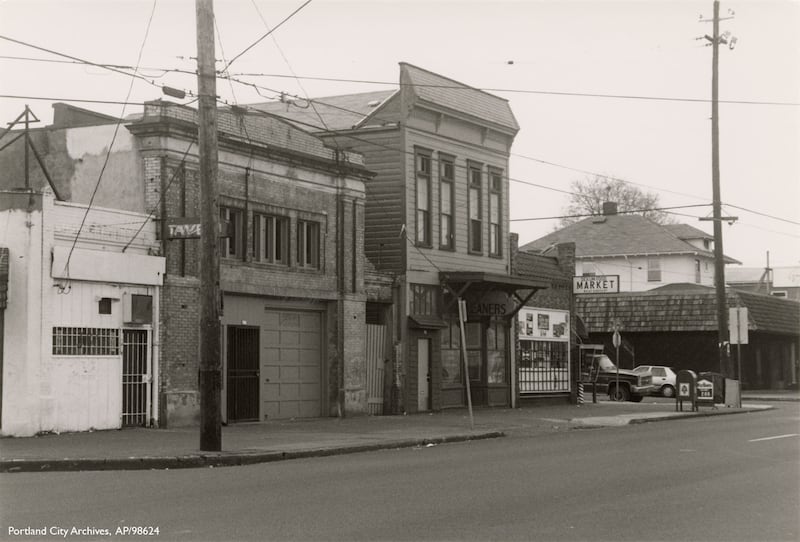
Amid the neighborhood’s newfound cool, buildings that once stood derelict were being rehabilitated to match the trendy commercial energy that had infused nearby Alberta and Mississippi. Woodlawn Coffee’s renovation gave new residents a slick coffee shop; Breakside, Firehouse, and Campana made the triangle a destination. The problem is when the appearance of revival obscures what is lost along the way, or when the people who kept a neighborhood alive through years of disinvestment are priced out just as others begin to appreciate it.
Which brings me to a recent weekend night on the triangle. After a live storytelling event at the glossy, intimate Village Ballroom, I found myself nibbling on LaVerne’s succulent rotisserie chicken tacos (served with a bright, citrusy slaw) and crispy jojos con queso while sipping a strawberry-chamoy mezcal margarita. The space was decorated for Halloween and even featured a special holiday menu. It was a great night out, even if, somewhere over the course of several hours, it dawned on me that I’d seen only two Black people.
A hoppy nightcap at Breakside followed by a stroll around the triangle past Classic Foods’ headquarters and around Firehouse revealed a similar assortment of patrons. These spaces were joyful, bright, busy, blooming with the investments the neighborhood seemed to lack 20 years ago. But Woodlawn did not lack a community then. What it lacked was the specific investment and approval that would eventually make the neighborhood desirable to a different demographic.
When we tell the story of a neighborhood’s revival, we risk implying that it was lifeless before the new businesses arrived. Businesses that benefit from a neighborhood’s character and history have a responsibility to understand where that character came from, and to consider who gets to participate in its future.
I still herald Woodlawn as the best neighborhood in Portland. But I’m not blind to the distance between what it was and what it has become. So if you find me sipping a slushy and playing Super Mario Bros. at The Retro Game Bar, or shopping at the makers market at High Water Mark, don’t be surprised when I drag you to the Black-owned Black Rose Market across the street. And before we part ways, expect a lecture on the history of Black commerce in the neighborhood.