Skip to main content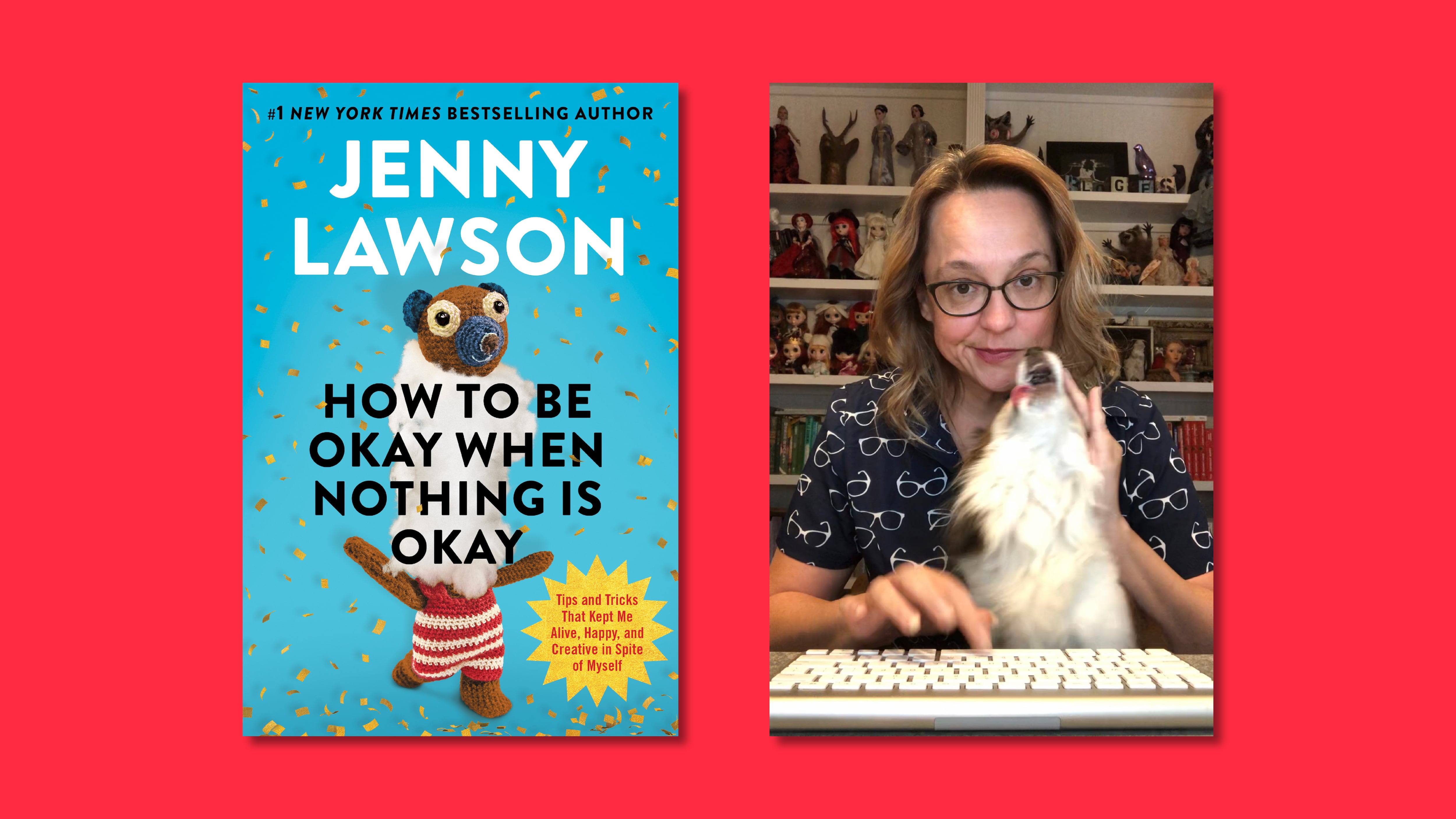
Jenny Lawson loves escaping reality. While she is a big fan of binge-watching TV, lately she’s been getting lost in books. The author owns Nowhere Bookshop in San Antonio, Texas, so this makes sense. “There’s something wonderful about reading a book that touches on something you’re dealing with in a magical way and is somewhat removed so it’s almost like you’re being inoculated,” she tells Willamette Week.
While her newest book, How to Be Okay When Nothing Is Okay, won’t transport readers into a fantastical world, it does depart from Lawson’s previous works. While her first three books were essay collections, the latest is a hybrid of genres including essays, self-help and reflections on craft. Though Lawson is primarily a writer, she also created a bestselling coloring book, You Are Here, so the craft aspects of the book are not limited to writing advice, but more of an overall creative practice, like The Artist’s Way if Julia Cameron went on tangents about whether or not it’s legal to own a human skull. (Spoiler alert: You already own one—it’s attached to your body.)
Arriving at a very convenient time considering…everything, How to Be Okay When Nothing Is Okay balances Lawson’s ability to tell a humorous story about life’s hardest moments and her “hacks” for how to handle one’s own mental health, energy levels and a desire to create, even in the face of impostor syndrome, internal conflict, and external challenges.
The following interview has been lightly edited for brevity and clarity.
WW: You’re known for your sometimes brutal honesty. How do you decide what to share?
Jenny Lawson: The rules that I have are: I am always the butt of the joke. If I’m going to write about someone, they get to look at it first and decide if they want it in there. The other thing I try to think about is, if this thing has to live on its own forever, am I willing to discuss it all the time?
A lot of the time I will live with something for a while until it becomes so uncomfortable the only way I can truly understand it and get through it is by writing about it and being honest about it. It’s more uncomfortable to not be honest.
What is your advice to someone, say a writer like me, about dealing with impostor syndrome?
There is no one else who is going to be able to write in the same way that you are, so don’t dumb that down. Don’t take away the little things that will make people go “Oh, this is too weird” or “She’s too much” or any of it. Those are the things that people are going to gravitate to.
In the book, you quote Ann Patchett saying, “Writing is a miserable, awful business. Stay with it. It’s better than anything in the world.” What advice do you have for someone, say a writer like me, about why they should keep writing even though it’s miserable? I’m doing fine, really.
“I hate to write, but I love having written.” I think that’s Dorothy Parker.
When I’m writing, sometimes I will go a week where I can’t think of the right way to come at this subject. What format am I going to do it in? Do I go right into the dark? What I’ll often do is, I’ll wait until it comes to me, and when it does, my husband and kid know I get a look and will run to the computer because I got to get it out. When it’s out—and this is going to sound terrible—when I get it out it is like the worst constipation is suddenly over.
You have to listen to that inner voice that wants to be on the paper. I need to get it on paper so I understand what it means to me. It’s almost like therapy. Having it written down allows me to capture it on the page so I can walk away a little bit.
What’s next for you?
I have three main things I’m doing right now. One is a very dark children’s book. It’s an Edward Gorey-esque kind of thing. I have another book that does not make sense, but I have to finish it. It’s a collection of strange, curious things that have happened to me. I have a YA book that I’ve been working on for years and years and years. It’s sort of a magical realism ghost story.
My weird, creepy children would like that.
Weird, creepy children are what make the world go round.
SEE IT: Jenny Lawson at Revolution Hall, 1300 SE Stark St.. powells.com/events. 7:30 pm Wednesday, April 15. $39, includes hardcover copy of the book.