Skip to main content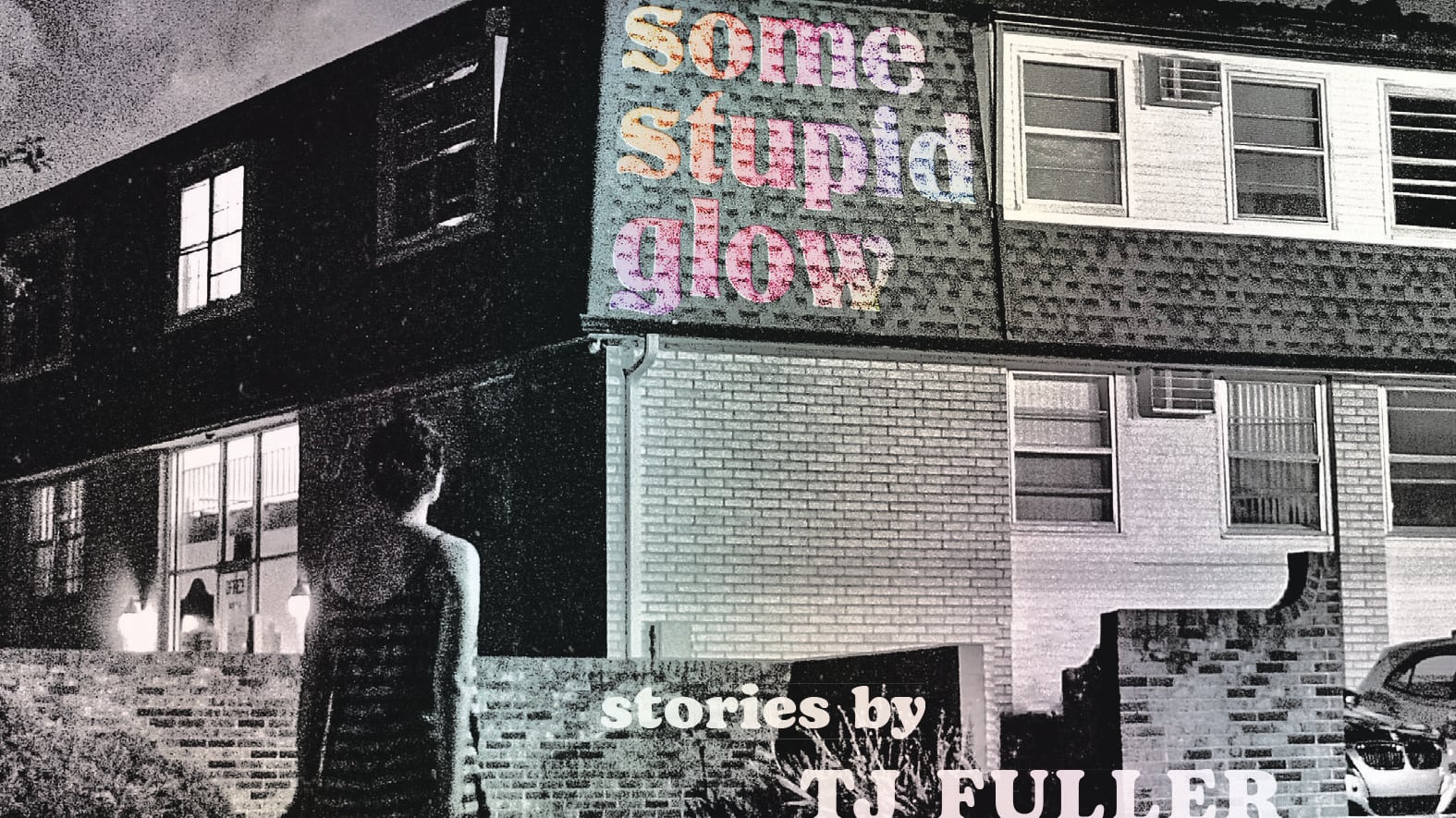
“Bake me like one of your rough puff pastries.”
That’s the offbeat come-on that acts as the title of a short story in TJ Fuller’s debut anthology, Some Stupid Glow (Featherproof Books, 184 pages, $17). The story is told from the perspective of a contestant on an episode of The Great British Baking Show. It begins: “Fold me. Butter me. Freeze me…Outside the bake-off tent and the television cameras, we slaver. Don’t look. Stay locked in on the competition.”
But then, like many of the stories in this varied but largely winning collection published April 14, it takes a darker twist. The story, a slight two pages long, uses baking and manipulating dough as a parallel to what it feels like to undergo extensive medical testing. The narrator is “turned over and scratched and prodded and spread for the close up.” It’s a clever pairing, and not even the best one in Some Stupid Glow.
Fuller teaches composition and creative writing at Mt. Hood Community College. Some of these stories have previously been published in the Columbia Journal, Juked, Vol. 1 Brooklyn, among other journals, but this is his debut book. He’s been working on it since about 2010; a long haul, but that’s because he wrote most of it in the hour before his young daughter wakes up, Fuller tells WW.
There are a whopping 22 stories in the collection, and many more weirdos. The cast includes a mall cop who’s a Philip Seymour Hoffman superfan, a pill-popper on the city bus who pretends to be a KGW news reporter, and two homeless men at a casino. Reading it feels reminiscent of being inside of Denis Johnson’s 1992 short story collection Jesus’ Son again—gritty and urban, albeit with way less heroin. (Fuller doesn’t count Johnson as a primary influence, though. Rather, he cites Sam Lipsyte and Christine Schutt and local writers Kimberly King Parsons and Leni Zumas.)
“A lot of the stories are about failure, and I think the failure gets more intense as the collection goes on,” Fuller says.
Fuller’s language throughout is spare, as if an editor told him, “Yes, this is good, but it would be stronger if you deleted a quarter of the words.” The remaining sentences are muscular, but some of the stories suffer from left-out details that might have offered the reader a little more hand-holding. But there’s also no flowery language slowing you down. Space out for 15 seconds while reading Some Stupid Glow and the plot and characters will have moved way on without your noticing. I didn’t quite know what was happening at times, let alone what it meant thematically. That could be a me problem, not a TJ Fuller problem, though; it’s possible my Instagram and Bravo consumption have microwaved my brain to the point that I can no longer parse literary fiction.
The standout piece in the collection, though, the one that grabbed me by the collar and convinced me of the breadth of Fuller’s talent, is “Hazards.” The pairing: new parenthood and bulimia, both told from the father’s perspective. The father has started choking—kung pao chicken, rib medallions, cheap steak—as he binges as a coping mechanism for dealing with the world shift of having a newborn. He worries the baby will choke; the baby will tip over a stack of books; he worries he is dreaming too often about the future and not treasuring the stage the child is at right now. (Parents: Who among us?)
The descriptions of the bingeing are disturbing and accurate: “I eat a medium pepperoni pizza alone. I crave the ache, not the flavor. If I craved the flavor, I would chew. But I chase that belly strain, that bloat. How else can I feel anchored?”
As the more glamorous cousin of bulimia, anorexia is far more prevalent in literature. But Fuller nails the depiction of the illness, both physically and spiritually. The ending of “Hazards” is beautiful but still messy; I’ll leave the specifics for Some Stupid Glow readers to discover on their own. The book as a whole is well worth your time and will leave you hungry for more from this local talent.