Skip to main content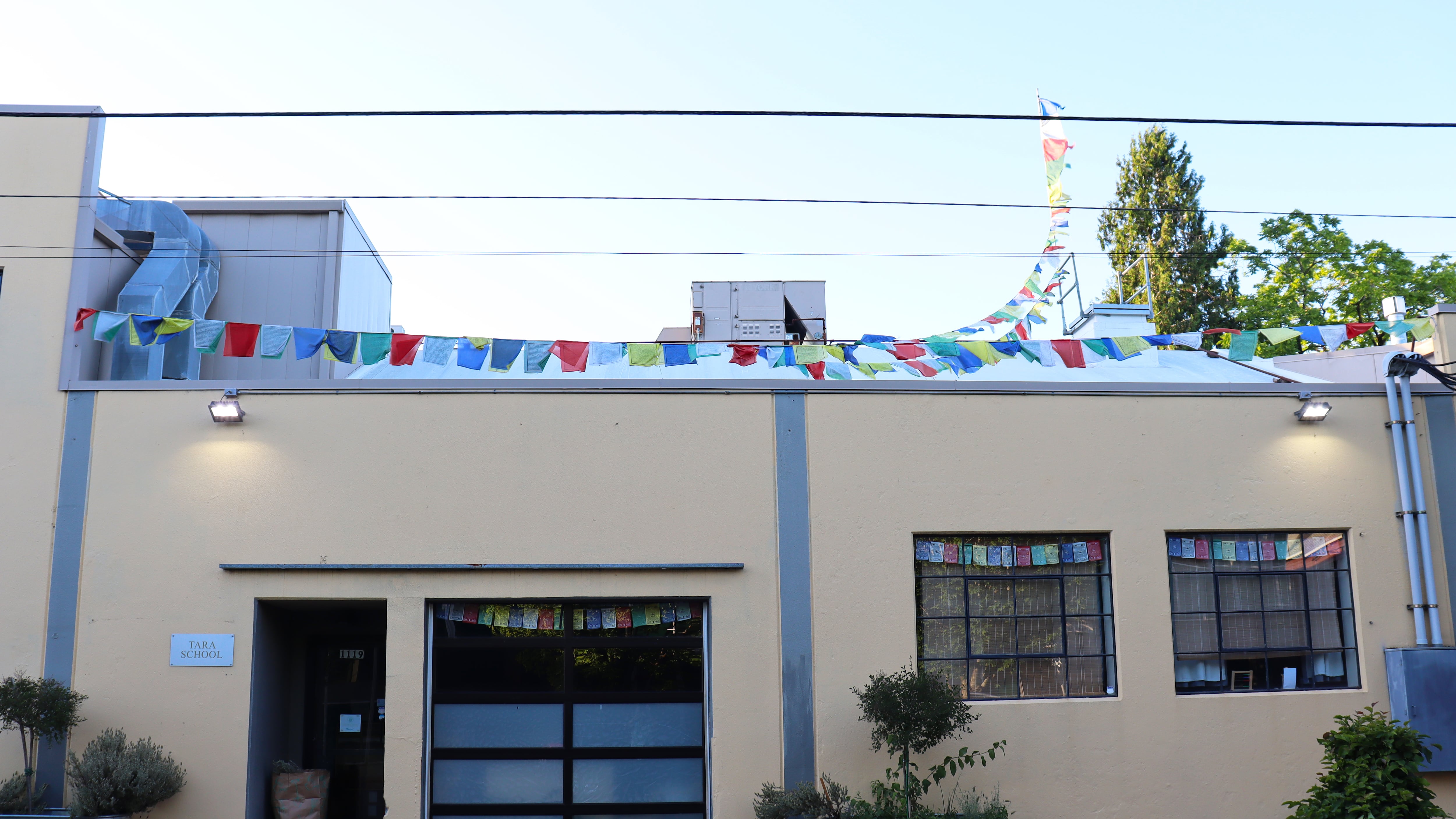
This story accompanies a WW investigative report on Maitripa College published today. To best understand both stories, we suggest starting here.
An international nonprofit organization that encompasses more than 132 Buddhist centers, retreats, monasteries, nunneries and projects around the world is headquartered in Portland. That means, no matter where accusations of misconduct against the organization or its affiliated Buddhist leaders or centers originate, the fallout lands here.
The organization is called the Foundation for the Preservation of the Mahayana Tradition. And not only has an accusation from a Portland woman come to the organization recently, but so have other accusations over the years.
Two Tibetan lamas founded the FPMT in 1975 with the intent of spreading the teachings of the Dalai Lama, specifically a lineage of teaching called the Mahayana tradition. Over the years it blossomed to include more than 130 Buddhist centers, monasteries, colleges, retreats and other offshoots around the world. Each center handles its own finances and business operations, but all of the affiliated projects are expected to further the FPMT’s teaching materials and be led by FPMT-registered teachers or gurus.
Yangsi Rinpoche, for instance, is an FPMT resident teacher and regarded as a “tulku,” a reincarnate of a prominent Buddhist leader. For 20 years, up until he was placed on leave by Maitripa College this spring due to a pending investigation into allegations of sexual misconduct made by a Portland woman named Sunitha Bhaskaran, Yangsi Rinpoche was expected to further the mission and teachings of the FPMT. (The FPMT also suspended Yangsi Rinpoche from teaching at all of its centers until the investigation is complete.)
In 2005, the FPMT moved its headquarters from New Mexico to Southeast Portland. Shortly after the foundation opened its new headquarters, Yangsi Rinpoche co-founded Maitripa College and moved the college into the first floor of the building; FPMT had its offices on the second floor and Maitripa spread across the first floor. The foundation went entirely virtual a few years ago, and Maitripa’s classrooms, offices and library now take up both floors. The two organizations co-own the building.
In 2019, a lama named Dagri Rinpoche, who traveled to FPMT centers and retreats to teach, was arrested by police in India after a 30-year-old woman alleged she had awoken to him groping her on a plane during a flight in India. Though Dagri Rinpoche denied the allegations, Indian authorities pressed charges.
A group of FPMT-affiliated nuns then came forward to allege that they, too, had been sexually assaulted or molested by the lama. Some alleged incidents stretched as far back as 2008. The nuns said they had brought the allegations forward to FPMT officials at the time, but got little response. In fact, when word about Dagri Rinpoche’s criminal charges surfaced, Lama Zopa Rinpoche—the lama that served as FPMT’s spiritual director up until his death in 2023—urged FPMT followers to follow their guru regardless, writing in an open letter: “I want to tell the students who have received initiations and teachings from Dagri Rinpoche that you should definitely one hundred percent rejoice, no matter what the world says, no matter if some people criticize him.”
After the nuns threatened the FPMT with legal action, the foundation contracted with an outside group, the FaithTrust Institute, to investigate the allegations. A summary of FaithTrust’s report, a copy of which was obtained by WW after the FPMT repeatedly declined to provide one, shows it concluded that “the preponderance of evidence supports the allegations that Dagri Rinpoche has sexually assaulted and/or harassed at least five women.” The summary also said that the testimonies “raise serious concerns about Dagri Rinpoche’s behavior in his role as spiritual teacher and about FPMT’s structure, governance and oversight.” Indeed, the report concluded that the women who had reported assault told FPMT officials at the time, but that Dagri Rinpoche continued to lead teachings across FPMT centers.
Following the report and facing public pressure, the FPMT removed Dagri Rinpoche from its list of teachers permanently in 2020.
The foundation in a public statement at the time wrote that the report concluded, “Dagri Rinpoche did engage in a pattern of intentional and inappropriate sexual behavior that persisted over many years towards women who were in his company due to his position as a trusted incarnate lama and teacher.”
Facing pressure, the FPMT established new ethics and safeguarding policies for all of its centers following the Dagri Rinpoche investigation. These state that Buddhist leaders have a duty to maintain appropriate boundaries with those who revere them. “We acknowledge that in a spiritual context it is also possible for people to experience coercive control if those in a position of trust misuse their power and influence,” the policy reads. “Holding a spiritual position or role involves differing power relationships and imbalances and these need to be recognised.”
The policy also outlines a concept called “spiritual abuse.”
“Some abuse is spiritual abuse because of the context in which it occurs, or where it invokes status as a teacher or someone of higher spiritual authority, or uses religious teachings to coerce or manipulate people into performing behaviors which meet the needs of the abuser rather than those of the individual concerned,” the policy reads.
The Dagri Rinpoche criminal case in India was still ongoing when he died in January of this year at age 67.
Bhaskaran’s allegations in Portland opened the FPMT wound wide open again this year. The foundation has pledged to hire a third-party to look into her claims, but it has also pledged to conduct its own internal investigation of whether Maitripa College, at the time of Bhaskaran’s initial complaint in 2021, followed FPMT’s new abuse policies and procedures.
Even as it grapples with new troubles in its hometown, the FPMT faces an explosive lawsuit in federal court.
In November 2025, a 26-year-old woman filed suit in U.S. District Court for the Eastern District of North Carolina against the FPMT and two of its affiliated centers in North Carolina and Vermont. The woman alleges she was molested between the ages of 10 and 16 by two different FPMT-affiliated monks, leaving her with severe trauma.
The FPMT has denied her allegations, as have the two centers. (One of the centers has since been voluntarily dismissed from the case.) The FPMT, which is the defendant facing the most serious allegations of vicarious liability for assault, battery and federal sex trafficking, also said in court filings that the monks were not foundation employees, but rather tied to FPMT-affiliated organizations, centers or rinpoches.
The girl and her mother joined a FPMT-run Buddhist center in Massachusetts when she was 8 years old. At the urging of FPMT leaders, the girl at age 10 took part in a foundation ceremony to “formally commit to FPMT,” the lawsuit states.
“After that, Lama Zopa, FPMT’s most senior leader, sought out [her] father, Troy, to tell him that his ten-year-old child was a ‘tulku’ – a reincarnation of an enlightened being,” the lawsuit alleges. “[Her] elevation to this exalted status occurred swiftly. Mere days after the refuge ceremony, [her] family was offered a private audience with Lama Zopa…a rare and highly prestigious honor within FPMT.” (The foundation denied in court documents that such a meeting with Lama Zopa was anything unusual. “A private audience was by no means a rare or prestigious honor within FPMT,” the foundation’s attorneys wrote.)
The lawsuit alleges that just a few weeks later, Lama Zopa told the girl’s parents “their daughter had formed a special bond with his attendant…He announced that [she] and [the monk] were linked cosmically, and had, in a past life, perhaps been husband and wife.” Deemed special by the spiritual leader of the FPMT, the girl became a celebrity within the organization.
For the next six years, the lawsuit alleges, the monk in question assaulted the girl at various retreats and centers across the country. The first alleged assault took place at a North Carolina retreat in 2010. She alleges the monk “led her outside of the cabin where he and she had been with other senior FPMT figures along a path to the woods, taking her to a look-out spot where he instructed her to sit on a flat rock. Then, [he] sat beside [her], reached over, and began to touch the ten-year-old’s breasts. As [he] groped [her], he started discussing Buddhist philosophy.”
She alleges the monk similarly abused her every day for the next two weeks. She alleges another monk, who was a longtime aide to Dagri Rinpoche, similarly assaulted her.
The abuse by the monk continued off and on until the girl was 16, the lawsuit alleges.
The lawsuit states her parents immediately alerted the president and CEO of FPMT, Roger Kunsang, in 2019 after the young woman divulged the alleged abuse. According to the lawsuit, Kunsang “displaced responsibility, however, to the individual FPMT centers, and contended that although FPMT had ethical guidelines in place, it had no duty to enforce them at the centers and retreats it operated or over the employees it controlled.” Shortly thereafter, the lawsuit alleges, the teenager also came forward about the first monk’s abuse.
“To this date, no one within FPMT has seriously acknowledged or apologized for the sustained abuse perpetrated on [her] by its senior figures and employees,” the lawsuit alleges.
The girl began self-harming as a result of the abuse when she was just age 12, according to the lawsuit, and has been hospitalized for harboring suicidal thoughts. “The harm that FPMT Defendants, their leaders and employees have done to [her] is profound, serious and long-lasting,” the lawsuit states.
Both in court documents and to WW, the FPMT has denied the young woman’s abuse allegations.
“We take all such allegations seriously, and we have tremendous empathy for the plaintiff and their health and wellbeing,” foundation spokesperson François Lecointre told WW in an April statement. “We have, however, thoughtfully and thoroughly investigated the allegations and we intend to vigorously defend against claims that we believe to be without merit.”
The case remains ongoing.