 Skip to main content
It’s August 1984 in Portland. The sun is shining high and bright; the roses are still in bloom. Elly Sparrow, wife and mother of four, is in a psych ward. Her attending nurse, Mary Ann, offers a “courteous but brief” smile, and asks, “And how are we today?”
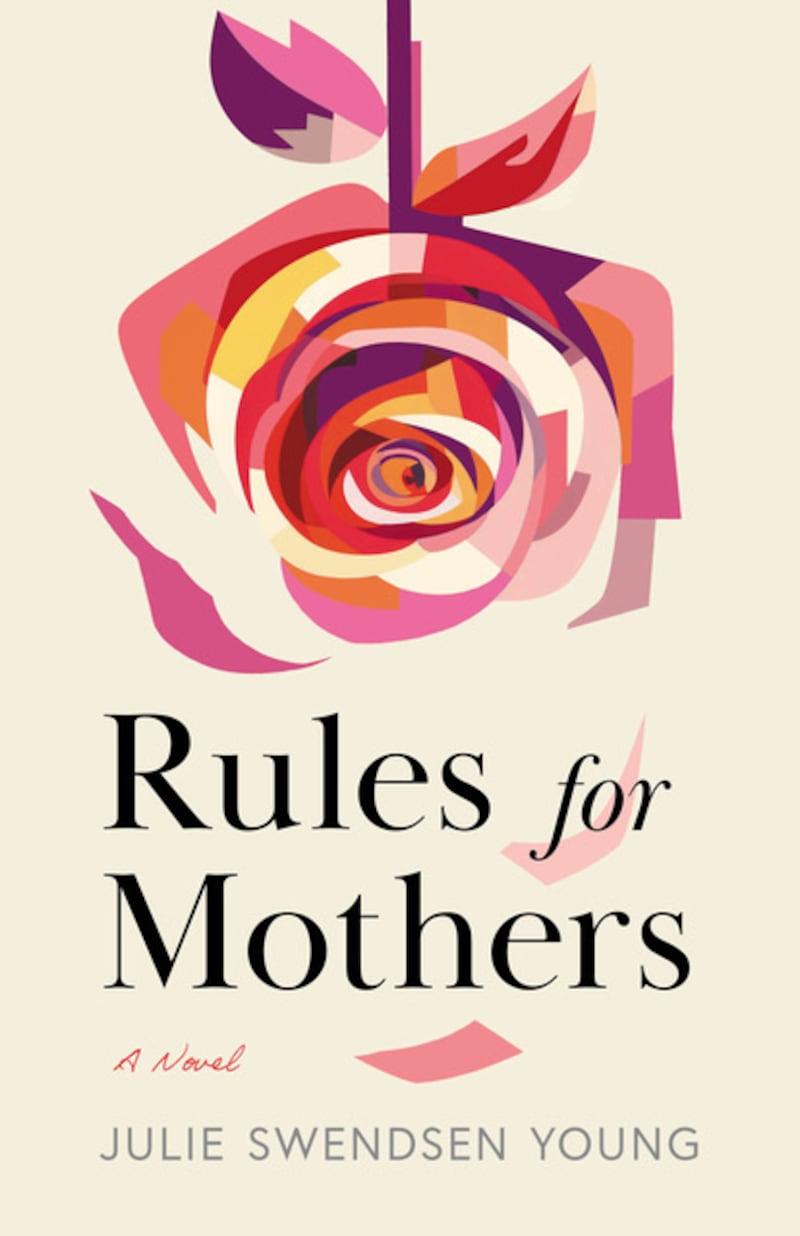
This use of the first-person plural at the very beginning of Julie Swendsen Young’s Rules for Mothers (Greenleaf Book Group Press, 256 pages, $16.95) is telling. Because there are rules for mothers, though in the ’80s, nobody talked about them. (Few do even today.) Elly has found herself locked up for trying to break the silence. She grips Mary Ann’s arm. “You need to listen,” she cries. “You need to know!”
Mary Ann calmly places Elly’s hand back against her own chest. But those who continue reading will be rewarded with the extraordinary—and totally ordinary—story behind Elly’s breakdown.
Rules for Mothers follows Elly through the day-to-day trials of ’80s mom life in Portland: scrubbing skid marks out of kids’ underwear in the kitchen sink; a mom-Vanagon fender-bender at the “quirky three-way intersection” of 12th, Burnside and Sandy (still an eminently fender-bendable locale 42 years later).
It also tracks the path Elly took—or, more accurately, was shuttled along—to get there: the marriage to a man she “thought she probably did love”; the thwarted dreams of a master’s program in literature that would have necessitated a move and disrupted the nascent relationship; the first exhilarating pregnancy, followed by a second, a third, and an unexpected fourth. The book captures the highs of motherhood as well as the lows: Elly describes the “astonishing euphoria of baby-scented skin; tiny folds and creases.” On a trip to Oxbow Park, her firstborn daughter weaves her a flower crown and deems her Queen of Dagobah.
Still, the summer days drag long. Elly’s hours are sucked into the time warp of caring for young children. Her husband, with his long days at the office and regular work trips, seems willfully ignorant. “Even if you have to scrub shit from underwear,” he scolds her, “at least you have some flexibility to be outdoors. Do you know how lucky you are?”
After the kids have finally fallen asleep, Elly sits down to write in her journal, the activity she’s been looking forward to all day. But she finds herself “empty.” She has nothing left to say, nothing left to give—nothing she can claim only for herself.
“Why,” she wonders, “hadn’t her mother warned her?”
Throughout her journey, Elly’s exhaustion and malaise are foiled by characters whose circumstances seem different from hers, at least at first: Bobbie and Elliot, a carefree couple who spend the summer traveling in their van with their twin sons; the twice-divorced and childless Peggy, who spends strings of quiet days in a floating home on the Columbia River, writing poetry and making jam out of the berries she picks at Sauvie Island.
But as the tale unfolds, it becomes clear that all the characters quietly suffer under the same pressures: the expectation and isolation of the American nuclear family (or the void left by the lack thereof). Everyone in the book sacrifices something on its altar.
Especially mothers. Because the problem with the rules for mothers is that you can’t know what they are until you’ve already become one—that irreversible and totalizing transformation.
And so, Elly “would press her story onto them: onto the nurses, the orderlies, the other patients. The story they needed to know. About the trap of motherhood, the toxic hormones of childbirth that promised every daybreak would be brilliant, every sunset exquisite, so you didn’t see the lid descending over the trap until the air became thin, until your body ached for replenishment.” In these pages, that story is heard.
Rules for Mothers a book about the secret pains and injustices of motherhood, but also its secret and exclusive joys. Ultimately, it’s a book about community: the village that parents have lost, the importance of rebuilding it, and the power of truthful storytelling—even those parts that are usually kept secret—to do just that.
SEE IT: Julie Swendsen Young appears in conversation with Emma Pattee at Broadway Books, 1714 NE Broadway, 503-284-1726. 6 pm Wednesday, April 29. Free.
