Skip to main content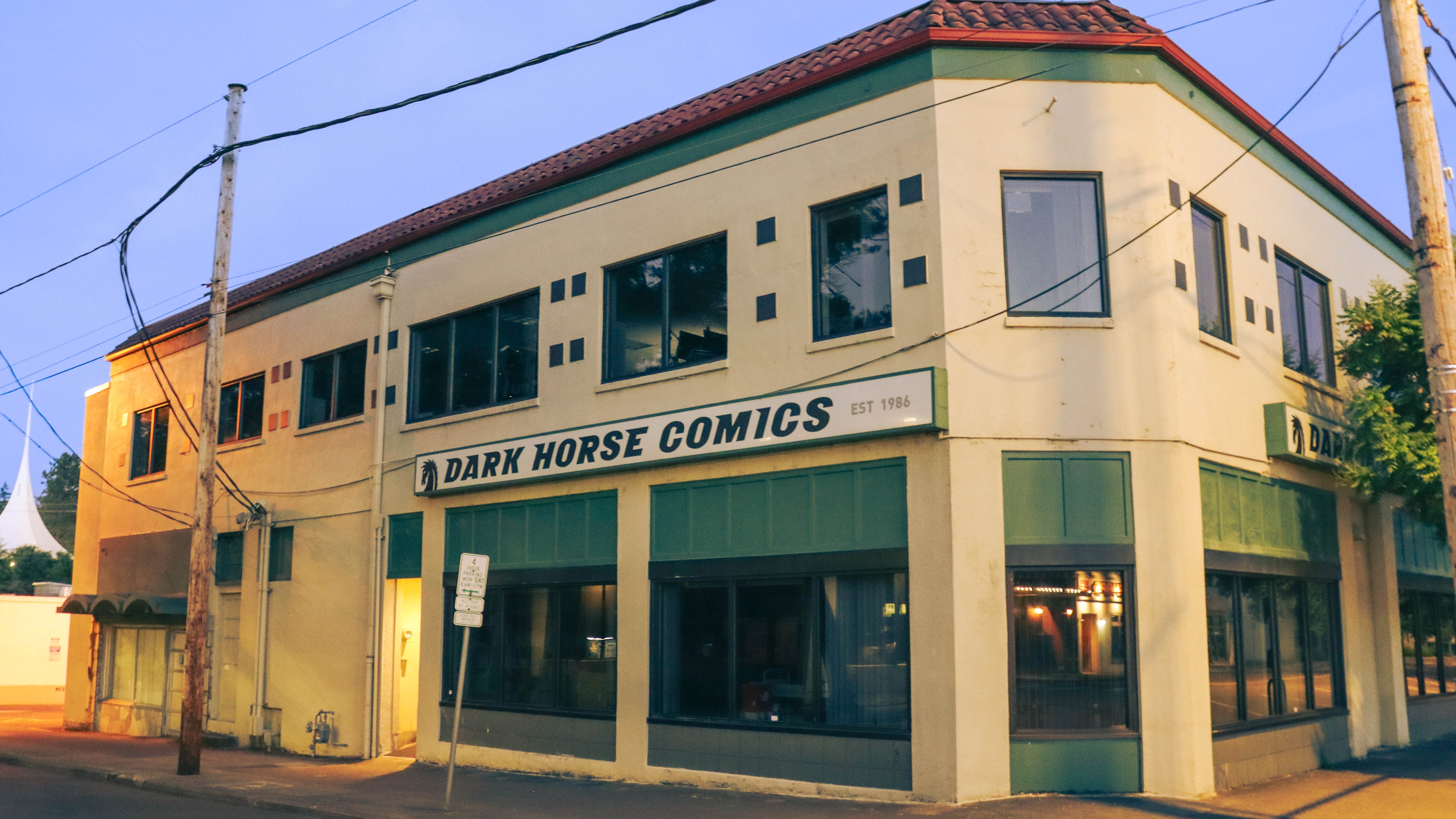
At the end of May, workers at Milwaukie’s Dark Horse Comics announced their intent to unionize with the Communications Workers of America Local 7901.
It’s the latest development in a tumultuous couple of years for the company, which has included layoff announcements, store closures, and the ouster of its founder.
According to a press release published May 27 by Dark Horse Workers United, 59 eligible employees of the comics publisher and its retail shop, Things From Another World, have signed and sent a letter to interim CEO Jay Komas asking for voluntary union recognition. Should Komas fail to recognize the union by June 3, DHWU intends to petition the National Labor Relations Board for a union election.
The workers’ motivations include “a desire for equitable pay, workplace democracy, and a continued commitment to creator-owned comics,” according to the release.
The union drive started early last year, graphic designer Riley Van Dyke tells Willamette Week.
“It started with just a few of us—like five of us—coming together on a couple of facts, one being that we are historically incredibly underpaid,” Van Dyke says. “Everyone here is incredibly passionate, and the company knows that. So, unfortunately, it’s kind of just a matter of course that you get underpaid to have the cool job, but a few of us got together and realized maybe we can do something to change that, and we decided to start organizing…it’s been a very long process of bringing people together, slowly making connections throughout other departments and getting this ball actually rolling.”
Riley Pittenger, a sales executive also involved in the union drive, says the organization doesn’t have exact compensation details for Dark Horse workers, in part because they are siloed in different departments and also spread out so far geographically that it’s been difficult to communicate about matters as fraught as take-home pay.
“There is a lot of siloing that’s traditionally happened in Dark Horse,” Pittenger says. “We all traditionally work in different buildings. There’s not a combination between departments. I work a mile and a half away from where Riley [Van Dyke] works, which is down the block from where other people work, always separated.”
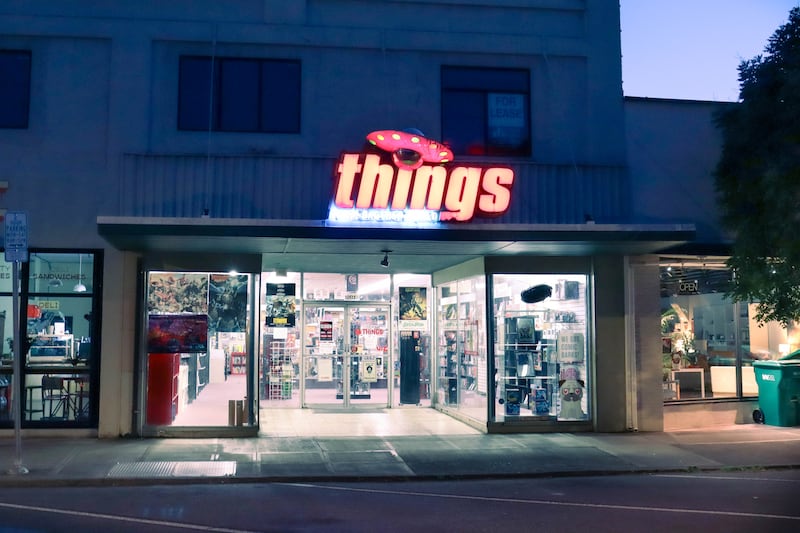
There are about 102 people in the bargaining unit, Van Dyke says, but that includes employees of Things From Another World, the publisher’s retail arm. In late May, shortly before the union drive was announced, Dark Horse announced it would close all three of the store’s locations, effective June 30 for the Oregon locations in Beaverton and Milwaukie and Sept. 30 for the California location at Universal Studios. In February 2025, the company laid off “more than a dozen” employees, according to Comics Beat. Van Dyke says all of TFAW’s employees are members of the bargaining unit right now, and the union hopes to keep them as long as possible.
Organizing a widely distributed workforce was a challenge, Van Dyke says. Conversations about the union started in the production department; she and her teammates knew few people in other departments, so they started reaching out organically.
“It started with going to lunch breaks at editorial, making connections, making friends, just hanging out. We would set up walks with people in the other building, like, ‘Hey, accounting, let’s go for a little walk outside. We noticed that you guys like to do that. Let’s go hang out,’” Van Dyke says. Organizers also started setting up group get-togethers, like parties after work meetings. “It was just getting to know our co-workers, making sure that they know that we all are together in this, even if we’re not physically together, and then slowly we could start talking about organizing, figuring out people’s concerns and echoing them, making sure that they feel heard. And it turns out most people had a lot of concerns, and they were glad to be heard. So people just naturally started jumping on board, and then they could get more people on board, so it was just kind of expanding out from there.”
Among those concerns: low pay and return-to-office orders that feel particularly challenging to comply with given escalating housing and fuel prices that mean many Dark Horse workers can’t afford to live in the ZIP codes where they work.
But the union has also expressed concern about matters related to the company’s output—one that feels extremely timely, and one that strikes at the heart of the publisher’s founding mission.
Dark Horse was founded in 1986 by Mike Richardson, who told WW in 2024 he started the company after opening the pop culture shop that later became Things From Another World and meeting multiple comic artists who talked about how frustrated they were that they didn’t own the rights to their work—a decades-old industry practice that left artists in the dust even as their creations became multimedia sensations. Richardson launched Dark Horse with the promise that artists would never lose control of their work; in the 40 years since, the publisher has been one of the forces that made Portland a hub for comics fans and creators, launching much-loved titles like Hellboy, Sin City and The Umbrella Academy that also became cult-classic Hollywood properties.
In 2022, Dark Horse was acquired by Embracer Group, a video game and media holding company based in Sweden, and in the past two years has undergone some notable upheavals, including the departure of its founder. In March, Richardson parted ways with the company. Comics Beat quoted Randy Lahrman, the company’s vice president of sales, saying the move was part of “changes to modernize the business and strengthen collaboration across publishing, games, film, merchandise and other key areas.” (Dark Horse did not respond to a request for comment from WW.)
Last week, Richardson, 75, told The Oregonian he plans to open a pop culture museum in a downtown Milwaukie building he owns. (Dark Horse has offices on the second floor of the building, which will display memorabilia he’s accrued over the years, including the 30-foot Xenomorph queen used in the Alien film franchise. Richardson also did not respond to WW’s request for comment.)
One of the concerns noted in DHWU’s press release is AI. That, Van Dyke says, is something the union is flagging preemptively as companies insert tech into existing products and generative AI seems to be affecting every industry, including publishing.
Related
“We’re not using it as a rule within our own department; AI is just not allowed,” Van Dyke says. “But we want actual protections on the books, saying that they’re not going to try and take away our jobs just to save a quick buck and make something that is an inferior product.”
Pittenger tells WW that Richardson’s vision for creator ownership is “one of the foundational principles that has driven a lot of us creative people wanting to work at Dark Horse. That’s what drew us to the company, because there’s such a quality that comes out of that—such a frame for creators to tell the story they want without being, you know, beholden to a larger structure.” But the irony is, that structure has “drastically undercut” the material means of the people doing the labor, designing the books and graphics, selling the product, and managing workflow.
“So that contradiction is kind of something that drives us all to [ask], ‘Where are we going? This good idea, is it a principle or just a marketing point?’ And that’s where we stand on that. We just want the idea to come home,” Pittenger says.
“It’s a little bit of a joke, but we say, ‘I didn’t come to work at Dark Horse for the money, but that doesn’t mean I deserve to starve.’”