Skip to main content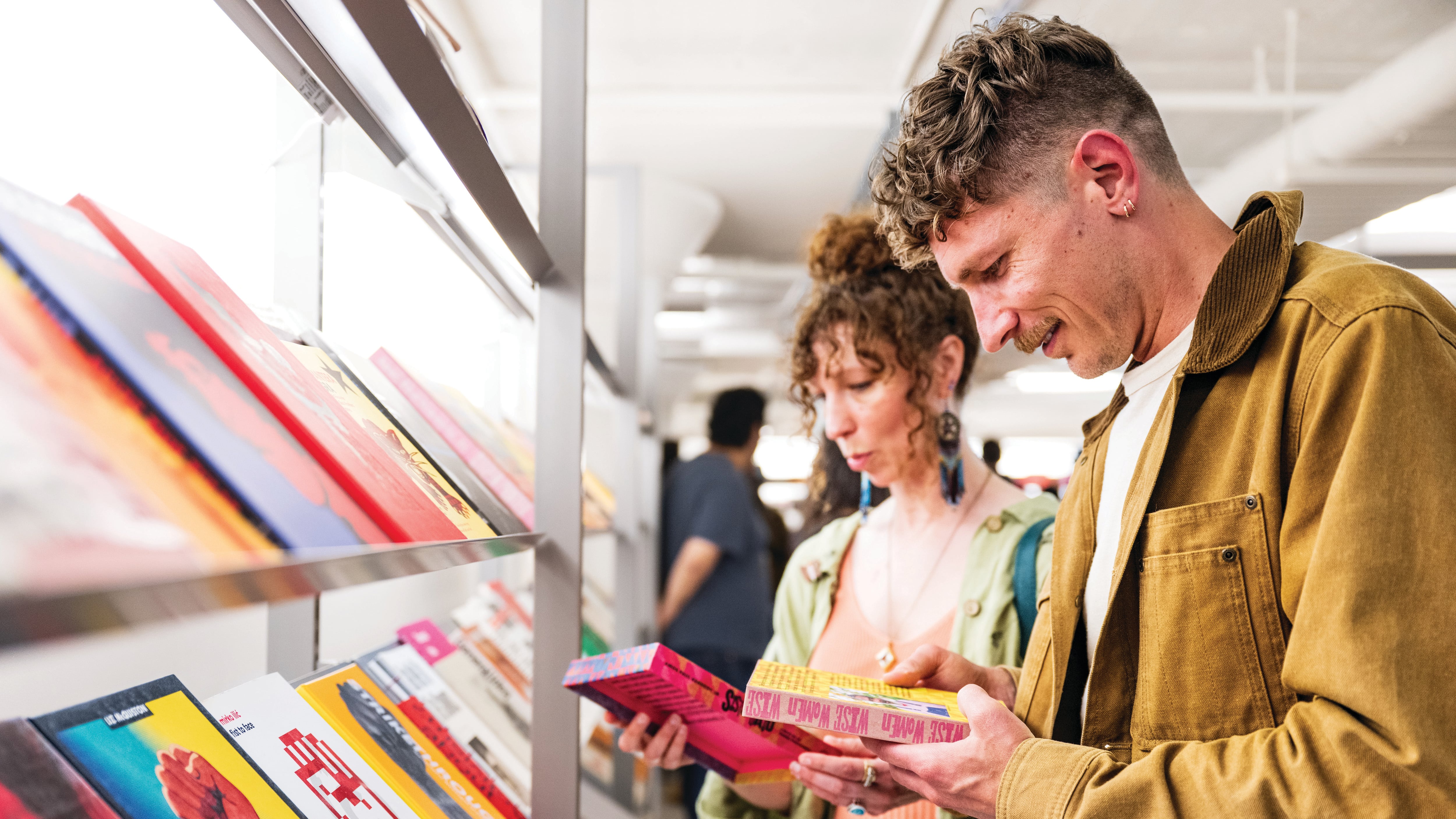
Volumes is not your typical library. Most of its bookshelves might be better called book displays, sleek silver units reclaimed from the shuttered downtown Nordstrom Rack. On them are hundreds of rare books, magazines, posters and periodicals—all focused on design. Michael Ellsworth, who owns the space, collected the archive over two decades. Now, he’s flipped his personal library public, and hopes it will be a place that Portlanders come to get inspired, research a project, work or simply explore a creative curiosity.
To visit, buzz into the J.K. Gill building on Southwest Harvey Milk Street and take the elevator up to the mezzanine level. As the doors part, you’re dropped into an entryway plastered with colorful vintage posters, many referencing historic civil rights movements like Black Lives Matter and Women, Life, Freedom. This space in particular nods to Ellsworth’s design studio, Civilization, which has a strong focus on nonprofits and justice movements; clients include Shout Your Abortion and the American LGBTQ+ Museum.
“We design for advocacy and advocate for design,” Ellsworth quips.
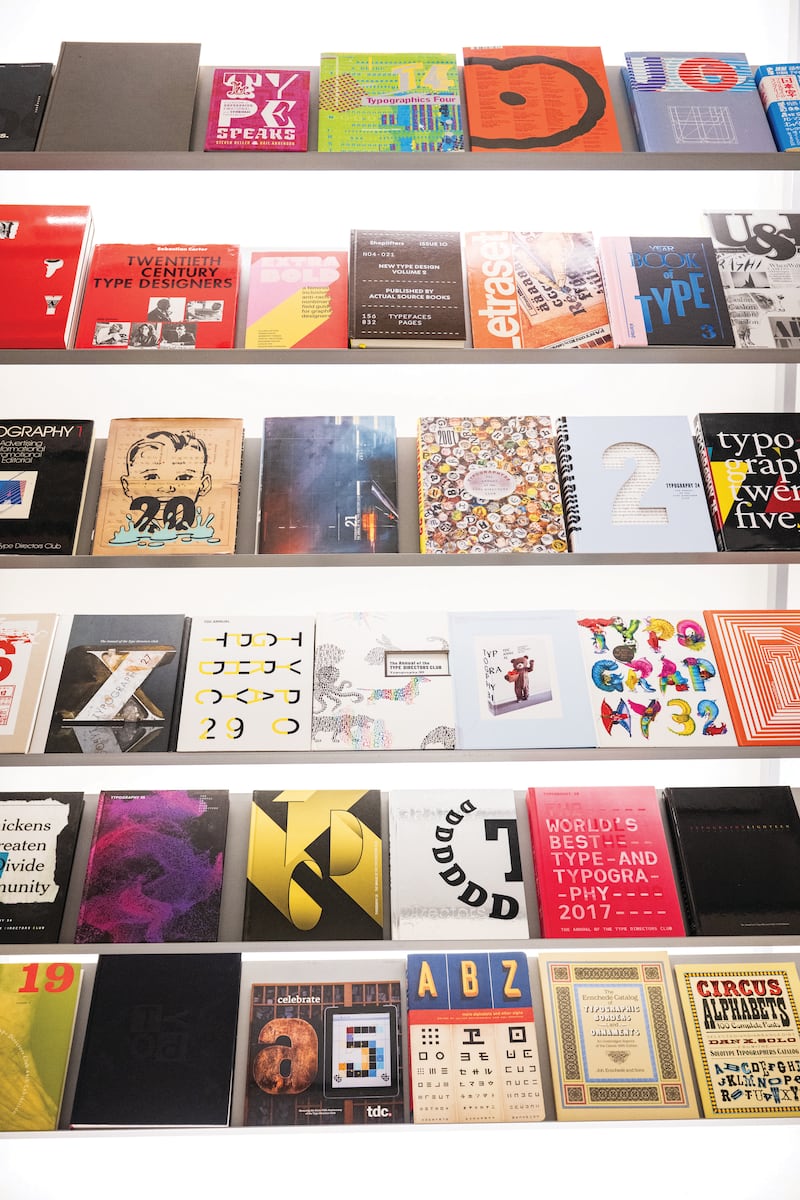
The main room is softly backlit, intentionally dim to make the materials pop. Genre dictates the sections—typography, interiors, product, fashion, architecture. Modular tables are either open for coworking and onsite research or covered with piles of magazines. Floor-to-ceiling windows let light in from the street and look down on the atrium below. On a far window is a decal of Volumes’ logo, which stacks the letters side by side to resemble rows of books in a library.
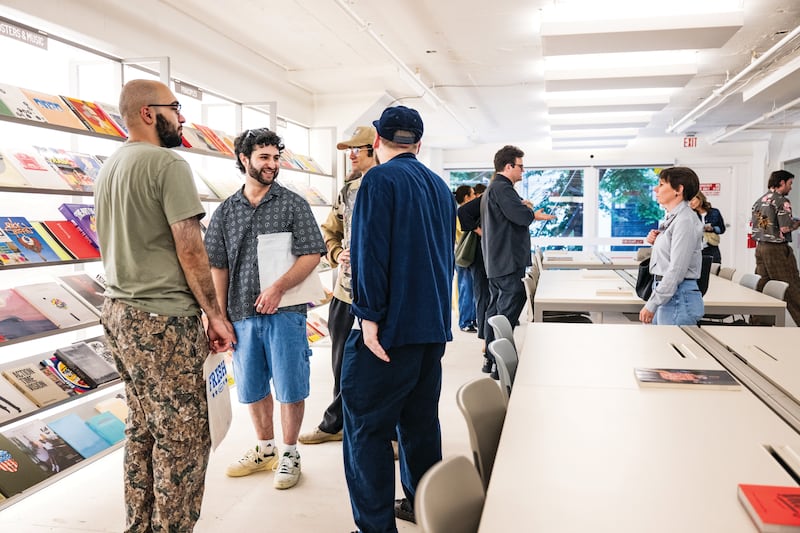
Volumes is a reference library, and 501(c)(3), so everything stays on-site and is not for sale. But Ellsworth is quick to recommend his friends at the Old Town magazine shop Chess Club, which stocks current issues of some titles you’ll find in the stacks at Volumes.
Ellsworth is a natural librarian. His enthusiasm is palpable as he excitedly pulls materials specific to visitors’ interests. Recently, two hip-hop musicians stopped by looking for inspiration for their next album. Ellsworth grabbed back issues of Raygun (a ’90s-era magazine with the tagline “The Bible of Music and Style”) as a reference point for them.
For a student researching a thesis on speculative design, Ellsworth pulled several issues of Archigram, an experimental and increasingly rare magazine put out by the influential 1960s British collective of the same name. Broadly, it’s a periodical about architecture. But it proposed outside-the-box concepts, like plug-in cities or walking buildings and walking cities. Instad of a reference to walkability scores, these concepts were for buildings and cities that literally move themselves from place to place.
“We want the collection to be an active resource that helps people make unexpected connections and discover new directions in their work,” Ellsworth says.
Other gems hidden in the stacks, for design heads or otherwise, include vintage books on Yves Saint Laurent’s design process, original copies of The Black Panther newspaper, and a complete run of Emigre, one of the first magazines ever designed on a Macintosh, published from 1984 to 2005.
“Emigre was one of the most controversial and influential design publications of its time,” Ellsworth says. “But it still feels super fresh.” Emigre challenged long-held assumptions about what graphic design could be by using expressive typography, unconventional layouts and original typefaces.
In 2022, Ellsworth moved himself, his archive and his business down to Portland from Seattle. Two years later, he kicked off Volumes as a series of pop-ups. He was testing the waters, seeing if there was an audience for a public design library in Portland, and keeping an eye out for a permanent home for his inventory.
Volumes’ collection was growing at the same time. Beyond what Ellsworth sourced from eBay, local bookstores (like Monograph Bookwerks) and vintage shops, friends, designers and other local studios had begun contributing materials.
A major donor was Joe Erceg’s estate. Erceg, who died in 2018, was a Portland graphic designer who worked on logos for Airwest Airlines, Columbia Sportswear and Lloyd Center. Ellsworth is still sorting through and cataloging the materials Erceg’s son, Matt, lent from his personal collection, pieces which otherwise would have been inaccessible to the public. One such item is a pointillist butterfly poster, which was later adapted into a mural on the Fleischner-Mayer Building at the corner of Northwest 1st Avenue and Couch Street, where it remained a downtown landmark for 30 years.
“This allows people to experience an important piece of Portland’s design history up close,” Ellsworth says. Another piece lent from the Erceg estate is a four-part issue of Playboy printed in braille. “Which,” Ellsworth says, “as a print design object alone, is quite interesting!”
At one of Volumes’ early Portland pop-ups, Ellsworth was connected with writer Randy Gragg and architect William Smith, who had recently collaborated to put on an exhibit called City of Possibility at the modernist, 1920s J.K. Gill Building. The show looked at 50 architectural models from Portland’s past, present and future. Ellsworth called it “an invitation to imagine how design can shape Portland.”
The idea behind the exhibit eventually evolved into what the building is today: Design Portland, a hub for art shows and events focused on archictecture, urbanism and industrial arts that now fills the building’s expansive ground floor.
“When I first walked in, I immediately knew the upstairs mezzanine was where Volumes belonged,” Ellsworth says, adding that he hopes the library can play a small role in revitalizing the downtown neighborhood.
Past its function as a place for designers and library scientists to nerd out, Ellsworth sees Volumes as a place where creatives can come to work remotely and businesses can find a cooler alternative to a conference room for their next team off-site. He even offers his network of designer and artist friends as guest speakers, if the shoe fits. But ultimately, he’d be content if people came simply to browse the shelves and spend a few minutes or hours with something that piques their interest.
GO: Volumes Design Library, 426 SW Harvey Milk St., 2nd floor, volumesdesignlibrary.org. 1–5 pm Tuesday–Friday. Suggested donation $5 hourly, $15 daily.