Skip to main content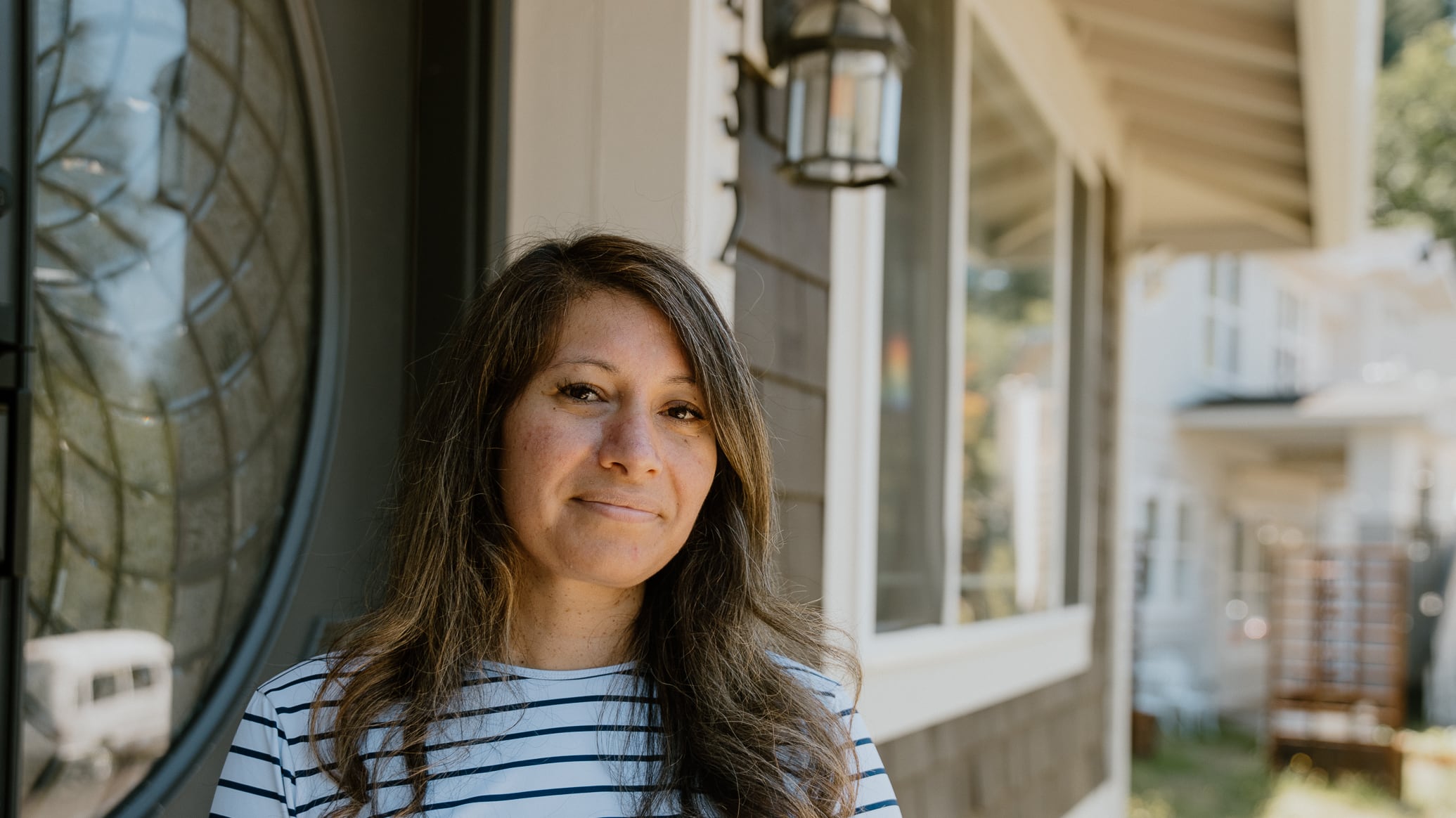
One day at their home, in April 2023, Rebecca Alvarez’s husband, Victor, went into sudden cardiac arrest. In the coming months at Oregon Health & Science University, Rebecca worked and lived with Victor at his bedside as he awaited organ transplants, and the couple’s four children moved in with extended family. That’s when they decided to list their Southeast Portland house on Airbnb.
The dwelling was brown, split level, three bedrooms, just off Powell Butte Nature Park. For a year, they rented out the top floor. They did not know it at the time, but Portland city workers were among those examining their listings.
The first six citations for short-term rental zoning violations, all sent by mail and issued on the same day, Nov. 6, 2024, had been returned due to a full mailbox, Alvarez says. It wasn’t until she received an email the next month about citations seven and eight that she discovered the financial peril she now faced.
By then, all eight fines had doubled. The city said she owed $96,523.
A fine of this scale would have been unheard of in any other city. Denver’s cap on first-time violations is $100, Minneapolis’ is $500. But Portland stands out. Its fines for Airbnbs (formally known as accessory short-term rentals) are 27 times higher than those of comparable cities, according to a report by the City Ombudsman’s Office released in March.
Criticizing the city for overly punitive enforcement, the report documented cases in which Portland Permitting & Development fined first-time offenders thousands of dollars with no warning, forcing some to take out a second mortgage, sell their homes, or cash out retirement funds to pay the fines.
Rebecca Alvarez was one. “I was crying, and I was trying to figure out what to do and how to handle the situation because this is my only home that I have,” Alvarez, 38, recalls.
Alvarez says she called Portland Permitting & Development to try to understand where she had gone wrong. Because she and her family had been absent from their home for a year due to Victor’s hospitalization, they were fined, among other things, for lacking a primary resident, since Portland requires a long-term resident to live at the rental for at least 270 days per year.
With help from the Ombudsman’s Office, Rebecca was by the spring of 2025 able to reduce her fine to $19,307—a figure still far beyond what her family can afford.
Until last year, Portland had no fine limit at all. Some fines eclipsed $100,000 as the city allowed citation after citation against Airbnb operators to accrue.
Portland softened its stance somewhat in May 2025, when, following complaints from the Ombudsman’s Office, city officials limited the number of fines a first-time violator could receive to five, effectively capping the total amount at $27,513.
Yet now, just a year later, officials desperate to raise revenue are hardening their stance again: Under the 2026–27 budget just passed by the Portland City Council, the cap will increase to $34,670 on July 10.
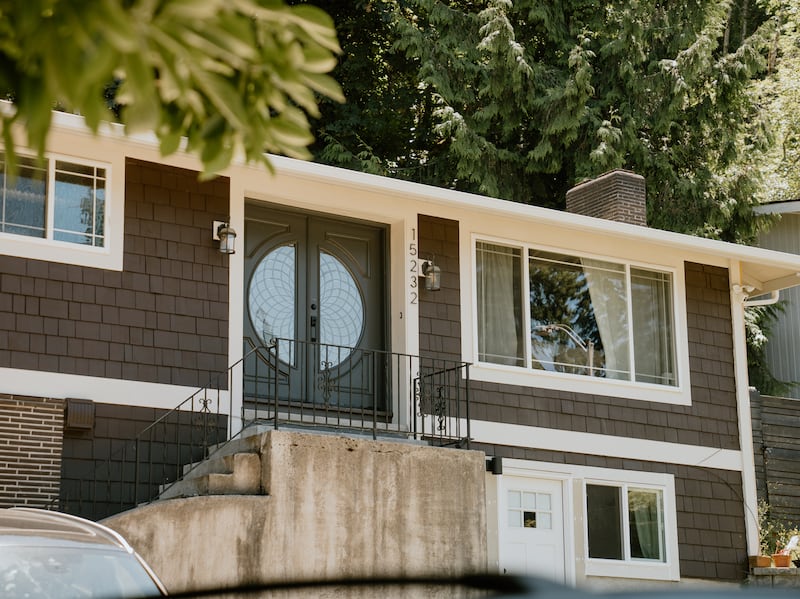
Portland Permitting & Development spokesman Ken Ray says the city’s fines are so high to discourage violations of short-term rental rules. But the reason for this year’s increase, Ray tells WW, is to support the department’s services and staffing.
“It was determined that the [accessory short-term rental] program would need to increase its fees by 26% to fully cover its costs without reliance on the bureau’s reserves or other funding streams,” Ray says.
The permitting agency receives 94% of its funding from permitting fees and fines for violations, Ray tells WW, as fine revenue covers the cost of staff time spent investigating possible violations.
Several city councilors did not respond to requests for comment on the fine cap increase.
City spokeswoman Chenoa Philabaum tells WW that Portland Permitting & Development recognizes that large penalties can have a significant financial impact on individuals and families.
The bureau “takes the ombudsman’s report seriously, including the concerns it raised about financial hardship and potential disproportionate impacts,” Philabaum says in a statement. “At the same time, Permitting & Development does not agree that the cases highlighted in the report were simply the result of minor mistakes or confusion. Many of the enforcement cases involved multiple documented violations of city rules.”
Portland’s rules didn’t always used to be so strict. In fact, in 2014, it became the first city in the country to allow “accessory short term rentals”—a catchall term for listings on Vrbo and other sites, but which tends in practice to mean mostly Airbnb. But, in 2017, when reports came out that operators were skirting permitting rules—so much so that, as WW reported at the time, even an Airbnb manager lacked the correct permits—the city turned up the dial on enforcement.
It eliminated a 30-day grace period for fine payments. It more than doubled fine amounts. And it issued citations each day for “continued violation” rather than on a monthly basis.
The idea, of course, is to prevent Airbnb hosts from turning houses into hotels. More short-term rentals mean less housing stock for long-term tenants, and many would rather their neighbors have more of a stake in the community than tourists cycling in and out.
But determining whether someone truly lives at their property is hard. This is partly why the city opted for a complaint-based system, meaning it investigates any complaint received from the public—which generally means a disgruntled neighbor.
There are several types of violations for neighbors to watch out for. The city breaks them into five categories: having no permit or a fraudulent permit; not having a full-time resident living at the property; renting out more rooms than permitted; renting to more guests than permitted; or advertising for more guests or rooms than permitted.
Permit types are a major problem area. “Type A” versus “Type B” permits correlate to the size of the house to be rented. According to last year’s budget, Type A permits cost $400 every two years and allow short-term rentals to host up to five guests with two bedrooms. Type B permits, on the other hand, require a one-time payment of $9,005 with an annual $245 fee and allow up to 10 guests in five bedrooms.
Not surprisingly, more than 90% of listings have Type A permits, despite the fact that most of Portland’s housing stock consists of houses with three or more bedrooms. According to the ombudsmen’s report, this likely indicates that about half of short-term rental operators in the city have Type A permits when they should have Type B—presumably due to the huge difference in price.
From 2024 through April 2026, Portland issued 270 fines for short-term rental violations, all over $1,000—but some amounted to quite a bit more.
One operator, Joseph Mullan, had been renting his Airbnb under the wrong type of permit, and the city slapped him with a $19,307 fine in November 2024. Mullan says he was working at the time to pay for a medication costing $14,000 a month to treat his terminal blood disease, but he received no empathy.
“I realized I’m dealing with the Mob,” Mullan says. “I am dealing with a horrific organization that would rather abuse their customers, which are their citizens, than help them. And at that point, I realized I wasn’t going to get anywhere.”
Right before Christmas 2024, Mullan says he took out a loan and paid the fine.
Similarly, Zach, a 25-year-old at the time who asked to go by his first name only, was fined $102,035 in 2025 for lacking a permit for his Airbnb, along with several other violations. Records reviewed by WW show he received 16 citations on the same day. This, he says, buried him so deep in debt he had to sell his house.
“I couldn’t sleep, couldn’t eat,” he says. “It was great for my weight loss, terrible for everything else.”
The citywide cap reduced his fines to $26,201.
Portland Ombudsman Tony Green says he has seen a number of cases like these. Some individuals fined are in severe medical debt, he says, or have other financial hardships that exacerbate the burden.
“One had to take $50,000 out of a retirement account to pay the penalties,” Green tells WW. “Others had to sell their primary residence.”
Still, city officials say cases of huge penalties such as those cited in this story are not common. “The individual cases in which such a large penalty is assessed for multiple violations are very rare and address the most egregious violators of the city’s rules,” Ray says.
And the city does offer a payment plan to those unable to pay the fine up front—at 12% interest.
Green, the ombudsman, says Portland’s rules are too complex. “They seem,” he says, “to be driving people to take out the incorrect permits and violate the rules because of the cost differences between the two, and the rule is extremely difficult to enforce.”
This is one reason the Ombudsman’s Office is pushing the city to issue warnings before fines, issue lower fines in general, and streamline its rules—for example, by limiting the number of rentable days to 95, which would eliminate loopholes allowing more rental days if the resident is on the property with the guest, and save investigators from chasing complaints about residents’ whereabouts.
“You need to make the cost of compliance less than the cost of cheating,” Green says.
And he adds that short-term rental fines are completely out of proportion. “If you demolish an old house that is painted with lead paint, and it’s next to a playground, and that lead paint spreads everywhere, you’ll be fined $10,000,” Green says. “The context here is: Does the fine commensurate with the offense?”
The city could face legal peril. In 2023, Airbnb sued New York City over excessive enforcement. The case was dismissed, but Mullan, one of the Portland operators who got a big fine, says Airbnb contacted him at the beginning of the year as part of an effort to collect stories—perhaps a precursor to legal action here.
For their part, Rebecca Alvarez and her family moved to a rental in Clackamas County after
Victor had recovered enough that his medical appointments became less frequent. Rebecca determined that returning to the home where her four children witnessed their father’s cardiac arrest was too traumatic, and the house by Powell Butte Nature Preserve sat empty until this May, when they started renting it to a family friend.
The family would like to move on from a difficult period—but the fallout from the Airbnb fines means they can’t. “We would have bought a house if we were able to,” Alvarez says. “We would sell our house and buy something else for our kids. But right now, we just have to wait until we clear out the lien.”