Skip to main content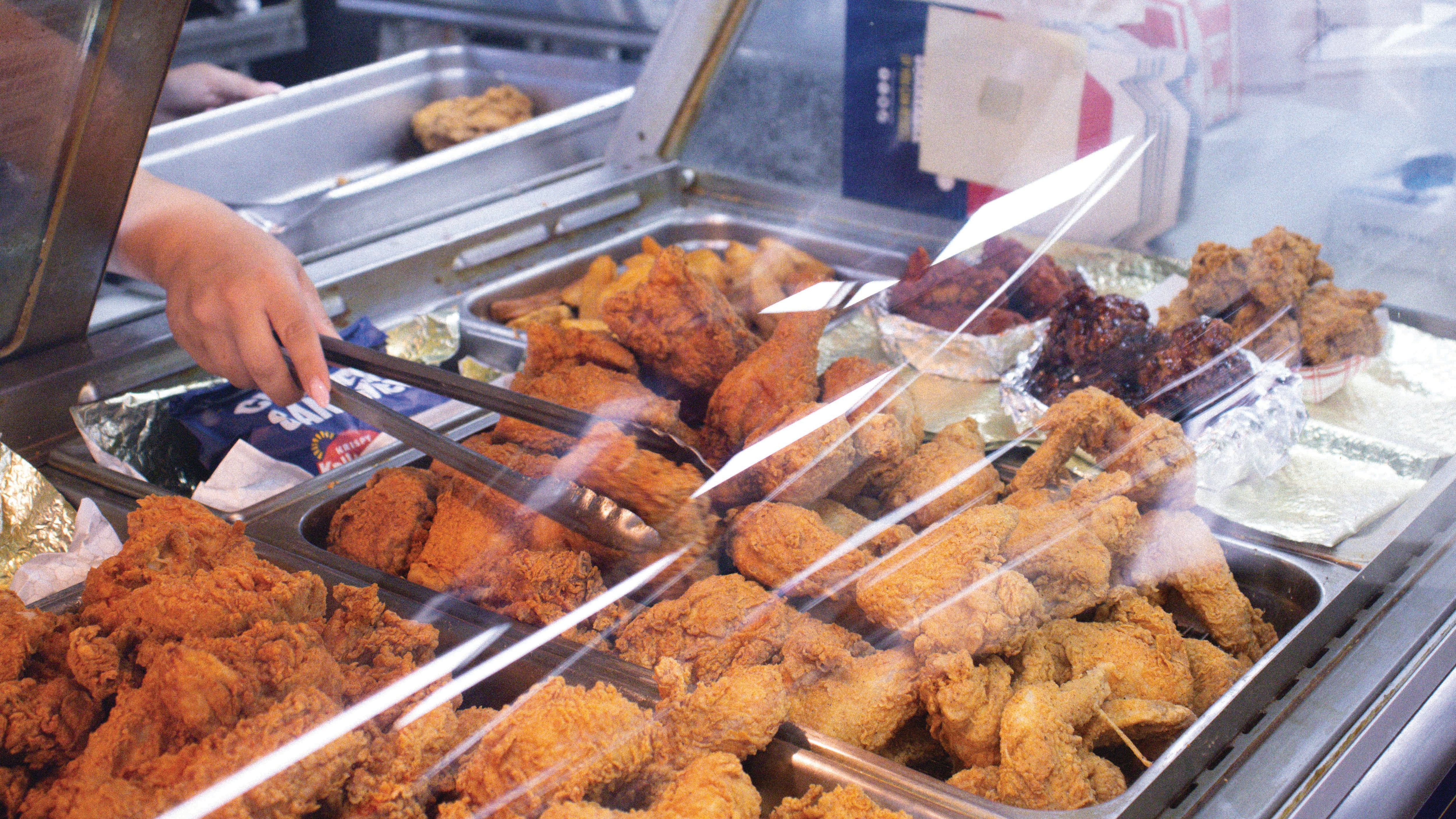
You’d likely guess that KFC is the country’s biggest fried chicken chain, with 4,100 locations. But No. 2 is less obvious. It’s not Chick-fil-A (3,100 locations), Popeyes (2,000) or Church’s (975) but Krispy Krunchy Chicken.
Who?
KKC flies under the radar by cleverly leveraging gas stations and convenience stores that have full kitchens and fryers. A lot of them. Founded in 1989 in Lafayette, La., the privately held company numbers 3,600 locations in 49 states. It even has the quaint origin story of being started by a single convenience store owner, Neal Onebane, a real-life Cajun with a very good fried chicken recipe.
Since 2022, the Portland metro area has seen a 400% increase in KKC locations, jumping from seven to 35. By the end of 2026, the chain is scheduled to push that number to 43.
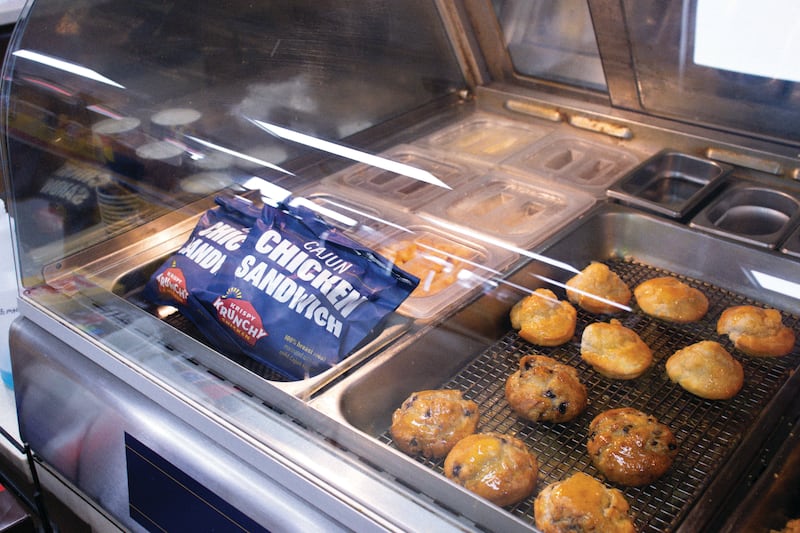
Krispy Krunchy Chicken is not a franchisor but a licensor. This means locations looking to add KKC don’t need to pay an upfront franchise fee—which can often exceed $50,000 with other chains—or ongoing royalties. Instead KKC defines some strict size and equipment requirements, provides training, then sells the food, packaging and marketing materials directly to operators, who prepare and price it independently. The chicken is delivered to each location fresh, not frozen, multiple times each week. Operators bread and fry on the premises. Estimated upfront startup costs can range from $10,000 to $50,000 depending on the build-out and permitting required.
Portland’s story with KKC starts at the Parkrose Shell station at 9920 NE Sandy Blvd., which in 2015 became one of the earliest KKC licensees on the West Coast.
Ambica Teja manages the Parkrose Shell, which her family owns. The family discovered KKC at a National Association of Convenience Stores conference. “The tenders were really juicy,” Teja says. “We’ve been in the industry a long time, so we’ve seen the different options in the convenience store market in terms of chicken, and it was a standout because they were so moist, but they were also crispy.”
I’ve been a fan of KKC for a decade thanks to Parkrose Shell. In my ranking, Portland’s best fried chicken is, in order: the Hour Glass Pub (7401 NE Glisan St.), Alberta Street Market (909 NE Alberta St.) and Krispy Krunchy Chicken. Sorry, Reel-M-Inn. I live a block away from Popeyes, but when I want chicken on the bone I drive to KKC.
What makes it so good? For starters, that fresh breading and its Southern spices set it apart. But there is a literal secret ingredient: KKC injects each piece of chicken with mildly spicy marinade. Bite into one and you’ll find juicy orange flavor stripes.
Deliciousness, however, is not the only reason Portland ended up with so many Krispy Krunchy Chickens. That story is a strange saga that recently landed in federal court.
In 2022, when KKC locations numbered about 2,700, the private equity firm Main Post Partners acquired a majority stake. That company was best known in the quick food service industry for buying controlling shares of Jimmy John’s in 2006 and growing it over a decade from 500 locations to 2,500.
KKC also brought in fast food veteran Jim Norberg as COO in 2022. Norberg had spent two years as COO of Papa John’s, and prior to that, three decades at McDonald’s, including a stint as COO.
Norberg quickly climbed to president, then CEO, and growth went into overdrive as the company morphed from a family-owned firm into a capital-fed juggernaut. For the first time, rather than working exclusively with independent stores operated by small business owners, KKC expanded into corporate partnerships with Circle K, Cumberland Farms, Walmart and a number of casinos and university food service departments around the country.
The stated goal of expanding to 10,000 locations by 2027 was so ambitious that former CEO Dan Shapiro, a 20-year veteran of the company and practically a KKC co-founder, publicly expressed skepticism. He worried the poultry industry couldn’t keep up.
But it was a set of high-profile, high-loss deals Norberg made to become the “Official Fried Chicken” of the Boston Red Sox and then the New England Patriots that did him in.
KKC fired Norberg at the end of 2025 and is currently suing him in U.S. District Court for the Northern District of Georgia. The complaint is a heckuva read, as if it were written with drama and publicity in mind. It alleges violations of the Federal Defend Trade Secrets Act and the Computer Fraud and Abuse Act (which has criminal implications), and it lifts the curtain on the past four years of Krispy Krunchy Chicken’s history.
Among other things, the lawsuit alleges Norberg stole corporate secrets, surreptitiously recorded private meetings, and secretly monitored co-workers’ emails—specifically, those of Dan Shapiro, who’s currently the chairman of the board and who, per the complaint, “questioned Norberg’s unsuccessful business strategy.”
Norberg’s replacement, David Birzon, might signal a change of pace. He was most recently CEO of a Denver-based breakfast chain called Snooze, which has 70 locations in 10 states. That Snooze is in the portfolio of KKC’s majority owner, Main Post Partners, could mean more of the same at the corporate level—the company did not publicize the shift; strangely, this story is the first reporting on the CEO change at a company estimated to be worth over $100 million—though Birzon did begin his tenure by canceling the NFL deal.
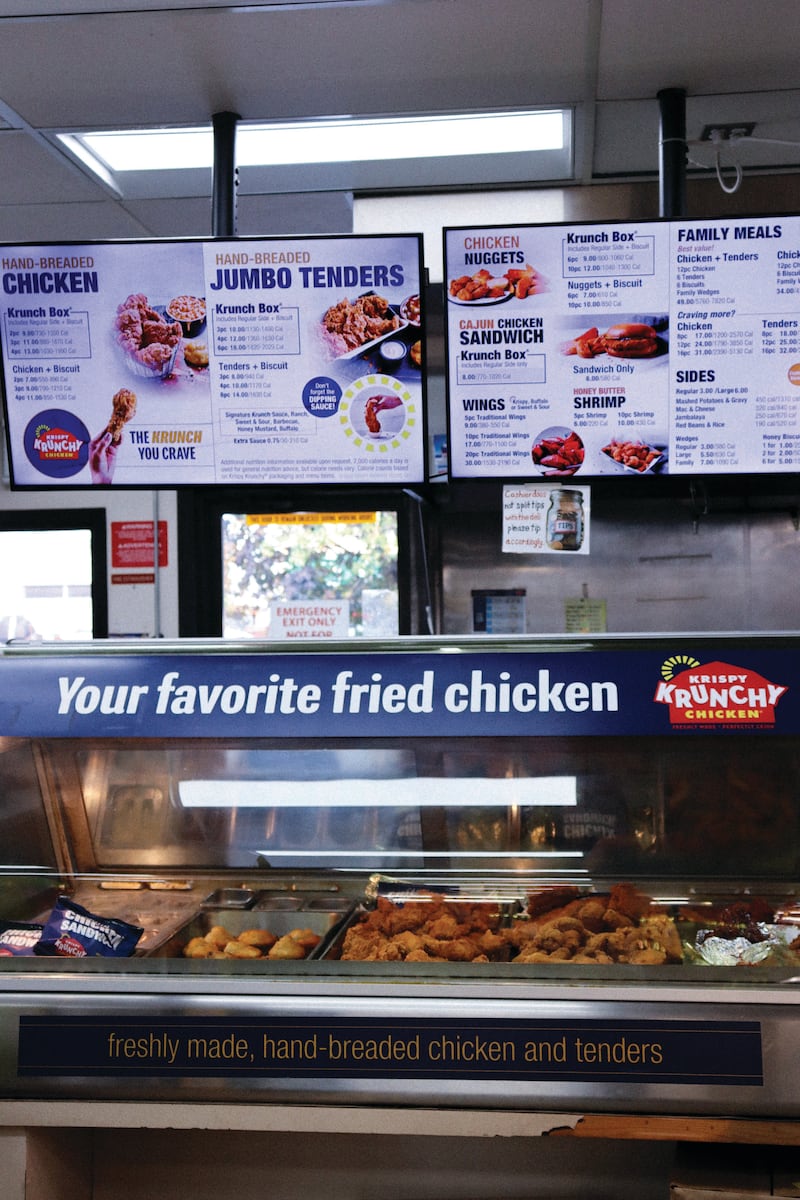
A good chunk of Portland’s Krispy Krunchy Chicken growth is due to one family-owned company, 365 Convenience Inc. It owns about a dozen convenience and liquor stores in the Portland metro area and has added KKC to six so far, with plans for the rest where it makes sense, based on traffic and proximity.
Dipesh Thapa, whose family owns 365 Convenience Inc., says the company wasn’t selling hot food before it added KKC. “I had it and I really liked it. So I was like, let’s bring it in,” he says. “It’s fresh. That’s the best part about it. It’s very fresh.”
Asked if KKC had a geographical limit on licensees, a common method used by franchise corporations to avoid flooding the market and diminishing their partners’ revenue, Thapa said KKC has a 1-mile radius limit. But he was optimistic about that. “Sometimes there’s 7-Elevens a mile away from each other,” he said, and sometimes they’re “a couple blocks away from each other.”
Still, 1 mile seems quite close for a unique food service. In response to my question about it, Krispy Krunchy Chicken’s external PR agency sent this generic reply: “We evaluate locations based on population density, traffic patterns and existing c-store coverage.”
The other sentence the PR agency said I could attribute to Albert Pont, vice president of U.S. west field operations, had a little more flavor: “Krispy Krunchy Chicken has grown on the foundation of prioritizing the profitability of our operators through simplified operations, a flexible program and ridiculously delicious fried chicken.”
For Parkrose Shell, Portland-area expansion over the years has been noticeable. “We did really well initially when we opened,” Teja, the manager, says. “As more and more locations have opened up, it’s slowed down a little bit because there’s more places people can go.”
Teja admits the store has seen an overall 50% drop in hot food sales over the past two years, though she doesn’t attribute the slump exclusively to new KKC locations but more to the dismal economy.
“What were very popular items are not as popular,” she says. “The party wings used to be very, very popular. But it’s just so expensive now, in general; party wings are so expensive. It’s kind of hard for people to justify spending nine bucks for five wings.”
The fact that each KKC is independently operated makes the business model accessible, but it also means overall quality can vary. I recently stopped at a KKC in Longview, Wash., and the chicken appeared to have been sitting under a warmer all day. Cliché, dry gas station food.
“I’ve been in this industry a long time,” Teja says. “So if I stop in at a gas station and look around, I can tell when they’re doing it properly and when they’re not doing it properly.”
On the flipside, some operators go beyond the KKC corporate guidelines, setting their locations apart from the flock. The Parkrose Shell, for example, double-fries its chicken to produce an especially crispy exterior.
“We make sure they’re shaking the batter properly,” Teja says of her cooks, “sifting it, not just being lazy. That makes a big difference.”
It’s hard to say what the corporate shakeup will spell for Portland’s KKC blitz, or the rest of the nation’s. How many licensees until we reach the point of diminishing fried chicken returns? Will Main Post Partners amp up the expansion even more to cover Norberg’s losses? Regardless, it’s still some of the best fried chicken in town. Those orange flavor stripes! And like at any other restaurant, the people cooking the food have more to do with its quality than the name on the packaging.