Skip to main content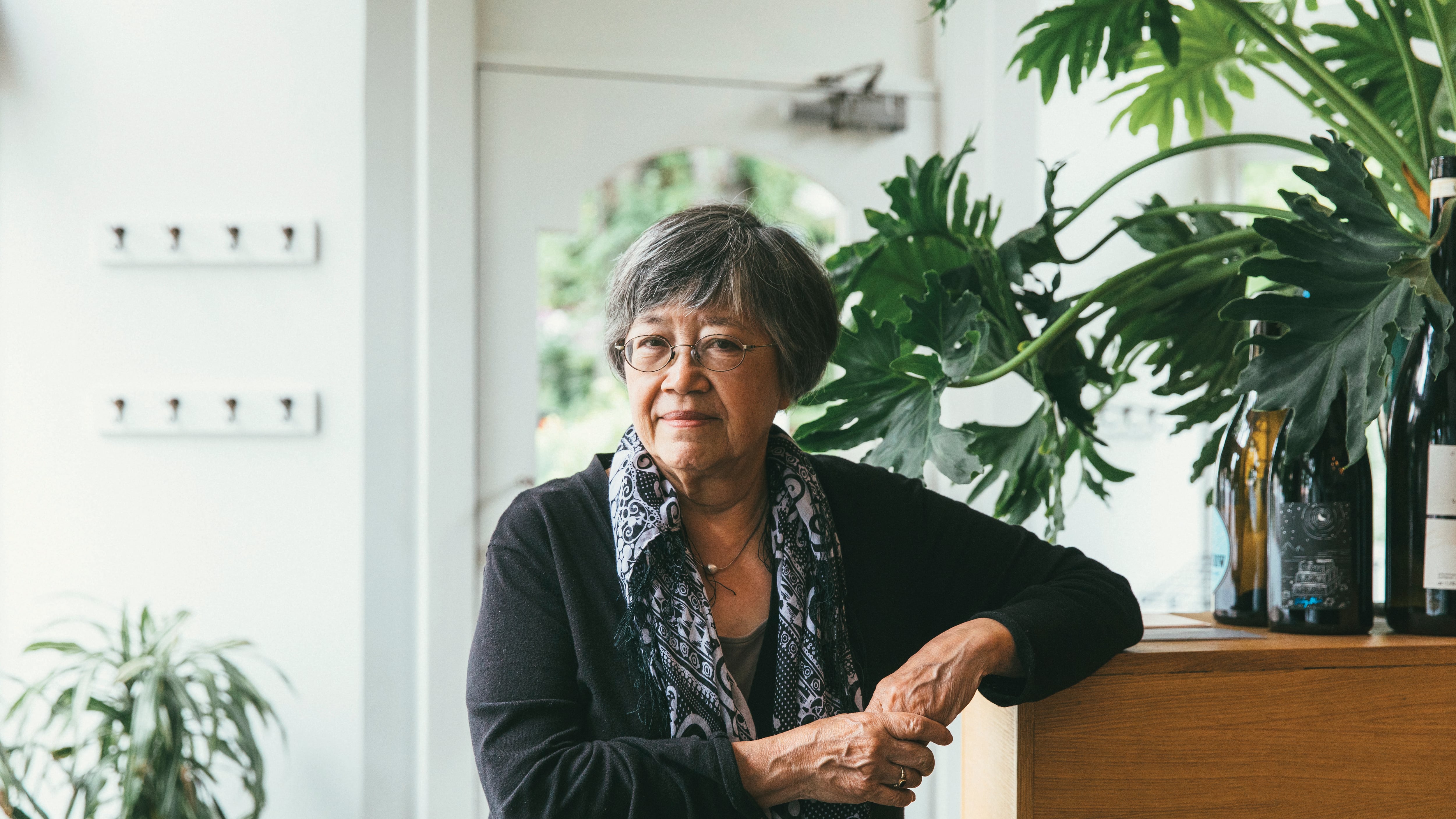
When Monique Siu announced late last month that OK Omens would soon close, it didn’t just mean that the wine-focused restaurant on Southeast Hawthorne Boulevard at 17th Avenue would close. It meant the end of the legacy of Castagna, the trailblazing restaurant next door that closed during the pandemic, and Cafe Castagna, the previous iteration of OK Omens.
“It is with a heavy yet grateful heart that I share the news of our upcoming closure. After 25 years of great food, wine, and incredible memories, I am officially wrapping up this chapter and heading into retirement,” Siu wrote in the Sept. 26 announcement. OK Omens will have its last service Oct. 17.
Siu, 74, is the restaurant owner-slash-fairy godmother behind all three of those restaurants, plus 1990s hot spot Zefiro before. Her restaurants shook up the foodie world in their own ways—fresh, local ingredients (Zefiro); Portlanders’ first taste of modernism (Castagna); going all in on natural wine (OK Omens)—but perhaps Siu’s greatest legacy was her ability to identify and hire talented chefs and then let them do what they wanted to do.
“Well, that’s what makes it fun, really,” Siu says.
Siu grew up in Berkeley, Calif., and came to Portland in 1970 to study biology and art at Reed College. She attended what is now the Pacific Northwest College of Art and worked as an artist in the late 1970s before pivoting to food and catering in the ’80s. She opened Zefiro on Northwest 21st Avenue at Glisan Street with chef Christopher Israel and co-founder Bruce Carey; co-founder Siu also served as pastry chef.
We caught up with Siu just as she was catching her breath at the end of a media blitz following her retirement and closure announcement. We got introspective about legacy, Portland’s food scene of yore and the challenges of operating a fine dining restaurant in 2026. The conversation has been edited for brevity and clarity.
WW: How did you know it was time to close OK Omens and retire?
Monique Siu: There’s a lot of things. It’s my age; I’m 74. It’s the restaurant climate in Portland and the general outlook economically in Portland. It’s finances…it’s been a struggle. It’s the hardest time in my whole history to do business.
Really? Tell me more about why this moment in the Portland food scene is such a challenge.
I think that there’s a lot of good energy in Portland, but it’s more in pop-ups and carts and a little bit more casual, low-key kind of places. It’s not really in, you know, fully formed restaurants. And I guess I’m kind of old fashioned. The kind of restaurant that I want to do is really hard right now. It’s all the costs, everything’s going up. You want to pay people enough money to live in Portland, and it just doesn’t pencil out very well. Other types of restaurants are more casual and have less labor, less overhead, use different ingredients.
I’m really curious how Portland diners have changed in the 36 years since you started opening restaurants here.
It was just so much more a meat and potatoes kind of place. There were some places…I went to Genoa and it was very traditional, but they were paying attention to ingredients and seasons. But most places in Portland were not paying attention to anything seasonal. And places didn’t pay attention to vegetables very much.
The Portland Farmers Market started the year after Zefiro opened. The whole way that people in Portland had looked at food was very much, you know, traditional and from the grocery store. And now all these people have access to amazing ingredients and farmers and fruit, and that is completely different. And the trouble with the restaurant right now is that it’s very hard to afford all those best ingredients.
You’ve made it in a notoriously difficult industry since 1990. What’s your secret?
Well, I don’t know if there’s a secret. I think what I really love about it is the people. I’ve had some great collaborations. It’s putting together the team, and making it—I don’t know if it’s fashionable these days to say it’s a family—but it becomes a family.
We have made consistently good communities of people working together towards a goal, and people growing up here. And I think that’s what keeps you going, too. If you have people working together that get some satisfaction from their job, not just the paycheck, and that have a goal of making something beautiful and crafting something with integrity…I think that’s what allows it to keep going, no matter what style, you know, because I’ve gone off on some tangents.
Do you mean cuisinewise?
Yeah, cuisinewise. I mean, I do like pushing. I love traditional food. I cook traditional food, but it was fun to try to make a really modernist restaurant. And it was interesting. It pushed everyone’s skills. It shook things up for me, too. You’re just exploring different ways of looking at food and different ways of looking at what the restaurant can be, and I feel lucky that I’ve been able to do that.
Can you identify the proudest moment of your restaurant career?
The early parts of making a restaurant, like the early parts of putting together Castagna and Zefiro. It’s partly excitement, but it’s also kind of—early on you have this vision and you want to make it happen, and it hasn’t been, you know, trod upon by bills and costs and all that.
What about the lowest low?
Has to be in COVID. We tried to go through but we couldn’t keep Castagna open. It was very, very sad for Justin [Woodward, the late chef]. And so I would say, even though we stayed open and we had some awesome customers that stuck with us and ate in our gazebos and all that, that was pretty heartbreaking.
Any regrets looking back?
Well, that’s a loaded question.
I know. We’re going deep.
I don’t know. Not really. I think that one regret may be that I might have been better off not trying to go it alone. I understood the collaboration and how positive that was with the staff and the chefs and all that. But I think, as a business, if I could have found someone to collaborate on that level with, like a co-owner, I think that might have allowed me to just be better.
Last question, what are you planning to do in retirement?
Well, I think I’m going to sleep for quite a while [laughs]. And then other things that I’ve always loved and want to do more of is growing a garden. I love flowers. I always said if I wasn’t doing this, I’d just want to be a girl in a flower shop.
EAT: OK Omens, 1758 SE Hawthorne Blvd., 503-231-9959, okomens.com. 5–9:30 pm Tuesday–Sunday, through Oct. 17.