Skip to main content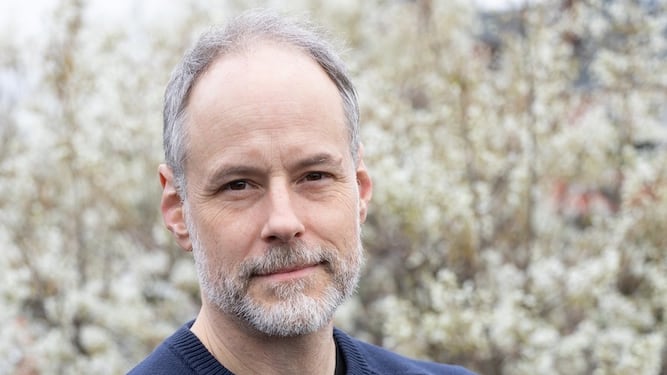
Oregon has hosted its fair share of influencers peddling questionable health advice.
Bret Weinstein, the former Evergreen State College professor who lauded ivermectin as a better precaution against COVID-19 than vaccines, lived in Portland for a few years starting in 2018.
Casey Means, Donald Trump’s pick to be surgeon general, dropped out of a surgical residency at Oregon Health & Science University and went on to advise Robert F. Kennedy Jr. on his presidential campaign, touting whole milk and questioning vaccines along the way.
Medford resident Dr. Diane Hennacy Powell, star of the blockbuster Telepathy Tapes podcast, claims that some children with autism can read their parents’ minds.
All three have something else in common beyond living in the Beaver State: Each has been scrutinized by Conspirituality, a podcast that “investigates the intersection of conspiracy theories and spiritual influence to uncover cults, pseudoscience, and authoritarian extremism.” As you can imagine, there is plenty of conspirituality to debunk these days.
One of Conspirituality’s co-founders, Derek Beres, moved to Portland in 2022. We wondered if he did so to be closer to the herb witches and crystal healers he dissects, so we invited him to coffee in the Mount Scott-Arleta neighborhood, where he lives with his wife, two cats, and a new puppy. Turns out, he and his wife just wanted to escape high house prices in Los Angeles, where you can’t throw a jar of peptides (the latest craze) without hitting a wellness influencer.
“This is a more authentic city than I’ve ever lived in,” Beres says. “There’s no fronting. That said, there’s a lot of weird wellness shit here. There’s a lot of homeopathy. There are all sorts of holistic clinics. It exists and I come across it here. It’s just not as loud.”
Beres, 50, grew up in New Jersey and earned a degree in religious studies from Rutgers University in 1997. He’s a jack of many trades. He’s worked as a journalist, financial writer, music producer, group fitness teacher and yoga instructor. He knows his way around both blockchains and kettlebells.
He’s written three books, including one on psychedelic medicine. While in his 20s, Beres did more than 100 psychedelic doses in about 18 months. Once, he ate half of an 8-gram mushroom shipped to him from Oregon and had the “worst day of my life.”
These days, he trips about twice a year, on manageable doses.
“I don’t try to blow out my head anymore,” Beres says.
Beres works out every morning at 5:30 am and brings the same discipline to his discourse. His speech is precise, and he’s attuned to the rhetorical strategies that influencers use to fend off critics, including the “Gish gallop,” named for creationist Duane Gish, who would try to overwhelm opponents by presenting a barrage of bogus arguments, making it impossible to address each one before the debate time ran out.
Russell Brand, the English anti-vaxx comedian who has been accused of sexual assault by British authorities, is the “king of Gish Gallop,” Beres says. In 2023, he wrote a Substack piece about Brand’s rhetoric headlined “Russell Brand’s Charismatic Bullshit.”
Here is our conversation with Beres. Questions and answers have been edited for clarity. We detected no Gish gallop.
WW: So, when it comes to having bullshit to debunk, this must be a golden age, yeah?
Derek Beres: The number of DMs we get is endless. Someone will write, “Hey, here’s this person.” And we’re like, “How many are there?” And then you look, and they have hundreds of thousands of followers you never heard of. We’ve been doing this for six years, and it’s constant. I think I found about three new people I never heard of this week.
What got you started on this kind of work?
I come from the wellness world. I was a yoga instructor. I started practicing in the ’90s. My degree isn’t religion, but focused on Eastern religions. Doing and teaching yoga became a huge part of my life. I was very primed to be an influencer if I wanted to go that route.
Why didn’t you?
People in wellness don’t understand “scope of practice.” They think that because they’re in front of crowds of people, they can say whatever they want about health, and they do. People in wellness take anecdotes as proof of reality. So you see that constantly in this industry. Whatever they’ve done themselves, they’re like, “Well, why can’t everyone do this? This is what everyone needs.” And so that sort of is where I became very skeptical.
Why are supplements and pseudoscience so alluring right now?
We have, in my estimation, just a completely fucked-up, for-profit health care system. We’re the only industrialized nation without a universal health care option.
And wellness influencers prey on that?
What MAHA and Kennedy do is create a caricature of the health care system, and they’re able to indoctrinate people who are either already healthy and don’t interact with the system much, or don’t interact with the system because they can’t afford to, and so they’re left out of options.
I’ve seen more websites, podcasts and Substacks written by experts who are refuting the Trump administration’s advice on nutrition and vaccines. Does that give you hope?
People like Food Science Babe, who’s amazing, say, “I can’t keep doing TikToks because I don’t have the time,” or “I’m not getting paid for this.” She still comments on threads, and she will provide information. But there’s no infrastructure for these people. Meanwhile, you have wellness influencers monetizing misinformation, and they can make a lot of money doing that. And so this disparity between getting good information and getting shitty information that’s monetized is really tough. We’re lucky. I make a livable wage with the podcast, but we’re just lucky. We just stepped backwards into it. And we’ve turned down a lot of sponsorship money from supplements companies who wanted to advertise on the podcast.
What do you make of Oregon’s legal psilocybin program?
We’re trying to legitimize psychedelic therapy through a psychiatry model, but everyone who’s leading it came through it recreationally. So we’re trying to fly the plane as we’re building it. That was the idea, which I understand. I am all for anything that helps people.
Is there a lesson for mushrooms from cannabis?
We watched it legalize and then saw the cash grab that happened. Strength and potency increased. My fear is, psychedelics are going to move in that same way. It already started to. You can buy anything online. They’re basically promoting something as natural and spiritual that can truly help people, but they’re putting it in our hypercapitalist model, with millions and tens of millions of dollars of investment, and they’re not philanthropic, so they want that return.
Early last year, former Portlander Bret Weinstein told Tucker Carlson that COVID-19 vaccines had killed 17 million people. He’s said similar things to Joe Rogan, who made Weinstein a star. Do you think Weinstein killed people by telling them to shun the shots?
All of them have killed people, and they won’t take responsibility. They’ll never admit it. I just did a video yesterday that started off with a clip of Rogan saying he couldn’t believe the Gestapo is just rolling up on Americans and arresting them. I opened by saying, “You don’t get a pass here.” If you went MAGA to get Kennedy installed, you have to own everything that’s happened, one hundred percent.
Portland is great, but you know you live in a city without fluoride in the water now, right?
Yeah, well, I have fluoride toothpaste.