Skip to main content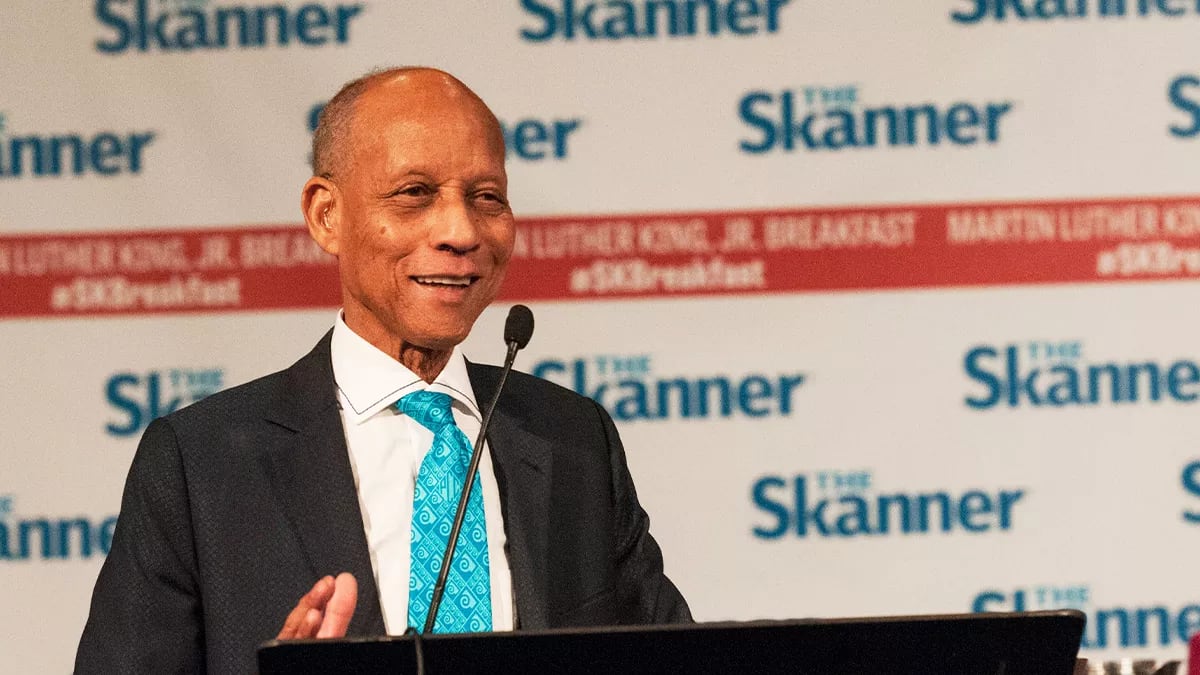
The Skanner, a pioneering Black-owned newspaper in Portland, has ceased operation.
Co-founder and executive editor Bobbie Dore Foster confirmed the outlet formally closed Jan. 30, 50 years after she and her husband, Bernie, began publishing in a small space off North Williams Avenue. In addition to the octogenarian owners, the closure affects three people: a sales manager, accountant and graphics designer.
“We closed the business due to changing technology,” Bobbie Dore Foster wrote to WW. “We faced the same issues that have plagued newspapers for the last decade—advertisers have migrated to social media platforms.”
In 2023, The Skanner ceased print publication and moved to online-only, and the Fosters sold the paper’s distinctive mid-century modern concrete building on North Killingsworth Street in the Humboldt neighborhood. A final digital edition was published Jan. 7. On Monday, the outlet’s website was down.
“We covered community events and issues, never shrinking from critiquing public officials, and challenging them to be responsive to the people who elected them,” Bobbie Dore Foster wrote.
The Skanner was conceived at a Portland Trail Blazers game, according to an oral history Bernie Foster gave to the Oregon Historical Society in 2017. An Air Force veteran, Foster was studying journalism at the University of Washington and taking photographs for The Facts, an African-American weekly.
One day, while Foster was in town to watch the Blazers and their star Geoff Petrie, friends asked if he would consider establishing a newspaper in Portland, where he says there were few options for African American readers.
He happened to be disillusioned with his own employer.
“It wasn’t a bad work environment; it was a good work environment,” he said. “But my boss at the time, he believed in ‘positive’ news. That was his word. He didn’t believe in doing what a newspaper was about: challenging people.”
The Kerner Commission Report of 1968 had found that hiring practices at mainstream American media outlets had been perpetuating a white-centric worldview, findings Foster took to heart. So in 1975, he and his wife relocated to Portland and founded The Skanner, motivated by the teachings of Martin Luther King Jr. and inspired to make a difference in underserved communities.
The paper covered city, state and national issues, interviewed political candidates, endorsed ballot measures, and was circulated throughout the Portland metro area. Advertising deals with Nordstrom and Kraft helped the nascent publication establish its footing, even if, initially, the Oregon Newspapers Publishers Association didn’t want it to join.
The offshoot Seattle Skanner began publication in 1981 and later merged with the Portland paper. At its peak in the 1990s, The Skanner had 12 to 15 full-time employees and a circulation of around 75,000. Later, it was among the first news outlets in Oregon with a website.
In 1997, the paper relocated to 415 N. Killingsworth St., the former home of a national funeral home business, where The Skanner remained for 26 years. (The “Skanner Building” is now available to rent as small business office space.)
Over the decades, the Skanner sponsored numerous community events. A Trail Blazers’ summer camp at Peninsula Park. A home-buying fair for African American and other minorities. The newspaper joined with Tri-Met to celebrate Martin Luther King Jr.’s legacy with an “It All Started on the Bus” promotion.
Bernie Foster was instrumental in an effort in the late 1980s to rename Union Avenue in honor of Martin Luther King Jr., which succeeded by vote of the city council and later withstood a boisterous public campaign to name it back. He later helped secure $300,000 in donations for a statue of the civil rights icon that today stands outside the Oregon Convention Center on Martin Luther King Jr. Boulevard.
For years, the Fosters also oversaw the Skanner Foundation, which recognized student leaders with grants and scholarships at its annual Martin Luther King Jr. Breakfast.
Former news editor Lisa Loving said in her 10 years with the publication, there wasn’t a prominent leader in Oregon she couldn’t talk to, which she credits to the respect they had for her bosses.
“The Skanner harkens back to a day when local media outlets were impactful in their communities, in their neighborhoods and at City Hall,” Loving says.
Over the years, The Skanner was home to many talented journalists, among them Helen Silvis, who as multimedia editor published features that tracked gentrification via dozens of church sales to white developers. Other notable writers include Brian Stimson, Bruce Poinsette and Donovan Scribes. Oregon’s first Black broadcast journalist, Dick Bogle, wrote a popular jazz column with an international audience. And for years, beloved local literary figure Katherine Dunn’s boxing column, Punch Lines, graced the Skanner’s pages.
In 2010, Portland police killed Black man Aaron M. Campbell after a relative called requesting a welfare check. In response, Bernie Foster penned a fiery editorial titled, “Having An Emergency? Don’t Call the Police.”
“We do a lot on police,” Bernie Foster told the OHS. “And the police will tell you, ‘Well, we’re risking our lives.’ I say, well, you don’t have to. If it’s uncomfortable, maybe you should get another line of work. I’m good with what I’m doing, so maybe you should get a softer job. But if you think we’re going to give you the ultimate power of taking a life, and you don’t think we’re going to hold you accountable? You don’t think I’m going to hold you accountable? Absolutely, man!”
The Skanner is being digitized by the University of Oregon’s Digital Newspaper Program, Washington State Library’s Digital Newspapers department, as well as the Library of Congress’ Newspapers in American Libraries program. Howard University in Washington, DC also has print issues of The Skanner in a special section for Black newspapers.
The Oregon Historical Society has all print issues of The Skanner except for those lost in a fire in the early 1980s. A collection of the Skanner’s photography from 1975 to 2006 is on file with OHS and free for public use.
“The paper speaks for itself,” Bernie Foster told WW. “I always said that each generation should leave the world a little bit better than it was when they found it. And we know that Portland is better than it was 50 years ago. And we hope that the next generation will make it better than it is now.”